Blog

  • Metals One to Increase Investment as Evolution Targets A$4m Capital Raise

    Metals One to Increase Investment as Evolution Targets A$4m Capital Raise

    Metals One Plc (LSE:MET1) intends to commit up to A$1 million to a renounceable entitlement offer launched by Evolution Energy Minerals Ltd, which is seeking to raise approximately A$4 million at A$0.015 per share. The funds are earmarked for the advancement of copper and graphite assets, including the Chikundo Copper and Chilalo Graphite projects.

    Although the transaction qualifies as a related-party deal, Metals One’s independent directors have determined that the terms are fair and reasonable for shareholders. The investment is expected to bolster Evolution’s financial position and support development progress across its key battery metal projects, potentially expanding Metals One’s exposure to commodities central to the energy transition.

    Evolution’s capital raise features renounceable and tradeable entitlements, free attaching options and partial underwriting. This structure is designed to encourage broad investor participation while increasing the likelihood that the full subscription target is achieved.

    For Metals One investors, the proposed subscription may lift the company’s equity stake in Evolution and reinforce its strategic footprint in critical minerals. However, this increased exposure comes as Evolution remains in a pre-revenue phase and continues to operate at a loss.

    More about Metals One PLC

    Metals One is a developer and investor in critical and precious metals projects, with listings on AIM and OTCQB. The company focuses on exploration and development-stage assets, particularly in copper and graphite. It currently holds a 16.9% interest in Evolution Energy Minerals, aligning its portfolio with early-stage resource opportunities linked to electrification and battery supply chains.

  • Severn Trent pushes capital spending to upper guidance as regulatory period begins strongly

    Severn Trent pushes capital spending to upper guidance as regulatory period begins strongly

    Severn Trent Plc (LSE:SVT) said it has made a solid start to the new regulatory cycle, with operational and environmental metrics progressing in line with internal targets and financial performance matching expectations. Supported by greater insourcing and the accelerated rollout of key programmes, the company now expects annual capital expenditure to reach the top of its previously guided £1.7 billion to £1.9 billion range — the largest investment commitment in its history.

    The group forecasts at least £40 million in benefits this year from outcome delivery incentives and price control deliverables. It also anticipates securing a four-star rating under the Environmental Performance Assessment for the seventh year in a row, underlining its focus on environmental standards and service reliability.

    Chief executive James Jesic said the investment programme is advancing well and reiterated the outlook provided at interim results. He also welcomed the Government’s recent water sector White Paper as a constructive development, noting that further regulatory clarity is expected later in the year.

    From an investment standpoint, sentiment on recent earnings calls has been positive and technical indicators remain supportive. While the company’s balance sheet reflects relatively high leverage and negative free cash flow, overall trading performance remains resilient. Valuation levels appear reasonable, with an attractive dividend yield contributing to a steady investment case.

    More about Severn Trent

    Severn Trent is a UK-regulated provider of water and wastewater services, operating within Ofwat’s regulatory framework. Its returns and operational objectives are shaped by capital investment allowances, outcome delivery incentives and price control mechanisms, with a strategic emphasis on environmental performance and reliable service delivery for customers and communities.

  • Zinc Media delivers record 2025 performance and builds momentum into 2026

    Zinc Media delivers record 2025 performance and builds momentum into 2026

    Zinc Media Group plc (LSE:ZIN) reported unaudited revenue of £41 million for 2025, alongside adjusted EBITDA of £1.9 million, with both figures rising 27% year-on-year. The results mark the company’s fifth straight year of growth in revenue and profitability, achieved against a challenging backdrop for the wider television production market.

    The group said the performance reflects continued demand for its content across domestic and international broadcasters, reinforcing its standing in the TV and content production sector. Despite industry headwinds, the business delivered its strongest annual outcome to date.

    Looking ahead, Zinc has entered 2026 with £3 million of new contracts already secured. A further £21 million is either contracted or at an advanced negotiation stage, while discussions are ongoing regarding an additional £10 million in commissions and several potential seven-figure projects.

    Management believes efficiency measures, alongside a robust development pipeline spanning intellectual property creation, expansion within entertainment formats, and geographic growth in the Middle East, will help drive progress toward its medium-term objectives of £50 million in revenue and £5 million in EBITDA. The outlook has strengthened confidence among investors and commissioning partners.

    From a market perspective, the company’s stock profile remains shaped by financial pressures, including past profitability constraints and elevated leverage levels. That said, strategic progress and successful programme launches have supported its longer-term growth case. Technical signals currently indicate a bearish trend, while valuation measures continue to reflect underlying financial challenges.

    More about Zinc Media

    Zinc Media is a premium television and content producer focused on award-winning factual programming for UK and global broadcasters. Its portfolio includes production labels such as Atomic, Brook Lapping and Tern Television.

    Beyond broadcast production, the group operates commercial content divisions including The Edge Picture Company, a specialist in branded films, and Zinc Audio, which produces podcast and radio programming.

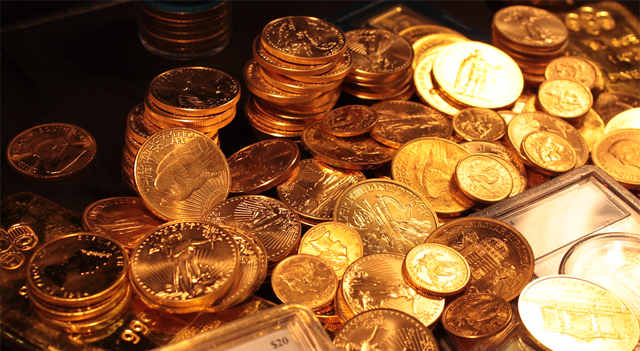
  • Gold dips modestly but holds above $5,000 as markets brace for key U.S. data

    Gold dips modestly but holds above $5,000 as markets brace for key U.S. data

    Gold prices edged lower on Tuesday, easing from the previous session’s strong advance as investors stayed on the sidelines ahead of a busy run of U.S. economic releases later in the week.

    Other precious metals also traded weaker. Silver and platinum slipped despite some overnight support from a softer dollar, which later stabilized during Asian trading.

    At 08:15 ET (13:15 GMT), spot gold was down 0.3% at $5,042.29 an ounce, while April gold futures fell 0.3% to $5,064.31 per ounce. Spot silver dropped 0.8% to $81.575 per ounce, and spot platinum declined 1.1% to $2,094.35 per ounce.

    Volatility persists as traders hesitate to buy the dip

    Precious metals have seen sharp price swings over the past week, with profit-taking and crowded positioning driving prices down from record highs. Heightened uncertainty over U.S. monetary policy — particularly ahead of a potential change in leadership at the Federal Reserve — has further fueled market volatility.

    Safe-haven demand has also been uneven amid conflicting signals from U.S.-Iran relations. While officials cited progress in nuclear talks over the weekend, Washington nevertheless issued a warning on Monday urging U.S.-flagged vessels transiting the Strait of Hormuz to exercise caution.

    Although gold and other metals have clawed back some recent losses, prices remain well below late-January peaks, as investors appear reluctant to chase the rebound.

    “Dip-buying has been selective rather than aggressive, indicating participants are still sensitive to macro signals,” OCBC analysts said in a note.

    They added that while de-dollarization trends have supported gold over the past year, near-term direction will still hinge largely on developments in the U.S. labor market and their implications for monetary policy.

    Analysts at Heraeus said gold and silver have shifted away from their traditional role as safe havens and are now trading in a high-volatility environment.

    “The seeds of the price decline were sown in the preceding rally that for a supposedly low-volatility safe-haven asset was exceptional,” Heraeus said. “The price of gold has gone up 5x in 10 years but the dollar index is at the same level that it was in 2015. With such a sharp price drop there was likely an element of leveraged positions being unwound, with stop losses being hit and rising margin requirements. Exchanges are still raising margin requirements for futures’ positions.”

    U.S. data calendar takes center stage

    Investors are now turning their attention to a packed U.S. economic calendar that could provide clearer signals on growth and interest rate prospects.

    December retail sales data are being watched closely for insight into consumer spending trends amid signs of cooling in the labor market. January nonfarm payrolls figures are due Wednesday, followed by the consumer price index on Friday. Both reports are expected to influence Federal Reserve policy expectations, given the central bank’s focus on inflation and employment.

    Markets are also assessing the outlook for monetary policy under Kevin Warsh, President Donald Trump’s nominee to replace Jerome Powell as Federal Reserve chair when his term ends in May.

    Seen as less dovish, Warsh’s nomination previously triggered steep sell-offs across precious metals markets — losses that have yet to be fully reversed. Gold fell from near-record highs around $5,600 per ounce, while silver retreated from levels above $120 per ounce.

  • Flat U.S. retail sales raise caution ahead of Wall Street open: Dow Jones, S&P, Nasdaq, Futures

    Flat U.S. retail sales raise caution ahead of Wall Street open: Dow Jones, S&P, Nasdaq, Futures

    U.S. stock index futures pointed modestly lower on Tuesday, signaling a cautious start to trading as investors reassessed the outlook following two sessions of solid gains.

    Futures slipped after fresh data from the Commerce Department showed that U.S. retail sales unexpectedly stalled in December, raising concerns about the strength of consumer spending heading into the new year.

    The report showed retail sales were essentially unchanged last month, following a 0.6% increase in November. Economists had been expecting a 0.4% rise. Even after excluding autos — where sales at motor vehicle and parts dealers edged slightly lower — sales remained flat, compared with a 0.4% gain the prior month. Ex-auto sales had been forecast to rise 0.3%.

    Meanwhile, separate figures from the Labor Department indicated that U.S. import prices rose marginally in December, matching market expectations.

    Wall Street closed mostly higher on Monday, extending the rally that began late last week. The Dow Jones Industrial Average inched to a fresh record close, while technology shares powered a stronger advance in the Nasdaq.

    By the close, all three major indexes finished in positive territory. The Dow added 20.20 points, less than 0.1%, to end at 50,135.87. The Nasdaq jumped 207.46 points, or 0.9%, to 23,238.67, while the S&P 500 rose 32.52 points, or 0.5%, to 6,964.82.

    Much of the momentum came from a continued rebound in technology stocks, building on Friday’s surge. Software shares were among the leaders, with Oracle (NYSE:ORCL) soaring 9.6% after D.A. Davidson upgraded the stock to Buy from Neutral.

    Despite the recent strength, investors appeared hesitant to make aggressive bets ahead of several high-impact U.S. economic releases scheduled for the days ahead. Particular focus is expected on the Labor Department’s monthly employment report, which was postponed last week due to a brief government shutdown.

    The jobs report is forecast to show payrolls rising by 70,000 in January, following a 50,000 increase in December, while the unemployment rate is expected to remain unchanged at 4.4%.

    Upcoming reports on retail sales and consumer price inflation are also set to draw close scrutiny, given their potential implications for the interest rate outlook.

    “With Jerome Powell nearing the end of his term and Kevin Warsh widely expected to take over as Fed Chair, markets are increasingly sensitive to how data influences rate expectations,” said Daniela Hathorn, Senior Market Analyst at Capital.com. “While leadership changes may affect tone and communication, the data remains the ultimate driver.”

    She added, “As a result, the employment and inflation releases this week will be critical in determining whether markets lean back into expectations of easing — a scenario that could support equities and precious metals — or whether sticky inflation forces continued restraint.”

    Gold-related stocks posted some of the strongest gains in the market on Monday, helped by a sharp rise in bullion prices that lifted the NYSE Arca Gold Bugs Index by 6.1%.

    Networking and software stocks also rallied strongly, with the NYSE Arca Networking Index climbing 4% and the Dow Jones U.S. Software Index advancing 3.3%. Brokerage and semiconductor stocks also performed well, while healthcare and airline shares moved lower.

  • European markets trade cautiously as earnings updates keep investors selective: DAX, CAC, FTSE100

    European markets trade cautiously as earnings updates keep investors selective: DAX, CAC, FTSE100

    European equities were largely subdued on Tuesday, as investors digested a mixed flow of corporate earnings and waited for key U.S. economic data later in the week that could influence expectations for Federal Reserve interest rates.

    France’s CAC 40 edged up 0.1%, while Germany’s DAX slipped 0.1%. The U.K.’s FTSE 100 lagged its peers, down 0.4%.

    Dutch healthcare group Philips (EU:PHIA) stood out on the upside after reporting strong fourth-quarter results and setting ambitious targets for 2026.

    Shares of luxury group Kering (EU:KER), owner of Gucci, also jumped after the company reported an acceleration in sales momentum in the final quarter of 2025.

    Pharmaceuticals group AstraZeneca (LSE:AZN) traded higher after forecasting continued revenue and earnings growth in 2026, supported by strong demand for its cancer treatments.

    In contrast, BP Plc (LSE:BP.) shares came under pressure after the energy major suspended its share buyback programme and reported a wider replacement cost loss for the fourth quarter.

    Travel stocks were weaker as well, with TUI (TG:TUI1), Europe’s largest tour operator, sliding despite posting solid quarterly results and reaffirming its full-year targets.

  • Netceed completes recapitalisation and names Rajeev Suri as chairman

    Netceed completes recapitalisation and names Rajeev Suri as chairman

    Netceed, a global provider of supply chain solutions for broadband, data centre and energy infrastructure, said it has successfully completed a financial recapitalisation that materially strengthens and deleverages the group’s balance sheet. The transaction leaves Netceed with a more resilient capital structure to support its strategic ambitions, including accelerating international expansion and deepening partnerships across broadband, AI infrastructure and energy infrastructure.

    The recapitalisation, which received unanimous approval from lenders, results in ownership transferring to a group of institutional investors including Pemberton, Blue Owl manager and Hayfin, while also significantly improving liquidity.

    Netceed said it continues to make progress with customers globally, citing recent project wins with Wyre in EMEA and Surf Internet and Lyte Fiber in the United States. The company said it is now well positioned to deliver sustainable long-term growth.

    Alongside the completion of the recapitalisation, Netceed announced the appointment of Rajeev Suri as chairman. Suri brings extensive experience leading and overseeing large global businesses through periods of growth, transformation and industry disruption across the telecommunications and technology sectors. He currently serves as chairman of Digicel Group and M-KOPA, and as a director of Stryker and Singtel. His previous roles include chief executive of Inmarsat from 2021 to 2023 and chief executive of Nokia from 2014 to 2020, following his tenure as CEO of Nokia Siemens Networks from 2009 to 2014.

    During his time at Nokia Siemens Networks, Suri led a major turnaround, reshaping the business into a highly profitable operation and laying the groundwork for Nokia’s next phase of development. At Nokia, he oversaw the acquisition and integration of Alcatel-Lucent, expanding the group’s scale and portfolio, strengthening its patent licensing business and driving diversification into cloud, software and enterprise markets. As CEO of Inmarsat, he delivered record financial results, accelerated the rollout of new technologies and positioned the company at the forefront of industry consolidation ahead of its acquisition by Viasat.

    Alper Turken, CEO of Netceed, said: “This is a significant milestone for Netceed. With the right capital structure in place, we have a strong foundation from which to deliver more for our customers and realize our vision of establishing Netceed as the leading infrastructure-centric supply chain management platform globally. I am also delighted with Rajeev’s appointment as Chairman. Netceed has great potential for long-term growth and Rajeev will work closely alongside management to drive sustainable value for our stakeholders.”

    Rajeev Suri, Chairman of Netceed, said: “Netceed is an exceptional business, and I am excited to be joining at this important moment. I look forward to supporting the Company as it builds its global leadership in delivering supply chain solutions for broadband, AI infrastructure and energy infrastructure.”

    About Netceed

    Netceed is a global provider of infrastructure-focused supply chain solutions that support the critical networks underpinning modern society. Operating at global scale with strong local expertise, the company delivers end-to-end services across broadband, AI infrastructure and energy infrastructure. Its offering spans planning and sourcing through to pre-integrated deployments, including pre-terminated PoPs, integrated active cabinets and automated street cabinets. Netceed serves more than 19,000 customers worldwide, helping them reduce risk, accelerate network build-outs and operate at scale.

  • European luxury shares advance as Kering update lifts sentiment across the sector

    European luxury shares advance as Kering update lifts sentiment across the sector

    European luxury stocks moved higher on Tuesday, supported by signs that trading at sector heavyweight Kering (EU:KER) held up better than expected in the fourth quarter, easing some concerns around the pace of its turnaround.

    Shares in fellow luxury names such as Salvatore Ferragamo (BIT:SFER) and Burberry (LSE:BRBY) were up more than 2% by mid-morning in Europe. Rival group LVMH, the diversified luxury conglomerate spanning fashion, wines and spirits, also edged higher, gaining around 0.8%.

    Kering itself led the gains, with its shares jumping more than 10%, extending a strong rally that began after the company announced the appointment of Luca de Meo as chief executive last June.

    The former Renault boss has been brought in to drive a broad restructuring of the group. Since taking the helm, de Meo has focused on reducing debt, streamlining governance and sharpening the portfolio. In October, Kering agreed a €4bn deal to sell its beauty business and certain brand licences to L’Oréal.

    In the fourth quarter — de Meo’s first full period as CEO — Kering reported a 3% decline in currency-adjusted sales year on year. That result compared favourably with a 5% drop expected by analysts, according to Visible Alpha forecasts cited by Reuters.

    Addressing analysts and investors, de Meo reiterated his ambition to return Kering to growth in 2026 and to improve margins across all of the group’s brands.

    Investor focus is now shifting to late February, when Gucci’s new creative director, Demna, is due to present his first collection at a Milan show. The performance of Gucci remains critical for Kering, as the brand accounts for a substantial share of the group’s profits.

    Gucci’s revenue fell 10% in the quarter, marking the tenth consecutive quarterly decline. However, the drop was less severe than many in the market had anticipated, Reuters noted, helping to underpin the positive reaction across the luxury sector.

  • Oil Slips as Markets Balance Geopolitical Risk Against Ample Supply

    Oil Slips as Markets Balance Geopolitical Risk Against Ample Supply

    Oil prices moved modestly lower on Tuesday as traders continued to assess the risk of supply disruptions tied to heightened U.S.–Iran tensions, while broader market fundamentals pointed to sufficient global supply.

    Brent crude futures fell 24 cents, or 0.35%, to $68.80 a barrel by 10:02 GMT. U.S. West Texas Intermediate declined 30 cents, or 0.47%, to $64.06.

    “The market remains focused on the tensions between Iran and the U.S., but without clear evidence of supply disruptions, prices are likely to drift lower,” said Tamas Varga, an oil analyst at PVM.

    “The market is range-bound — an oversupplied market colliding with geopolitics,” he added.

    Oil prices had climbed more than 1% on Monday after the U.S. Department of Transportation’s Maritime Administration advised U.S.-flagged commercial vessels to avoid Iranian territorial waters where possible and to refuse boarding requests from Iranian forces.

    Roughly 20% of global oil consumption passes through the Strait of Hormuz, the narrow chokepoint between Oman and Iran, making any escalation in the region a material threat to global energy flows.

    Iran and fellow OPEC producers Saudi Arabia, the United Arab Emirates, Kuwait and Iraq ship most of their crude exports through the strait, largely to Asian markets.

    The advisory was issued despite comments last week from Iran’s top diplomat, who said nuclear talks with the United States, mediated by Oman, had got off to a “good start” and were set to continue.

    Goldman Sachs analysts wrote on Tuesday that geopolitical uncertainty continues to underpin prices, noting increased oil volumes on vessels as buyers seek to secure supplies amid elevated risk.

    “While the Oman talks struck a cautiously constructive tone, lingering uncertainty around escalation risks, potential sanctions tightening or supply disruptions in the Strait of Hormuz has preserved a modest risk premium,” said Tony Sycamore, an analyst at IG.

    Separately, the European Union has proposed widening sanctions on Russia to cover ports in Georgia and Indonesia that handle Russian oil, according to a document seen by Reuters. The proposal would mark the first time the bloc targets ports in third countries.

    The move is part of broader efforts to clamp down further on Russian oil exports, a key source of revenue for Moscow as the war in Ukraine continues.

    Meanwhile, traders said Indian Oil Corp purchased six million barrels of crude from West Africa and the Middle East, as India scaled back purchases of Russian oil while pursuing a trade agreement with Washington that both sides aim to finalise in March.

  • Bitcoin Slips Back Below $70,000 as Markets Brace for Key U.S. Data

    Bitcoin Slips Back Below $70,000 as Markets Brace for Key U.S. Data

    Bitcoin (COIN:BTCUSD) fell under the $70,000 threshold during Asian trading on Tuesday, struggling once again to extend its recent rebound from lows near $60,000 as traders turned more defensive ahead of upcoming U.S. employment and inflation reports.

    The largest cryptocurrency by market value was down 2.2% at $69,392.7 as of 05:58 GMT.

    Bitcoin trapped in a narrow range

    In recent days, Bitcoin has largely oscillated between $68,000 and $72,000, following a volatile period last week when prices sank to roughly $60,000—levels not seen since October 2024—before a relief rally pushed the token back above $70,000.

    That sell-off was exacerbated by liquidation-driven pressure, with leveraged positions being unwound rapidly during sharp market declines.

    Attention has now shifted to U.S. macroeconomic releases that could reset expectations around Federal Reserve policy. Monthly U.S. jobs data, postponed due to a brief government shutdown, is scheduled for release on Wednesday.

    Later in the week, Friday’s U.S. Consumer Price Index (CPI) figures will offer fresh insight into inflation trends and could influence market expectations around interest-rate cuts.

    Investors are also watching developments at the Federal Reserve closely after President Donald Trump nominated Kevin Warsh as the next Fed chair. Traders are assessing how a potentially more hawkish leadership approach could affect liquidity conditions and risk-sensitive assets, including Bitcoin.

    South Korean exchange mishap raises regulatory alarms

    Separately, South Korean cryptocurrency exchange Bithumb mistakenly distributed approximately $44 billion worth of bitcoin to users during a promotional campaign, reigniting calls for tighter oversight of digital asset platforms.

    The incident occurred on Friday when the exchange accidentally credited accounts with 620,000 bitcoins instead of modest cash rewards. The error triggered a brief bout of selling before it was identified, and 99.7% of the misplaced coins were ultimately recovered.

    Lee Chan-jin, governor of the Financial Supervisory Service, said the episode exposed structural vulnerabilities in virtual asset systems and underscored the need for stronger supervisory frameworks and updated legislation to bring cryptocurrencies under firmer regulatory control.

    Altcoins also weaken

    Most major alternative cryptocurrencies also traded lower.

    Ethereum slid 2% to $2,052.92, while XRP fell 1% to $1.43.

    Solana declined 1.6%, and both Cardano and Polygon dropped 2.5%. Among meme-themed tokens, Dogecoin lost 1.8%.