Blog

  • Pebble Beach Systems Outperforms Forecasts as Recurring Income and Cash Flow Improve

    Pebble Beach Systems Outperforms Forecasts as Recurring Income and Cash Flow Improve

    Pebble Beach Systems Group (LSE:PEB) delivered a better-than-expected trading performance for the year ended 31 December 2025, with revenue increasing 6% to roughly £12.2 million and adjusted EBITDA rising 27% to around £4.2 million. Both metrics came in slightly ahead of market forecasts, reflecting solid demand across the group’s activities.

    Growth was driven in part by an expansion in recurring revenues from support and maintenance contracts, which climbed 8% to approximately £6.6 million and now account for about 64% of revenues excluding third-party hardware. Project-related revenue also advanced, up 5% to £5.6 million, supported by stronger demand from streaming customers. Cash generation improved significantly over the period, with adjusted EBITDAC surging 206% to £3.2 million. This enabled the group to further strengthen its balance sheet, reducing net debt (excluding leases) by 48% to around £2.0 million following the repayment of an additional £1.0 million in bank borrowings. The board now expects Pebble Beach Systems to reach a net cash position by the end of 2026.

    Management believes the combination of a healthier balance sheet, increasing levels of contracted recurring revenue and improving margins places the company in a stronger position to pursue growth opportunities. These include its established broadcast market as well as the expanding live and advertising-supported streaming segment.

    From an outlook perspective, positive share price technical signals and recent corporate developments point to potential upside. However, this is tempered by ongoing financial and valuation challenges, including reported net losses and a negative P/E ratio. The company’s ability to translate its improving cash flow profile and strategic progress into sustained profitability will remain a key focus for investors.

    More about Pebble Beach Systems

    Pebble Beach Systems Group is a global software provider specialising in automation, integrated channel management and virtualised playout solutions for broadcast and streaming customers. Founded in 2000, the company supplies scalable systems used by Tier 1 broadcasters and streaming platforms in more than 70 countries, managing around 2,000 on-air channels across installations ranging from single-channel operations to deployments of more than 150 channels.


  • Personal Group Delivers Earnings Beat as Double-Digit Growth Drives Recurring Income

    Personal Group Delivers Earnings Beat as Double-Digit Growth Drives Recurring Income

    Personal Group Holdings (LSE:PGH) reported a strong trading performance for 2025, with revenue rising 11% to around £48.4 million and adjusted EBITDA climbing 21% to approximately £12.1 million. The results came in ahead of market expectations, supported by growth across all operating divisions and a continued expansion in high-quality recurring revenues.

    The company pointed to particularly solid momentum in its insurance and benefits activities. Insurance annualised premium income increased by 12% to £40.5 million, while annual recurring revenue from the benefits platform rose 6% to £7.1 million. New insurance sales reached a record £15.4 million during the year, reflecting both strong customer demand and the effectiveness of the group’s distribution model. Personal Group ended the period with a robust balance sheet, holding roughly £29 million in cash and no debt, providing flexibility to invest in growth initiatives and pursue its longer-term financial targets through to 2030.

    From an investment perspective, the group’s outlook is supported by healthy profitability and cash generation, which contribute positively to its overall financial profile. Share price technicals suggest a stable trading pattern with a mild upward bias, while valuation measures point to a reasonable earnings multiple alongside an attractive dividend yield. Recent corporate developments, while not a core driver of the outlook, further underline strategic progress and continuity in leadership.

    More about Personal Group Holdings

    Personal Group Holdings is a UK-based provider of workforce benefits and insurance solutions, focused on delivering affordable protection products and employee engagement services. Its offering includes hospital, recovery and death benefit insurance, complemented by the Hapi digital benefits platform, which aggregates employee benefits, discounts and rewards. The platform also supports white-labelled solutions, including Sage’s SME employee benefits proposition. Headquartered in Milton Keynes, the group has over 40 years of industry experience and serves more than one million UK employees across a broad, blue-chip client base spanning retail, transport, healthcare and public sector organisations.

  • AEW UK REIT edges NAV higher, sustains 7.4% yield amid selective valuation pressure

    AEW UK REIT edges NAV higher, sustains 7.4% yield amid selective valuation pressure

    AEW UK REIT (LSE:AEWU) reported a slight increase in unaudited net asset value to £173.47 million, or 109.32 pence per share, as at 31 December 2025. This translated into a quarterly NAV total return of 2.05%, achieved despite a 0.33% like-for-like fall in portfolio valuations, which nonetheless compared favourably with the wider UK property market.

    The board announced a further interim dividend of 2.00 pence per share for the quarter, extending the trust’s record to 41 consecutive quarterly distributions. On an annualised basis, this represents a yield of 7.4%. EPRA earnings per share improved to 2.36 pence, supported by a resilient tenant base, lower bad debts and management fees, and successful asset management initiatives. Notable examples included a value-accretive lease regear at Barnstaple Retail Park and a profitable disposal of an asset in Hitchin.

    Sector performance across the portfolio was mixed. Strength in retail warehousing helped offset softer conditions in the industrial and office segments. Financially, the trust continues to benefit from a low fixed cost of debt of 2.959% extending to 2027 and a conservative loan-to-GAV ratio of around 25%. The share price has remained close to NAV, following limited treasury share reissuance at a premium, reflecting ongoing investor confidence. With balance sheet capacity intact, AEW UK REIT retains flexibility to deploy capital into refurbishments and selective acquisitions. A one-year shareholder total return of 15.3% further highlights the trust’s relative resilience in a challenging property environment.

    Looking ahead, the company’s outlook is underpinned by improving financial strength, including a move to zero reported debt, and a strong rebound in earnings in the latest year. The investment case is supported by an attractive income profile, combining a high dividend yield with a reasonable earnings multiple. These positives are partly offset by weaker cash flow relative to reported profits in 2025 and a history of uneven results, while technical indicators currently point to a broadly neutral trading setup.

    More about AEW UK REIT

    AEW UK REIT plc is a London-listed real estate investment trust with a diversified, value-oriented portfolio of 34 UK commercial properties spanning industrial, retail, office and leisure sectors. The trust focuses on delivering income-led returns through active, counter-cyclical asset management and operates with a relatively conservative balance sheet, characterised by low-cost, fixed-rate debt and an emphasis on maintaining a sustainable and attractive dividend for shareholders.

  • Cloudbreak Discovery Identifies Several High-Grade Gold Targets at Darlot West

    Cloudbreak Discovery Identifies Several High-Grade Gold Targets at Darlot West

    Cloudbreak Discovery (LSE:CDL) has outlined a series of promising gold targets at its 60.6 km² Darlot West Gold Project in Western Australia, following the completion of a high-resolution magnetic survey. The geophysical results are reinforced by extensive soil and rock chip sampling, with numerous assays returning grades above 10 g/t gold, pointing to strong near-surface mineralisation potential.

    Structural analysis from the survey indicates geological features comparable to those hosting the nearby 2.8 Moz Darlot Gold Mine. These similarities enhance confidence in the project’s prospectivity and help refine priority targets ahead of a planned maiden drilling programme. Cloudbreak is continuing to expand its geochemical sampling grid, aiming to further delineate high-grade zones while leveraging elevated gold prices and a supportive Western Australian mining environment to advance its growth strategy.

    From a financial perspective, the company’s outlook remains challenged. Cloudbreak reported no revenue, ongoing operating losses, continued cash burn and negative equity in 2025. Market technical indicators also present some pressure, with a negative MACD signal and the shares trading below key short- and medium-term moving averages. Valuation metrics remain limited, reflected in a negative P/E ratio and the absence of a dividend.

    More about Cloudbreak Discovery PLC

    Cloudbreak Discovery PLC is a London-listed mineral exploration company focused on gold, precious metals and base metals. The company’s core activities are centred on exploration assets in Western Australia, where it applies a multi-asset, generative exploration model aimed at building a portfolio of high-quality mineral projects capable of delivering near-term cash flow and long-term shareholder value.

  • Roundhouse Digital to Begin Trading on Aquis on 30th January 2026 (Ticker: AQSE:ETHL)

    Roundhouse Digital to Begin Trading on Aquis on 30th January 2026 (Ticker: AQSE:ETHL)

    Pioneering the UK’s First Ethereum-Led “Dual Value” Corporate Treasury Model

    Roundhouse Digital Ltd (“Roundhouse” or “the Company”) is pleased to announce that its ordinary shares will begin trading on the Aquis Stock Exchange on 30th January 2026 under the ticker AQSE:ETHL.

    This milestone marks the arrival of one of the UK market’s first technology companies to adopt a dedicated Ethereum-led corporate treasury strategy, combining artificial intelligence infrastructure with a yield-optimised digital asset reserve.

    A Hybrid Model: AI Operations + Digital Asset Treasury

    Roundhouse operates a distinctive “Dual Value Creation” model. The Company builds and deploys AI Agent infrastructure, scalable automation platforms designed for enterprise integration, generating recurring operational revenue.

    Rather than holding cash passively, Roundhouse uses surplus cash flows from its AI business to systematically accumulate Ethereum (ETH), transforming its treasury into a productive, yield-generating asset base.

    This makes Roundhouse not just a crypto holder, but an active technology operator with a disciplined digital finance strategy.

    Ethereum Treasury Strategy

    Unlike traditional Bitcoin-only treasury models, Roundhouse uses Ethereum for its Proof-of-Stake yield capabilities.

    Key elements include:

    • Target treasury mix: 75% crypto / 25% fiat
    • Staking target: 80% of ETH holdings
    • Partnered with best-in-class institutional-level staking operators to maximise yield

    This creates a recurring passive income stream from the Company’s digital reserves, something conventional treasury assets cannot provide.

    Leadership & Strategic Assets

    Roundhouse is led by CEO Matthew Lodge, the former CEO of Satsuma Technology, who has raised over £160 million in digital asset placements across previous ventures. His experience is reinforced by Roundhouse’s strategic holding of 75 million shares in Satsuma Technology Plc (SATS.L), a key participant in the UK Bitcoin treasury market.

    The Company is headquartered in Singapore, benefiting from a structurally efficient tax environment and a progressive regulatory framework for digital assets.

    The “Flywheel” Effect for Shareholders

    Roundhouse intends to apply a crypto-treasury financing flywheel:
    By issuing shares at a premium to Net Asset Value (mNAV) in favourable market cycles, the Company can acquire more ETH per share, increasing long-term value for existing investors.

    As Ethereum continues its move toward mass institutional adoption, supported by network upgrades such as Fusaka and the growth of tokenised real-world assets, Roundhouse offers a regulated, listed vehicle for exposure to the ETH ecosystem without the operational burden of direct crypto custody.

    *********************

    First Day of Trading

    First Day of Trading: 30 January 2026
    Ticker: AQSE:ETHL
    Exchange: Aquis Stock Exchange

    *********************

    Roundhouse Digital represents a new category on Aquis, combining AI infrastructure with a disciplined, yield-optimised Ethereum treasury.

    The 30th January 2026 listing gives investors an early opportunity to participate in the convergence of artificial intelligence, decentralized finance, and institutional digital asset adoption.

  • Will 2026 be a turning point for the yen?

    Will 2026 be a turning point for the yen?

    Although the surge in USD/JPY forced the Bank of Japan to raise its 2026 core inflation forecast from 2.0% to 2.2% — technically signaling the need for more aggressive rate hikes — the BoJ kept its policy rate unchanged at 0.75% last Friday.

    This lack of resolve reflects how limited the BoJ’s room to maneuver really is. Raising rates faster than 25 basis points every six months would pose serious risks to Japan’s financial system. Just to put this into context, in 2025, debt servicing accounted for approximately 24.5% of the government’s budget.

    For the same reason, the Bank of Japan merely reiterated that real interest rates remain deeply negative and that, if its growth and inflation forecasts prove accurate, it will continue to raise official interest rates only gradually, without offering any specific guidance.

    Why did the yen strengthen then?

    Apparently, the BoJ may have intervened in the currency market for the first time since July 2024, potentially in coordination with the US, if reports are true that the New York Federal Reserve conducted rate checks on USD/JPY around midday on Friday, asking traders at what levels the pair would trade if it entered the market.

    The problem is that any Japanese intervention would almost certainly be only a temporary solution. The underlying structural problems remain unresolved: a huge public debt burden and a prime minister firmly committed to fiscal expansion.

    If Japan fails to stabilize the situation, it could be forced to sell some of its US Treasury holdings, which would put upward pressure on US yields. At the same time, unwinding the yen carry trade — borrowing yen to invest in risky assets — could trigger a sharp rise in volatility, much as markets experienced in 2024 after the Bank of Japan’s surprise rate hike.

    Finally, yet importantly, if the US ultimately decides to actively support the yen, the added pressure on the US dollar index could give gold another boost.

  • Wall Street futures suggest quiet open as investors await Fed, earnings and geopolitical signals: Dow Jones, S&P, Nasdaq

    Wall Street futures suggest quiet open as investors await Fed, earnings and geopolitical signals: Dow Jones, S&P, Nasdaq

    U.S. stock index futures are indicating a largely flat start to trading on Monday, pointing to subdued market conditions after the mixed performance seen at the end of last week.

    Investors appear hesitant to take decisive positions ahead of the Federal Reserve’s policy announcement on Wednesday. While the central bank is broadly expected to leave interest rates unchanged, markets will closely scrutinize its statement for any hints about the future direction of monetary policy.

    Corporate earnings are also set to play a major role in the coming sessions, with results due from several heavyweight companies including Meta Platforms (NASDAQ:META), Microsoft (NASDAQ:MSFT), Tesla (NASDAQ:TSLA) and Apple (NASDAQ:AAPL).

    Geopolitical developments remain a key source of uncertainty. President Donald Trump has warned he may impose a 100% tariff on imports from Canada in response to a potential trade agreement between Ottawa and Beijing. Canadian Prime Minister Mark Carney responded by saying his government has no intention of pursuing such a deal.

    At the same time, concerns are growing about another possible U.S. government shutdown. A group of Democratic senators has threatened to block a spending bill if it includes funding for the Department of Homeland Security, following the fatal shooting of a U.S. citizen by federal immigration agents in Minneapolis over the weekend.

    After posting strong gains earlier in the week, U.S. equity markets delivered a split performance on Friday. The Dow Jones Industrial Average retreated, while the Nasdaq continued its advance, notching its third straight daily gain.

    The Dow closed down 285.30 points, or 0.6%, at 49,098.71. The S&P 500 edged higher by 2.26 points to 6,915.61, while the Nasdaq climbed 65.22 points, or 0.3%, to finish at 23,501.24.

    For the holiday-shortened week, all three major indexes ended lower. The Nasdaq slipped 0.1%, while the S&P 500 and the Dow fell by 0.4% and 0.5%, respectively.

    Market volatility on Friday reflected shifting geopolitical concerns. Earlier worries over Greenland eased, only to be replaced by renewed anxiety about a possible escalation between the United States and Iran.

    After ruling out the use of force to acquire Greenland and easing tariff threats toward Europe, Trump appeared to refocus on Iran. Speaking to reporters aboard Air Force One on Thursday, he said a U.S. “armada” was heading toward the Middle East.

    “We’re watching Iran,” Trump said. “You know we have a lot of ships going in that direction just in case. We have a big flotilla going in that direction and we’ll see what happens.”

    Previously, Trump had stepped back from threats of military action against Iran tied to its response to widespread protests.

    On the economic front, fresh data pointed to improving consumer confidence. The University of Michigan revised its January consumer sentiment index higher to 56.4 from a preliminary reading of 54.0, exceeding expectations and rising above December’s level of 52.9.

    Sector performance was mixed. Software stocks led gains, lifting the Dow Jones U.S. Software Index by 2.2%. Shares of gold miners also advanced alongside a continued surge in gold prices, with the NYSE Arca Gold Bugs Index up 1.5%.

    Meanwhile, computer hardware stocks lagged sharply, dragging the NYSE Arca Computer Hardware Index down 2.9%. Banking and housing shares also weakened, with the KBW Bank Index down 2.2% and the Philadelphia Housing Sector Index off 1.6%.

  • European markets trade cautiously as Iran–U.S. tensions rise and Fed decision looms: DAX, CAC, FTSE100

    European markets trade cautiously as Iran–U.S. tensions rise and Fed decision looms: DAX, CAC, FTSE100

    European equities were largely flat on Monday, with investors reluctant to take strong positions amid escalating tensions between Iran and the United States and ahead of a key U.S. Federal Reserve policy decision later in the week.

    Sentiment was also weighed down by U.S. President Donald Trump’s renewed threat to impose 100% tariffs on Canada, lingering concerns about a potential U.S. government shutdown and caution ahead of major technology earnings scheduled for the coming days.

    By late morning, the U.K.’s FTSE 100 index was edging up around 0.1%, while Germany’s DAX index was slightly lower and France’s CAC 40 was down about 0.1%.

    Among individual stocks, German automotive and industrial components supplier Stabilus (TG:STM) jumped after reporting that first-quarter cash flow more than tripled, even though revenue declined.

    Shares in Fnac Darty (EU:FNAC) also surged after the French retailer said it had received a takeover proposal from EP Group, the investment vehicle controlled by Daniel Kretinsky.

    Real estate group Aroundtown (TG:AT1) posted strong gains as well, following its announcement of plans to repurchase up to €250 million of its own shares during the current year.

    On the downside, Danone (EU:BN) shares fell sharply after the food group disclosed a recall of certain baby formula batches in selected markets.

    Budget carrier Ryanair Holdings (LSE:0A2U) also traded lower after reporting a decline in third-quarter profit.

  • Gold smashes through $5,100/oz as investors seek shelter from rising global risks

    Gold smashes through $5,100/oz as investors seek shelter from rising global risks

    Gold surged to fresh record highs on Monday, breaking decisively above the $5,100 an ounce threshold as investors flocked to the metal in response to escalating geopolitical uncertainty and heightened market volatility.

    Spot gold jumped nearly 2.5% to an all-time high of $5,111.11 an ounce by 18:52 ET (00:52 GMT), while U.S. gold futures advanced by a similar margin to a record $5,145.39 an ounce.

    The precious metal capped off another strong week, having climbed more than 8% over the previous five sessions and pushing its year-to-date gain to almost 17%. The rally has been fueled by a combination of geopolitical risk, expectations that U.S. monetary policy will turn more accommodative later in 2026, and sustained buying from central banks.

    The surge extended across the precious metals complex. Silver leapt 6% to a new all-time high of $109.46 an ounce, and platinum rose 4% to a record $2,910.67 an ounce.

    Geopolitical flare-ups and tariff rhetoric drive demand

    A key factor behind gold’s strong performance this month has been the sharp rise in geopolitical tensions, particularly friction between the United States and NATO allies over Greenland, which has unsettled global financial markets.

    President Donald Trump’s remarks on America’s strategic interests in the Arctic have strained transatlantic ties, raising concerns about broader diplomatic and economic repercussions.

    Adding to the uncertainty, Trump reignited trade tensions with Canada over the weekend, threatening to impose a 100% tariff on Canadian imports if Ottawa proceeds with a trade agreement with China. In social media posts, he said Canada could be used as a “drop off port” for Chinese goods entering the United States and warned that Beijing would “eat Canada alive” if such a deal were struck.

    Fed outlook in focus

    Gold has also benefited from expectations around U.S. interest rates. The Federal Reserve is set to conclude its policy meeting on Wednesday, with markets largely anticipating that rates will be left unchanged.

    While a pause is widely expected, investors will closely examine the Fed’s statement and comments from Chair Jerome Powell for clues on the timing and pace of potential rate cuts later this year. Lower interest rates tend to support gold by reducing the opportunity cost of holding a non-yielding asset.

    “Both the data and Chair Powell’s robust defence of central bank independence indicate little prospect of a 28 January Fed rate cut,” analysts at ING said in a note.

    “The focus will be on President Trump’s imminent nomination for the new Fed Chair, the upcoming data, and whether that person can corral the rest of the committee into further cuts,” they added.

  • Oil prices consolidate as traders weigh geopolitics, supply outlook and Fed signals

    Oil prices consolidate as traders weigh geopolitics, supply outlook and Fed signals

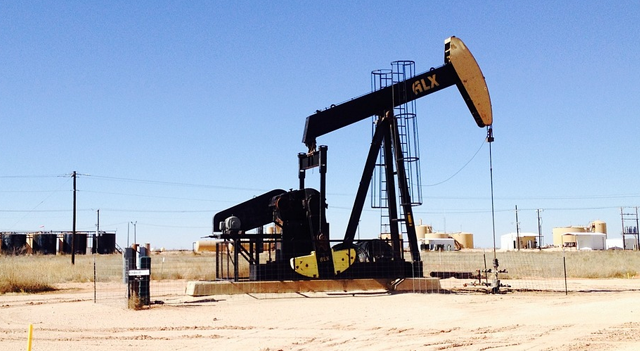
    Oil prices were broadly steady on Monday, consolidating recent advances as investors balanced rising geopolitical tensions with ongoing concerns over a potential supply surplus, while awaiting guidance from the Federal Reserve later in the week.

    At 22:18 ET (03:18 GMT), Brent crude futures for March delivery dipped 0.1% to $65.84 a barrel, while U.S. West Texas Intermediate crude also edged 0.1% lower to $61.03 a barrel.

    Both contracts posted gains of more than 2% on Friday, driven by a sharp increase in geopolitical risk premiums.

    Geopolitical backdrop supports prices

    Markets remained sensitive after the United States signaled a more assertive military posture. President Donald Trump said an “armada” of U.S. naval assets — including an aircraft carrier strike group — was heading toward the Middle East amid escalating tensions with Iran. Any flare-up involving Tehran has heightened concerns about potential disruptions to oil flows from a key producing region.

    Crude markets have also been influenced by Trump’s recent geopolitical maneuvering around Greenland, which has added to volatility across broader financial markets.

    On the supply side, some of the downward pressure eased after Kazakhstan’s main export route returned to full capacity. The Caspian Pipeline Consortium confirmed that operations at its Black Sea terminal had resumed normally following repairs to a mooring point, allowing exports to continue at standard levels.

    Oversupply risks linger as Fed meeting approaches

    Despite near-term support from geopolitical risks, investors remain cautious about the medium-term balance between supply and demand. Concerns persist that oil markets could face a surplus later in the year if output growth outpaces consumption, particularly with non-OPEC production holding up well.

    Attention now turns to the Federal Reserve’s policy meeting scheduled for this week, with markets largely expecting U.S. interest rates to remain unchanged. Traders will closely analyze the Fed’s guidance for clues on the timing of potential rate cuts later in the year, as interest rate expectations can influence oil demand through their impact on economic activity and the U.S. dollar.