Blog

  • Gold Prices Weaken as Trump Declares Iran Peace Framework Has Ended

    Gold Prices Weaken as Trump Declares Iran Peace Framework Has Ended

    Gold prices declined on Wednesday after U.S. President Donald Trump said the interim peace framework between the United States and Iran had effectively come to an end, prompting a rally in oil prices and renewing concerns over global inflation.

    By 09:36 GMT, spot gold had fallen 1.2% to $4,057.09 an ounce, while gold futures were down 2.2% at $4,066.56 an ounce.

    Geopolitical Tensions Pressure Bullion

    Speaking during the NATO summit in Turkey, Trump questioned Iran’s commitment to the agreement and suggested diplomatic efforts had failed.

    “We make a deal, and everyone’s agreed. No nuclear weapons. We make a deal. They go outside, talk to the press, they say we never even talked about it. There’s something wrong with them. They’re cuckoo. As far as I’m concerned, it’s over,” Trump said.

    Earlier in the day, Iran said it had launched attacks on U.S. military facilities in Kuwait and Bahrain in response to American military operations inside Iran and Washington’s decision to withdraw a sanctions waiver on Iranian oil exports.

    Iran’s Islamic Revolutionary Guard Corps said it had struck 85 U.S. military targets and shot down an MQ-9 drone. Meanwhile, the Pentagon said U.S. forces had carried out strikes against more than 80 targets in Iran and over 60 IRGC vessels following attacks on commercial shipping in the Strait of Hormuz.

    Although Iran has not claimed responsibility for Tuesday’s attacks on commercial vessels near Oman, the renewed conflict has unsettled financial markets.

    Inflation Outlook Takes Centre Stage

    The rebound in crude oil prices has revived concerns that higher energy costs could feed into inflation, potentially influencing future monetary policy decisions.

    According to Britannia Global Markets, expectations of another Federal Reserve rate increase had eased following weaker U.S. employment data last week but have strengthened again as geopolitical tensions intensified.

    Higher interest rates generally reduce demand for non-yielding assets such as gold, while a stronger U.S. dollar can also limit buying interest by making bullion more expensive internationally.

    Investors Await Fed Minutes

    Market participants are now focused on the publication of the Federal Reserve’s June meeting minutes.

    Although policymakers left interest rates unchanged at 3.5% to 3.75%, several members projected that additional rate increases may be appropriate during 2026.

  • Oil Prices Rally as Trump Declares Iran Truce Framework Has Ended

    Oil Prices Rally as Trump Declares Iran Truce Framework Has Ended

    Crude oil prices surged on Wednesday after U.S. President Donald Trump said the interim agreement between the United States and Iran was effectively finished, reigniting concerns over energy supplies from the Middle East.

    By 08:46 GMT, Brent crude had climbed 5.5% to $78.24 a barrel, while U.S. West Texas Intermediate (WTI) gained 2.9% to $72.49 a barrel.

    Fresh Middle East Tensions Lift Crude

    During the NATO summit in Turkey, Trump accused Iran of failing to honour the agreement and suggested diplomatic efforts had reached an end.

    “We make a deal, and everyone’s agreed. No nuclear weapons. We make a deal. They go outside, talk to the press, they say we never even talked about it. There’s something wrong with them. They’re cuckoo. As far as I’m concerned, it’s over,” Trump said.

    Earlier in the day, Iranian officials said military strikes had been carried out against U.S. facilities in Kuwait and Bahrain in response to recent American operations inside Iran and Washington’s withdrawal of a sanctions waiver covering Iranian oil exports.

    Iran’s Islamic Revolutionary Guard Corps claimed it had targeted 85 U.S. military sites and downed an MQ-9 drone. Meanwhile, the Pentagon said American forces had struck more than 80 locations inside Iran and over 60 IRGC vessels after attacks on commercial shipping in the Strait of Hormuz.

    Washington also withdrew an important exemption that had allowed Iran to continue selling oil on international markets, increasing expectations of tighter crude supplies.

    Strait of Hormuz Back in the Spotlight

    Oil markets had stabilised in June after the United States and Iran agreed to a temporary peace framework that helped restore shipping through the Strait of Hormuz, a route responsible for around 20% of global oil and LNG trade.

    The latest military escalation has cast doubt over the future of that agreement and raised fresh uncertainty about any long-term diplomatic settlement.

    “A return to full-scale U.S.-Iran conflict appears unlikely given growing U.S. political pressure to keep oil prices contained ahead of the November midterm elections. However, there is still no clear path to fully securing the Strait of Hormuz,” OCBC analysts wrote in a note.

    Supply Data Remains in Focus

    Although geopolitical developments dominated trading, investors also continued to assess the impact of OPEC+’s latest decision to increase production.

    Attention is also turning to official U.S. oil inventory figures due later in the day after recent disruptions linked to the conflict.

    The American Petroleum Institute reported that U.S. crude inventories declined by 399,000 barrels last week, a smaller draw than expected.

  • Wall Street Futures Retreat as Iran Tensions Escalate and Trump Dismisses Peace Agreement: Dow Jones, S&P, Nasdaq

    Wall Street Futures Retreat as Iran Tensions Escalate and Trump Dismisses Peace Agreement: Dow Jones, S&P, Nasdaq

    U.S. equity futures traded sharply lower on Wednesday after President Donald Trump declared the interim peace framework with Iran was no longer in effect, adding to mounting geopolitical concerns that were already weighing on investor sentiment.

    By 09:03 GMT, Dow Jones futures had dropped 680 points, or 1.3%, while S&P 500 futures were down 71 points, or 0.9%. Nasdaq 100 futures also fell 381 points, or 1.3%.

    Trump Says Ceasefire Arrangement Has Ended

    Speaking during the NATO summit in Turkey, Trump said the temporary agreement with Iran had effectively collapsed, accusing Tehran of failing to honour the deal.

    “We make a deal, and everyone’s agreed. No nuclear weapons. We make a deal. They go outside, talk to the press, they say we never even talked about it. There’s something wrong with them. They’re cuckoo. As far as I’m concerned, it’s over,” Trump said.

    The comments followed reports that Iranian forces had launched attacks against U.S. military facilities in Kuwait and Bahrain in response to American military operations and Washington’s decision to revoke a sanctions waiver on Iranian oil exports.

    Investors Monitor Oil and Federal Reserve Signals

    Crude oil prices rose sharply as renewed conflict in the Middle East increased concerns over global energy supplies, fuelling expectations that higher fuel costs could add to inflationary pressures.

    Attention is now turning to the release of the Federal Reserve’s June meeting minutes, with investors looking for clues on how policymakers are assessing inflation risks, economic resilience and the outlook for interest rates under Fed Chair Kevin Warsh.

    Earnings Season Draws Closer

    U.S. markets closed lower on Tuesday, led by weakness in technology shares after Samsung Electronics (USOTC:SSNHZ) released earnings that, despite beating expectations, failed to reassure investors about demand for AI-related products and memory chips.

    The S&P 500 lost 0.5%, the Nasdaq Composite fell 1.2%, and the Dow Jones Industrial Average declined 0.3%.

    Investors are also preparing for the start of the second-quarter earnings season, which begins later this week.

  • European Stocks Tumble as Trump Signals U.S.-Iran Agreement Has Collapsed: DAX, CAC, FTSE100

    European Stocks Tumble as Trump Signals U.S.-Iran Agreement Has Collapsed: DAX, CAC, FTSE100

    European equity markets fell sharply on Wednesday afternoon after U.S. President Donald Trump said the framework agreement that had supported a ceasefire with Iran was effectively finished, triggering a broad risk-off move across global markets.

    The pan-European STOXX 600 index, which had been down around 0.4% earlier in the session, extended its losses to 1.7% as investor confidence deteriorated. The comments weakened expectations of a diplomatic resolution to the conflict and prompted a widespread sell-off across European equities.

    Trump Says Ceasefire Framework Is “Over”

    Speaking during the NATO summit in Ankara, President Trump dismissed the future of the Islamabad Memorandum of Understanding (MoU), the agreement that had underpinned a fragile 60-day ceasefire introduced in June.

    “We make a deal, and everyone’s agreed. No nuclear weapons. We make a deal. They go outside, talk to the press, they say we never even talked about it. There’s something wrong with them. They’re cuckoo. As far as I’m concerned, it’s over,” Trump said.

    The apparent collapse of the agreement has renewed concerns that shipping through the Strait of Hormuz could once again face significant disruption, increasing uncertainty for global energy markets and international trade.

    Germany’s DAX declined 2.4%, France’s CAC 40 fell 2.2%, while London’s FTSE 100 and Italy’s FTSE MIB both dropped more than 1.5%.

    Oil Prices Jump as Geopolitical Risks Return

    Energy markets reacted strongly to the latest developments, with Brent crude futures climbing 5.4% after already posting gains earlier in the trading session.

    The renewed tensions have prompted traders to factor a greater risk of supply disruptions into oil prices, reversing recent expectations that geopolitical pressures on global energy supplies were easing.

    Markets Await Federal Reserve Minutes

    Investor attention is also focused on the release of the U.S. Federal Reserve’s June meeting minutes later in the day.

    The minutes will provide the first detailed insight into policy discussions under the central bank’s new chairman, Kevin Warsh. Markets are closely watching for indications of how the Federal Reserve intends to communicate its monetary policy following Warsh’s comments favouring a less guidance-driven approach.

    With several policymakers having recently indicated they remain open to further interest rate increases if inflation remains elevated, any unexpectedly hawkish tone in the minutes could influence expectations for global monetary policy.

    Among individual stocks, energy producers benefited from the surge in oil prices, with Shell (LSE:SHEL) rising 1.6% and BP (LSE:BP.) gaining 2.3%.

  • Europe Gas Prices Jump as Hormuz Tensions Raise LNG Supply Concerns

    Europe Gas Prices Jump as Hormuz Tensions Raise LNG Supply Concerns

    European wholesale natural gas prices climbed sharply on Wednesday as renewed military tensions between the United States and Iran heightened concerns over the security of global liquefied natural gas (LNG) shipping routes.

    Although Europe entered the summer gas storage season with comparatively healthy inventory levels, the growing risk of prolonged disruption to shipping through the Middle East has prompted traders to reprice supply risks, adding a significant geopolitical premium to the market.

    Dutch and UK Gas Benchmarks Rally

    The Dutch TTF benchmark gas contract rose 3% to 47.9 euros per megawatt-hour (MWh), while the front-month UK natural gas contract climbed 5.4% to 116.59 pence per therm.

    The latest gains followed a sharp escalation in the Persian Gulf after reports that Iranian forces targeted commercial vessels passing through the Strait of Hormuz. In response, the United States launched additional military strikes against Iran and withdrew key oil export concessions.

    LNG Supply Risks Back in Focus

    The Strait of Hormuz is responsible for transporting around 20% of global seaborne LNG supplies and serves as the main export route for major producers including Qatar and the United Arab Emirates. Any disruption to shipping through the waterway could significantly reduce spot LNG availability at a time when European and Asian buyers are competing for cargoes.

    Higher gas prices could also have wider economic implications. Natural gas remains a key fuel for electricity generation and an essential feedstock for nitrogen fertiliser production across Europe. A sustained increase in wholesale gas prices therefore has the potential to feed into broader eurozone inflation, adding further challenges for policymakers.

  • FTSE 100 Falls as Trump Declares Iran Ceasefire Over and Oil Prices Jump

    FTSE 100 Falls as Trump Declares Iran Ceasefire Over and Oil Prices Jump

    UK equities moved sharply lower on Wednesday after U.S. President Donald Trump declared the ceasefire with Iran “over,” escalating geopolitical tensions and triggering a broad sell-off across European markets while sending oil prices sharply higher.

    The FTSE 100 fell 1.61% by 09:14 GMT, with Germany’s DAX down 2.54% and France’s CAC 40 losing 2.23%. Sterling also reversed earlier gains to trade 0.22% lower against the U.S. dollar at $1.3324.

    Middle East Tensions Intensify

    Speaking on the sidelines of the NATO summit in Ankara, Turkey, Trump described Iran’s leadership as “sick” and said dealing with the country was “a waste of time,” following overnight U.S. strikes on more than 80 Iranian targets.

    Regional tensions escalated further as Bahrain activated missile warning sirens for a third time on Wednesday after Iran and Kuwait exchanged fire. Iran’s Revolutionary Guard said it had targeted U.S. military facilities in both countries, claiming Washington had violated a ceasefire agreement, while Kuwait’s military said its air defence systems were “confronting hostile missile and drone attacks.”

    Iranian state media also reported explosions in the port city of Bushehr, home to the country’s only civilian nuclear power plant, although no casualties were reported.

    The latest developments followed accusations that Iran was responsible for attacks on three commercial vessels transiting the Strait of Hormuz.

    “U.S. Central Command forces have begun launching a series of powerful strikes against Iran to impose heavy costs,” CENTCOM said.

    The United States also revoked a sanctions waiver that had allowed Iran to export oil, prompting Iran’s foreign ministry to describe the move as a “clear violation” of last month’s memorandum.

    Parliament Speaker Mohammad Bagher Qalibaf said, “The era of bullying and extortion is over. It leads nowhere. We don’t fold.”

    Oil Extends Rally While Gold Retreats

    Oil prices surged as investors priced in increased supply risks. Brent crude climbed 6.27% to $78.78 a barrel, while West Texas Intermediate rose 6.42% to $74.99.

    ING analysts noted that the front end of the Brent futures curve had returned to backwardation, while American Petroleum Institute data showed U.S. crude inventories declined by 400,000 barrels last week, alongside larger-than-expected draws in gasoline and distillate stocks.

    Additional pressure on energy markets came from increased Ukrainian drone attacks on Russian refineries, tightening diesel supplies and lifting the ICE gasoil crack spread above $50 a barrel. European natural gas prices also strengthened, with TTF futures rising more than 4% to above €48/MWh as storage levels remained below seasonal averages.

    Gold prices moved lower as rising oil prices and shifting market sentiment dominated trading. Gold futures fell 2.27% to $4,063.70 an ounce, while spot gold declined 1.26% to $4,054.66.

    ING analysts noted that China’s central bank extended its gold-buying programme for a 20th consecutive month in June, providing longer-term support even as short-term price movements continue to reflect expectations for U.S. Federal Reserve policy ahead of this week’s FOMC minutes.

    UK Corporate Highlights

    Unite Group (LSE:UTG) said reservations for the 2026/27 academic year had reached 86% of available beds, supported by strong direct-let demand, while maintaining its full-year earnings guidance.

    Jet2 (LSE:JET2) reported that summer passenger bookings were 7.1% higher than a year earlier, with improving booking trends supported by easing geopolitical tensions.

    IG Group (LSE:IGG) announced plans to establish a Jersey-based holding company as part of a broader strategic review designed to enhance shareholder value.

    Ofcom fined Virgin Media £28 million after finding the company repeatedly made it difficult for customers to cancel contracts between 2022 and 2024.

    Severn Trent Water (LSE:SVT) was found by Ofwat to have breached wastewater obligations, although the regulator opted not to impose a financial penalty after considering the company’s remedial actions.

    Vistry (LSE:VTY) said it expects to report a first-half pre-tax loss of around £30 million and confirmed that Chief Financial Officer Tim Lawlor will step down.

  • SEGRO Secures £53m of New Rental Income in First Half as Development Pipeline Reaches Record Level (SGRO)

    SEGRO Secures £53m of New Rental Income in First Half as Development Pipeline Reaches Record Level (SGRO)

    SEGRO plc (LSE:SGRO) released its trading update for the first six months of 2026 on Wednesday, reporting £53 million of new headline rent contracted during the period.

    Leasing Activity and Developments Drive Rental Growth

    The industrial property specialist generated £27 million of new headline rent from its existing portfolio through leasing vacant space and capturing rental reversions. A further £26 million came from development lettings, including £24 million from new pre-let agreements signed during the first half.

    The company also continued to benefit from strong rental growth across its portfolio. Rent reviews, renewals and regears delivered a 44% uplift in the UK, while the group-wide increase was 32%. In Continental Europe, rental uplifts averaged 4%.

    Occupancy at the end of the period stood at 94.5%, slightly below the level reported at the end of 2025, reflecting the completion of speculative developments within SEGRO’s urban logistics portfolio in Germany.

    Development Pipeline and Capital Allocation

    SEGRO said it now has a record pipeline of developments either under construction or in advanced negotiations, representing potential annual rental income of £90 million. Around 75% of this pipeline is supported by pre-let agreements.

    The company narrowed its 2026 capital expenditure guidance to between £500 million and £550 million, towards the upper end of its previous forecast range.

    During the first half, SEGRO completed £213 million of property disposals at prices above book value, representing £10 million of associated rental income. It has also exchanged contracts on a further £95 million of disposals that are expected to complete before the end of 2026.

    Balance Sheet and Data Centre Expansion

    The EPRA cost ratio, excluding share-based payments, improved to below 18%, compared with 19.8% at the end of 2025.

    Pro forma adjusted net asset value stood at 905 pence per share, marginally lower than at 31 December 2025 due to revised yield assumptions applied by the company’s new UK property valuer for selected urban assets.

    SEGRO also continued to expand its data centre strategy, adding 0.5GVA to its strategic power bank, signing a second fully fitted joint venture with Pure DC and progressing discussions on its first fully fitted data centre lease at Park Royal in London.

    The company is scheduled to publish its half-year 2026 results on 30 July.

  • Senior Raises Full-Year Outlook as Aerospace and Flexonics Deliver Strong Momentum (SNR)

    Senior Raises Full-Year Outlook as Aerospace and Flexonics Deliver Strong Momentum (SNR)

    Senior Plc (LSE:SNR) said on Wednesday that it now expects full-year trading to exceed the board’s expectations outlined in its April 2026 trading update, following continued strong performance during the first half of the year.

    Strong Performance Across Key Divisions

    In a post-close trading update covering the six months ended 30 June, the engineering group said it has “continued to see positive momentum” since releasing its April trading update. Senior attributed the improved outlook to the ongoing strength of its Aerospace and Flexonics businesses, which have continued to perform well.

    The company noted that it assesses its financial performance on an adjusted basis, excluding items that it believes do not reflect the underlying trading performance of the business during the reporting period.

    Foreign Exchange Assumptions Remain Unchanged

    Senior also confirmed that its primary foreign exchange exposure remains the U.S. dollar. For the 2026 financial year, the company continues to use a planning assumption of US$1.35 to the pound sterling for the exchange rate.

    Half-Year Results Due in August

    The group is scheduled to publish its results for the six months ended 30 June on Monday, 3 August.

  • Market Open: Jet2 Share Buyback, Vistry Strategic Reset

    Market Open: Jet2 Share Buyback, Vistry Strategic Reset

    FTSE 100 edges higher while European markets fall. Jet2 reports record passenger growth, Vistry resets strategy and Brent crude rises.

    Market Overview

    The FTSE 100 opened marginally higher, while broader European markets weakened as the Euronext 100 slipped and Germany’s DAX fell more than one per cent. Overnight, US markets also closed lower, with the Nasdaq and S&P 500 both retreating as investors reacted to escalating tensions in the Gulf, monitored Federal Reserve policy expectations and assessed the impact of heightened geopolitical uncertainty on global risk sentiment.

    Commodity markets reflected the increase in geopolitical risk, with Brent crude rising sharply while copper, gold and natural gas also moved higher. Bitcoin edged lower against sterling. Sterling strengthened slightly against the US dollar but weakened modestly against the Swiss franc, euro, Japanese yen and Australian dollar as investors sought traditional safe-haven assets amid concerns over energy supplies and shipping through the Strait of Hormuz.


    Market Numbers

    FTSE 100: Up (0.001%), 10,666.09

    Euronext 100: Down (-0.03%), 1,912.02

    DAX: Down (-1.14%), 25,174.68

    NASDAQ: Down, 25,818.69

    S&P 500: Down, 7,503.85


    In the Headlines

    Passenger growth – Jet2 (LSE:JET2)

    Jet2 reported record passenger growth, launched a £250 million share buyback programme and expanded its presence at London Gatwick. The update highlights continued demand for leisure travel while reinforcing confidence in shareholder returns and long-term expansion plans.

    Strategic reset – Vistry (LSE:VTY)

    Vistry said first-half earnings will be affected as it prioritises cash generation through discounted sales, lower-risk developments and tighter capital allocation. The measures are intended to strengthen the balance sheet and support longer-term profitability despite near-term earnings pressure.


    Currencies (vs GBP)

    USD: Up (0.02%), $1.3347

    CHF: Down (-0.01%), Fr.1.0798

    EUR: Down (-0.01%), €1.1706

    JPY: Down (-0.02%), ¥216.7045

    AUD: Down (-0.01%), $1.9281

    Bitcoin (BTC/GBP): Down, £47,017.91


    Commodities

    Copper: Up

    Gold: Up

    Brent Crude: Up

    Natural Gas: Up

  • Tungsten West Set to Begin Phased Commissioning at Hemerdon Mine This Month (TUN)

    Tungsten West Set to Begin Phased Commissioning at Hemerdon Mine This Month (TUN)

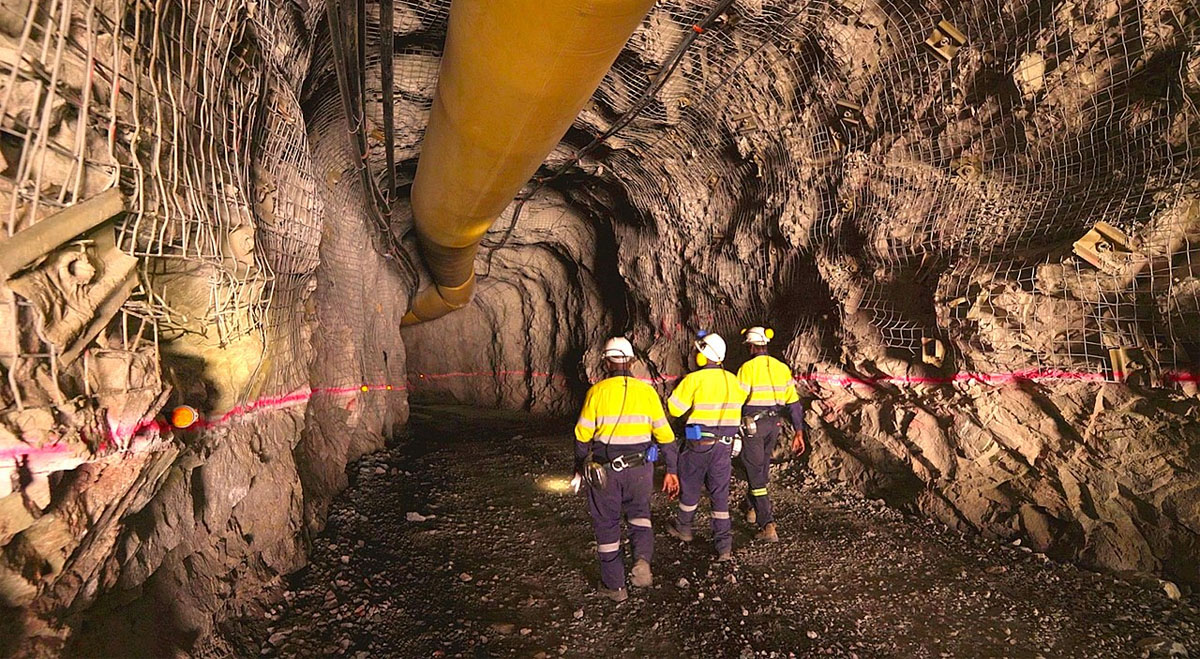
    Tungsten West (LSE:TUN) has confirmed that phased commissioning of the Hemerdon tungsten and tin mine will begin later this month, keeping the project on schedule in line with previously announced plans. Ahead of the production restart, the company has launched an expanded engagement programme with local communities and regulators to provide updates on the timing, scope and phased approach to the commissioning process.

    The recommissioning programme will start with the fines gravity circuit and downstream processing facilities during the third quarter of 2026, followed by the coarse gravity circuit in the fourth quarter. Full project commissioning remains targeted for the first quarter of 2027, with management expecting the redevelopment to be completed within budget. As preparations continue, Tungsten West has recruited more than 100 employees and expects its workforce to grow to around 350 people by early 2027, highlighting the project’s increasing operational readiness and contribution to the local economy.

    Despite continued operational progress, Tungsten West’s investment outlook remains constrained by ongoing losses, negative cash flow, increased debt and negative shareholders’ equity reported for the 2025 financial year. While recent share price momentum has been encouraging, the company’s valuation continues to reflect its loss-making position, with a negative price-to-earnings ratio and no dividend support.

    More about Tungsten West Plc

    Tungsten West Plc is a UK mining company focused on restarting production at the Hemerdon tungsten and tin mine in Devon. The project is intended to re-establish one of the world’s largest tungsten resources as a significant domestic supplier of strategically important metals. Alongside the mine’s redevelopment, the company is committed to working closely with local communities and building a predominantly local workforce to support long-term operations.