Blog

  • Dollar strengthens on Trump’s new tariff moves; sterling pressured by sluggish growth figures

    Dollar strengthens on Trump’s new tariff moves; sterling pressured by sluggish growth figures

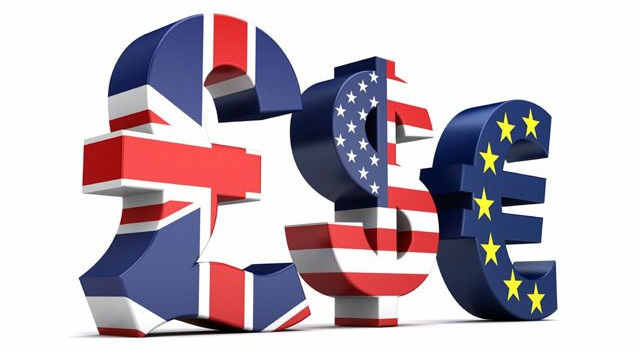
    The U.S. dollar nudged higher on Friday following President Donald Trump’s recent tariff announcements, which boosted demand for the greenback as a safe-haven asset. Meanwhile, the British pound came under pressure after disappointing growth data.

    By 04:55 ET (08:55 GMT), the Dollar Index, measuring the dollar against a basket of six major currencies, climbed 0.2% to 97.500, positioning itself for a weekly gain close to 0.6%.

    Safe-haven demand lifts the dollar

    On Thursday evening, Trump declared a 35% tariff on all Canadian imports effective August 1, along with plans to impose broad tariffs ranging from 15% to 20% on several other trading partners. This followed earlier correspondence from the president outlining revised tariff rates for multiple countries.

    Although the dollar has strengthened this week, market reaction to these latest tariffs has been relatively subdued compared to the dramatic moves seen after April’s so-called “Liberation Day,” yet investors remain cautious.

    The USD/CAD pair rebounded 0.3% to 1.3699 after an initial sharp drop of over 0.5% overnight.

    Beyond trade policy uncertainties, the dollar remains sensitive to U.S. economic data, as traders focus on clues about the Federal Reserve’s potential interest rate cuts.

    Analysts at ING noted, “The fifth consecutive decline in initial jobless claims yesterday supports the view that a severe weakening in the labor market is unlikely to trigger an immediate Fed rate cut as early as September. This increases the importance of upcoming inflation data due Tuesday.”

    Sterling falters on weaker GDP figures

    In Europe, the euro slipped 0.2% to 1.1685 against the dollar, set for a weekly loss near 0.8%.

    Trump’s tariff announcement on Canadian goods has sparked speculation about whether the European Union might be next to receive a formal tariff notice, casting doubt over ongoing trade negotiations with Washington.

    Economic data showed consumer price inflation in France edged up to 0.9% in June, slightly exceeding preliminary estimates of 0.8%. Conversely, German inflation cooled to 2.0% in June, indicating that the European Central Bank may have scope to ease monetary policy further—likely in September—to support economic growth.

    As ING analysts observed, “EUR/USD briefly dipped to 1.1670 yesterday. While short-term risks appear balanced, with a slight tilt to the downside, the absence of fresh data suggests the pair could hover around 1.170 for now.”

    The British pound fell 0.3% to 1.3532 versus the dollar, on track for a weekly decline near 1%, after data revealed the UK economy unexpectedly contracted for the second consecutive month in May.

    Figures released by the Office for National Statistics on Friday showed UK GDP declined 0.1% month-on-month in May, following a sharper 0.3% drop in April—the largest since October 2023.

    ING analysts commented, “The upcoming jobs report next Thursday will provide further insights. Should conditions remain weak, it would heighten pressure on the Bank of England to accelerate interest rate cuts.”

    Yen faces steep weekly losses

    Elsewhere, USD/JPY rose 0.4% to 146.90, with the Japanese yen on course for a 1.7% weekly decline as markets digested a slew of tariff announcements and prepared for further trade-related developments.

    The USD/CNY pair edged down 0.1% to 7.1709, while AUD/USD inched up 0.1% to 0.6577, on track for a weekly gain following the Reserve Bank of Australia’s unexpected decision to keep interest rates steady this week.

    This content is for informational purposes only and does not constitute financial, investment, or other professional advice. It should not be considered a recommendation to buy or sell any securities or financial instruments. All investments involve risk, including the potential loss of principal. Past performance is not indicative of future results. You should conduct your own research and consult with a qualified financial advisor before making any investment decisions.

  • Dow Jones, S&P, Nasdaq, Canadian tariffs, Nvidia’s new milestone, and Bitcoin rally — what’s driving markets

    Dow Jones, S&P, Nasdaq, Canadian tariffs, Nvidia’s new milestone, and Bitcoin rally — what’s driving markets

    U.S. stock futures pulled back on Friday following President Donald Trump’s announcement of increased tariffs on Canadian goods, fueling fears that more trading partners could face higher duties and putting pressure on global commerce. Meanwhile, Nvidia (NASDAQ:NVDA) surpassed a market value of $4 trillion, and Bitcoin hit new record prices.

    Trump sets 35% tariff on Canada

    Late Thursday, President Trump intensified his trade dispute by declaring that a 35% tariff on all imports from Canada will take effect starting August 1. He also signaled plans to impose broad tariffs ranging from 15% to 20% on many other countries.

    Trump communicated the decision in a letter to Canadian Prime Minister Mark Carney, which he shared on social media. The tariff hike would exceed the current 25% rate but would still exempt goods covered by the US-Mexico-Canada Agreement. Energy and fertilizer imports would also maintain existing 10% tariffs.

    The president has expanded his trade actions recently, introducing new tariffs on several nations including key allies such as Japan and South Korea, as well as a 50% levy on copper imports.

    U.S. futures dip amid trade concerns

    Futures for major U.S. indexes retreated Friday from recent highs amid worries that Trump’s tariff moves could hamper economic growth worldwide. At 03:20 ET, S&P 500 futures fell 0.4%, Nasdaq 100 futures dropped 0.2%, and Dow futures declined 0.5%.

    Although Thursday saw record closes for the S&P 500 and Nasdaq Composite, markets are cautious heading into the weekend as investors weigh the potential fallout of a full tariff rollout on Canadian products starting August.

    Focus has also shifted toward the European Union, with officials hoping to finalize trade agreements before tariffs come into effect.

    Nvidia surpasses $4 trillion market cap

    On Thursday, Nvidia’s valuation crossed the $4 trillion mark for the first time, underscoring its dominance in the AI chip sector. The stock closed at $4.004 trillion, reflecting an 89% rise since hitting lows in April.

    This milestone highlights the soaring demand for AI technology, a key growth driver for Nvidia. CEO Jensen Huang told MSNBC’s Morning Joe, “We’ve reinvented computing like never before, transforming the industry over the past three decades — and especially in the last five years.”

    Bitcoin hits new highs

    Bitcoin surged past $118,000 on Friday, reaching fresh all-time highs fueled by strong institutional buying and supportive U.S. policies. At 03:20 ET, the cryptocurrency was up 5.6% to $117,670 after peaking at $118,320 earlier in the session.

    Investor appetite for bitcoin in treasury portfolios and ETFs continues to grow. U.S. spot bitcoin ETFs reported net inflows of $1.18 billion as of Thursday, marking six consecutive days of gains, with total trading volumes across 12 ETFs hitting $6.3 billion — the highest since late May.

    Earlier this year, the Trump administration endorsed a strategic Bitcoin reserve, reinforcing a positive regulatory environment. Further optimism came from a recent Chinese regulatory meeting advising local officials on stablecoins and digital currencies, signaling a possible easing of China’s digital asset stance.

    Oil prices rise on Russia sanction speculation

    Oil prices climbed Friday amid speculation of tighter sanctions on Russia, although gains were limited by concerns over tariffs and increased output from OPEC+.

    At 03:20 ET, Brent crude futures were up 0.4% at $68.94 per barrel, and U.S. West Texas Intermediate rose 0.6% to $66.96.

    Both benchmarks had fallen more than 2% on Thursday as investors weighed the impact of new tariffs on the global economy and oil demand. Still, sentiment improved after President Trump voiced frustration over the stalled peace talks between Russia and Ukraine, raising the likelihood of additional sanctions on the world’s third-largest oil producer.

    This content is for informational purposes only and does not constitute financial, investment, or other professional advice. It should not be considered a recommendation to buy or sell any securities or financial instruments. All investments involve risk, including the potential loss of principal. Past performance is not indicative of future results. You should conduct your own research and consult with a qualified financial advisor before making any investment decisions.
  • European markets dip as Trump expands trade conflict; UK economy shrinks in May

    European markets dip as Trump expands trade conflict; UK economy shrinks in May

    European shares declined on Friday following new tariff announcements by U.S. President Donald Trump targeting Canada, sparking concerns that the European Union could be next in line for increased trade restrictions.

    By 08:05 GMT, Germany’s DAX index fell 0.8%, France’s CAC 40 slipped 0.6%, and the U.K.’s FTSE 100 edged down 0.2%.

    Trump escalates trade tensions

    On Thursday evening, Trump unveiled a 35% tariff on Canadian imports effective August 1, alongside plans to impose broad tariffs ranging from 15% to 20% on various other trading partners.

    These moves have raised worries that the EU may soon receive similar tariff notices, putting trade negotiations between Washington and Brussels in jeopardy.

    EU Trade Commissioner Maros Sefcovic recently acknowledged progress toward a trade framework but warned no final agreement has been reached, and Trump’s patience may wear thin.

    UK economy contracts again in May

    On the economic front, French consumer inflation was revised up to 0.9% for June, slightly exceeding forecasts, while German inflation eased to 2.0%. These trends suggest the European Central Bank retains ample scope to ease monetary policy further, likely in September, to support growth.

    In June, the ECB cut borrowing costs for the eighth time in a year, lowering its key deposit rate by 25 basis points to 2.0%.

    Meanwhile, the Bank of England may also consider rate cuts soon after UK GDP unexpectedly shrank for a second consecutive month in May.

    Official data from the Office for National Statistics showed a 0.1% monthly decline in UK GDP for May, following a sharper 0.3% drop in April — the largest fall since October 2023.

    BP’s production outlook impresses investors

    In corporate news, BP (LSE:BP.) shares rose after the oil giant forecast higher-than-expected upstream production for Q2, despite pressures from lower gas and oil prices.

    Other corporate updates

    Swedish hotel operator Pandox (USOTC:PNDXF) reported a 2% year-on-year rise in second-quarter revenues, supported by recent acquisitions.

    UniCredit (BIT:UCG) reaffirmed its plans to pursue a takeover of Germany’s Commerzbank (TG:CBK), despite opposition from the German government. CEO Andrea Orcel told board members that the bank will continue its bid, highlighting a recent increase in its equity stake to over 9%.

    Oil prices edge up amid sanction worries

    Oil prices rose slightly Friday, supported by growing expectations of new sanctions on Russia, although gains were limited by tariff concerns and increased OPEC+ output.

    By 04:05 ET, Brent crude futures were up 0.2% at $68.80 per barrel, and West Texas Intermediate climbed 0.3% to $66.79 per barrel.

    Both contracts had fallen more than 2% the previous day as investors fretted about the economic fallout from Trump’s tariff escalation.

    Sentiment improved after Trump voiced frustration with Russian President Vladimir Putin over stalled Ukraine peace talks, signaling a possibility of harsher penalties against the oil-producing nation.

    This content is for informational purposes only and does not constitute financial, investment, or other professional advice. It should not be considered a recommendation to buy or sell any securities or financial instruments. All investments involve risk, including the potential loss of principal. Past performance is not indicative of future results. You should conduct your own research and consult with a qualified financial advisor before making any investment decisions.
  • FTSE 100 dips as pound falls below $1.36; UK GDP data disappoints

    FTSE 100 dips as pound falls below $1.36; UK GDP data disappoints

    UK equities opened lower on Friday following the release of May’s economic data showing the British economy contracted for the second month running. This adds to pressure on the Bank of England to potentially ease monetary policy.

    At 07:45 GMT, the FTSE 100 index slipped 0.07%, while the British pound weakened 0.1% against the US dollar, trading near 1.35. Across Europe, Germany’s DAX fell 0.6% and France’s CAC 40 declined 0.4%.

    UK GDP falls short of expectations

    The Office for National Statistics reported that UK GDP decreased by 0.1% in May, following a 0.3% drop in April—the largest since October 2023. This result was below economists’ forecast of 0.1% growth. Industrial output dropped 0.9%, and manufacturing production fell by 1.0% during the month.

    UK Finance Minister Rachel Reeves called the figures “disappointing” but affirmed her commitment to reigniting economic growth.

    BP forecasts increased Q2 oil and gas production, expects net debt reduction

    BP (LSE:BP.) provided a trading update, anticipating that upstream production in Q2 will surpass Q1 levels, thanks to higher output from its US onshore operations at BPX Energy and growth in gas and low-carbon segments. The company also expects net debt to slightly decrease by the end of the quarter compared to earlier months.

    Warehouse REIT favors enhanced Blackstone bid over Tritax offer

    In corporate developments, Warehouse REIT’s (LSE:WHR) board has recommended an improved cash takeover bid from US private equity firm Blackstone (NYSE:BX), turning down a competing offer from Tritax Big Box (LSE:BBOX).

    Flutter to buy Boyd Gaming’s 5% stake in FanDuel

    Flutter Entertainment (LSE:FLTR) announced plans to purchase Boyd Gaming’s (NYSE:BYD) 5% share in FanDuel for roughly $1.76 billion, gaining full control over the online betting platform.

    Heathrow aims to increase annual passenger capacity by 10 million by 2031

    Heathrow Airport revealed plans to expand capacity by 10 million passengers per year by 2031, contingent on regulatory approval for higher fees and modifications to existing terminals.

    Unilever divests Venezuelan ice cream business

    Unilever (LSE:ULVR) has sold its Venezuelan ice cream operations, including the Tio Rico brand, to Mack de Venezuela, a local truck company representing Mack, Volvo, and Dongfeng brands. Separately, Unilever’s Magnum spin-off has appointed Jochanan Senf as the new CEO of Ben & Jerry’s, effective mid-July.

    This content is for informational purposes only and does not constitute financial, investment, or other professional advice. It should not be considered a recommendation to buy or sell any securities or financial instruments. All investments involve risk, including the potential loss of principal. Past performance is not indicative of future results. You should conduct your own research and consult with a qualified financial advisor before making any investment decisions.
  • BP Forecasts Boost in Production and Strong Trading Despite Pressure from Lower Energy Prices

    BP Forecasts Boost in Production and Strong Trading Despite Pressure from Lower Energy Prices

    BP (LSE:BP.) signaled on Friday that second-quarter oil production will rise alongside a solid trading performance, though earnings may be constrained by softer price realizations in upstream segments. Shares increased 2.2% as of 07:48 GMT.

    The company expects upstream output to surpass first-quarter levels, with notable growth in oil production, particularly driven by BPX Energy’s operations. Gas and low carbon energy output also edged higher.

    Price realizations in gas and low carbon energy declined slightly by $0.1 billion to $0.3 billion, influenced by fluctuations in non-Henry Hub natural gas prices. In the oil production segment, a larger decrease of $0.6 billion to $0.8 billion was seen, attributed to changes in production mix and regional pricing in the United States and United Arab Emirates.

    BP’s customers and products segment anticipates stronger results due to seasonally increased volumes and improved margins on fuels. The refining margin averaged $21.10 per barrel in Q2, up from $15.20 in the previous quarter, supported by less turnaround downtime. Oil trading activity remained robust.

    During the quarter, Brent crude prices averaged $67.88 per barrel, down from $75.73 in Q1, while Henry Hub gas prices slipped to $3.44 per mmBtu from $3.71. The one-month lagged WTI CMA and WCS crude differential narrowed to $10.01 per barrel from $11.97.

    BP projects a slight reduction in net debt by the end of the quarter. Charges related to other businesses and corporate expenses are expected to be consistent with earlier quarters.

    The company anticipates post-tax adjusting items ranging from $0.5 billion to $1.5 billion this quarter, which will be excluded from its underlying replacement cost profit.

    BP maintains its full-year guidance with capital expenditures at around $14.5 billion and an effective underlying tax rate near 40%. Divestment proceeds are expected between $3 billion and $4 billion, mainly in the second half of 2025.

    Payments associated with the Gulf of Mexico oil spill are forecasted at $1.2 billion pre-tax for the year, with $1.1 billion expected in Q2.

    This content is for informational purposes only and does not constitute financial, investment, or other professional advice. It should not be considered a recommendation to buy or sell any securities or financial instruments. All investments involve risk, including the potential loss of principal. Past performance is not indicative of future results. You should conduct your own research and consult with a qualified financial advisor before making any investment decisions.

  • Jefferies: Greggs’ pricing edge slightly narrows versus rivals

    Jefferies: Greggs’ pricing edge slightly narrows versus rivals

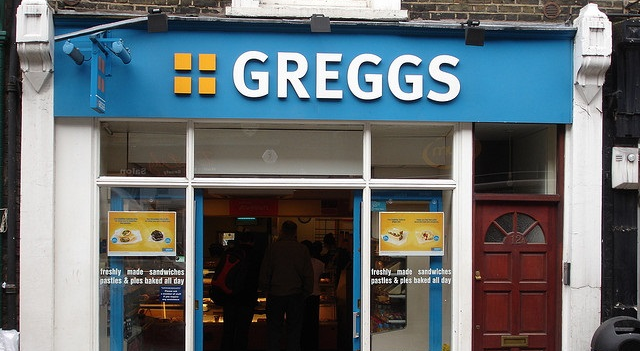
    Following Greggs’ (LSE:GRG) recent profit warning, Jefferies released an updated analysis showing a slight weakening in the bakery chain’s pricing position compared to some competitors. According to their latest Sandwich Price Tracker, Greggs’ sandwich prices have risen by 6% over the past year. This growth aligns closely with Sainsbury’s (LSE:SBRY) 5% increase and Boots’ 7.5%, while outpacing Tesco (LSE:TSCO) and Pret, both of which maintained stable prices, and M&S (LSE:MKS), which saw a modest 1% rise.

    Looking at a two-year span, Greggs’ prices climbed 10%, similar to Boots’ 12% and Sainsbury’s 9%, yet still higher than Tesco’s 5%, M&S’s 3%, and Pret’s 1%. Jefferies notes these figures reflect Greggs’ own reported price hikes: 4-5% early in the year followed by a further 1-2% increase in May.

    Despite this slight softening in pricing advantage, Greggs remains notably more affordable than key competitors like Boots, M&S, and Pret. Jefferies suggests the recent profit warning mainly reflects short-term weather disruptions rather than a fundamental shift in the brand’s appeal. In fact, Greggs’ like-for-like sales for March through May exceeded expectations with roughly 4% growth.

    The research house views the current market dip as a buying opportunity. They emphasize Greggs’ strong value proposition, solid brand loyalty, steady market share gains, healthy margins, and promising store expansion plans with projected cash returns above 30%. Additionally, Greggs’ current market valuation hovers near a decade-long low, potentially enhancing its investment appeal.

    This content is for informational purposes only and does not constitute financial, investment, or other professional advice. It should not be considered a recommendation to buy or sell any securities or financial instruments. All investments involve risk, including the potential loss of principal. Past performance is not indicative of future results. You should conduct your own research and consult with a qualified financial advisor before making any investment decisions.

  • Bitcoin Smashes Past $118K as ETF Demand Soars and Regulatory Optimism Grows

    Bitcoin Smashes Past $118K as ETF Demand Soars and Regulatory Optimism Grows

    Bitcoin (COIN:BTCUSD) continued its upward momentum on Friday, breaching a new all-time high above $118,000, buoyed by accelerating inflows into spot exchange-traded funds (ETFs) and a surge in institutional demand. The world’s leading cryptocurrency climbed 6.1% to $118,310.80 as of 05:54 GMT, marking its third straight week of gains.

    Record ETF Inflows Reflect Soaring Institutional Interest

    Market enthusiasm was evident in both price action and volume. Spot trading and on-chain activity spiked sharply, with data from SoSoValue showing $1.18 billion in net inflows into U.S.-listed spot Bitcoin ETFs as of Thursday—extending a six-day streak of strong inflows.

    BlackRock’s iShares Bitcoin Trust (IBIT) led the surge, drawing $448.5 million. Fidelity’s FBTC and Bitwise’s BITB also posted notable gains. Overall, daily trading volume across the twelve U.S.-listed Bitcoin ETFs reached $6.3 billion, the highest since late May.

    Pro-Crypto Policy Signals and Trump’s ETF Ambitions Stir Market Optimism

    The bullish momentum is also underpinned by increasing institutional integration of Bitcoin into corporate treasuries and ETF portfolios, reflecting confidence in long-term crypto adoption.

    Supportive signals from Washington added fuel to the rally. The Trump administration’s endorsement of a federal Bitcoin reserve earlier this year has set a more welcoming tone for the digital asset sector.

    Adding to the momentum, Trump Media & Technology Group (NASDAQ:DJT)—linked to former President Donald Trump—recently filed to launch a “Crypto Blue Chip ETF”, marking its third such filing this month.

    Investors are also eyeing “Crypto Week” starting July 14, when U.S. lawmakers are expected to advance key legislation targeting the digital asset space, including potential reforms on crypto taxation and compliance standards.

    Altcoins Ride the Bitcoin Wave: Cardano Leads Gains

    Bitcoin’s record-setting move reverberated across the broader crypto market, with major altcoins posting double-digit gains.

    • Ethereum (ETH) soared 8.5% to $3,019.06
    • XRP added 7.5%, reaching $2.60
    • Solana (SOL) gained 6%
    • Cardano (ADA) outperformed, jumping 13%
    • Polygon (MATIC) climbed 9%

    Even meme coins joined the rally—Dogecoin (DOGE) surged 12%, while the politically-themed $TRUMP token rose 11%.

    With momentum building and key legislation on the horizon, markets appear poised for further volatility and potential upside in the weeks ahead.

    This content is for informational purposes only and does not constitute financial, investment, or other professional advice. It should not be considered a recommendation to buy or sell any securities or financial instruments. All investments involve risk, including the potential loss of principal. Past performance is not indicative of future results. You should conduct your own research and consult with a qualified financial advisor before making any investment decisions.
  • Oil Prices Stabilize After Sharp Decline as Markets Weigh Tariffs and OPEC+ Strategy

    Oil Prices Stabilize After Sharp Decline as Markets Weigh Tariffs and OPEC+ Strategy

    Oil prices rebounded modestly in Asian trading on Friday, following a steep sell-off the previous day. The recovery came as investors reassessed the impact of newly announced U.S. trade tariffs and focused on upcoming OPEC+ supply decisions.

    By 01:47 GMT (21:47 ET), September Brent crude futures were up 0.5% at $69.01 per barrel, while West Texas Intermediate (WTI) crude rose 0.7% to $67.00 per barrel. Both benchmarks had dropped nearly 2% on Thursday, retreating from two-week highs earlier in the week.

    Trump’s Expanding Tariff Agenda Raises Demand Concerns

    President Donald Trump intensified his trade stance on Thursday, unveiling a 35% tariff on Canadian imports starting August 1. He warned that rates could increase if Canada retaliates. This move adds to a string of recent duties—25% on imports from Japan and South Korea and a 50% tariff on copper—all effective the same day.

    These aggressive trade measures have raised fears of a broader slowdown in global economic activity, which could weigh on oil consumption. Tariffs typically dampen industrial production and travel—two key sources of energy demand. Analysts at ING cautioned that tariffs present a notable downside risk for oil markets.

    OPEC+ Policy in the Spotlight as Output Nears Completion

    Meanwhile, supply-side developments also held traders’ attention. According to Bloomberg, OPEC and its allies (OPEC+) are considering halting further production increases after implementing their final scheduled output hike next month.

    The group is currently in the final phase of restoring 2.2 million barrels per day to the market, with an additional 550,000 barrels expected in August. However, the cartel on Thursday downgraded its oil demand outlook through 2029, citing persistent headwinds in China’s economy.

    ING analysts noted that while markets may be well supplied once the OPEC+ additions are complete, any significant downward pressure on prices may not materialize until the fourth quarter of 2025, when a surplus is expected to emerge.

    This content is for informational purposes only and does not constitute financial, investment, or other professional advice. It should not be considered a recommendation to buy or sell any securities or financial instruments. All investments involve risk, including the potential loss of principal. Past performance is not indicative of future results. You should conduct your own research and consult with a qualified financial advisor before making any investment decisions.

  • Gold Climbs on Tariff Concerns, While Silver and Platinum Extend Rally

    Gold Climbs on Tariff Concerns, While Silver and Platinum Extend Rally

    Gold prices edged higher in Asian trading on Friday, buoyed by renewed safe-haven demand after U.S. President Donald Trump unveiled fresh tariff measures. Geopolitical instability in the Middle East further supported gold’s modest rebound, although a strong U.S. Dollar capped broader gains across the precious metals complex.

    The Dollar, on track to close the week stronger, limited gold’s upside, but silver and platinum continued to shine. Both metals outperformed gold significantly, with silver hitting its highest level in nearly 14 years and platinum approaching an 11-year peak, fueled by growing supply concerns and speculative buying.

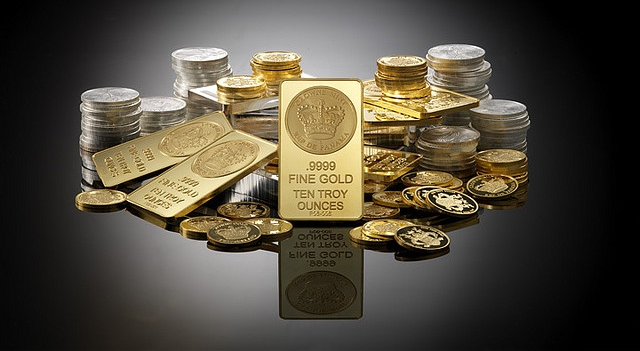
    Spot gold rose 0.5% to $3,341.27 an ounce, while September gold futures climbed 0.9% to $3,354.60 by 01:28 ET (05:28 GMT). Despite Friday’s gains, the metal remains rangebound, trading between $3,300 and $3,500 for most of the year amid uncertainty around U.S. interest rate policy.

    Trump’s Tariff Threat and Middle East Tensions Drive Safe-Haven Demand

    Trump’s announcement of a 35% tariff on Canadian goods—effective August 1 and higher than previously signaled—triggered risk aversion across markets. The unexpected escalation dealt a blow to improving trade relations with Ottawa and pushed investors toward traditional safe-haven assets, including gold and the Japanese yen.

    In the Middle East, continued Israeli airstrikes on Gaza and lack of tangible progress in U.S.-brokered ceasefire talks kept geopolitical tensions elevated. These factors supported safe-haven flows but weren’t enough to offset gold’s sluggish overall weekly performance amid Dollar strength and rate speculation.

    Silver and Platinum Outperform with Strong Weekly Gains

    Silver and platinum remained the top performers among precious metals. Silver futures rose 2.2% to $38.14 per ounce, marking their third straight weekly gain and reaching their highest price since 2011. Platinum futures climbed 0.3% to $1,420.25 per ounce, putting the metal on track for a sixth consecutive weekly gain, fueled by bullish industry forecasts and tightening supply expectations.

    Copper Slips After Stellar Run

    In industrial metals, copper futures pulled back following a surge earlier in the week. COMEX copper fell 1.2% to $5.5620 per pound as traders locked in profits after Trump floated the possibility of a 50% tariff on the red metal. The previous rally had briefly driven prices to record highs. Meanwhile, benchmark copper on the London Metal Exchange held steady at $9,700.55 per ton.

    This content is for informational purposes only and does not constitute financial, investment, or other professional advice. It should not be considered a recommendation to buy or sell any securities or financial instruments. All investments involve risk, including the potential loss of principal. Past performance is not indicative of future results. You should conduct your own research and consult with a qualified financial advisor before making any investment decisions.

  • GBP/USD Weakens Amid Stronger Dollar and UK Economic Concerns

    GBP/USD Weakens Amid Stronger Dollar and UK Economic Concerns

    The British Pound continues to lose ground against the US Dollar, with GBP/USD falling for the sixth straight session, trading near 1.3560 during early Friday trading in Asia. The continued decline reflects persistent strength in the US Dollar, driven by evolving policy signals from Federal Reserve officials.

    On Thursday, Chicago Fed President Austan Goolsbee dismissed calls for interest rate cuts aimed at easing the cost of US government borrowing, emphasizing that the central bank remains focused on employment and inflation. Meanwhile, the Federal Open Market Committee’s (FOMC) minutes from its June meeting revealed a cautious stance, with policymakers in no rush to adjust rates until further economic clarity emerges.

    However, the Dollar’s momentum could face resistance if new US trade policies begin to weigh on sentiment. President Donald Trump announced a 35% tariff on Canadian imports starting August 1 and hinted at similar measures targeting the European Union, potentially curbing the Dollar’s rally.

    The Pound, on the other hand, is also under pressure from mounting domestic economic risks. Market participants are awaiting the UK’s GDP data for May, which is expected to offer fresh insights into the economy’s health. Additionally, the Bank of England’s latest Financial Policy Committee (FPC) report issued a stark warning, citing elevated risks of market volatility, geopolitical instability, and fragmentation in global trade and finance.

    The FPC stated that the likelihood of sharp asset price corrections and abrupt shifts in investment patterns remains high, largely due to rising sovereign debt stress and persistent geopolitical tensions—factors that continue to cast a shadow over the UK’s economic outlook.

    This content is for informational purposes only and does not constitute financial, investment, or other professional advice. It should not be considered a recommendation to buy or sell any securities or financial instruments. All investments involve risk, including the potential loss of principal. Past performance is not indicative of future results. You should conduct your own research and consult with a qualified financial advisor before making any investment decisions.