Pebble Beach Systems Group (LSE:PEB) has confirmed a forthcoming board transition following a request from its largest shareholder, Kestrel Partners. Non-executive director Chris Errington, who has represented Kestrel on the board, will step down from both Kestrel and Pebble on 31 March 2026. He will be succeeded by Kestrel’s managing partner, Oliver Scott, pending customary regulatory checks. Scott is also expected to take over as chair of the company’s remuneration committee, further solidifying Kestrel’s role as a 24.24% shareholder.
The incoming director brings substantial experience from board positions across publicly listed UK technology businesses. His appointment is anticipated to enhance governance and strategic guidance as Pebble continues supporting leading broadcast and streaming customers. The move highlights Kestrel’s ongoing, hands-on engagement as a long-term technology investor, particularly in matters relating to leadership structure and executive compensation — areas likely to attract attention from other investors.
From a market perspective, Pebble Beach Systems’ equity profile reflects encouraging technical momentum and recent corporate developments that may support expansion. Nonetheless, financial metrics remain a constraint. The company reports negative net income and a negative price-to-earnings ratio, factors that temper valuation appeal. Future performance will depend on management’s ability to capitalise on operational cash flow strengths while executing on its refreshed governance framework.
More about Pebble Beach Systems
Pebble Beach Systems Group, operating under the Pebble brand, is an international software provider specialising in automation, integrated channel management and virtualised playout solutions for the broadcast and streaming sectors. Established in 2000, the company serves Tier 1 broadcasters and streaming platforms worldwide. Its systems are deployed in more than 70 countries and currently manage approximately 2,000 live on-air channels globally.
Hamak Strategy Limited (LSE:HAMA) has wrapped up its due diligence review of the Akoko Gold Project, located within Ghana’s highly prospective Ashanti gold belt, and is now progressing toward completing the acquisition. The company has secured an exclusive option over a shallow oxide resource that management believes could underpin a low-capex, heap-leach mining operation.
Akoko currently contains a non-JORC compliant inferred and indicated resource estimated at approximately 252,659 ounces grading 0.58 grams per tonne. To advance the project toward internationally recognised reporting standards, Hamak intends to undertake 4,250 metres of reverse circulation drilling alongside metallurgical testing. The objective is to convert the existing resource into a JORC-compliant estimate and evaluate potential gold recoveries.
An independent Preliminary Economic Assessment (PEA) will also be commissioned to analyse anticipated capital expenditure, operating costs, production forecasts and revenue potential. The company aims to complete this body of work by the end of 2026. At that point, Hamak will determine whether to exercise its exclusive option to acquire Akoko, which implies a purchase price of roughly US$10 per ounce.
Management characterises the project as a potentially low-cost expansion opportunity at a time of historically strong gold prices. If technical and economic studies confirm viability, the acquisition could strengthen the group’s asset portfolio and offer meaningful upside for shareholders.
However, Hamak’s broader investment profile remains weighed down by limited financial traction. The company currently reports no revenue, continues to post operating losses, and generates negative cash flow. While short-term technical indicators have shown some improvement, valuation metrics remain constrained by a negative price-to-earnings ratio and the absence of dividend payments.
More about Hamak Gold Limited
Hamak Strategy Limited is a UK-listed exploration company targeting gold opportunities across Africa. In addition to its mineral exploration activities, the group maintains a digital asset treasury approach, allocating part of its reserves to Bitcoin and other cryptoassets. This hybrid model provides exposure to both gold exploration upside and the price volatility and regulatory risks associated with cryptocurrency holdings.
In the evolving landscape of North American energy, few companies have repositioned themselves as boldly—or as deliberately—as U.S. Energy Corp. (NASDAQ:USEG).
What once resembled a traditional exploration and production company is now transforming into something far more ambitious: a vertically integrated industrial gas and carbon management platform positioned at the crossroads of energy security, helium supply, and long‑duration decarbonization.
It’s a story about scale, timing, and strategy—one that investors are only beginning to appreciate.
A company reinventing itself at the right moment
Over the past 18 months, U.S. Energy has undergone a stealthy and profound evolution. The driving force behind that transformation is a management team with deep domain expertise—not just in oil and gas, but in helium, carbon capture, complex project development, and capital markets strategy. Their collective backgrounds, as outlined on the company’s website, represent decades of developing unconventional assets, building infrastructure, and monetizing industrial gas opportunities.
This team hasn’t simply added new assets to the portfolio—they’ve reshaped the company’s identity. Their vision is clear: build a platform capable of producing oil, advancing helium, and scaling carbon capture and utilization, all anchored by one world‑class geological resource. Few emerging companies have positioned themselves so directly in the flow of both traditional energy demand and the accelerating push for industrial decarbonization.
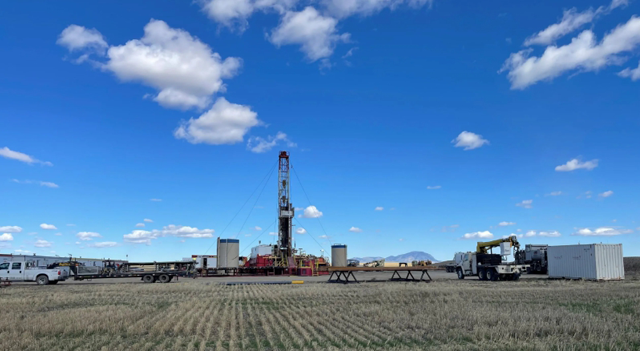
Much of U.S. Energy’s long‑term opportunity revolves around a massive geologic structure in Montana known as Kevin Dome. Through a series of strategic transactions, the company has assembled approximately 32,000 acres across this dome—a land position large enough to support multiple decades of industrial gas development and carbon management operations at its Big Sky Carbon Hub.
Independent evaluations have affirmed what management already believed: Kevin Dome is a rare, resource-rich asset containing an estimated 1.3 trillion cubic feet of naturally occurring CO₂ and 2.3 billion cubic feet of helium. In a world increasingly defined by critical mineral scarcity, industrial gas shortages, and tightening decarbonization expectations, this combination is uniquely valuable.
But U.S. Energy’s strategy is not to commercialize these resources in isolation. Instead, the company is building an interconnected platform—one in which helium production, CO₂ capture, utilization, and sequestration, and enhanced oil recovery work together to maximize both cash flow and optionality.
“Over the past 18 months, we have deliberately built what we believe is one of the most compelling industrial gas, energy, and carbon management platforms in the country,” the company’s CEO, Ryan Smith said in a news release. “From assembling a rare, large-scale resource position at Kevin Dome, to advancing Montana’s first Monitoring, Reporting, and Verification (MRV) submissions, securing a purpose-built plant site, and finalizing our processing facility design, our team has consistently delivered against key milestones.”
Kevin Dome isn’t just a resource. It’s the foundation for a vertically integrated energy and industrial gas ecosystem.
A deliberate, de‑risking march forward
While many early‑stage resource stories hinge on future potential, U.S. Energy has already executed several key milestones that materially reduce the project’s risk profile.
One of the most important was the submission of two MRV plans to the U.S. Environmental Protection Agency—the first such submissions ever made in the State of Montana. Once approved, these plans would place the company among the largest 20 carbon capture, utilization, and storage projects in the United States, giving U.S. Energy early‑mover regulatory positioning in a sector dominated by large industrial players.
At the same time, the company already has three producing industrial gas wells online. These wells are expected to supply steady, low‑decline volumes for the initial phase of gas processing—meaning early operations do not require additional drilling. In an industry where capital intensity can quickly spiral, this is a meaningful advantage.
The company also completed final engineering and design for its proposed gas processing facility and, in January 2026, acquired a 32-acre site strategically located for power access, road logistics, and offtake pathways. Securing this land reduces construction risk and ensures ample room for future expansion as helium, CO₂ management, and energy operations scale.
Individually, each of these achievements is notable. Collectively, they represent the creation of a highly differentiated platform—one built to generate durable cash flow while participating in multi‑decade industrial gas and carbon management demand.
A new type of energy company for a new energy era
The emerging USEG story is less about any single commodity and more about the convergence of several powerful trends:
The growing need for domestic helium to support semiconductor fabrication, aerospace, defence, and healthcare
The push for CO₂ capture, utilization, and storage as U.S. industry accelerates decarbonization
The durability of oil demand, especially in high‑value applications supported by enhanced oil recovery
The rise of integrated, vertically controlled energy‑gas‑carbon hubs—a model previously reserved for far larger corporations
U.S. Energy is positioning itself not just as a producer, but as a platform—a multi‑segment operator capable of capturing full-cycle value from extraction to processing to long-duration carbon management.
For investors, this represents a rare opportunity: exposure to a diversified industrial gas and energy company still in the early stages of its growth curve, yet already well‑advanced in its de‑risking.
To keep up with the latest developments from the company, visit usnrg.com.
Part 2 takes the story deeper
This first installment set the stage by focusing on the strategic foundation, leadership, and milestones that define U.S. Energy’s transformation. In Part 2, we’ll dive deeper into the 2026 development plan, the roadmap for Kevin Dome commercialization, and the upcoming catalysts that could reshape the company’s value trajectory over the next 12–24 months.
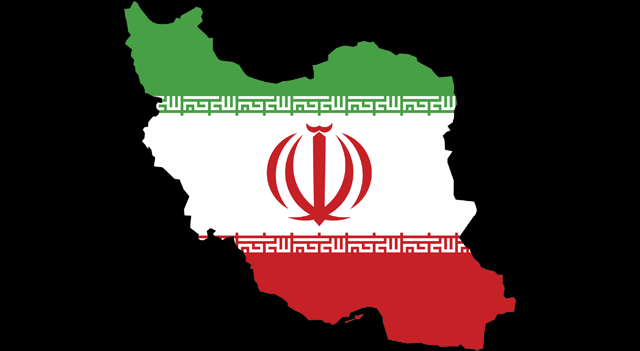
Talks in Oman have failed, and on Saturday, the United States and Israel launched attacks on Iran with the aim of dismantling its missile capabilities and halting any nuclear development. In response, Iran’s Revolutionary Guard fired missiles at U.S. bases in Arab countries allied with Washington, including the United Arab Emirates, Bahrain, Qatar, Jordan, and Kuwait.
What makes the situation even worse for the global economy is that the attacks reached the Strait of Hormuz. As a result, by Monday morning, about 40 supertankers were stuck near the strait, each carrying roughly 2 million barrels of oil. Not surprisingly, oil prices are climbing, even after OPEC+ decided over the weekend to boost production by 206,000 barrels a day, because the bigger question of how to actually move that oil out of the Persian Gulf is still hanging in the air.
What would happen if the conflict were to drag on for weeks?
In short, the effects would be unpleasant, especially for oil-importing countries the hardest, including China and the eurozone. As for industries specifically, similarly, those that rely heavily on oil would feel the impact first. For instance, on Monday morning, U.S. airline stocks were already down in pre-market trading, while major European travel companies, including airlines, hotel chains, and cruise operators, also suffered sharp declines.
In perspective, most industries outside of energy are likely to suffer, either directly or indirectly, as the energy crisis after the war in Ukraine showed. For example, the auto industry could struggle with rising costs for plastics and synthetic materials, retailers might face higher transportation expenses, and the tech sector could be hit by higher inflation, which could push the U.S. Federal Reserve toward tighter policies.
Speaking of that, the recent data isn’t looking encouraging. As companies start passing higher costs onto consumers, U.S. producer prices for January rose 0.5 percent month over month and 2.9 percent year over year, while core producer prices went up 0.8 percent month over month and 3.6 percent year over year.
On the flip side, safe-haven assets like gold (XAUUSD) and the U.S. dollar could benefit.
U.S. equity futures signaled a sharply weaker start to trading on Monday, pointing to further declines after stocks posted losses in each of the previous two sessions.
Market sentiment deteriorated following coordinated military strikes by the United States and Israel on Iran over the weekend that resulted in the death of Iranian Supreme Leader Ayatollah Ali Khamenei.
Regional tensions intensified further after Israel launched additional air attacks on Hezbollah positions in Beirut and other parts of Lebanon in response to projectiles fired into northern Israel from Lebanese territory.
President Donald Trump indicated that hostilities with Iran could continue for as long as four weeks, fueling concerns that the conflict may expand across the broader Middle East.
The escalation has pushed crude oil prices sharply higher, reviving fears that inflationary pressures could strengthen again.
“Scenes in the Middle East have caused widespread nervousness across financial markets,” said Dan Coatsworth, head of markets at AJ Bell. “The U.S. attacks on Iran have caused oil prices to soar amid fears of disruptions to supplies, pushing up costs for businesses and consumers.”
He added, “If the issues persist then the market will start to worry about new inflationary pressures and that could lower expectations for near-term interest rate cuts.”
Stocks had already declined notably on Friday, extending Thursday’s sell-off, with technology shares leading losses and the Nasdaq continuing to underperform.
Despite recovering somewhat from session lows, the major indices still closed firmly lower. The Dow Jones Industrial Average dropped 521.28 points, or 1.1%, to 48,977.92, the Nasdaq Composite fell 210.17 points, or 0.9%, to 22,688.21, and the S&P 500 slipped 29.98 points, or 0.4%, to 6,878.88.
For the week, the Dow lost 1.3%, the Nasdaq declined 1.0%, and the S&P 500 edged down 0.4%.
Additional pressure came from fresh economic data showing U.S. producer prices rose more than anticipated in January. The Labor Department reported that its producer price index for final demand increased by 0.5% following a downwardly revised 0.4% gain in December.
Economists had forecast a 0.3% increase compared with the earlier estimate of a 0.5% rise for the prior month.
On a yearly basis, producer price growth slowed slightly to 2.9% in January from 3.0% in December, while economists had expected a decline to 2.8%.
“For the past month the market has been worried about AI disruption and its impact on the labor market, so inflation hasn’t been top of mind,” said Chris Zaccarelli, Chief Investment Officer for Northlight Asset Management.
He continued, “But this morning’s inflation readings could give the Fed another reason to be more patient with rate cuts and wait until the second half of the year before making any changes.”
The stronger-than-expected inflation data, combined with concerns over AI-related job losses, has raised fears that the economy could face stagflationary conditions.
Adding to worries about technological disruption, Block (XYZ) announced plans to cut nearly half of its workforce.
Block Chief Financial Officer Amrita Ahuja said the company sees an “opportunity to move faster with smaller, highly talented teams using AI to automate more work.”
Airline stocks were among the worst performers, sending the NYSE Arca Airline Index down 5.0% to its lowest closing level in nearly a month.
Financial stocks also came under heavy pressure, with the KBW Bank Index and the NYSE Arca Broker/Dealer Index falling 4.9% and 3.0%, respectively.
Software and semiconductor shares also declined noticeably, while pharmaceutical, retail and telecommunications stocks posted gains during the session.
European equities moved sharply lower on Monday as escalating conflict in the Middle East weakened investor sentiment and prompted a shift away from risk-sensitive assets.
Concerns about inflation resurfaced after Brent crude prices surged nearly 10%, reaching their highest levels since January 2025 amid fears that regional instability could disrupt global oil supplies.
Market participants are closely monitoring developments around the Strait of Hormuz, a vital shipping route responsible for a significant share of worldwide oil transportation.
On the economic front, fresh data showed German retail sales declined more than anticipated in January, while UK house prices rose slightly faster than expected in February following a late-2025 slowdown.
Major European indices posted broad declines, with Germany’s DAX falling 2.6%, France’s CAC 40 dropping 2.2%, and the UK’s FTSE 100 retreating 1.5%.
Banking stocks were among the worst performers, as Commerzbank (TG:CBK), Deutsche Bank (TG:DBK), BNP Paribas (EU:BNP) and Barclays (LSE:BARC) all recorded notable losses amid renewed concerns about transparency in private lending markets.
UK engineering group Senior (LSE:SNR) also traded lower after reporting 2025 revenue that fell short of market expectations.
Medical technology company Smith & Nephew (LSE:SN.) declined sharply despite announcing improved profit and cash flow figures for 2025.
In contrast, Bunzl (LSE:BNZL) gained ground after the distribution group reported 3.0% revenue growth at constant exchange rates for 2025, supported by acquisitions.
Shares in Sage Group (LSE:SGE) edged higher after the software firm announced plans to launch a share buyback programme worth up to £300 million.
Shares of luxury goods companies moved lower on Monday after Morgan Stanley analysts warned that escalating conflict involving Iran could weigh on consumer spending sentiment across the Middle East.
In Paris, shares of Louis Vuitton owner LVMH (EU:MC) fell more than 3%, while Gucci parent Kering (EU:KER) dropped 4.3%. Switzerland-listed Richemont (TG:RITN) declined over 6%, and UK luxury brand Burberry (LSE:BRBY) lost around 4%. Sports car maker Ferrari (BIT:RACE) also slipped 3.8% in U.S. premarket trading.
In a research note, Morgan Stanley analysts estimated that the Middle East accounts for roughly 5% of total sales for most luxury companies, with the United Arab Emirates representing the largest individual market within the region.
They added that spending in the Middle East typically accelerates toward the latter part of the Ramadan holy month, particularly in the run-up to Eid al-Fitr, which this year falls on March 19 and 20. However, the recent outbreak of violence could dampen luxury purchases during this key seasonal period — often referred to as the “Ramadan rush” — according to analysts including Natasha Bonnet and Edouard Aubin.
On Saturday, the United States and Israel announced coordinated strikes targeting multiple locations in Iran, resulting in the deaths of several senior Iranian officials, including Supreme Leader Ayatollah Ali Khamenei. U.S. President Donald Trump called on Iranian opposition groups to overthrow the country’s long-standing political system, although many senior U.S. officials remain doubtful that regime change is imminent, Reuters reported.
Questions also remain over how long Washington intends to remain involved in the conflict. Trump told the New York Times that military operations could continue for “four to five weeks.” He also declined to outline how a political transition in Iran might unfold, saying he has “three very good choices” but “won’t be revealing them now,” according to the New York Times.
The strikes prompted retaliatory actions by Tehran targeting locations across the Middle East, including several energy-producing Gulf nations.
Shares of International Consolidated Airlines Group SA (LSE:IAG) dropped more than 5% on Monday after escalating tensions in the Middle East over the weekend led to significant disruption across global flight networks.
Multiple airports across the region — including Dubai, Doha and Abu Dhabi — were temporarily closed, with Dubai International Airport, the world’s busiest hub for international passenger traffic, among those impacted.
The closures caused widespread travel disruption on Sunday, forcing airlines to cancel or reroute flights and leaving large numbers of passengers stranded as operations were suspended.
British Airways, the UK flag carrier owned by IAG, cancelled flights to Tel Aviv and Bahrain until at least Wednesday and warned that services between London Heathrow and several Middle Eastern destinations, including Abu Dhabi and Dubai, could continue to face disruption for several days.
Shares in UK low-cost airline EasyJet PLC (LSE:EZJ) also declined, falling 3.6% as of 11:25 GMT.
European airline stocks broadly moved lower, with Wizz Air Holdings PLC (LSE:WIZZ) dropping more than 6%, Deutsche Lufthansa AG (TG:LHA) falling 6%, and Air France KLM SA (EU:AIR) sliding over 9%.
Shares in BAE Systems PLC (LSE:BAE) climbed 5.5% on Monday following heightened tensions in the Middle East over the weekend, with JPMorgan analysts identifying the UK defence contractor as one of the companies best positioned to benefit from a potential increase in U.S. defence spending.
In a research note, JPMorgan said the European defence sector could see further gains amid ongoing geopolitical conflicts and expectations of higher military budgets in the United States.
The bank highlighted comments from President Trump in January 2026 indicating plans to raise the U.S. defence budget by as much as 50% in fiscal 2027, although JPMorgan considers a rise of around 20–30% to be a more realistic scenario.
Analysts said the accelerating pace of U.S. military operations during 2026 is increasing pressure on policymakers to boost defence expenditure. BAE Systems derives roughly 44% of its revenue from the U.S. defence market — the highest exposure among European defence companies covered by JPMorgan.
JPMorgan also pointed to the need for the United States to replenish missile inventories following recent military activity. Media reports from June 2025 suggested the U.S. deployed between 15% and 25% of its total THAAD interceptor stockpile during a 12-day conflict, using approximately 100 to 150 interceptors from an estimated inventory of around 650 units.
BAE Systems supplies the infrared seeker component used in the THAAD missile guidance system, with JPMorgan estimating the company generates about $1 million in revenue per THAAD unit.
Other UK-listed defence companies also traded higher on Monday. Babcock International Group PLC (LSE:BAB) rose 0.9%, while Qinetiq Group PLC (LSE:QQ.) gained roughly 3% as of 11:00 GMT.
JPMorgan additionally highlighted several European defence firms with meaningful exposure to the U.S. market, including RENK Group AG (TG:R3NK) with around 25% exposure, Leonardo SpA (BIT:LDO) at approximately 23%, and Qinetiq Group PLC at about 18%.
Oil prices surged on Monday as markets reacted to rising fears of supply disruptions following coordinated military strikes by the United States and Israel against Iran.
By 03:35 ET (08:35 GMT), Brent crude futures had jumped 9.6% to $79.78 per barrel after earlier reaching their highest level since January 2025. West Texas Intermediate (WTI) crude futures climbed 8.8% to $72.95 per barrel, remaining just below their strongest level since June.
Military escalation raises supply concerns
Over the weekend, U.S. and Israeli forces carried out extensive strikes across Iran, reportedly killing hundreds of people, including Supreme Leader Ayatollah Khamenei and several senior government officials.
Iran responded with missile attacks targeting Israel as well as multiple Middle Eastern countries aligned with the United States, including Bahrain, Kuwait, Qatar and the United Arab Emirates.
Reports also indicated Iranian attacks on vessels moving through the Strait of Hormuz, heightening concerns about near-term disruptions to global oil shipments.
“With the retaliatory action now evolving to attacks on oil tankers in the Strait of Hormuz, the threat on oil supplies has substantially risen,” ANZ analysts said in a note.
The Strait of Hormuz is one of the most strategically important energy corridors worldwide, accounting for roughly 20% of global oil consumption flows.
U.S. President Donald Trump said late Sunday that military operations against Iran would continue in the coming days and cautioned that additional American casualties were likely.
The latest escalation marks the second major U.S. military action against Iran since mid-2025, with Tehran’s nuclear enrichment programme remaining a central source of geopolitical tension. The strikes followed failed negotiations between Washington and Tehran that ended without a breakthrough.
In June 2025, the United States had previously targeted Iran’s key nuclear facilities in an effort to curb its nuclear ambitions.
Analysts believe oil prices could stay elevated in the near term as markets assess the evolving geopolitical risks.
“We expect a potential price spike of up to $80/bbl over the next week due to the initial and continued U.S. and Israeli combat operations against Iran,” analysts at Texas Capital, led by Derrick Whitfield said in a note on Sunday.
OPEC+ agrees to boost output
Separately, the Organization of the Petroleum Exporting Countries and its allies, known collectively as OPEC+, agreed at a Sunday meeting to increase production by 206,000 barrels per day.
The additional output could help offset some of the supply risks linked to the conflict, although uncertainty remains over whether member countries will fully implement the planned increases.
Shipping disruptions related to the conflict could also reduce the overall impact of the supply boost.
The move represents OPEC’s first production increase since late 2025, as the group seeks to expand output and reclaim market share.
OPEC had already lifted production by roughly 2.5 million barrels per day during 2025 before announcing a temporary pause in output increases in November.
Oil prices later pulled back slightly from earlier highs, as the announced production increase helped ease concerns about severe supply shortages.