Blog

  • Lancashire maintains stability in Q1 2026 despite softer pricing environment

    Lancashire maintains stability in Q1 2026 despite softer pricing environment

    Lancashire Holdings (LSE:LRE) reported a stable opening to 2026, posting gross premiums written of $668.4 million in the first quarter, while insurance revenue rose 2.1% year over year to $468.6 million. Growth in energy and marine lines, along with expansion in its U.S. operations, helped support performance.

    The group also adjusted its underwriting strategy by scaling back property retrocession within its reinsurance segment. A relatively benign loss environment, combined with limited exposure to the Middle East, contributed to steady results. Lancashire generated a 0.3% return on investments and maintained strong capital levels and positioning within the Lloyd’s of London market, while continuing with leadership transitions and plans to consolidate its syndicates to improve operational flexibility.

    Underwriting discipline offsets decline in premiums

    Gross premiums fell 6.1% compared to the prior year, though the decline was just 1.2% on an underlying basis after excluding reinstatement premiums from the previous year. The Group Renewal Price Index came in at 93%, reflecting a softer pricing environment but also highlighting continued underwriting discipline.

    Management pointed to the company’s broader product offering, expanding geographic footprint, and strong regulatory capital coverage as key strengths. The group reiterated its ambition to deliver returns in the high single digits to mid-teens, positioning itself to generate solid risk-adjusted returns despite ongoing geopolitical uncertainty and market volatility.

    Valuation and outlook remain supportive

    Lancashire’s outlook is underpinned by consistent financial performance, including post-loss recoveries, controlled leverage, and solid cash generation. The company also continues to trade at an attractive valuation, characterized by a relatively low price-to-earnings ratio and a high dividend yield.

    From a technical perspective, indicators are mixed. While overall positioning remains moderately positive, neutral momentum and a slightly negative MACD suggest limited near-term upside.

    More about Lancashire Holdings

    Lancashire Holdings is a Bermuda-based global provider of specialty insurance and reinsurance products, with a focus on sectors such as energy, marine, and property. The company operates through both its own balance sheet and Lloyd’s syndicates, with shares listed on the London Stock Exchange under the ticker LRE. It is regulated by the Bermuda Monetary Authority.

  • Eco Atlantic advances JHI acquisition with court approval milestone

    Eco Atlantic advances JHI acquisition with court approval milestone

    Eco Atlantic Oil & Gas (LSE:ECO) has moved a step closer to completing its planned acquisition of JHI Associates after JHI secured an interim court order in Ontario, allowing the transaction to proceed to a shareholder vote. The move forms part of Eco Atlantic’s broader strategy to expand its presence across the Atlantic Margin, adding exposure to the Falkland Islands alongside its existing assets in Guyana, Namibia, and South Africa.

    Shareholder vote set as support builds

    JHI has scheduled its annual and special meeting for 12 May, where shareholders will vote on the proposed arrangement. Notably, investors representing roughly 60% of JHI’s shares have already committed their support through voting agreements.

    Pending approval from shareholders and regulators — including the Falkland Islands Government and the TSX Venture Exchange — Eco Atlantic would acquire full ownership of JHI. This would give the company a 35% interest in the Falklands licence PL001, strengthening its collaboration with operator Navitas Petroleum and expanding its exploration portfolio.

    More about Eco Atlantic Oil & Gas

    Eco Atlantic Oil & Gas is an exploration company listed on both the TSX Venture Exchange and AIM, focused on offshore Atlantic Margin basins. The company targets low carbon intensity oil and gas opportunities in emerging regions near established infrastructure. Its current portfolio includes interests in Guyana’s Orinduik Block, three licences in Namibia’s Walvis Basin, and South Africa’s Orange Basin blocks 3B/4B and 1 CBK.

  • Fed Decision Ahead as Tech Earnings Set Stage for Volatile Trading: Dow Jones, S&P, Nasdaq, Wall Street Futures

    Fed Decision Ahead as Tech Earnings Set Stage for Volatile Trading: Dow Jones, S&P, Nasdaq, Wall Street Futures

    U.S. stock futures suggest a muted open on Wednesday, with markets lacking clear direction after the previous session’s decline.

    Investors are staying cautious ahead of the upcoming policy announcement from the Federal Reserve later in the day.

    Data from CME Group’s FedWatch Tool shows markets are fully pricing in a pause in interest rates for a third consecutive meeting.

    With that outcome largely expected, attention is likely to turn to the Fed’s statement for signals about the future path of monetary policy. However, in the absence of firm guidance, focus may shift toward earnings from major technology companies.

    Alphabet Inc. (NASDAQ:GOOGL), Amazon.com Inc. (NASDAQ:AMZN), Meta Platforms Inc. (NASDAQ:META), and Microsoft Corporation (NASDAQ:MSFT) are all due to report after the closing bell.

    As part of the so-called “Magnificent Seven,” their results are expected to play a key role in shaping sentiment, particularly as questions re-emerge around the sustainability of AI-related spending.

    At the same time, markets have shown resilience in the face of another surge in oil prices, with U.S. crude futures briefly climbing above $100 per barrel following renewed tensions involving Iran and comments from President Donald Trump.

    “Iran can’t get their act together. They don’t know how to sign a nonnuclear deal. They better get smart soon!” Trump said on Truth Social, alongside an image of himself holding a rifle and the words “No more Mr. Nice Guy!”

    Market Recap

    After a mixed session on Monday, U.S. equities moved lower on Tuesday, with all three major indices finishing in negative territory and technology stocks leading the decline.

    The Nasdaq Composite dropped 223.30 points, or 0.9%, to 24,663.80. The S&P 500 fell 35.11 points, or 0.5%, to 7,138.90, while the Dow Jones Industrial Average edged down 25.86 points, or 0.1%, to 49,141.93.

    The Nasdaq pulled back from its recent record close as artificial intelligence-related stocks came under pressure following a report from The Wall Street Journal that OpenAI had missed internal targets for both user growth and revenue.

    Sources cited in the report suggested that the shortfall has raised concerns about the company’s ability to sustain its heavy investment in data center infrastructure.

    Oracle Corporation (NYSE:ORCL), which is closely tied to OpenAI through a major infrastructure partnership, fell 4.1%.

    Semiconductor stocks also declined, including Broadcom Inc. (NASDAQ:AVGO), Advanced Micro Devices Inc. (NASDAQ:AMD), and NVIDIA Corporation (NASDAQ:NVDA).

    Oil Prices and Geopolitical Tensions

    Higher oil prices added another layer of uncertainty, with U.S. crude briefly trading above $100 per barrel before easing.

    The rally has been fueled by ongoing geopolitical tensions between the U.S. and Iran.

    Recent developments suggest that Trump is unlikely to accept Iran’s proposal to reopen the Strait of Hormuz while postponing negotiations over its nuclear programme.

    In another Truth Social post, Trump said Iran is in a “state of collapse” and is seeking to reopen the Strait of Hormuz as it deals with internal leadership challenges.

    CNN reported that Iran is preparing a “revised proposal,” with mediators in Pakistan waiting for the updated plan.

    Sector Performance

    Gold-related stocks declined sharply as bullion prices dropped, dragging the NYSE Arca Gold Bugs Index down 4.6%.

    Semiconductor stocks also came under heavy pressure, with the Philadelphia Semiconductor Index falling 3.6%.

    Weakness was also seen in computer hardware, networking, and airline stocks, while energy shares, particularly oil and gas companies, moved higher.

  • European Stocks Decline, Extending Previous Session’s Losses: DAX, CAC, FTSE100

    European Stocks Decline, Extending Previous Session’s Losses: DAX, CAC, FTSE100

    European equities moved lower on Wednesday, continuing the downward trend from the prior session after a report from the The Wall Street Journal indicated that U.S. President Donald Trump was dissatisfied with Tehran’s latest proposal to end the conflict and had directed aides to prepare for a prolonged blockade of Iranian ports.

    Concerns over tighter oil supply pushed Brent crude prices close to $115 per barrel, reigniting worries around inflation and interest rates.

    The FTSE 100 Index fell 0.9%, while France’s CAC 40 Index declined 0.3%. Germany’s DAX Index hovered just below flat.

    Straumann Holding rose nearly 2% after reporting 7.1% organic revenue growth in the first quarter of 2026, ahead of expectations.

    UBS (NYSE:UBS) surged 4.7% after posting an 80% increase in first-quarter profit.

    Sandoz (LSE:0SAN) declined 2.4% despite strong biosimilars growth in the same period.

    Iberdrola (BIT:1IBE), Europe’s largest utility, dropped around 2% after reporting a 15% year-over-year decline in first-quarter net profit.

    GSK (LSE:GSK) fell 1.8% despite delivering solid first-quarter results and reaffirming its 2026 outlook.

    Similarly, AstraZeneca (LSE:AZN) slipped 1.3% even after posting better-than-expected quarterly earnings.

    Lloyds Banking Group (LSE:LLOY) lost 1% after warning about the economic impact of the Iran conflict.

    KPN (EU:KPN) dropped 2.7% after reporting a modest 2.1% increase in first-quarter sales.

    Adidas (TG:ADS) jumped 6% following stronger-than-expected first-quarter operating profit and revenue.

    Deutsche Bank (TG:DBK) fell 1.7% after reporting higher credit risk provisions and adverse currency effects.

  • Airbus Profit Falls Sharply in Q1 on Lower Deliveries, Keeps 2026 Guidance

    Airbus Profit Falls Sharply in Q1 on Lower Deliveries, Keeps 2026 Guidance

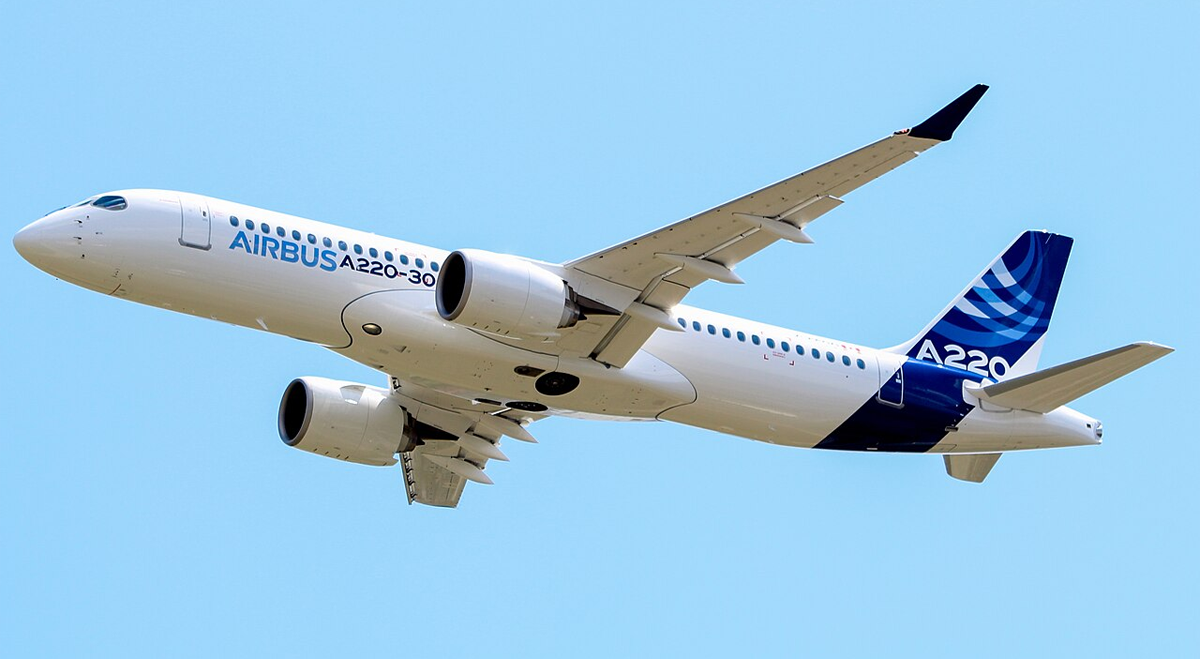
    Airbus (EU:AIR) reported a significant decline in first-quarter earnings, as reduced commercial aircraft deliveries and currency pressures weighed on performance, while analysts highlighted execution and timing factors as central to the outlook.

    Shares in the group were up 1.7% at 06:00 ET (10:00 GMT).

    Airbus posted revenue of €12.7 billion for the quarter, down 7% year on year and slightly below the €12.87 billion consensus estimate. Adjusted EBIT dropped to €300 million from €624 million a year earlier, while reported earnings per share declined to €0.74 from €1.01.

    The commercial aircraft division was the main driver of the downturn. Deliveries fell to 114 units compared with 136 in the same period last year, pushing adjusted EBIT in the segment down to €81 million from €494 million, also impacted by less favorable hedge rates.

    Free cash flow before customer financing shifted to an outflow of €2.5 billion, versus an inflow of €310 million a year earlier, reflecting lower delivery volumes and a planned inventory build linked to production ramp-up.

    The Defence and Space division provided some support, with revenue rising 7% to €2.8 billion and adjusted EBIT nearly doubling to €130 million.

    Chief Executive Guillaume Faury said Airbus continues to increase production “as per our plan while navigating the shortage of Pratt & Whitney engines,” adding that the operating environment remains “dynamic and complex.”

    Analysts at Barclays said the weak first-quarter performance was largely due to timing rather than a deterioration in demand.

    They pointed to a mismatch between production and deliveries, mainly caused by administrative delays affecting around 20 aircraft intended for Chinese customers. These issues have now been resolved and are expected to support a catch-up in deliveries in the coming months.

    “From here, the focus remains execution, with delivery acceleration key to restoring confidence,” the analysts said.

    Barclays also noted that Airbus reaffirmed its full-year 2026 outlook, including approximately 870 aircraft deliveries, €7.5 billion in adjusted EBIT, and €4.5 billion in free cash flow—signalling confidence in a stronger second half despite a weak start to the year.

    The broker added that the first quarter “served as a reminder of the execution hurdles” still facing the company, with supply chain constraints continuing, albeit at a reduced intensity.

    While profitability in the commercial aircraft division came in slightly above Barclays’ cautious expectations, overall margins remain “very modest,” highlighting the need for improved delivery volumes over the remainder of the year.

  • MedPal AI Expands Pharmacy Network with Remedi Asset Acquisition

    MedPal AI Expands Pharmacy Network with Remedi Asset Acquisition

    MedPal AI (LSE:MPAL) has completed the purchase of the pharmacy operations and assets linked to Remedi Solutions’ Runcorn facility through its subsidiary MedPal Limited, in a deal worth £310,000. The acquisition adds a second NHS-registered dispensing hub to the group’s footprint. The Runcorn site previously handled around 1 million prescriptions per year, representing approximately £10 million in annual revenue, and will now operate from newly leased premises within a reorganised group structure under a new holding company, New Performance Health.

    The transaction, classified as a related-party deal due to CEO Jason Drummond’s involvement in securing the original rights, strengthens MedPal’s position in specialist pharmacy services for care homes while significantly increasing its dispensing capacity. By replicating its patient reactivation model successfully deployed at its Swaffham hub, the company aims to scale volumes toward a monthly run rate of 80,000 items—seen as the level required to achieve EBITDA breakeven at the pharmacy level and support the wider economics of its digital health platform.

    Jason Drummond, Chief Executive Officer of MedPal AI, commented:
    “For a total spend of less than half a million pounds we have secured an NHS dispensing hub in a strategically critical location with a patient book that NHS-verified data shows historically delivered over £10 million of annualised turnover. We have already proven at Swaffham that our reactivation strategy works. We are now running that same programme, at materially greater scale, across the Remedi book. Our pharmacy operations are growing rapidly, currently dispensing 42,000 items a month and rising, with a mapped path to pharmacy-level breakeven at 80,000 items a threshold the acquired Runcorn site alone comfortably exceeded throughout 2024”

    More about MedPal AI Plc

    MedPal AI plc is a UK-based healthcare technology group operating an AI-enabled, vertically integrated platform known as MedPal Health OS. The platform combines wellness support, clinical services, and automated pharmacy fulfilment. Through MedPal Limited, the company runs round-the-clock NHS and private prescription hubs powered by AI and robotic dispensing, offering nationwide same-day or next-day delivery to both individual consumers and care home clients.

  • Oil Extends Gains on Talk of Longer U.S. Blockade on Iran

    Oil Extends Gains on Talk of Longer U.S. Blockade on Iran

    Oil prices pushed higher again on Wednesday, adding to a multi-session advance after reports suggested Washington is preparing to prolong its blockade of Iranian ports—heightening the risk of ongoing supply constraints from the Middle East.

    According to The Wall Street Journal, Donald Trump has told aides to get ready for an extended blockade targeting Iran, citing U.S. officials.

    The report said the plan is to tighten pressure on Iran’s economy and curb its oil exports by restricting maritime traffic linked to its ports.

    Brent crude for June delivery rose 52 cents, or 0.47%, to $111.78 a barrel at 01:54 GMT, marking an eighth straight day of gains. The June contract expires Thursday, while the more actively traded July contract was up 0.4% at $104.84.

    U.S. West Texas Intermediate crude for June climbed 57 cents, or 0.57%, to $100.50 a barrel, following a 3.7% jump in the previous session. Prices have now advanced in seven of the past eight sessions.

    “The recent rise in oil prices has been driven by the Strait blockade. If Trump is prepared to extend the blockade, supply disruptions would worsen further and continue to push oil prices higher,” said Yang An, an analyst at Haitong Futures.

    Although a ceasefire remains in place in the conflict involving the U.S., Israel and Iran, talks have yet to produce a lasting resolution. Iran continues to restrict traffic through the Strait of Hormuz—a channel for roughly 20% of global oil and liquefied natural gas shipments—while the U.S. maintains its blockade of Iranian ports.

    Washington is pressing Iran to halt what it describes as a nuclear weapons program, while Tehran is seeking compensation for the recent conflict, relief from sanctions and greater influence over the Strait of Hormuz.

    The continued disruption at Hormuz is also tightening global supply conditions. Market sources said the American Petroleum Institute reported another weekly decline in U.S. crude inventories.

    Crude stockpiles fell by 1.79 million barrels in the week ending April 24, according to the sources. Gasoline inventories dropped by 8.47 million barrels, while distillate stocks declined by 2.60 million barrels.

  • Gold Hovers Near Monthly Low as Iran Risks Linger; Fed Decision Looms

    Gold Hovers Near Monthly Low as Iran Risks Linger; Fed Decision Looms

    Gold prices remained close to a one-month low on Wednesday, with demand for the metal subdued as uncertainty surrounding the Iran conflict continued to weigh on sentiment. Investors also stayed cautious ahead of the latest policy decision from the Federal Reserve.

    The precious metal has come under pressure this week, as safe-haven flows have largely shifted toward the U.S. dollar. At the same time, rising oil prices—driven by expectations of a prolonged standoff between Washington and Tehran—have unsettled financial markets.

    Spot gold slipped 0.1% to $4,593.04 per ounce as of 02:09 ET (06:09 GMT), while gold futures also declined 0.1% to $4,606.31 per ounce.

    Performance across other precious metals was mixed, although recent losses continued to weigh. Spot silver gained 0.7% to $73.6135 per ounce, while platinum dropped 0.3% to $1,937.75 per ounce.

    Trump Eyes Extended Iran Blockade – WSJ

    Donald Trump has directed aides to prepare for a prolonged naval blockade targeting Iran, according to a report by The Wall Street Journal.

    The approach is intended to tighten economic pressure on Tehran by restricting its oil export capabilities, with the aim of forcing progress toward a negotiated settlement.

    Earlier reports indicated Trump was dissatisfied with an Iranian proposal that would have reopened the Strait of Hormuz while postponing discussions over nuclear activities.

    An extended blockade could further escalate tensions, potentially prompting Iran to keep the Strait of Hormuz closed in the near term. Such a move would risk further disruption to global oil supply.

    Concerns about oil-driven inflation have weighed on gold since late February. Markets fear that sustained price pressures could prompt central banks to maintain tighter monetary policy, raising the opportunity cost of holding non-yielding assets like gold and diminishing its appeal as a safe haven.

    “For gold to regain stronger traction, markets may need to see either a pullback in oil prices or signs that geopolitical tensions are easing enough to revive dovish Fed pricing,” analysts at OCBC Bank said in a note.

    Fed Meeting in Spotlight for Policy Direction

    Attention is now firmly on the outcome of the Fed’s two-day meeting later on Wednesday, with policymakers widely expected to leave interest rates unchanged.

    The decision comes as expectations build that the Fed may keep rates steady through the remainder of 2026, particularly in light of inflationary pressures tied to the Iran conflict.

    Beyond the Fed, investors are also watching upcoming rate decisions from the European Central Bank and the Bank of England later this week, which could offer further insight into the global monetary policy outlook.

  • Markets Hold Steady Ahead of Fed Call and Big Tech Earnings: Dow Jones, S&P, Nasdaq, Wall Street Futures

    Markets Hold Steady Ahead of Fed Call and Big Tech Earnings: Dow Jones, S&P, Nasdaq, Wall Street Futures

    U.S. equity futures were modestly higher on Wednesday but hovered near unchanged levels as investors braced for a series of key developments. The Federal Reserve is expected to leave interest rates unchanged, though reports indicate it could shift its messaging in a more hawkish direction. Meanwhile, several mega-cap technology firms are due to report results, with markets closely watching their spending on artificial intelligence. In Europe, a wave of corporate earnings is underway, while Donald Trump has reportedly told aides to prepare for an extended blockade of Iranian ports.

    Futures Edge Higher

    U.S. stock futures posted slight gains in early trading, ahead of what is shaping up to be one of the busiest sessions of the year.

    As of 03:26 ET, Dow futures were up 47 points, or 0.1%, S&P 500 futures added 5 points, or 0.1%, and Nasdaq 100 futures climbed 85 points, or 0.3%.

    Wall Street’s main indices ended the previous session lower, largely due to renewed concerns about the financial outlook for OpenAI after a The Wall Street Journal report said the firm had missed certain revenue and user targets. Shares of companies linked to OpenAI also weakened following the news.

    At the same time, stalled negotiations between the U.S. and Iran continued to weigh on sentiment, delaying any reopening of the Strait of Hormuz, which has effectively remained closed to shipping traffic for weeks. Oil prices have moved higher, adding to concerns over inflation and economic growth worldwide.

    Even so, corporate earnings have shown resilience. Reuters data shows that just over one-third of S&P 500 sectors have reported so far, with 81% of companies beating expectations.

    Focus Turns to Fed Decision

    The Federal Reserve is widely expected to keep rates steady within a 3.5% to 3.75% range at the end of its two-day meeting, as policymakers monitor the inflationary implications of geopolitical tensions.

    According to the The Wall Street Journal, the Fed may adjust its forward guidance in a more hawkish tone by removing references to potential rate cuts in 2026.

    The meeting could also include one of the final press conferences by Fed Chair Jerome Powell, whose term is set to expire in May.

    “Powell’s (supposedly) final press conference shouldn’t rock the boat, but he could err a bit on the hawkish side given the lack of progress in the Gulf,” analysts at ING Group wrote.

    Former Fed Governor Kevin Warsh has been nominated by Trump as Powell’s successor, with a Senate vote on his confirmation expected this week.

    Tech Earnings in the Spotlight

    Investors are also digesting a busy schedule of corporate results, particularly from major technology companies whose AI investments have underpinned recent market gains.

    Alphabet Inc. (NASDAQ:GOOG), Microsoft (NASDAQ:MSFT), Amazon (NASDAQ:AMZN), and Meta Platforms (NASDAQ:META) are all due to report after the market close.

    Following the negative sentiment triggered by the OpenAI report, these results will be closely watched as a test of confidence in the AI-driven rally.

    “[P]articipants will be looking not only for the classic ‘beat and raise’ from these ‘Magnificent Seven’ names, but also for clarity as to the scale of capital expenditure over coming quarters, the source of that expenditure, and the timeframe over which a return on said investment is likely to be achieved,” said Michael Brown.

    “With the sector coming into earnings, essentially, at record highs, we are to a degree ‘priced for perfection’, leaving little room for disappointment, and with the market hence likely to punish any sub-par reports.”

    Outside of tech, companies including AbbVie (NYSE:ABBV), Regeneron Pharmaceuticals (NASDAQ:REGN), and Phillips 66 (NYSE:PSX) are also set to release results.

    European Earnings Wave

    Amid the uncertain backdrop, several major European firms released their latest quarterly figures earlier in the day.

    Adidas AG saw its shares jump more than 7% after posting stronger-than-expected operating profit for the first quarter, despite what it described as a “very volatile and heavily discounted” retail environment.

    UBS Group AG moved higher after reporting an 80% increase in quarterly profit, supported by strong trading and client activity amid market volatility.

    STMicroelectronics advanced to its highest level since 2024 following better-than-expected results.

    Airbus SE edged up after reaffirming its annual delivery targets, even as it faces supply challenges from Pratt & Whitney.

    Mercedes-Benz Group AG posted modest gains despite weaker revenue, while Banco Santander hovered near flat after reporting a 12.5% rise in underlying profit.

    Trump Signals Extended Iran Blockade

    Donald Trump has instructed aides to prepare for a prolonged blockade of Iran, according to a report from the The Wall Street Journal.

    Citing U.S. officials, the report said the strategy would focus on tightening restrictions on Iran’s oil exports and limiting maritime access to its ports, with a blockade viewed as a lower-risk alternative to renewed large-scale military action or a rapid diplomatic resolution.

    The move follows an April ceasefire that halted a major bombing campaign but left tensions unresolved.

    According to the report, Trump recently rejected a three-step proposal from Iran that would have reopened the Strait of Hormuz quickly while postponing nuclear negotiations, judging it insufficient to meet U.S. demands.

    The report added that Trump remains firm in requiring Iran to suspend uranium enrichment for at least 20 years and accept additional long-term restrictions.

  • European Stocks Drift Lower as Earnings, Iran Tensions and Rate Outlook Weigh: DAX, CAC, FTSE100

    European Stocks Drift Lower as Earnings, Iran Tensions and Rate Outlook Weigh: DAX, CAC, FTSE100

    European equities traded slightly weaker in early dealings on Wednesday, with investors balancing a heavy flow of corporate results against geopolitical risks in the Middle East and upcoming central bank policy decisions.

    As of 07:34 GMT, the pan-European Stoxx 600 was down 0.1%. Germany’s DAX edged up 0.1%, while France’s CAC 40 slipped 0.2%. In London, the FTSE 100 declined 0.4%.

    Markets remain cautious as oil prices climb amid the ongoing conflict involving Iran, raising concerns about the broader impact on inflation, corporate earnings, and the trajectory of interest rates.

    Efforts to resolve tensions between the U.S. and Iran continue to stall, with little indication of progress. According to reports, Donald Trump has instructed aides to prepare for a prolonged blockade of Iranian ports, as policymakers face limited options to quickly de-escalate the situation.

    At the same time, the Strait of Hormuz remains largely inaccessible to tanker traffic. Given that the route typically handles about one-fifth of global oil flows, crude prices have remained elevated, fuelling fears of a wider energy shock.

    Earnings Parade

    Against this uncertain backdrop, a number of major European companies released quarterly updates.

    Adidas AG (BIT:1ADS) shares jumped more than 7% in early trading after the group delivered first-quarter operating profit ahead of expectations, despite what it described as a “very volatile and heavily discounted” retail environment.

    UBS Group AG (NYSE:UBS) also moved higher, supported by an 80% surge in first-quarter profit driven by strong trading and client activity amid heightened market volatility.

    STMicroelectronics (BIT:STMMI) advanced to its highest level since 2024 after reporting quarterly results that exceeded forecasts.

    Airbus SE (EU:AIR) edged up after reaffirming its full-year delivery targets, even as it continues to manage engine supply issues from Pratt & Whitney.

    Mercedes-Benz Group AG (TG:MBG) saw modest gains despite reporting lower revenue, largely due to increased competition from Chinese manufacturers.

    Banco Santander (LSE:BNC) traded near unchanged levels after posting a 12.5% rise in underlying net profit for the first quarter.

    GSK plc (LSE:GSK) fell more than 3%, even though it reaffirmed its 2026 outlook for revenue growth and expansion in core operating profit.

    Aena S.M.E. (BIT:1AENA) also declined following the release of its quarterly results.

    Looking ahead, attention is turning to the upcoming interest rate decision from the Federal Reserve later in the day. Policymakers are widely expected to leave rates unchanged, with market focus likely to shift toward guidance on the future path of borrowing costs.