
Blog

  • Dow Jones, S&P, Nasdaq, Wall Street, U.S. Futures Tick Higher; Traders Eye PCE Data as Trump Unveils New Tariffs

    Dow Jones, S&P, Nasdaq, Wall Street, U.S. Futures Tick Higher; Traders Eye PCE Data as Trump Unveils New Tariffs

    U.S. stock futures inched upward Friday as investors prepared for the release of a key inflation metric that could influence Federal Reserve policy decisions later this year. Meanwhile, President Donald Trump introduced a fresh set of tariffs, including duties on branded and patented pharmaceuticals. Media outlets also reported that the administration is exploring ways to reduce America’s dependence on imported semiconductors.

    Futures edge up

    By 03:02 ET, Dow futures were up 73 points, or 0.2%, S&P 500 futures gained 9 points, or 0.1%, and Nasdaq 100 futures added 16 points, or 0.1%. Investors are digesting the latest tariff announcements while awaiting new inflation data.

    On Thursday, Wall Street’s main indexes fell amid strong economic data, including lower-than-expected jobless claims and an upward revision to second-quarter GDP. The figures tempered expectations for further Fed rate cuts in 2025, while short-term U.S. Treasury yields climbed—moving inversely to bond prices.

    Jabil shares fell despite the company posting better-than-expected revenue and profit forecasts for fiscal 2026. Analysts noted that Jabil’s (NYSE:JBL) results, similar to semiconductor firm Micron (NASDAQ:MU) earlier this week, “were not as strong as many had hoped,” tempering some of the enthusiasm around artificial intelligence.

    Eyes on PCE

    Attention now turns to the August personal consumption expenditures price index, the Fed’s preferred inflation gauge, which could guide policymakers on interest rate decisions for the final two meetings of the year. Economists expect core PCE inflation to hold at 0.2% month-on-month and remain at 2.9% year-over-year, the same as in July.

    “Upside surprises in the final U.S. GDP numbers and jobless claims make it difficult for markets to agree on upcoming Fed cuts. A benign PCE reading on Friday won’t change that,” analysts at ING said, adding that next week’s jobs report “should be more pivotal.”

    Trump unveils new drug tariffs

    Shares of European and Asian drugmakers declined after Trump’s tariff announcement, which included a 100% duty on branded and patented pharmaceuticals. In Europe, Novo Nordisk, Roche, Novartis, and AstraZeneca all slipped, while Samsung Biologics, SK Biopharmaceuticals, and Sumitomo Pharma fell in Asia.

    Trump’s package, effective October 1, also imposes a 25% levy on imported heavy-duty trucks and tariffs on kitchen cabinets and upholstered furniture. The President said the measures are intended to protect domestic industry and national security.

    “…while country-level ’reciprocal’ tariffs are starting to take shape, product-specific tariffs remain a threat,” analysts at Capital Economics noted.

    Tech stocks react to semiconductor import news

    European and Asian technology stocks fell after a Wall Street Journal report indicated that the U.S. is considering measures to reduce reliance on imported semiconductors by increasing domestic production.

    According to the report, a proposed policy would require U.S. tech companies to match their semiconductor imports with domestic output or face tariffs. The plan could pressure foreign tech companies by curbing U.S. demand for overseas chips, squeezing margins, and increasing trade uncertainty.

    ASML shares slipped in early European trading, while semiconductor firms ASM International and Infineon declined more than 1%. In Asia, Taiwan Semiconductor Manufacturing Co remained flat after a 2% dip, Samsung Electronics dropped 3.3%, and SK Hynix fell 5.6%.

    Gold steady, oil climbs

    Gold prices held steady after retreating from record highs, supported by safe-haven demand amid tariff uncertainty and anticipation of the PCE data. Persistent inflation expectations could reduce the Fed’s incentive to cut rates, keeping bullion well-bid.

    Meanwhile, oil prices rose, positioning the commodity for a notable weekly gain, as attacks on Russia’s energy infrastructure and a surprise drop in U.S. crude inventories tightened supply concerns.

    This content is for informational purposes only and does not constitute financial, investment, or other professional advice. It should not be considered a recommendation to buy or sell any securities or financial instruments. All investments involve risk, including the potential loss of principal. Past performance is not indicative of future results. You should conduct your own research and consult with a qualified financial advisor before making any investment decisions.

  • Dollar Poised for Weekly Gain as Markets Eye PCE Data

    Dollar Poised for Weekly Gain as Markets Eye PCE Data

    The U.S. dollar dipped slightly Friday, consolidating after the previous day’s sharp advance ahead of the release of the Federal Reserve’s favored inflation indicator.

    At 03:00 ET (08:00 GMT), the Dollar Index, which tracks the greenback against six major currencies, slipped 0.1% to 98.090, following a 0.6% jump in the prior session. The index is on track to post a 0.8% gain this week, its largest weekly rise since the week ending August 1.

    PCE Data in Focus

    The dollar surged Thursday after stronger-than-expected U.S. economic data reinforced the view that the world’s largest economy remains robust despite higher borrowing costs, limiting market bets on aggressive Fed easing in the near term.

    The Commerce Department revised second-quarter GDP growth up to an annualized 3.8% from 3.3%, citing resilient consumer spending and a narrower trade deficit. Weekly initial jobless claims also fell for a second consecutive week, dropping to 218,000 from 232,000, well below the one-year moving average of 227,000.

    “The dollar hadn’t had such a slew of good data in a while, and positioning squeezes likely helped the move,” said analysts at ING, in a note. “But we think more good news is needed to keep the dollar going, and we see substantial risks of a correction today after a USD rally that looks slightly overdone.”

    Investors are now awaiting the Fed’s preferred inflation measure, the personal consumption expenditures price index (PCE), for clearer guidance on the future path of policy.

    “We expect 0.2% MoM, in line with expectations. That could be enough to bring the pricing for December Fed easing back into the 40-45bp area (now 39bp),” ING added.

    Euro Trades in Narrow Range

    In Europe, EUR/USD inched 0.1% higher to 1.1673, trading within a narrow band.

    “Our baseline view is for the dollar to give back some gains, and we think a return above 1.170 can happen as early as today,” ING noted.

    Traders are also weighing U.S. President Donald Trump’s announcement of broad new import duties, including 100% on branded pharmaceuticals, 25% on heavy-duty trucks, and 50% on kitchen cabinets.

    GBP/USD remained largely unchanged at 1.3348, while USD/CHF was flat at 0.7999 after the Swiss National Bank left its key interest rate at zero on Thursday, as widely anticipated. This was the first hold in seven meetings following the SNB’s rate cuts that began in March 2024.

    Asia-Pacific Moves

    USD/JPY fell slightly to 149.83 but is on track for a weekly gain exceeding 1%, after Tokyo reported headline CPI rising 2.5% year-on-year in September, unchanged from August. Core CPI, excluding fresh food and energy, eased to 2.5% from 3.0%. The softer underlying inflation supports expectations that the Bank of Japan will proceed cautiously on further rate hikes, favoring gradual policy normalization.

    USD/CNY traded mostly flat at 7.1345, while AUD/USD dipped 0.1% to 0.6531, on course for a weekly loss of nearly 1%.

    This content is for informational purposes only and does not constitute financial, investment, or other professional advice. It should not be considered a recommendation to buy or sell any securities or financial instruments. All investments involve risk, including the potential loss of principal. Past performance is not indicative of future results. You should conduct your own research and consult with a qualified financial advisor before making any investment decisions.

  • Gold Holds Steady Amid Tariff Uncertainty as Investors Await Key U.S. Inflation Data

    Gold Holds Steady Amid Tariff Uncertainty as Investors Await Key U.S. Inflation Data

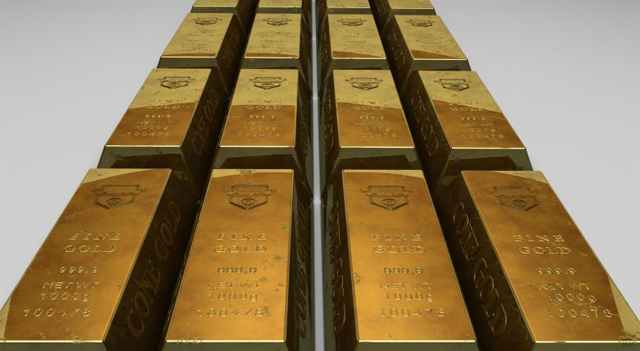
    Gold prices showed little movement in Asian trading on Friday, stabilizing after a recent decline from record levels as renewed U.S. tariff measures encouraged traders to favor safe-haven assets.

    Investor focus was also drawn to upcoming U.S. inflation data, keeping demand for gold relatively firm. The metal maintained modest weekly gains after hitting a series of record highs, although a stronger U.S. dollar limited further advances. Broader metal markets also experienced restrained gains amid uncertainty over the timing of Federal Reserve interest rate cuts.

    Spot gold was unchanged at $3,749.30 per ounce, while gold futures inched up 0.2% to $3,778.90 per ounce by 01:39 ET (05:39 GMT). Earlier this week, spot prices reached a record high of $3,791.11 per ounce.

    Tariff Concerns Support Gold Demand

    Gold steadied following President Donald Trump’s announcement of new U.S. trade tariffs, including a 100% levy on all imported pharmaceuticals. The tariffs heightened uncertainty over their economic impact and prompted risk-averse flows into gold.

    The metal was poised for roughly a 1.7% gain on the week, marking its sixth consecutive weekly increase. However, rising uncertainty over U.S. interest rates prevented gold from sustaining its record highs. Recent U.S. data showed a stronger-than-expected GDP growth in Q2 and some improvement in weekly jobless claims, adding to speculation about the pace of Fed policy adjustments.

    Federal Reserve Chair Jerome Powell has highlighted elevated economic risks stemming from persistent inflation and a slowing labor market. The U.S. dollar rebounded from multi-year lows this week, tempering gains across metals and commodities.

    Markets Await PCE Inflation for Rate Signals

    Investors are now eyeing the U.S. PCE price index— the Fed’s preferred inflation measure— for indications on potential interest rate moves. Headline inflation for August is expected to remain elevated, with core PCE figures staying well above the Fed’s 2% annual target.

    Sticky inflation may reduce the Fed’s scope to cut rates, particularly amid uncertainty from Trump’s tariffs. On Thursday, Trump reiterated his call for lower U.S. interest rates, urging the Fed to cut rates to 2% and renewing criticism of Powell, who has largely resisted the president’s pressure.

    Other Metals Mixed

    Spot platinum rose 0.9% to $1,541.85 per ounce, while silver slipped 0.7% to $44.8745 per ounce. Industrial metals saw muted movements: LME copper futures held steady at $10,258.65 per ton, while COMEX copper futures fell 0.2% to $4.7807 per pound.

    This content is for informational purposes only and does not constitute financial, investment, or other professional advice. It should not be considered a recommendation to buy or sell any securities or financial instruments. All investments involve risk, including the potential loss of principal. Past performance is not indicative of future results. You should conduct your own research and consult with a qualified financial advisor before making any investment decisions.
  • Oil Poised for Largest Weekly Gain in Three Months as Russia Restricts Fuel Exports

    Oil Poised for Largest Weekly Gain in Three Months as Russia Restricts Fuel Exports

    Oil prices edged higher on Friday, tracking a weekly gain of more than 4%, as Ukrainian strikes on Russia’s energy infrastructure prompted Moscow to limit fuel exports and brought the country close to reducing crude output.

    Brent futures rose 21 cents, or 0.3%, to $69.63 a barrel by 0635 GMT, while U.S. West Texas Intermediate (WTI) crude futures added 32 cents, or 0.5%, to $65.30 a barrel.

    “Gains were supported by ongoing Ukrainian drone strikes targeting Russian oil infrastructure, NATO’s warning to Russia it is ready to respond to future violations of its airspace and Russia’s move to halt key fuel exports,” said IG analyst Tony Sycamore.

    Both benchmarks are on course for their largest weekly increases since the week ending June 13, when Brent jumped 11.7% and WTI surged 13% amid air strikes between Israel and Iran.

    Russia announced a partial ban on diesel exports until year-end and extended an existing ban on gasoline exports, Deputy Prime Minister Alexander Novak said Thursday. Reduced refining capacity has pushed Moscow toward potential crude output cuts, as several regions face shortages of specific fuel grades.

    “NATO’s warning of a response to further violations of its airspace has ratcheted up the tensions from the Russia-Ukraine war and raised prospects of additional sanctions on Russia’s oil industry,” said Daniel Hynes, an analyst at ANZ.

    Both Brent and WTI also hit their highest levels since August 1 earlier this week, fueled by a surprise drop in U.S. weekly crude inventories and Ukraine’s continued attacks on Russian energy facilities.

    Offsetting some of the gains, U.S. GDP grew at an upwardly revised annualized rate of 3.8% in Q2, according to the Commerce Department’s Bureau of Economic Analysis. Stronger-than-expected economic data could make the Federal Reserve more cautious about further rate cuts. The U.S. central bank reduced rates by 25 basis points last week, its first cut since December, signaling potential additional reductions ahead.

    “The Kurdistan Regional Government’s announcement on Thursday that oil exports would resume within 48 hours also pressured prices,” said Hynes. “Geopolitical tensions reversed earlier losses after a landmark agreement was reached to allow the resumption of exports from Iraq’s Kurdistan, which could return up to 500kb/d to the global market.”

    This content is for informational purposes only and does not constitute financial, investment, or other professional advice. It should not be considered a recommendation to buy or sell any securities or financial instruments. All investments involve risk, including the potential loss of principal. Past performance is not indicative of future results. You should conduct your own research and consult with a qualified financial advisor before making any investment decisions.

  • European Central Bank Plans New Digital Euro Experiments in 2026

    European Central Bank Plans New Digital Euro Experiments in 2026

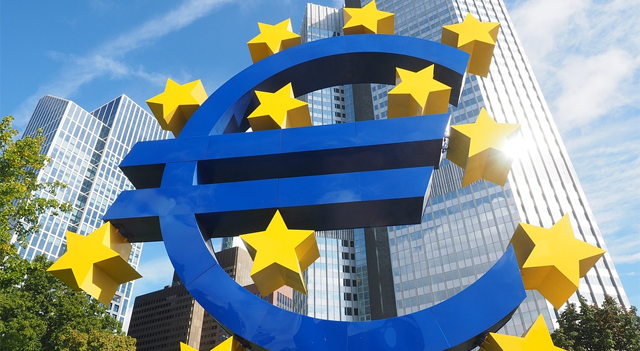
    The European Central Bank (ECB) announced on Friday that it will launch a fresh series of experiments in 2026 to explore the potential uses of a digital euro. The initiative is seen as a key step in ensuring the eurozone’s financial autonomy from the United States.

    The ECB noted that trials conducted this year with private sector partners have already highlighted promising applications for the digital euro, designed as a central bank-backed electronic wallet. These tests indicated that the digital currency could streamline automated payments for public transportation and support certain types of reimbursements.

    This announcement marks another stage in the ECB’s ongoing effort to assess practical uses and implementation strategies for a potential central bank digital currency, as part of its broader digital finance agenda.

    This content is for informational purposes only and does not constitute financial, investment, or other professional advice. It should not be considered a recommendation to buy or sell any securities or financial instruments. All investments involve risk, including the potential loss of principal. Past performance is not indicative of future results. You should conduct your own research and consult with a qualified financial advisor before making any investment decisions.

  • DAX, CAC, FTSE100, European Stocks Rise Amid Tariff Concerns and Focus on U.S. Inflation Data

    DAX, CAC, FTSE100, European Stocks Rise Amid Tariff Concerns and Focus on U.S. Inflation Data

    European equities inched higher on Friday, stabilizing after losses in the previous session, although investors remain cautious ahead of key U.S. inflation data and renewed uncertainty over trade tariffs from President Donald Trump.

    As of 07:05 GMT, Germany’s DAX was up 0.4%, France’s CAC 40 gained 0.4%, and the U.K.’s FTSE 100 edged 0.1% higher.

    U.S. Inflation Data in Focus

    Markets are closely watching the upcoming release of U.S. Personal Consumption Expenditures (PCE) data, the Federal Reserve’s preferred inflation gauge, for signals on potential further interest rate cuts this year. Wall Street losses on Thursday reflected the resilience of the U.S. economy, which has raised questions about the need for additional policy easing. Fed officials have largely signalled caution on cutting rates further, noting that tariffs could increase inflationary pressures.

    Trade Tariffs Add to Market Uncertainty

    Late Thursday, President Trump unveiled a series of new trade tariffs, including a 100% levy on imported pharmaceutical products. The tariffs would apply to all pharma imports unless the company has already begun establishing a U.S.-based manufacturing plant. Additional duties include a 25% tariff on heavy trucks, a 50% tariff on kitchen and bathroom fittings, and a 30% tariff on upholstered furniture, all set to take effect from October 1.

    It remains unclear whether these tariffs would be imposed on top of existing national duties or if countries with trade agreements, such as the European Union or the U.K., would be exempt. The U.S. imported at least $212 billion in pharmaceutical goods in 2024, highlighting the potential market impact.

    Drugmakers and European Economic Data

    Investors will be watching Europe’s largest pharmaceutical companies closely in response to the tariff news. On the economic front, Spain’s GDP rose 0.8% quarter-on-quarter in Q2, exceeding expectations, while Italy’s business and consumer confidence figures are due later in the session.

    Oil Prices Poised for Weekly Gain

    Oil prices climbed on Friday, tracking a strong weekly gain as Russian energy supply disruptions and a surprise U.S. crude inventory draw tightened market conditions. At 03:05 ET, Brent crude futures were up 0.2% at $69.54 a barrel, while West Texas Intermediate rose 0.3% to $65.17 a barrel. Both benchmarks have increased over 4% this week, marking their largest weekly gains since mid-June.

    Ukrainian drone strikes on Russian energy facilities prompted Moscow to impose partial diesel export curbs and extend a gasoline export ban until the end of 2025 to protect domestic fuel supplies, reducing global availability. On the demand side, U.S. crude inventories fell more than expected, further tightening the market.

    This content is for informational purposes only and does not constitute financial, investment, or other professional advice. It should not be considered a recommendation to buy or sell any securities or financial instruments. All investments involve risk, including the potential loss of principal. Past performance is not indicative of future results. You should conduct your own research and consult with a qualified financial advisor before making any investment decisions.
  • Ceres Power Reports H1 2025 Results Amid Shift to Commercial Operations

    Ceres Power Reports H1 2025 Results Amid Shift to Commercial Operations

    Ceres Power Holdings (LSE:CWR) posted a 26% decline in revenue to £21.1 million for the first half of 2025, as the clean energy technology company transitions from R&D to commercial production.

    Despite lower revenues, largely due to significant one-off license revenue from the Delta agreement in 2024, Ceres maintained a strong balance sheet with £104.1 million in cash and short-term investments, recording a positive cash inflow of £1.6 million during the period. Gross profit fell 27% to £16.6 million, while operating costs before exceptional items dropped 6% to £35.6 million following cost rationalization measures introduced last year. Adjusted EBITDA loss widened to £11.3 million from £9.0 million in H1 2024.

    In a notable milestone, Doosan became the first Ceres partner to begin mass production of products using the company’s solid oxide fuel cell technology in July. Additionally, Shell’s megawatt-scale electrolyser went live at Ceres’ Technology Centre in Bangalore, demonstrating efficient hydrogen production.

    The company launched a business transformation program to reflect its shift from an R&D-focused to a commercially-led organization, aiming to cut operating expenses by roughly 20% by the end of 2025 compared to the full year.

    Looking ahead, Ceres expects full-year revenue of around £32 million, with additional potential upside if a new manufacturing license agreement currently under negotiation is finalized.

    CEO Phil Caldwell highlighted the rapidly evolving market, particularly the urgent power needs of AI data centers, as a key growth opportunity. “With a single product approach, a sharper commercial and operational focus and the establishment of mass manufacturing, I am confident that we can both meet the needs of today’s rapidly growing power market,” Caldwell said.

    This content is for informational purposes only and does not constitute financial, investment, or other professional advice. It should not be considered a recommendation to buy or sell any securities or financial instruments. All investments involve risk, including the potential loss of principal. Past performance is not indicative of future results. You should conduct your own research and consult with a qualified financial advisor before making any investment decisions.

  • FTSE 100 Rises as European Markets Overlook Trump’s Pharma Tariffs

    FTSE 100 Rises as European Markets Overlook Trump’s Pharma Tariffs

    British equities climbed on Friday, bouncing back from the previous day’s declines despite U.S. President Donald Trump announcing new trade tariffs, including a 100% duty on imported pharmaceutical products.

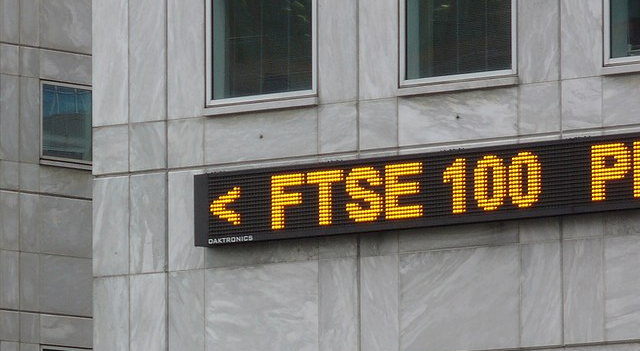
    The FTSE 100 index was up roughly 1% as of 0720 GMT, while the British pound edged slightly higher against the U.S. dollar, trading at 1.33. European markets also advanced, with Germany’s DAX rising 0.4% and France’s CAC 40 up 0.7%.

    Trump’s Tariffs Weigh on Pharma, UK Stocks Hold Firm

    European pharmaceutical stocks fell following the tariff announcement, although UK companies saw more muted movements. In early European trading, AstraZeneca PLC (LSE:AZN) slipped 0.09%, while GSK plc (LSE:GSK) increased 0.3%. Hikma Pharmaceuticals PLC (LSE:HIK), focused on generics unaffected by the tariffs, gained 1.7%.

    Meanwhile, continental European firms including Novo Nordisk A/S Class B (NYSE:NVO), Roche Holding AG (BIT1:ROG), and Novartis AG (NYSE:NVS) each fell between 1.2% and 2.4% on the Tradegate platform.

    Pennon Projects “Strong Return to Profitability”

    Water utility Pennon Group (LSE:PNN) confirmed it remains on track for 2025/26, forecasting a “strong return to profitability” in its trading statement released Friday. The company anticipates around 60% EBITDA growth year-over-year, slightly below Jefferies’ estimate of 66% and consensus expectations of 67%. Analysts suggested this variance could be linked to Pennon shifting some revenues from the current year into the next to smooth customer billing profiles.

    Ceres Power Sees Revenue Dip Amid Shift to Commercial Production

    Clean energy technology developer Ceres Power Holdings PLC (LSE:CWR) reported a 26% decline in revenue to £21.1 million for H1 2025, reflecting its transition from R&D to commercial operations. Despite lower revenues, attributed to significant one-off license revenue from the Delta agreement in 2024, the company maintained a solid balance sheet with £104.1 million in cash and short-term investments, recording a positive cash inflow of £1.6 million over the period.

    This content is for informational purposes only and does not constitute financial, investment, or other professional advice. It should not be considered a recommendation to buy or sell any securities or financial instruments. All investments involve risk, including the potential loss of principal. Past performance is not indicative of future results. You should conduct your own research and consult with a qualified financial advisor before making any investment decisions.

  • Tandem Group Reports Strong H1 2025 Performance with Revenue and Profit Growth

    Tandem Group Reports Strong H1 2025 Performance with Revenue and Profit Growth

    Tandem Group plc (LSE:TND) posted a 14.3% increase in revenue to £11.2 million and a 21.4% rise in gross profit for the first half of 2025, driven by effective inventory management and cost control measures. The company also reduced net debt by 17.9% and experienced sales growth in July and August. Despite macroeconomic pressures, including high unemployment and rising costs, management remains optimistic about future conditions, supported by product innovation and a diversified business strategy. Dividend payments are expected to resume when profitability allows.

    Financially, Tandem faces challenges related to profitability and valuation, reflected in a negative P/E ratio and the absence of a dividend yield. Technical indicators are neutral, though some bearish momentum is present. Strong cash flow management and continued attention to debt levels will be critical for maintaining performance.

    About Tandem Group plc

    Tandem Group plc designs, develops, distributes, and retails sports, leisure, and mobility equipment. Its diverse product range includes toys, golf, cycling, and home & garden items, supported by expanding licensing partnerships and proprietary brands.

    This content is for informational purposes only and does not constitute financial, investment, or other professional advice. It should not be considered a recommendation to buy or sell any securities or financial instruments. All investments involve risk, including the potential loss of principal. Past performance is not indicative of future results. You should conduct your own research and consult with a qualified financial advisor before making any investment decisions.

  • Defence Holdings to Feature Interview with Incoming Chairman

    Defence Holdings to Feature Interview with Incoming Chairman

    Defence Holdings PLC (LSE:ALRT) will host a live broadcast interview with its newly appointed Non-Executive Chairman, Field Marshal Lord Houghton, on October 3, 2025. The discussion will highlight Lord Houghton’s extensive military career, his insights on the evolving defence landscape, and his plans for shaping the company’s strategic direction.

    The appointment is expected to strengthen Defence Holdings’ position in the defence technology sector, enhance engagement with policymakers, and bolster investor confidence.

    About Defence Holdings

    Defence Holdings PLC is the UK’s first listed software-led defence company, focused on developing sovereign AI applications in collaboration with hyperscale platforms and UK deep-tech providers. The company aims to advance national defence capabilities through innovative technology solutions.

    This content is for informational purposes only and does not constitute financial, investment, or other professional advice. It should not be considered a recommendation to buy or sell any securities or financial instruments. All investments involve risk, including the potential loss of principal. Past performance is not indicative of future results. You should conduct your own research and consult with a qualified financial advisor before making any investment decisions.