Blog

  • FTSE 100 Edges Higher as UK Shop Price Inflation Slows

    FTSE 100 Edges Higher as UK Shop Price Inflation Slows

    The FTSE 100 moved higher on Tuesday as investors assessed a slowdown in UK shop price inflation alongside developments involving the US and Iran.

    The FTSE 100 was up 0.33% as of 03:16 ET (07:16 GMT). Elsewhere in Europe, Germany’s DAX declined 0.20% and France’s CAC 40 fell 0.10%.

    Sterling was down 0.15% against the US dollar at $1.3238.

    UK Shop Price Inflation Eases to 1.4%

    British Retail Consortium data showed shop price inflation slowed to 1.4% year on year in September from 1.5% in August. The reading was below the 1.5% forecast but remained above the three-month average of 1.3%.

    Food inflation eased to 2.5% from 2.8%, while non-food inflation declined to 0.8% from 0.9%.

    The British Retail Consortium said retailers were absorbing higher costs associated with business rates, employment, energy and packaging taxes, while indicating there were limits to their ability to continue doing so.

    Broader UK consumer price inflation stood at 3.1% in August and is expected to exceed 4% in early 2027 as higher energy prices related to the Iran conflict feed through to inflation.

    Investors Monitor US-Iran Discussions

    Iran expects to receive an official US response on Tuesday to its proposal concerning the reopening of the Strait of Hormuz, Foreign Minister Abbas Araghchi said, according to Mehr news agency.

    “There are conditions that have been emphasised by the (supreme) leader, and these conditions must be implemented for the Strait of Hormuz to open,” Araghchi said.

    He said Qatari mediators were expected to present proposals to Washington, with Iran hoping for a response “by tomorrow”.

    US President Donald Trump confirmed that US officials had separately spoken with mediators on Monday, saying the process would “go pretty quickly”.

    A US official described the discussions as “positive and constructive” but said an agreement would require nuclear issues to be addressed.

    Trump also denied reports that he had offered sanctions relief or access to frozen funds. “This is untrue. I offered them nothing,” he wrote on Truth Social.

    US Secretary of State Marco Rubio said the Strait of Hormuz was open and that oil flows, excluding Iranian crude, were close to levels recorded before the conflict.

    Iran presented a seven-day proposal at the UN General Assembly last week that included ending hostilities, unfreezing assets, removing oil sanctions and lifting the US port blockade in exchange for reopening Hormuz. Trump rejected the proposal on Friday.

    Treasury Yields and Oil Prices Remain in Focus

    Jefferies economist Mohit Kumar said financial markets remained sensitive to interest rates and oil prices.

    “We are in a one factor world where rates are likely to drive all asset classes and rates are being driven by oil prices,” Kumar wrote in a note.

    He noted that the 10-year US Treasury yield had moved above 5.25%, while the S&P 500 declined 0.8% on Monday.

    Jefferies continues to see the possibility of an agreement before the US midterm elections but said it remains in “reduced risk mode” pending greater clarity on geopolitical developments.

    UK Police Investigate Possible Foreign State Involvement

    In the UK, five men arrested on Sunday near RAF Fairford on suspicion of terrorism and explosives offences were released on bail, police said.

    Counter-terrorism officers are examining whether a foreign state was involved. Iran has denied involvement.

    Rubio described the matter as “a very serious situation” involving a “foreign actor”.

    Oil and Gold Prices Rise

    Brent crude futures increased 1.34% to $99.15 a barrel, while WTI crude rose 1.24% to $93.75.

    Gold futures were higher at $4,175.40, while spot gold gained 0.72% to $4,144.87.

  • Vesuvius Shares Rise 23% After Company Confirms RHI Magnesita Takeover Proposal

    Vesuvius Shares Rise 23% After Company Confirms RHI Magnesita Takeover Proposal

    Vesuvius (LSE:VSVS) shares rose as much as 23% on Tuesday after the British refractories manufacturer confirmed it was considering a takeover proposal from RHI Magnesita (LSE:RHIM) valued at 551 pence per share.

    The proposal comprises 470 pence in cash and 0.28 new RHI Magnesita shares for every 10 Vesuvius shares. The valuation of the share component is based on RHI Magnesita’s one-month volume-weighted average share price on 27 August, when the proposal was made.

    Vesuvius said its board is evaluating the proposal with its financial and legal advisers, including consideration of the terms and execution risks.

    The company said there is no certainty that a firm offer will be made and advised shareholders to take no action at this stage.

    Vesuvius Shareholders Would Own Around 13% of Enlarged Group

    Under the proposed terms, Vesuvius shareholders would receive approximately 7.1 million new RHI Magnesita shares and would own around 13% of the combined company.

    The proposal also allows Vesuvius shareholders to receive the company’s declared interim dividend of 7.1 pence per share without an adjustment to the offer value.

    Vesuvius’ largest shareholder, Cevian Capital, provided an irrevocable undertaking on 27 August to support a recommended offer made on the proposed financial terms.

    Cevian has been a Vesuvius shareholder since 2012 and has a representative on the company’s board.

    RHI Magnesita Has Made Several Previous Approaches

    RHI Magnesita has made a series of proposals for Vesuvius since September 2025, which were previously rejected by the Vesuvius board.

    The first approach, made on 29 September 2025, valued Vesuvius at 448 pence per share in cash. Further proposals followed during October, November and December.

    On 17 March 2026, RHI Magnesita proposed an all-cash offer of 550 pence per share. Vesuvius subsequently provided access to information for confirmatory due diligence.

    RHI Magnesita revised the proposal on 23 June to 454 pence in cash and 96 pence in new RHI Magnesita shares, giving a headline value of 550 pence per Vesuvius share.

    The share component was capped at 9.5 million new shares, representing approximately 20% of RHI Magnesita’s issued share capital at the time. Vesuvius rejected the proposal on 29 June.

    The March and June proposals allowed Vesuvius shareholders to receive the 16.5 pence final dividend for 2025, which was paid on 6 July, without reducing the proposed offer value.

    Those proposals also included an additional payment of 2 pence per share for each month completion extended beyond 15 months following a firm offer announcement, subject to a maximum of three months. That provision is not included in the latest proposal.

    RHI Magnesita Faces 27 October Takeover Deadline

    Under the UK Takeover Code, RHI Magnesita has until 5 p.m. London time on 27 October to either announce a firm intention to make an offer for Vesuvius or state that it does not intend to make an offer.

    The deadline may be extended with the consent of the Takeover Panel.

    Vesuvius said its announcement confirming the proposal was made without the prior agreement or approval of RHI Magnesita.

    More About Vesuvius

    Vesuvius is a UK-listed company supplying refractory products, systems and services used in high-temperature industrial processes.

    RHI Magnesita is also listed in London and operates in the refractory products sector.

  • Roundhouse AI Moves Forward with AIM Admission

    Roundhouse AI Moves Forward with AIM Admission

    Roundhouse AI Ltd is progressing its move to AIM, marking an important stage in the company’s development as it builds infrastructure for the rapidly emerging autonomous AI agent economy.

    Currently trading on the AQSE Growth Market under the ticker (AQSE:ETHL), Roundhouse AI is transitioning to the London Stock Exchange’s AIM market as it enters its next phase of growth and commercial rollout.

    The company announced in August its intention to admit its entire issued and to be issued ordinary share capital to AIM, alongside the cancellation of its existing AQSE admission. The process has now advanced with the publication of its Schedule One announcement.

    The company expects admission to AIM on 13 October 2026, when its shares will trade under the ticker RHAI.

    Building infrastructure for the autonomous AI economy

    At the centre of Roundhouse AI’s proposition is the development of infrastructure for the emerging autonomous AI agent economy.

    As AI agents increasingly interact with businesses, platforms and other agents, the ability to establish identity, trust and reputation becomes an important part of the digital infrastructure required to support these interactions.

    Roundhouse AI is developing technology focused on this area.

    The company describes itself as a business building and operating infrastructure for AI agent deployment, with the objective of establishing the neutral data and reputation infrastructure standard for the autonomous AI agent economy.

    This includes its public analytics dashboard, which records and verifies real settlement activity between AI agents and merchants so their identity and reliability can be assessed.

    From technology development to commercialisation

    The AIM admission comes as Roundhouse AI moves into what it describes as its next “Go to Market” stage.

    The company is focusing on cornerstone partner negotiations, distribution validation and reference data access as it validates its commercial proposition.

    Its stated revenue model is built on three streams: enterprise API subscriptions for Agent Reputation Scores, consulting and advisory engagements with institutional clients, and larger bespoke enterprise contracts. providing the company with multiple routes to commercialisation as its technology is deployed.

    The focus is therefore shifting from the development of the underlying technology towards building partnerships, securing adoption and expanding data coverage, ahead of the Commercialisation stage in which the platform’s scored products are introduced.

    A rapidly developing AI market

    Autonomous AI agents are becoming an increasingly important area within the broader artificial intelligence market. By 2028, Gartner forecasts that AI agents will handle 90% of all B2B purchases, driving more than $15 trillion in spending through automated transactions.

    AI systems are moving beyond simply generating information and are increasingly capable of carrying out tasks, interacting with platforms and operating with greater levels of autonomy.

    As this develops, infrastructure supporting areas such as identity, data, reputation and interactions between AI agents will become an important part of the wider ecosystem.

    This is the market in which Roundhouse AI is positioning its technology.

    The company has already launched the first version of its public analytics dashboard, providing infrastructure for observing, recording and verifying transactions between AI agents and merchants.

    Entering its next phase

    Roundhouse AI’s move from AQSE to AIM represents a significant milestone for the company as it develops its position within the rapidly expanding AI infrastructure market.

    Following its AQSE admission in January, the company has continued to develop its AI infrastructure proposition and is now moving towards its next stage of commercial rollout.

    With the AIM admission scheduled for 13 October 2026, Roundhouse AI is entering this next phase with a focus on cornerstone partnerships, distribution validation, reference data access and the continued evolution of infrastructure for the autonomous AI agent economy.

    The company’s AIM ticker will be RHAI.

    For more information, visit Roundhouse AI.

  • Card Factory Reports 5.3% First-Half Revenue Growth and Raises Interim Dividend

    Card Factory Reports 5.3% First-Half Revenue Growth and Raises Interim Dividend

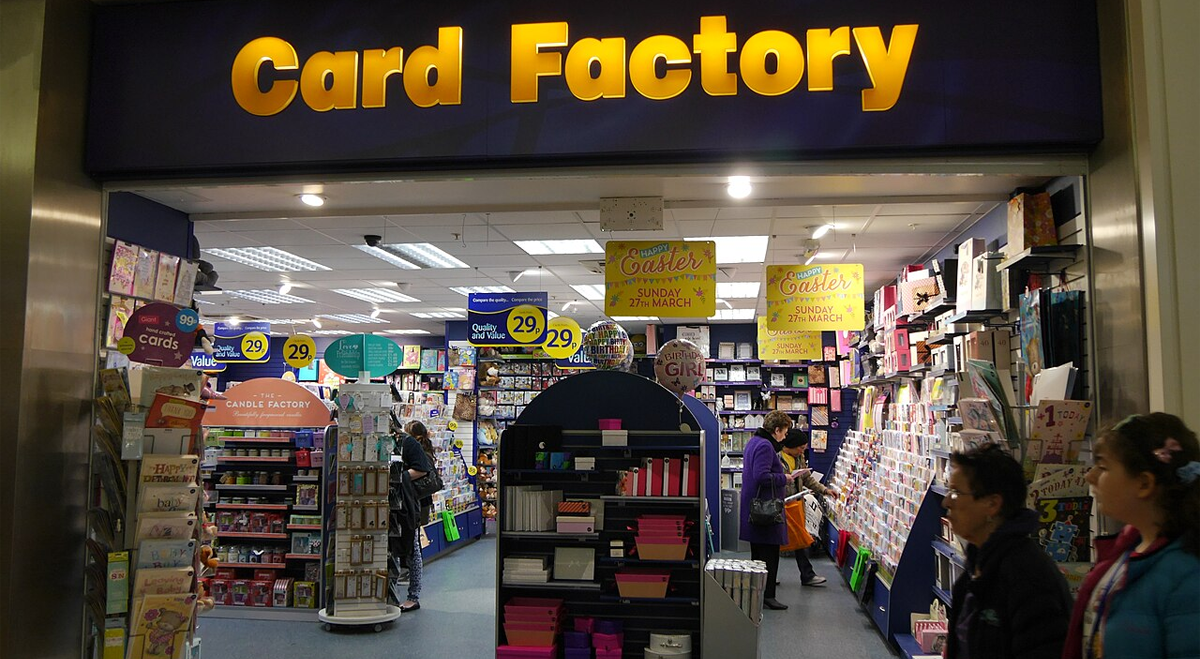
    Card Factory (LSE:CARD) reported revenue of £260.8 million for the first half, an increase of 5.3%, supported by its store operations, international activities and digital business.

    Statutory profit before tax increased during the period, reflecting improved store margins and working capital management.

    Adjusted profit before tax declined slightly as the group continued to invest in its digital operations and international expansion.

    Card Factory generated positive cash flow during the first half, a period that the company said has traditionally been weaker for cash generation.

    The group increased its interim dividend and continued a £15 million share buyback programme. Management also maintained its expectations for the full financial year.

    Card Factory Expands Party Range and International Operations

    During the period, Card Factory continued to manage its store portfolio and rolled out a new party product range as part of its expansion beyond greeting cards.

    The company also reported growth in the Republic of Ireland and through its wholesale partnerships.

    These include relationships with The Reject Shop, Aldi and Garlanna, through which Card Factory distributes products outside its directly operated store network.

    Funky Pigeon Integration Progresses

    Card Factory continued the integration of Funky Pigeon, reporting increased digital sales and customer growth within the business.

    The acquisition has expanded the group’s digital presence alongside its existing physical store network.

    Management said UK like-for-like trading trends were improving ahead of the Golden Quarter, which includes the important Christmas trading period.

    The group is also implementing its Simplify & Scale programme, which is intended to improve efficiency across the business.

    Card Factory continues to target a larger share of the broader celebrations market through its greeting cards, gifts, party products and digital operations.

    More About Card Factory

    Card Factory plc is a UK specialist retailer of greeting cards, gifts and celebration-related products.

    The group operates stores across the UK and Republic of Ireland alongside digital operations including Funky Pigeon. It also distributes products through international and wholesale partnerships.

    Card Factory estimates the broader celebrations market in which it operates at approximately £14.9 billion.

  • Made Tech Reports 26.8% Revenue Growth as Adjusted EBITDA Rises 69%

    Made Tech Reports 26.8% Revenue Growth as Adjusted EBITDA Rises 69%

    Made Tech (LSE:MTEC) reported revenue of £58.9 million for FY26, an increase of 26.8%, supported by demand for its digital and technology services across the UK public sector.

    Adjusted EBITDA increased 69% during the year as margins improved, while the group’s cash balance rose to £14.5 million. Made Tech ended the financial year with no debt.

    Contracted backlog declined modestly at the year end, although the company secured several multi-year public-sector contracts during the period.

    These included a £19 million partnership with the Government Digital Service.

    Made Tech Expands Workforce and AI Services

    The company increased its permanent workforce to 482 employees during FY26 and made changes to its delivery leadership.

    Made Tech also increased the use of artificial intelligence across its service lines, both within its own operations and in the development of products and services for customers.

    Projects delivered during the period included work on the Reception Baseline Assessment for schools and the redesign of the Met Office application.

    £40 Million Contract Lifts Backlog to Around £115 Million

    Following the end of FY26, Made Tech secured a £40 million contract, which the company described as its largest contract win to date.

    The award increased contracted backlog to approximately £115 million by late July.

    Following the contract win and post-period trading, Made Tech upgraded its expectations for FY27.

    Management also expects bookings during the first half of FY27 to reach their highest half-year level to date.

    Made Tech Targets Greater Recurring Revenue

    The company is seeking to increase the proportion of revenue generated from recurring and longer-term contracts as part of its strategy to improve revenue visibility.

    Made Tech also plans to expand its relationships across central and local government while developing its data, AI and digital services.

    Management expects continued public-sector investment in the modernisation of services and technology to provide opportunities for the business through FY30 and beyond, although these remain company expectations.

    More About Made Tech Group

    Made Tech Group PLC is an AIM-listed provider of digital, data, artificial intelligence and technology services, primarily serving the UK public sector and regulated industries.

    The company works with government and public bodies on areas including legacy technology modernisation, digital services, cyber resilience, data and AI.

    Its strategy includes increasing managed services and multi-year contracts while expanding relationships with existing and new public-sector customers.

  • KEFI Gold and Copper Advances Tulu Kapi Development Following US$240 Million Debt Facility

    KEFI Gold and Copper Advances Tulu Kapi Development Following US$240 Million Debt Facility

    KEFI Gold and Copper (LSE:KEFI) reported interim results covering the start of full development activities at its Tulu Kapi Gold Project in Ethiopia, alongside financing, exploration and governance developments across the group.

    The project funding arrangements include a US$240 million senior debt facility, more than US$400 million of contracted services and over US$100 million of equity-risk capital.

    A construction start ceremony was held in February, while KEFI also entered into a mining services agreement with BCM valued at more than US$400 million over nine years.

    Tulu Kapi Development Suspended Following Fatal Security Incident

    Following the end of the reporting period, a security incident occurred at Tulu Kapi on 4 September that resulted in multiple fatalities, including a KEFI employee.

    The company subsequently suspended development activities at the project and said work would resume through a sequenced restart process.

    KEFI has held consultations with local communities, Ethiopian and Oromia authorities, contractors, lenders and investors following the incident. According to the company, these parties have reaffirmed their support for the project.

    The timing and implementation of the development restart remain subject to the company’s security and operational arrangements.

    Saudi Arabian Joint Venture Advances Exploration

    In Saudi Arabia, KEFI’s interest in Gold and Minerals Company, or GMCO, was diluted during the period as the group prioritised capital allocation to Tulu Kapi.

    GMCO secured new exploration licences covering Umm Hijlan and Al Hajar North and continued definitive feasibility study work at the Jibal Qutman and Hawiah projects.

    The joint venture was also selected for Saudi Arabia’s Exploration Enablement Program, which provides funding to support mineral exploration activities.

    KEFI Considers Move to LSE Main Market

    KEFI appointed Stifel Nicolaus Europe as financial adviser and joint broker as it evaluates a potential move from AIM to the London Stock Exchange’s Main Market.

    The company also made changes to its board during the period, including the appointment of independent directors and new committee chairs covering areas including ESG, risk, operations and remuneration.

    KEFI said it is planning a future transition towards a CEO-led management structure around the commencement of production.

    Net Assets Rise to £87 Million

    KEFI reported net assets of £87 million following an equity placing completed in March.

    The group’s comprehensive loss for the half-year increased to £4.6 million, reflecting higher administrative expenses as activity increased during the development phase.

    More About KEFI Gold and Copper

    KEFI Gold and Copper plc is a London-listed gold and copper exploration and development company with projects in Ethiopia and Saudi Arabia.

    Its principal development asset is the Tulu Kapi Gold Project in Ethiopia, held through TKGM, where KEFI expects to retain an 86% beneficial interest alongside Ethiopian government participation.

    In Saudi Arabia, the company participates through GMCO, which is progressing gold and copper projects including Jibal Qutman and Hawiah.

  • Tern Narrows First-Half Loss to £382,000 as Net Assets Increase

    Tern Narrows First-Half Loss to £382,000 as Net Assets Increase

    Tern Plc (LSE:TERN) reported a loss of £382,000 for the six months ended 30 June 2026, a reduction of 60% compared with the same period a year earlier.

    The AIM-listed technology investment company reported net assets of £7.4 million at the end of the period, up from £6.9 million at 31 December 2025.

    Administration expenses declined 15% year on year as Tern continued to manage costs amid what the company described as a challenging funding environment for early-stage technology businesses.

    Tern Raises Funding and Repays Loan Facility

    Tern raised approximately £0.9 million during the first half through placings and an open offer.

    Following the end of the reporting period, the company raised a further approximately £0.95 million through additional placings and an open offer.

    The proceeds have supported follow-on investments in portfolio companies Device Authority and Talking Medicines, as well as the repayment in full of a short-term loan facility.

    The fundraising also provided additional liquidity for Tern as it continues to manage and invest selectively across its portfolio.

    Portfolio Recurring Revenue Declines 37%

    Aggregated annual recurring revenue across Tern’s key portfolio companies declined 37% year on year during the period.

    Against this backdrop, the company said portfolio businesses continued to develop products incorporating artificial intelligence and advanced data science while adjusting their cost bases.

    Tern continues to provide strategic, commercial and governance support to its portfolio companies as they develop their operations and seek additional commercial opportunities.

    More About Tern

    Tern Plc is an AIM-listed investment company focused on early-stage Internet of Things and technology businesses.

    Its portfolio includes Device Authority and Talking Medicines, which develop technology incorporating areas such as artificial intelligence, data analytics and automation.

    Tern takes an active role in its portfolio companies through strategic guidance, commercial support and governance oversight, with a focus on businesses offering recurring revenue potential.

  • Close Brothers Reports £120.3 Million Adjusted Operating Profit as Motor Finance Provision Rises

    Close Brothers Reports £120.3 Million Adjusted Operating Profit as Motor Finance Provision Rises

    Close Brothers Group (LSE:CBG) reported adjusted operating profit of £120.3 million for the year ended 31 July 2026, down 17% year on year, as the specialist lender continued to restructure its operations and address potential costs related to motor finance commissions.

    The group recorded a statutory operating loss before tax of £60.3 million, while return on tangible equity declined to 5.5%. Adjusted earnings per share from continuing operations fell to 47.5 pence.

    Close Brothers said no ordinary dividend will be paid for the year amid uncertainty surrounding potential motor finance redress.

    Cost Savings Reach £36 Million

    During the year, Close Brothers continued to simplify its operations through the sale of Close Brewery Rentals and Winterflood, the run-off of Close Brothers Vehicle Hire and the repositioning of its premium finance business towards commercial lines.

    The group achieved approximately £36 million of annualised cost savings during FY26, exceeding its previous target of £25 million.

    Close Brothers now expects annualised savings to exceed £60 million by the end of FY27 as further restructuring and efficiency measures are implemented.

    Loan Book Remains at £9.5 Billion

    The group’s overall loan book was broadly unchanged at £9.5 billion but increased 2% on an underlying basis.

    Underlying loan book growth reached 4% during the second half, with Close Brothers reporting growth across all divisions during the final quarter.

    Net interest margin declined to 6.9% from 7.2%, which the group attributed to changes in its business mix and its focus on risk-adjusted returns.

    The bad debt ratio remained at 1.0%. The results incorporated updated IFRS 9 modelling and increased provisions relating to a small number of property finance facilities.

    Motor Finance Provision Increases to Around £320 Million

    Close Brothers increased its provision relating to motor finance commission matters to approximately £320 million.

    The provision comes amid continuing legal and regulatory developments concerning the Financial Conduct Authority’s motor finance consumer redress scheme.

    The group said its capital position had strengthened despite the increased provision, with its Common Equity Tier 1 ratio rising to 14.1%. This was above Close Brothers’ medium-term target range of 12% to 13%.

    The board did not declare a final dividend, citing uncertainty associated with motor finance redress.

    Close Brothers Targets Double-Digit Returns by FY28

    Close Brothers is continuing to invest in restructuring and digital initiatives as part of its strategy for the specialist banking business.

    Chief executive Mike Morgan reiterated the group’s objective of achieving a double-digit return on tangible equity by FY28.

    The target remains dependent on the execution of the group’s strategy and the impact of regulatory and other developments affecting the business.

    More About Close Brothers Group

    Close Brothers Group is a UK-based specialist banking group providing secured lending and related financial services across areas including motor finance, property and premium finance.

    The group has been reducing its exposure to non-core activities through disposals and business exits while investing in technology, data and digital capabilities across its specialist lending operations.

  • MobilityOne Reports £113.7 Million H1 Revenue as Loss Narrows

    MobilityOne Reports £113.7 Million H1 Revenue as Loss Narrows

    MobilityOne (LSE:MBO) reported revenue of £113.7 million for the first half of 2026, a decline of 2.0% from the same period a year earlier, as lower demand for its core Malaysian prepaid reload and bill payment services offset growth elsewhere in the business.

    The group’s loss after tax narrowed to £1.02 million, supported by an improvement in gross margins.

    Cash holdings stood at £3.03 million, while secured borrowings increased to £7.47 million. MobilityOne said the additional borrowing supported working capital requirements and higher operating costs.

    Payments Businesses Report Mixed Performance

    The company’s Malaysian prepaid reload and bill payment operations recorded lower demand during the period.

    This was partially offset by growth in sales generated through EDC terminals, payment gateway services and third-party e-wallets.

    Management described operating conditions in Malaysia as challenging during the first half, despite growth in the country’s broader economy.

    MobilityOne’s remittance and e-money activities, along with its operations in Brunei, remained relatively small contributors to the group’s overall business.

    Super Apps Transaction Could Generate RM40 Million Payment

    MobilityOne is awaiting completion of a proposed merger involving Super Apps, which has been delayed.

    Under arrangements relating to the disposal of and joint venture involving MobilityOne’s OneShop business, completion of the transaction is expected to trigger a RM40 million cash consideration for the group.

    The timing and receipt of the payment remain dependent on completion of the Super Apps transaction.

    MobilityOne said the proceeds, if received, would increase its available financial resources and support its growth plans.

    The company is also expanding its activities in health technology, including digital payment systems designed for hospital billing and healthcare administration in Malaysia and Thailand.

    More About MobilityOne

    MobilityOne Limited is a Malaysia-focused provider of e-commerce infrastructure, payment platforms and related financial technology services.

    The group provides mobile prepaid reload and bill payment services and connects with banks, telecommunications companies, utilities, government agencies and transport operators through channels including mobile wallets, e-commerce platforms, EDC terminals, ATMs, kiosks and online banking.

    MobilityOne also holds licences covering activities including acquiring, e-money, remittance and lending.

  • Petro Matad Narrows Interim Loss as Block XX Oil Sales Revenue Remains Outstanding

    Petro Matad Narrows Interim Loss as Block XX Oil Sales Revenue Remains Outstanding

    Petro Matad (LSE:MATD) reported a loss of US$0.59 million for the six months ended 30 June 2026, compared with a loss of US$1.7 million in the same period a year earlier.

    The company’s cash balance increased to US$2.76 million from the prior-year level.

    Production from the Heron-1 and Gazelle-1 wells in Mongolia’s Block XX averaged 241 barrels of oil per day during the period, with 41,941 barrels of crude delivered for sale.

    However, Petro Matad said it had not received revenue from these sales due to delays in finalising its 2026 Oil Sales Agreement with PetroChina. The company reported that US$2.16 million remains outstanding.

    Block XX Production Shut In During September

    Petro Matad deferred planned seismic work and additional well operations as it sought to conserve cash while the oil sales agreement remained unresolved.

    Production continued following the end of the reporting period until September, when PetroChina instructed Petro Matad to shut in production as available storage approached capacity.

    The company said it has raised the issue with Mongolian authorities, which are supporting efforts to obtain approval for the sales agreement.

    Petro Matad is also continuing farm-out discussions covering Blocks XX and VII with international and Chinese counterparties.

    SunSteppe Secures Exclusivity Over 290MW of Renewable Projects

    Petro Matad’s SunSteppe Renewable Energy joint venture progressed several renewable energy projects during the period.

    SunSteppe secured exclusivity over three projects with combined planned capacity of 290MW. These include two 100MW solar and battery storage projects that have been prioritised by the Mongolian government and have received feasibility study approvals and construction licences.

    A consortium led by SunSteppe Renewable Energy was also ranked first for a proposed 90MW project intended to support the electricity grid serving Ulaanbaatar.

    Following the reporting period, discussions continued over tariffs and power purchase agreements. SunSteppe is also working with an international partner on the projects.

    The company said the projects could generate double-digit returns, although their economics remain dependent on factors including the outcome of tariff and power purchase agreement negotiations.

    More About Petro Matad

    Petro Matad Limited is an AIM-listed oil and gas company focused on exploration and production activities in Mongolia.

    Its principal oil interests include the Block XX and Block VII licences in eastern Mongolia. The group also participates in renewable energy development through its SunSteppe Renewable Energy joint venture, which is progressing solar and battery energy storage projects.