
Blog

  • Supply@ME Capital Receives Key Funding Installment

    Supply@ME Capital Receives Key Funding Installment

    Supply@ME Capital plc (LSE:SYME) has confirmed the drawdown of a US$2 million tranche from Nuburu Inc., part of a larger US$5.15 million on-demand convertible funding agreement. The company expects to receive the final installment of approximately US$2.2 million by 31 October 2025.

    This financing represents an important milestone for SYME, strengthening its operational capacity and supporting the growth of its inventory monetisation platform. The funding is expected to bolster the company’s ability to expand its market presence while providing additional financial flexibility to clients that use its solutions.

    About Supply@ME Capital

    Supply@ME Capital plc is a fintech company specializing in Inventory Monetisation. Its platform enables manufacturing and trading businesses to unlock liquidity by converting existing inventory—including stored goods and import/export stock—into cash flow without relying on traditional credit facilities.

    This content is for informational purposes only and does not constitute financial, investment, or other professional advice. It should not be considered a recommendation to buy or sell any securities or financial instruments. All investments involve risk, including the potential loss of principal. Past performance is not indicative of future results. You should conduct your own research and consult with a qualified financial advisor before making any investment decisions.


  • Bytes Technology Group Posts Solid Half-Year Results

    Bytes Technology Group Posts Solid Half-Year Results

    Bytes Technology Group plc (LSE:BYIT) has delivered a steady performance in the first half of its fiscal year, with gross invoiced income projected at around £1.33 billion and operating profit expected to exceed £33 million. Despite dividend payouts and share buybacks, the company maintained a healthy net cash balance of approximately £82 million.

    Chief Executive Officer Sam Mudd voiced confidence in the company’s trajectory, pointing to sustained demand for cloud computing, cybersecurity, and artificial intelligence services as key growth drivers. He noted that these trends should continue to support momentum into the second half of the year.

    Bytes’ strong financial results, highlighted by solid revenue expansion and profitability, have supported its stock performance. Technical indicators point to ongoing bullish momentum, though analysts caution that shares may be nearing overbought levels. Valuation remains reasonable, offering investors an attractive dividend yield, though with modest growth potential. The absence of recent earnings calls or corporate events has not altered the company’s outlook.

    About Bytes Technology Group

    Bytes Technology Group plc is a prominent provider of IT software solutions serving the UK and Ireland, with a focus on cloud, security, and artificial intelligence offerings. The company helps organizations manage technology sourcing, adoption, and implementation in a cost-effective way, catering primarily to non-consumer clients. Bytes is dual-listed on the London Stock Exchange and the Johannesburg Stock Exchange.

    This content is for informational purposes only and does not constitute financial, investment, or other professional advice. It should not be considered a recommendation to buy or sell any securities or financial instruments. All investments involve risk, including the potential loss of principal. Past performance is not indicative of future results. You should conduct your own research and consult with a qualified financial advisor before making any investment decisions.

  • Mkango Resources Secures £3 Million to Accelerate Rare Earth Recycling Expansion

    Mkango Resources Secures £3 Million to Accelerate Rare Earth Recycling Expansion

    Mkango Resources Ltd. (LSE:MKA) has successfully raised £3 million to advance its rare earth magnet recycling and production initiatives in the UK and Germany. The new capital will help the company ramp up its recycling operations, drive manufacturing growth, and evaluate additional opportunities, including a possible Nasdaq listing tied to its projects in Malawi and Poland. The raise underscores strong investor backing and reinforces Mkango’s goal of building a vertically integrated global rare earths business at a time of favorable market momentum.

    About Mkango Resources

    Mkango Resources Ltd., listed on both AIM and the TSX-V, is positioning itself as a leader in the recycling and production of rare earth magnets, alloys, and oxides. Through its stake in Maginito Limited, the company is actively expanding rare earth magnet recycling capacity in the UK and Germany. It is also engaged in developing sustainable supplies of critical rare earth elements—including neodymium, praseodymium, dysprosium, and terbium—that are vital to the fast-growing electric vehicle and renewable energy industries. Beyond recycling, Mkango owns the Songwe Hill rare earths project in Malawi and the Pulawy separation project in Poland, both of which have been classified as Strategic Projects under the European Union’s Critical Raw Materials Act.

    This content is for informational purposes only and does not constitute financial, investment, or other professional advice. It should not be considered a recommendation to buy or sell any securities or financial instruments. All investments involve risk, including the potential loss of principal. Past performance is not indicative of future results. You should conduct your own research and consult with a qualified financial advisor before making any investment decisions.
  • Manchester United Shares Slide After Sixth Consecutive Annual Loss and Cautious Outlook

    Manchester United Shares Slide After Sixth Consecutive Annual Loss and Cautious Outlook

    Manchester United (NYSE:MANU) saw its shares drop nearly 8% in pre-market trading on Wednesday following the release of its latest financial results, marking the club’s sixth straight annual net loss.

    For the fiscal year ending June 30, the Premier League club reported a net loss of £33 million ($45 million), an improvement from the previous year’s £113.2 million deficit. Quarterly revenue for Q4 rose 15.4% year-over-year to £164.1 million, pushing total fiscal 2025 revenues to a record £666.5 million.

    Commercial revenue contributed significantly, reaching £88.2 million in Q4 and £333.3 million for the full year. Adjusted EBITDA for the year was £182.8 million, while the operating loss narrowed to £18.4 million from £69.3 million a year earlier. Adjusted basic loss per share improved to 3.16 pence from 15.79 pence in the prior-year period.

    “As we settle into the 2025/26 season, we are working hard to improve the club in all areas,” said CEO Omar Berrada. “Our commercial business remains strong as we continue to deliver appealing products and experiences for our fans, and best-in-class value to our partners.”

    Looking ahead, the club projects revenues for fiscal 2026 in the range of £640 million to £660 million, slightly below last year’s record. Adjusted EBITDA guidance is set between £180 million and £200 million.

    This content is for informational purposes only and does not constitute financial, investment, or other professional advice. It should not be considered a recommendation to buy or sell any securities or financial instruments. All investments involve risk, including the potential loss of principal. Past performance is not indicative of future results. You should conduct your own research and consult with a qualified financial advisor before making any investment decisions.
  • UBS Sees Silver Poised for Record Levels Amid Surge in Precious Metals Demand

    UBS Sees Silver Poised for Record Levels Amid Surge in Precious Metals Demand

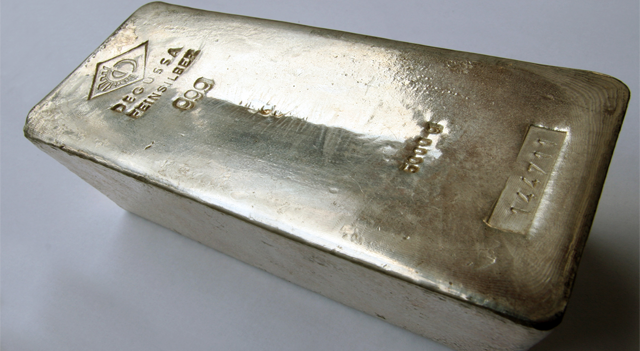
    Silver has climbed to $42 an ounce, marking a 14-year high, as investors flock to the metal alongside gold’s record performance.

    Following the rise, UBS has updated its projections, forecasting that silver could hit new all-time highs. The bank now anticipates silver reaching $44 an ounce by the end of 2025 and climbing to $47 by mid-2026, reflecting its upgraded outlook on gold as well.

    “We flag that silver prices could reach an all-time high—a view that supports a long position in the metal or selling its downside risk for yield enhancement,” strategists Dominic Schnider and Wayne Gordon said in a note.

    The rally is occurring even amid muted global industrial activity, as macroeconomic factors such as geopolitical tensions, U.S. fiscal deficits, slowing economic growth, and potential Federal Reserve rate cuts are driving investor interest.

    Silver’s strong correlation with gold—generally ranging between 0.5 and 1.0—has amplified these gains. ETF inflows underscore this trend, with silver-backed funds adding over 20 million ounces this quarter, pushing the year-to-date total close to 80 million ounces. Despite this, holdings remain roughly 200 million ounces below the peak seen during the pandemic in 2021.

    Looking forward, UBS expects silver to benefit further as monetary policy eases and the market anticipates a cyclical recovery. The strategists also project the gold-silver ratio will move toward 80, which would favor silver’s relative performance.

    They warned, however, that silver’s volatility is roughly double that of gold. Price drops of 15% or more “can occur rapidly, even in a bull market,” they noted, emphasizing that investors need elevated risk tolerance to hold the metal.

    “With lower rates, a softening global economy, and ongoing fiscal deficits, investor interest in precious metals remains strong,” UBS concluded, noting that these conditions are unlikely to reverse soon.

  • DAX, CAC, FTSE100, European Shares Make Small Gains Ahead of Fed Decision

    DAX, CAC, FTSE100, European Shares Make Small Gains Ahead of Fed Decision

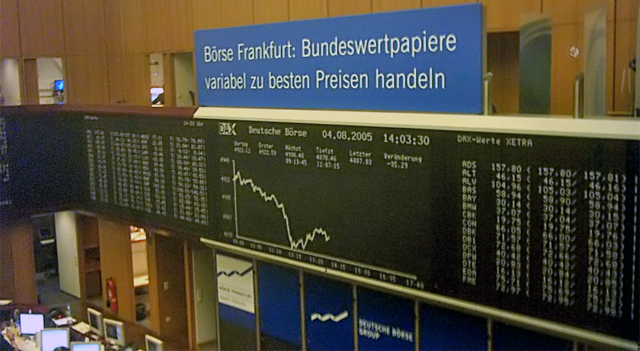
    European stock markets traded slightly higher on Wednesday as investors awaited the outcome of the U.S. Federal Reserve’s policy meeting later in the day. A quarter-point rate cut is largely anticipated, but attention remains firmly on the remarks Fed Chair Jerome Powell will deliver regarding the path forward for monetary policy.

    On the economic front, U.K. inflation figures came in line with forecasts, reinforcing expectations that the Bank of England will hold rates steady this week.

    The Office for National Statistics reported that consumer prices increased 3.8% year over year in August, the same pace as July. The reading matched analyst estimates and marks one of the highest levels since January 2024, when inflation stood at 4.0%.

    In equity markets, London’s FTSE 100 rose 0.3% and Germany’s DAX gained 0.2%. France’s CAC 40, however, slipped 0.1%, moving against the broader trend.

    Among individual movers, French services group Sodexo (EU:SW) advanced after securing a five-year contract renewal with Shell. German wind turbine manufacturer Nordex (TG:NDX1) also climbed after winning its first order in Ecuador. Meanwhile, Dutch postal operator PostNL (EU:PNL) traded sharply higher following the release of its new “ambitious” targets for 2028.

    This content is for informational purposes only and does not constitute financial, investment, or other professional advice. It should not be considered a recommendation to buy or sell any securities or financial instruments. All investments involve risk, including the potential loss of principal. Past performance is not indicative of future results. You should conduct your own research and consult with a qualified financial advisor before making any investment decisions.

  • Dow Jones, S&P, Nasdaq, Wall Street Futures Hover as Markets Await Fed; Nvidia Weakness in Focus

    Dow Jones, S&P, Nasdaq, Wall Street Futures Hover as Markets Await Fed; Nvidia Weakness in Focus

    U.S. equity futures pointed to a subdued start on Wednesday, with Wall Street expected to open little changed as investors stayed cautious ahead of the Federal Reserve’s rate decision.

    Traders are widely betting that the Fed will deliver a 25 basis-point cut later today, though the bigger question lies in the central bank’s updated projections and Jerome Powell’s tone at the press conference. CME’s FedWatch tool places the likelihood of a quarter-point move at 94%, leaving only slim odds for a deeper reduction. Markets also anticipate two more cuts—one in October and another in December—but policymakers have signaled those will hinge on incoming data.

    Pre-market sentiment took a hit from Nvidia (NASDAQ:NVDA), which slipped 1.6% following a Financial Times report that Beijing has instructed its largest internet companies, including Alibaba and ByteDance, to halt purchases of the chipmaker’s AI products.

    The wait-and-see approach follows a choppy Tuesday session. The Nasdaq and S&P 500 both touched fresh intraday records before losing steam, with the Dow Jones Industrial Average closing down 0.3% at 45,757.90, the Nasdaq down 0.1% at 22,333.96, and the S&P 500 lower by 0.1% at 6,606.76.

    Economic data offered a bright spot, as U.S. retail sales surged 0.6% in August—triple market expectations and matching July’s revised pace. Still, the upbeat report did little to shift sentiment as traders focused squarely on the Fed.

    Sector performance remained mixed. Gold miners retreated sharply, dragging the NYSE Arca Gold Bugs Index down 2.3%, while utilities also weakened, with the Dow Jones Utility Average falling 1.6%. By contrast, energy names rallied strongly, rising alongside crude oil prices and pushing both the NYSE Arca Oil Index and Philadelphia Oil Service Index up 2.2%.

    This content is for informational purposes only and does not constitute financial, investment, or other professional advice. It should not be considered a recommendation to buy or sell any securities or financial instruments. All investments involve risk, including the potential loss of principal. Past performance is not indicative of future results. You should conduct your own research and consult with a qualified financial advisor before making any investment decisions.

  • Investa Unveils UK’s First Zero-Commission Options Trading App

    Investa Unveils UK’s First Zero-Commission Options Trading App

    Investa has launched the UK’s first zero-commission options trading platform, designed to make a traditionally complex and costly investment tool more accessible to retail investors.

    Created by former Citi options brokers in collaboration with Freetrade co-founder Ian Fuller, the app debuted on iOS after a soft launch that processed more than 1,400 trades. An Android version is planned in the coming months.

    Despite its popularity in the U.S.—where nearly 20% of retail investors trade options—adoption in the UK remains below 2%. Investa attributes this gap to high fees, complicated platforms, and limited access, issues it aims to solve with its streamlined design.

    The app gives users exposure to over 200 stocks and ETFs and more than 100,000 listed options contracts. It features plain-language explanations and simplified tools such as “options cards.” Investa runs on a zero-commission model, though other charges may apply, and trading is limited to cash accounts rather than margin.

    During its trial phase, U.S. tech stocks dominated activity, with Nvidia representing over 20% of trades.

    “Our mission is to make the options market more approachable for UK investors, who we believe are missing out on significant opportunities,” said Alec Beasley, Investa co-founder and CEO. “By removing high costs and overly complex systems, we’re opening the door to a broader audience.”

    The launch coincides with Investa’s second crowdfunding campaign on Crowdcube, where it is seeking at least £1 million to support growth and fund the Android rollout.

    Disclaimer

    This content is for informational purposes only and does not constitute financial, investment, or other professional advice. It should not be considered a recommendation to buy or sell any securities or financial instruments. All investments involve risk, including the potential loss of principal. Past performance is not indicative of future results. You should conduct your own research and consult with a qualified financial advisor before making any investment decisions.

  • Deutsche Bank raises gold price outlook for 2026 to $4,000 per ounce

    Deutsche Bank raises gold price outlook for 2026 to $4,000 per ounce

    Deutsche Bank analysts have revised upward their forecast for gold in 2026, citing recent price gains and the potential for U.S. interest rate cuts, along with ongoing concerns over the Federal Reserve’s independence.

    In a client note, the team led by Michael Hsueh set their new average price projection for 2026 at $4,000 per troy ounce, up from the previous $3,700/oz forecast. The adjustment follows spot gold reaching $3,700 on Tuesday, driven largely by market expectations that the Fed will reduce rates by at least 25 basis points at the conclusion of its two-day policy meeting this week. Lower rates generally support gold by reducing opportunity costs, weakening the U.S. dollar, and enhancing the metal’s appeal as a hedge against inflation and a safe-haven asset.

    Analysts highlighted that investor sentiment has also been influenced by concerns over political interference in the Fed’s policymaking. President Donald Trump has publicly criticized the central bank for moving too slowly to cut rates, targeting Chair Jerome Powell and attempting to remove Fed Governor Lisa Cook over alleged property transactions. A federal appeals court recently blocked Trump’s effort to fire Cook, and the White House may appeal the decision to the Supreme Court.

    According to Deutsche Bank, the ongoing questions around Fed independence and shifts in the composition of the Federal Open Market Committee are adding uncertainty about how monetary policy adjustments might be implemented in 2026.

    On the demand side, official purchases of gold continue to be robust, with China playing a major role. The bank noted that China’s net imports of gold through Hong Kong jumped 126.8% in July from June, and its central bank has been steadily adding to reserves. Globally, total gold demand—including over-the-counter trading—rose 3% year-on-year in the second quarter to 1,248.8 metric tons, while investment demand surged 78% compared to the previous year.

    Still, Deutsche Bank pointed to potential headwinds for gold, such as strong equity market performance, greater clarity on Trump’s trade policies, an immigration crackdown affecting U.S. labor needs, and the possibility that the Fed may not cut rates further in 2026. The analysts also noted that historically, gold has often underperformed in the fourth quarter.

    This content is for informational purposes only and does not constitute financial, investment, or other professional advice. It should not be considered a recommendation to buy or sell any securities or financial instruments. All investments involve risk, including the potential loss of principal. Past performance is not indicative of future results. You should conduct your own research and consult with a qualified financial advisor before making any investment decisions.

  • AI could drive a 40% surge in global trade by 2040, WTO says

    AI could drive a 40% surge in global trade by 2040, WTO says

    Artificial intelligence (AI) is expected to significantly boost cross-border trade in goods and services, potentially increasing its value by nearly 40% by 2040, according to the World Trade Report 2025 published Wednesday by the World Trade Organization (WTO).

    The report examines multiple scenarios, projecting global trade growth of 34-37%, influenced by differences in policy adoption and technological advancement between low-, middle-, and high-income countries. Across these scenarios, global GDP could expand by 12-13%.

    “AI has vast potential to lower trade costs and boost productivity. However, access to AI technologies and the capacity to participate in digital trade remains highly uneven,” WTO Director-General Ngozi Okonjo-Iweala highlighted in her foreword.

    Trade in AI-related goods, including semiconductors, raw materials, and intermediate components, reached $2.3 trillion in 2023. The report notes that if lower- and middle-income economies close half of their digital infrastructure gap with high-income nations and embrace AI more broadly, incomes in those regions could grow by 15% and 14%, respectively.

    The WTO stresses the need for policies that bridge the digital divide, enhance workforce skills, and maintain open trade channels to ensure AI contributes to inclusive economic growth. It also highlights a sharp increase in quantitative restrictions on AI goods, rising from 130 in 2012 to almost 500 in 2024, primarily from high- and upper middle-income economies.

    Access to AI-enabling products remains uneven globally, with some low-income countries facing bound tariffs of up to 45%. The WTO provides a platform for member states to discuss trade measures related to AI, noting 80 specific trade concerns centered on the technology.

    The report calls for further commitments, such as broader participation in the WTO’s Information Technology Agreement and updates under the General Agreement on Trade in Services, to make AI adoption more accessible and equitable worldwide.

    This content is for informational purposes only and does not constitute financial, investment, or other professional advice. It should not be considered a recommendation to buy or sell any securities or financial instruments. All investments involve risk, including the potential loss of principal. Past performance is not indicative of future results. You should conduct your own research and consult with a qualified financial advisor before making any investment decisions.