Blog

  • RUA Life Sciences Achieves Strong Revenue Growth and Reaches Profitability

    RUA Life Sciences Achieves Strong Revenue Growth and Reaches Profitability

    RUA Life Sciences plc (LSE:RUA) has successfully evolved from a research-driven organization into a revenue-generating medical technology business, posting substantial revenue growth for the 18-month period ending September 2025. Revenue rose to £6.6 million, supported by higher biomaterials royalty income, increased UK contract manufacturing activity, and contributions from its recently acquired French subsidiary, Abiss. The company’s ongoing diversification efforts have reduced dependence on a single key customer, while achieving EBITDA profitability marks a major milestone in its financial turnaround. Looking ahead, RUA expects continued growth, driven by strategic customer expansion and disciplined cash management.

    RUA Life Sciences’ outlook is underpinned by solid revenue momentum and a healthy balance sheet, though challenges remain in sustaining profitability and improving cash flow. A high price-to-earnings ratio and indications of an overbought stock position suggest investors should remain measured despite positive technical momentum.

    More about RUA Life Sciences plc

    RUA Life Sciences plc operates as a group of medical device businesses focused on the use of long-term implantable biostable polymers, particularly its proprietary Elast-Eon™ technology. The company’s activities include licensing and commercialization of its intellectual property, contract manufacturing, and the development of advanced medical devices for the global healthcare market.

  • Ariana Resources Launches Drilling Program at Dokwe Gold Project in Zimbabwe

    Ariana Resources Launches Drilling Program at Dokwe Gold Project in Zimbabwe

    Ariana Resources (LSE:AAU) has initiated its exploration drilling campaign at the Dokwe Gold Project in Zimbabwe, targeting key zones to evaluate the potential for resource expansion. The program will include 26 drill holes spanning approximately 4,000 meters, focusing on major shear zones estimated to contain more than one million ounces of gold. Initial assay results are expected before year-end, with the company also considering additional drilling for metallurgical analysis—an initiative that could play a crucial role in upcoming feasibility studies and future resource assessments.

    More about Ariana Resources PLC

    Ariana Resources PLC is a diversified mineral exploration and development company with a portfolio of gold projects across Africa and Europe. The company focuses on advancing high-potential assets through exploration, resource definition, and strategic partnerships aimed at delivering long-term value for shareholders.

  • Nanoco Extends Development Partnership with Major Asian Chemical Partner

    Nanoco Extends Development Partnership with Major Asian Chemical Partner

    Nanoco Group plc (LSE:NANO) has renewed its Joint Development Agreement with a leading Asian chemical manufacturer for an additional three years. The collaboration will continue advancing and scaling the production process of Quantum Dot nanomaterials used in silicon sensors, with the potential to move into full-scale production by 2028. The revised agreement includes inflation-linked payment increases, providing Nanoco with recurring revenue contributions projected between FY26 and FY29. This extension reinforces the company’s strategic position as a key innovator in high-performance nanomaterials for large-scale, cost-sensitive applications.

    Despite the operational progress, Nanoco continues to face financial headwinds, including a net loss and negative equity. While recent improvements in revenue and cash management are encouraging, technical indicators point to bearish momentum, and the company’s valuation remains pressured by a negative price-to-earnings ratio. Recent management commentary highlights both the risks and opportunities ahead, emphasizing restructuring initiatives and long-term market growth potential as central to the company’s recovery efforts.

    More about Nanoco Group plc

    Nanoco Group plc specializes in the design and production of cadmium-free quantum dots and advanced nanomaterials. Its technologies are used across consumer electronics, automotive, industrial, and defense markets, with particular expertise in enhancing silicon sensors with short-wave infrared capabilities. The company’s proprietary materials support a sustainable and scalable approach to next-generation imaging and sensing solutions.

  • Amaroq Uncovers High-Grade Rare Earth Element Deposits in South Greenland

    Amaroq Uncovers High-Grade Rare Earth Element Deposits in South Greenland

    Amaroq Ltd. (LSE:AMRQ), a mineral exploration and development company, has announced the discovery of high concentrations of rare earth elements (REE) within its Nunarsuit license area in South Greenland. The find represents a major milestone in Amaroq’s strategy to diversify into the rare and critical minerals sector. Sampling from the Ilua pegmatite zone revealed concentrations of up to 2.31% total rare earth oxides (TREO). Located within the Gardar geological province—an area recognized for hosting a large share of global REE resources—the site holds strong potential for further development.

    Amaroq plans to advance exploration efforts and commence targeted drilling in 2026 to determine the scale and economic viability of the discovery. The company believes these results could unlock meaningful value for shareholders and position it as a key participant in meeting the growing global demand for rare earth elements.

    More about Amaroq Ltd.

    Amaroq Ltd. is an independent mining and exploration company dedicated to developing Greenland’s rich mineral resources. The company’s portfolio includes gold and strategic metal projects across southern Greenland, anchored by its 100% ownership of the Nalunaq Gold Mine. Additional exploration assets include the Stendalen and Sava Copper Belt projects, which complement its broader focus on gold, copper, and emerging critical minerals.

  • Genedrive Marks First International Rollout with Deployment at Dublin’s Rotunda Hospital

    Genedrive Marks First International Rollout with Deployment at Dublin’s Rotunda Hospital

    Genedrive plc (LSE:GDR) has expanded its international footprint with the implementation of its Genedrive® MT-RNR1 ID Kit at the Neonatal Intensive Care Unit of Dublin’s Rotunda Hospital — the company’s first installation outside the UK. Funded by the Rotunda Foundation, the initiative forms part of the Early Identification of Susceptibility to Gentamicin-Induced Hearing Loss programme. The deployment underscores the clinical value of Genedrive’s rapid bedside genetic test, which identifies newborns at risk of gentamicin-related hearing loss, improving patient safety and enhancing neonatal care outcomes. The rollout is supported by the ÉISTIGÍ project and the Charlotte Stoker Fund, reinforcing growing recognition of pharmacogenetic testing as a key advancement in personalized medicine.

    Despite ongoing profitability challenges, Genedrive continues to show positive operational progress, supported by revenue growth and a stable balance sheet. While technical indicators suggest bearish short-term momentum and valuations remain constrained by limited earnings, the company’s latest international deployment strengthens its market positioning and long-term outlook.

    More about Genedrive plc

    Genedrive plc is a UK-based molecular diagnostics company specializing in rapid, affordable point-of-care genetic testing. Its flagship products — the Genedrive® MT-RNR1 ID Kit and the Genedrive® CYP2C19 ID Kit — enable clinicians to make precise, time-critical treatment decisions in neonatal and emergency care. Developed in collaboration with NHS partners and recommended by NICE for use within the UK healthcare system, Genedrive’s technologies are helping to advance the adoption of pharmacogenetic testing worldwide.

  • Image Scan Holdings Delivers Second-Half Profit and Strengthens Order Pipeline

    Image Scan Holdings Delivers Second-Half Profit and Strengthens Order Pipeline

    Image Scan Holdings PLC (LSE:IGE) reported a profitable performance in the second half of the fiscal year ending 30 September 2025, marking a turnaround after a difficult start. Early challenges—including supply chain disruptions and delays in a key defence contract—had weighed on results, but improved momentum in the latter half helped narrow the full-year loss. The company closed the period with a solid cash balance of £1.1 million and an impressive forward order book of £4.7 million, reflecting strong demand for its security and defence solutions. Looking ahead, Image Scan plans to broaden its product portfolio and accelerate order conversions to sustain growth.

    The company’s financial outlook shows improving profitability and a stable cash position, though near-term sentiment remains tempered by bearish technical signals and valuation pressures stemming from a negative P/E ratio. Restoring consistent revenue growth and strengthening cash flow will be key priorities moving forward.

    More about Image Scan Holdings PLC

    Image Scan Holdings PLC designs and manufactures advanced X-ray screening systems, serving the global security, defence, and industrial markets. Its technologies are used in counter-terrorism operations and industrial inspection, particularly for automotive emissions components such as catalytic converters and diesel particulate filters. The company markets its products worldwide through a network of specialist distributors and partners.

  • IG Group Adjusts Financial Year End to Strengthen Market Alignment

    IG Group Adjusts Financial Year End to Strengthen Market Alignment

    IG Group Holdings plc (LSE:IGG) has revised its financial year end from 31 May to 31 December, a move that takes effect immediately. The change brings the company’s reporting cycle in line with standard market conventions, a step expected to improve operational efficiency and provide greater comparability with peers. IG Group has also issued an updated reporting timetable for both the transitional period and future results announcements, confirming that its dividend policy will remain unchanged.

    The company maintains a strong financial footing, supported by robust profitability and a healthy balance sheet. Its current valuation appears attractive, characterized by a low price-to-earnings ratio and a generous dividend yield. However, recent softness in revenue and cash flow growth presents moderate headwinds, while technical indicators suggest a neutral near-term trend.

    More about IG Group Holdings plc

    IG Group Holdings plc is a UK-based FTSE 250 financial services company offering online trading and investment platforms. Through its suite of digital tools and educational resources, IG provides access to around 19,000 global financial markets, serving both retail and institutional clients worldwide.

  • Mila Resources Expands Footprint in Queensland to Advance Gold Exploration Strategy

    Mila Resources Expands Footprint in Queensland to Advance Gold Exploration Strategy

    Mila Resources Plc (LSE:MILA) has moved forward with its option agreement with EMX Royalty Corp, securing exploration licenses for three project areas in Queensland, Australia. Through this agreement, Mila will issue new shares to EMX, strengthening their partnership and enabling the company to fast-track its exploration and development plans. The acquisition is seen as a strategic step toward unlocking new gold resource potential and generating long-term value for shareholders.

    While the company continues to grapple with financial difficulties, including ongoing losses and limited cash reserves, its recent initiatives—particularly at the Yarrol Gold Project—offer a path for potential recovery. Technical analysis points to short-term bullish momentum, although persistent valuation concerns remain due to negative earnings and the absence of dividend distributions.

    More about Mila Resources Plc

    Mila Resources Plc is a post-discovery gold exploration and development company focused on advancing early-stage projects toward production. The company specializes in acquiring exploration licenses and building asset value through targeted drilling and resource expansion, with a strategic emphasis on maximizing project potential for investors.

  • Ferro-Alloy Resources Cuts Project Costs and Advances Financing Plans for Vanadium Development

    Ferro-Alloy Resources Cuts Project Costs and Advances Financing Plans for Vanadium Development

    Ferro-Alloy Resources Limited (LSE:FAR) reported major progress on its Balasausqandiq vanadium project, revealing that capital costs have been trimmed by 40% after completing a detailed feasibility study. The company has finalized terms for front-end engineering and design with China National Chemical Engineering Sixth Construction Co., Ltd, which estimated construction expenses at approximately US$261 million. This substantial reduction boosts the project’s internal rate of return to 31% and raises its net present value to around US$931.6 million.

    Further financial momentum comes from a conditional loan proposal by the Bank of Communication and the potential inclusion of Chinese insurance support, both of which could lower overall financing costs. These developments are expected to strengthen the project’s economic appeal and benefit stakeholders.

    Despite these positive updates, Ferro-Alloy Resources Ltd. continues to face financial strain. The company’s weak financial performance and ongoing lack of profitability have weighed on investor confidence, with technical indicators pointing toward continued bearish momentum. The absence of dividend payouts further dampens its market outlook.

    More about Ferro-Alloy Resources Ltd.

    Ferro-Alloy Resources Limited is a mining company focused on developing the extensive Balasausqandiq vanadium deposit in southern Kazakhstan. The project’s ore body allows for comparatively low capital and operating expenses, supporting the company’s long-term production goals. In addition to vanadium, Ferro-Alloy also produces carbon black substitutes and other valuable by-products.

  • Why are governments and tech companies suddenly interested in small nuclear reactors?

    Why are governments and tech companies suddenly interested in small nuclear reactors?

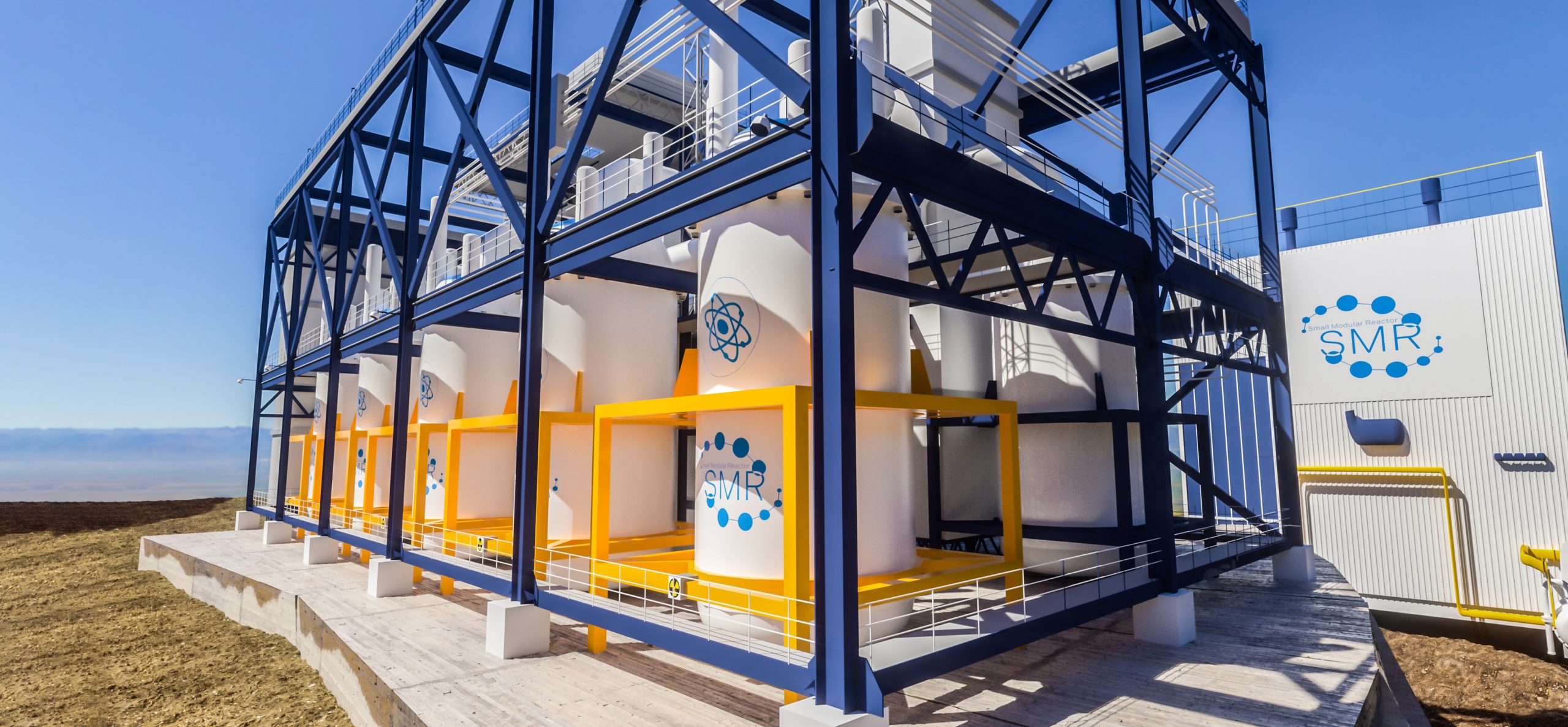
    The world needs a constant supply of electricity to reach net-zero targets. Renewable energy sources provide part of the solution. Nuclear reactors run regardless of weather conditions, with lower carbon emissions than hydrocarbons, but traditional nuclear plants have become notorious for delays and cost overruns. Small modular reactors (SMRs) promise to de-risk the cost overruns and delays through factory production methods. Given the growth in AI infrastructure, large technology companies are already interested in SMRs.

    Google has partnered with Kairos Power, Amazon has invested in X-energy and Microsoft has secured output from a restarted reactor. These companies need vast amounts of reliable electricity for data centres. Governments see SMRs as essential for energy security while meeting climate commitments. The scale of interest is substantial: the global SMR pipeline has grown 65% since 2021 to reach 22 gigawatts of planned capacity, requiring $176bn in total investment according to Wood McKenzie.

    What advantages do SMRs offer over traditional nuclear plants?

    SMRs use standardised components built in factories and assembled on site, in contrast with traditional nuclear power plants, which consist of massive, bespoke reactors that take many years to construct. This modular approach should reduce construction time and cost. The reactors themselves are smaller (defined by the International Atomic Energy Agency as up to 300MW compared to 1,000MW plus for traditional plants), making them suitable for locations that cannot accommodate massive facilities. Some advanced designs use innovative cooling systems beyond conventional water-based technology. No Western company has completed a first-of-a-kind SMR, although China and Russia have operational reactors.

    Which reactor designs are leading the race to market?

    The SMR market resembles a global race with diverse technological approaches. Among proven water-cooled designs, GE Hitachi’s BWRX-300 leads deployment timelines, with four units under construction in Ontario, Canada, targeting first power by late 2029 and build times of 24–36 months. Rolls-Royce (LSE:RR.) leverages six decades of UK submarine reactor experience, with its design undergoing final UK regulatory review and selected for Czech deployment. NuScale Power Corporation (NYSE: SMR) achieved first SMR technology US regulatory approval, though its Idaho Falls project was cancelled in 2023 due to cost overruns.

    More experimental designs have attracted substantial backing: Kairos Power began constructing its Hermes demonstration reactor in 2024, becoming the first US Gen IV reactor to enter build phase, with Google’s investment supporting its molten salt technology for 2030 deployment. X-energy plans the sector’s most ambitious rollout – over 5GW by 2039 – with Amazon backing its high-temperature, gas-cooled design. TerraPower’s sodium-cooled fast reactor with integrated energy storage, supported by Bill Gates, began demonstration construction in 2024. Westinghouse Electric (NYSE:WEC) is developing both the eVinci microreactor and the AP300 SMR, drawing on decades of nuclear expertise.

    BWX Technologies (NYSE: BWXT) positions itself as a critical supplier of nuclear components and fuel across multiple designs. Terra Innovatum Global (NASDAQ: NKLR) focuses on micro reactors, using widely available low-enriched uranium fuel and off-the-shelf components, with supply chains ready to construct its first SOLO reactor by 2027, pending US regulatory approval. This technological diversity reflects different approaches on the optimal balance between proven reliability and advanced performance.

    Are SMRs economically competitive with renewables and gas?

    SMRs must achieve levelised costs of electricity between €52 and €119 per megawatt-hour to compete with other baseload energy sources under current market conditions, according to Arthur D. Little analysis. These targets face stark competition: the International Energy Agency estimates standalone solar at $30.43/MWh and onshore wind at $36.92/MWh, though offshore wind reaches $120.51/MWh. Advanced nuclear currently sits at $63.10/MWh. Rolls-Royce targets below £70/MWh for its design. The economics depend critically on achieving standardisation benefits through volume production –requiring 30 to 50 units of standardised designs to unlock economies of scale. First-of-a-kind projects consistently face cost overruns, making next-of-a-kind deployments essential for proving commercial viability. Without synchronised supply chains and early manufacturing investment, projected time and cost advantages remain theoretical. The challenge intensifies as wind and solar scale rapidly, though their intermittent nature and lack of affordable large-scale storage create opportunities for reliable baseload alternatives. Investment decisions hinge on whether the industry can transform from custom-built projects to mass-produced standardised components, escaping nuclear’s historical pattern of delays and budget overruns.

    What are the biggest obstacles to widespread SMR deployment?

    Regulatory frameworks for SMRs remain fragmented, with each country requiring separate certification processes, reducing the benefits of standardisation. There are supply chains constraints, particularly for specialised fuel and components. In addition, a global skills shortage in nuclear engineering limits how quickly projects can proceed. Most fundamentally, no Western company has yet proven the SMR concept works commercially at scale. Until a first-of-a-kind reactor operates successfully in the West, demonstrating both technical performance and cost competitiveness, the technology remains unproven. This creates a dilemma: progress requires investment, yet investment requires proof. Government support and large corporate partnerships have become essential precisely because private capital alone will not bridge the financing gap.

    This article is part of a series from Edison Explains which looks to break down complex investment topics into clear, practical insights. If you would like any future topic covered please leave a comment for the Edison team.