Blog

  • Getech H1 Revenue Rises 15% to £2.4 Million as Order Book Reaches £4.7 Million in August

    Getech H1 Revenue Rises 15% to £2.4 Million as Order Book Reaches £4.7 Million in August

    Getech Group plc (LSE:GTC) reported a 15% increase in revenue to £2.4 million for the first half of 2026, alongside adjusted EBITDA profit of £0.2 million and operating cash generation of £0.9 million.

    The geoscience and geospatial analytics company attributed its financial performance to a reduced cost base and growth in annualised recurring revenue.

    Getech’s contractually committed order book stood at £4.0 million at the end of the reporting period and subsequently increased to £4.7 million by August 2026.

    The company continued developing its software portfolio during the period, including the release of Globe 2026.1 and Exploration Analyst 3.2, while reporting increased demand for its geoscience and spatial analytics services.

    Getech secured a three-year renewal of its Globe software agreement with a state-backed offshore energy producer in Asia.

    Following the period-end, the company also signed a new multi-year Globe contract with a European oil and gas supermajor.

    According to Getech, the latest agreement means five of the six global oil and gas supermajors now use its Globe platform.

    The company also joined a European Commission-led consortium undertaking the first Europe-wide assessment of natural hydrogen resources.

    Getech’s participation in the programme is expected to be worth approximately €1 million across the 2026 and 2027 financial years.

    The project extends the company’s activities in natural hydrogen alongside its existing work in conventional oil and gas exploration and other resource sectors.

    Getech provides subsurface and geospatial data, software and analytical services to companies, governments and regulatory organisations involved in natural resource exploration and development.

    Its activities cover oil and gas, critical minerals, geothermal energy and natural hydrogen, using proprietary geological datasets and geospatial analysis to support resource identification and evaluation.

    The company has been focusing its operations on core markets while expanding recurring software subscription revenue and data-driven services.

    The increase in its order book, recent Globe contracts and participation in the European natural hydrogen programme represent the latest developments in its commercial pipeline.


  • Invinity Energy Systems H1 Orders Rise to 34.2 MWh as Revenue and Grant Income Reach £1.7 Million

    Invinity Energy Systems H1 Orders Rise to 34.2 MWh as Revenue and Grant Income Reach £1.7 Million

    Invinity Energy Systems (LSE:IES) reported customer orders of 34.2 MWh for the six months ended 30 June 2026, nearly three times the previous level, as revenue and project grant income increased to £1.7 million.

    The vanadium flow battery manufacturer said gross losses narrowed during the period, reflecting improved product margins and increased factory utilisation. However, the group remained loss-making as it continued investing in manufacturing expansion and cost reduction.

    During the first half, Invinity delivered what it described as Europe’s largest vanadium flow battery to the Copwood energy hub in the United Kingdom.

    The company also advanced a battery storage project in Switzerland with FlexBase and reported that a UK long-duration energy storage scheme had selected a project expected to deploy up to 260 MWh of Invinity batteries.

    Following the period-end, Invinity secured a 43 MWh order from Dairyland Power Cooperative, representing its largest contract to date.

    The batteries for the Dairyland project are expected to be supplied from a planned manufacturing facility in the United States.

    The new contract increased Invinity’s secured orders for 2026 to 77.2 MWh, supporting its expansion into the North American energy storage market.

    Management said trading remains in line with expectations, with revenue anticipated to be weighted towards the second half of the year.

    The company reported a combined commercial pipeline of 12.5 GWh. Alongside existing framework agreements and development projects, Invinity said these opportunities provide potential revenue visibility through 2028.

    The pipeline represents prospective business and is distinct from the company’s secured orders.

    Invinity continues to invest in manufacturing capacity, operational efficiency and cost reduction as it works to increase production volumes and improve product economics.

    The company is also implementing changes to its board. Volker Beckers has joined as a non-executive director, while chairman Neil O’Brien intends to retire once a successor has been appointed.

    Chief executive Jonathan Marren said the company is moving towards larger-scale commercial operations as it expands production and pursues additional contracts.

    Invinity manufactures vanadium flow batteries designed for long-duration energy storage applications, including renewable energy integration, grid infrastructure and data centres.

    Its Endurium battery systems are intended for applications requiring repeated charging and discharging over extended operating periods.

    The company currently has manufacturing operations in the UK and Canada and is planning additional production capacity in the United States.

    Invinity’s near-term priorities include fulfilling its contracted orders, progressing manufacturing expansion and converting further opportunities from its commercial pipeline into binding agreements.

  • Blencowe Resources Appoints Interim CEO as It Seeks US$45 Million for Orom-Cross Graphite Project

    Blencowe Resources Appoints Interim CEO as It Seeks US$45 Million for Orom-Cross Graphite Project

    Blencowe Resources Plc (LSE:BRES) has appointed Chief Operating Officer Iain Wearing as interim chief executive officer as the company progresses financing and commercial arrangements for its Orom-Cross graphite project in Uganda.

    Wearing has more than 40 years of experience in mining operations and project development and has made a personal investment in Blencowe. The board is continuing its search for a permanent chief executive.

    The company is prioritising approximately US$45 million in project-level financing for the first phase of Orom-Cross, alongside efforts to convert non-binding offtake arrangements and ongoing product qualification activities into binding commercial agreements.

    Blencowe is also working through the remaining implementation requirements ahead of potential construction.

    The company said its cash position was supported by a £3 million fundraising completed in late 2025. Management considers existing funds sufficient to cover corporate overheads, product qualification programmes and financing activities.

    An updated definitive feasibility study for Orom-Cross estimated a post-tax net present value, discounted at 10%, of US$1.254 billion and an internal rate of return of 51%, based on an initial mine life of 15 years.

    The project has a mineral resource of 64.3 million tonnes and an ore reserve of 23.08 million tonnes.

    According to Blencowe, independent engineering and geological consultants have validated the project’s technical foundations. The company is using the feasibility study and supporting technical work in discussions with potential strategic, institutional and development-finance investors.

    Alongside financing activities, Blencowe is progressing product qualification programmes covering several potential markets for Orom-Cross graphite.

    These include high-purity graphite processing in Europe and the United States, participation in EU-funded battery initiatives, and testing for supercapacitors, defence batteries, anti-radar applications, electromagnetic interference shielding and hypersonic aerospace uses.

    The company said the programmes are providing technical information on the performance of its graphite products and supporting discussions with prospective customers. However, the qualification activities have not yet resulted in binding orders.

    Blencowe is also continuing discussions with the Ugandan government regarding project development and potential support arrangements.

    A recent meeting with President Yoweri Museveni covered the development of Orom-Cross, opportunities for local processing and value addition, and possible financing or government support mechanisms.

    Blencowe owns 100% of the Orom-Cross project and intends to develop graphite production and processing capabilities in Uganda, targeting battery materials and specialist industrial applications.

    The company’s immediate priorities remain securing Phase 1 financing, completing commercial offtake agreements and advancing the implementation work required before construction can begin.

  • Arc Minerals Narrows H1 Loss to £1.74 Million Following £2.88 Million Equity Raise

    Arc Minerals Narrows H1 Loss to £1.74 Million Following £2.88 Million Equity Raise

    Arc Minerals (LSE:ARCM) reported a reduced loss from continuing operations of £1.74 million for the six months ended 30 June 2026, compared with £2.28 million in the corresponding period of 2025, according to its unaudited interim results.

    The exploration company reduced administrative expenses by more than half during the period, while its basic loss per share narrowed to 0.10 pence from 0.16 pence a year earlier.

    Arc also reported an increase in net assets to £4.96 million at 30 June 2026, compared with £2.56 million at the end of December 2025.

    The change in the group’s financial position followed a £2.88 million equity fundraising, which provided additional capital for its ongoing activities.

    Cash balances increased to £1.86 million at the half-year end, while trade payables declined during the period.

    Intangible assets rose to £2.60 million, reflecting continued investment in the company’s exploration portfolio.

    Arc remains a pre-revenue exploration business, with its activities focused on identifying and developing copper deposits in Africa. The company does not currently generate production revenue, and its operations are supported by external financing.

    Its exploration strategy is centred on identifying large-scale copper deposits and advancing projects through resource evaluation and development.

    The interim results reflect lower operating losses, reduced administrative expenditure and an increase in cash and net assets following the equity fundraising.

    The company’s subsequent activities will continue to focus on progressing its African copper exploration portfolio.

  • Predator Oil & Gas Begins MOU-6 Drilling in Morocco, Targets 20-Day Programme

    Predator Oil & Gas Begins MOU-6 Drilling in Morocco, Targets 20-Day Programme

    Predator Oil & Gas Holdings Plc (LSE:PRD) has commenced drilling operations at its MOU-6 well in Morocco, with the programme beginning on 19 September 2026 and expected to take up to 20 days to complete.

    The well forms part of the company’s onshore Moroccan exploration portfolio and is targeting potential gas resources within geological structures previously penetrated by the MOU-1 and MOU-3 wells.

    Predator considers these structures prospective for hydrocarbons and is undertaking the MOU-6 drilling programme to further evaluate their gas potential.

    The company is pursuing a strategy of developing Moroccan gas resources for potential commercialisation through compressed natural gas (CNG) or micro-liquefied natural gas (micro-LNG) facilities.

    Its proposed development approach takes into account local gas pricing and the availability of nearby export infrastructure, although commercial development will depend on the results of exploration and subsequent evaluation.

    The MOU-6 programme represents the latest drilling activity within Predator’s Moroccan portfolio. The company has not yet reported results from the well, and its gas potential remains subject to confirmation through drilling.

    Alongside its Moroccan exploration activities, Predator maintains interests in onshore oil operations in Trinidad, including production, appraisal and infill drilling opportunities.

    The company operates under a Master Services Agreement with NABI Construction in Trinidad and has access to legacy tax losses that may affect its effective Petroleum Profit Tax obligations.

    Predator’s portfolio combines Moroccan gas exploration with Trinidadian oil activities, with the company pursuing development opportunities across both markets.

    The immediate focus in Morocco is the completion of MOU-6 drilling and the assessment of its results, which will inform subsequent exploration and potential gas development activities.

  • Eco Buildings Signs Binding Gambian Agreement Covering Minimum 10,000-Home Programme

    Eco Buildings Signs Binding Gambian Agreement Covering Minimum 10,000-Home Programme

    Eco Buildings Group Plc (LSE:ECOB) has signed a binding Strategic Investment Framework Agreement with the Government of The Gambia and Lumen Holdings to establish a manufacturing and housing development platform in the country, covering a minimum programme of 10,000 homes.

    The agreement provides for an initial order of at least 1,000 housing units and the establishment of Eco Buildings’ West African headquarters and an AI-powered Centre of Excellence in The Gambia.

    Under the framework, a new entity, Eco Buildings Gambia Limited, will serve as the exclusive implementation, manufacturing and technology-transfer platform for the proposed national housing and industrialisation programme.

    The Government of The Gambia will provide support relating to land allocation, permitting, infrastructure and regulatory coordination.

    The initiative includes plans for an AI-enabled manufacturing facility, a training academy and a regional export hub intended to serve markets within the Economic Community of West African States (ECOWAS).

    Eco Buildings said the agreement is structured as a long-term industrial development programme rather than a standalone housing supply contract. It combines residential construction with local manufacturing, workforce training and technology transfer.

    The company expects the proposed facilities to support housing production in The Gambia while providing manufacturing capacity for potential exports to other West African markets.

    The framework remains subject to the completion of definitive financing and implementation agreements. Eco Buildings anticipates that the programme could generate recurring annual revenue once these arrangements are finalised and operations are established.

    The company also intends to use the Gambian initiative as a model for potential agreements with other national governments, although no additional agreements were announced in the update.

    According to Gambian ministers, the partnership is aligned with the government’s objectives for industrialisation, employment, skills development and economic security.

    Eco Buildings’ board described the agreement as part of its strategy to expand from construction materials manufacturing into technology-based housing production and associated industrial development.

    The company specialises in glass-fibre-reinforced gypsum (GFRG) construction systems and aims to establish local manufacturing facilities in markets where it secures housing contracts.

    Its proposed operating model combines standardised factory production with digital engineering, artificial intelligence, workforce training and technology transfer.

    Eco Buildings intends to retain ownership of its patents, software and AI systems while deploying its manufacturing technology across different jurisdictions.

    The Gambian agreement establishes the framework for the proposed housing and manufacturing programme, with financing and detailed implementation arrangements still to be completed before the project proceeds.

  • Mkango Resources to Change Name to Mkango Magnetic Materials on 23 September

    Mkango Resources to Change Name to Mkango Magnetic Materials on 23 September

    Mkango Resources (LSE:MKA) has announced that it will change its name to Mkango Magnetic Materials Limited from the start of trading on 23 September 2026, reflecting its increasing focus on rare earth magnet manufacturing and recycling.

    The company, which is listed on AIM and the TSX Venture Exchange, confirmed that its trading symbol will remain MKA on both exchanges. Existing shareholder arrangements will also remain unchanged.

    The name change reflects Mkango’s strategy of expanding its downstream rare earth activities, including the production of recycled magnets, alloys and oxides, alongside its existing mining and processing projects.

    Through its majority-owned subsidiary Maginito, the company is developing a rare earth magnet recycling and manufacturing business with operations in the United Kingdom, Germany and the United States.

    Its portfolio includes the Remloy business in Germany and HyProMag operations in the UK and Germany. The company is also expanding its Hydrogen Processing of Magnet Scrap (HPMS) recycling technology into the US through the HyProMag USA joint venture.

    These operations cover different stages of magnet recycling and manufacturing, including short-, medium- and long-loop recycling processes.

    Mkango’s downstream activities focus on recovering and processing rare earth elements, including neodymium, praseodymium, dysprosium and terbium, which are used in permanent magnets for applications such as electric vehicles, wind turbines and other clean energy technologies.

    The company also continues to advance its upstream rare earth interests, including the Songwe Hill project in Malawi and the proposed Pulawy rare earth separation plant in Poland.

    Both projects have been designated Strategic Projects under the European Union’s Critical Raw Materials Act and have received US development funding for front-end engineering and design activities.

    Mkango is also pursuing a proposed NASDAQ listing of these assets through a special purpose acquisition company (SPAC) merger involving Mkango Rare Earths Limited.

    The planned name change does not alter the company’s existing exchange listings or trading symbol. It reflects the group’s strategy of developing its rare earth magnet recycling and manufacturing operations while continuing work on its mining and processing assets.

  • Block Energy Completes 70% of Partner-Funded 3D Seismic Survey at Martkopi Prospect in Georgia

    Block Energy Completes 70% of Partner-Funded 3D Seismic Survey at Martkopi Prospect in Georgia

    Block Energy Plc (LSE:BLOE) has reported that approximately 70% of its partner-funded 3D seismic acquisition programme at the Martkopi Terrace prospect in Georgia has been completed, with the survey targeting an independently assessed mean unrisked recoverable resource of 301.7 million barrels of oil equivalent.

    The survey, located within the XIQ licence and forming part of Block Energy’s Project IV portfolio, began recording in August 2026.

    The company said the programme has accumulated nearly 69,000 working hours without a lost-time incident.

    The seismic acquisition follows the farm-out of the XIQ licence to Aspect Georgia, which may invest approximately US$95 million through a staged programme covering seismic acquisition and drilling.

    Under the farm-out arrangements, Aspect Georgia is expected to fully fund Block Energy’s participation through seismic acquisition, exploration, appraisal and potential early production activities.

    The funding structure allows Block to retain an interest in the prospect while its partner finances the agreed work programme.

    The 3D seismic data is expected to provide more detailed subsurface imaging of the Martkopi Terrace prospect and inform future exploration drilling decisions.

    The prospect’s independently assessed mean unrisked recoverable resources of 301.7 million barrels of oil equivalent represent an estimate of potentially recoverable hydrocarbons rather than confirmed reserves. Exploration and appraisal work will be required to establish the presence and commercial viability of any hydrocarbons.

    Block Energy operates a portfolio of oil and gas production, development, appraisal and exploration assets in Georgia, alongside offshore interests in Gabon.

    In Georgia, the company holds interests in seven Production Sharing Contracts covering approximately 4,256 square kilometres. Its portfolio includes producing assets and licences containing contingent and prospective gas resources.

    The company’s strategy involves advancing projects at different stages of development through a combination of operating cash flow, partner funding and carried work programmes.

    Its entry into Gabon has also provided exposure to historical oil discoveries and additional exploration opportunities.

    At Martkopi Terrace, the immediate priority remains completing the 3D seismic acquisition programme. The resulting dataset will support further technical evaluation and help determine subsequent drilling activities under the Aspect Georgia farm-out agreement.

  • Cora Gold Advances Sanankoro Engineering and Pre-Construction Work Ahead of Mining Permit

    Cora Gold Advances Sanankoro Engineering and Pre-Construction Work Ahead of Mining Permit

    Cora Gold Limited (LSE:CORA) has reported progress on front-end engineering design (FEED) and pre-construction activities at its Sanankoro Gold Project in southern Mali, with engineering work scheduled for completion in the fourth quarter of 2026.

    The company said engineering contractor SENET has completed all fieldwork and three-dimensional plant modelling for the project. Equipment suppliers have also contributed to the design of the crushing, milling and gold recovery circuits.

    The engineering programme is intended to support decisions on long-lead equipment once the required mining permit has been granted.

    Pre-construction activities are progressing alongside the engineering work. Cora has completed land compensation arrangements for the planned tailings storage facility and undertaken geotechnical drilling at the proposed processing plant and power station sites.

    The geotechnical results will be used to refine foundation designs for the planned infrastructure.

    The company has also upgraded its exploration camp, including improvements to security, accommodation and utilities, as part of preparations for the construction phase.

    Cora said the engineering and early works programmes are intended to reduce the time required to move into construction and ultimately achieve first gold production, subject to obtaining the necessary permits.

    The FEED programme remains on schedule for completion in the fourth quarter of 2026.

    Separately, the company is undertaking resource expansion drilling aimed at increasing Sanankoro’s existing JORC-compliant mineral resource of more than one million ounces of gold.

    Cora continues to engage with the Government of Mali regarding the exploitation permit and the consolidation of permits associated with the project.

    Sanankoro is being developed as an open-pit oxide gold operation in Mali’s Yanfolila Gold Belt. The project has a Probable Reserve of 531,000 ounces.

    A feasibility study completed in 2025 indicated a post-tax internal rate of return of 98% and a post-tax net present value of US$365 million, based on an assumed gold price of US$3,500 per ounce.

    In April 2026, Cora secured a binding US$120 million gold streaming agreement, which the company said would fully fund Sanankoro’s development through to production alongside existing equity.

    The agreement was amended in August 2026 to permit up to half of the streaming facility to be replaced with conventional senior debt, providing an alternative financing structure for the project.

    Cora’s immediate development priorities remain the completion of engineering, continued pre-construction activities and securing the necessary permits before proceeding with full construction.

    The company also holds exploration interests in Senegal and continues to evaluate opportunities to expand its mineral resources.

  • Mothercare Expects £0.8 Million Liquidation Dividend as Solvency Uncertainty Persists

    Mothercare Expects £0.8 Million Liquidation Dividend as Solvency Uncertainty Persists

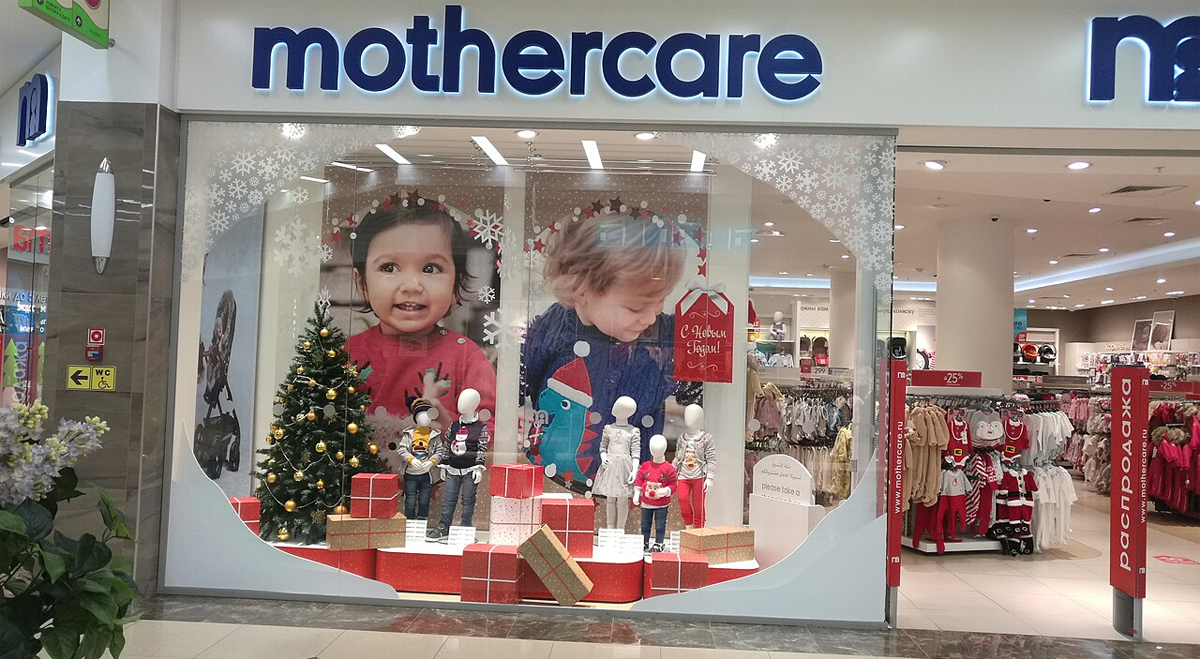
    Mothercare plc (LSE:MTC) has been notified that a wholly owned subsidiary will receive a further cash dividend of £0.8 million from the liquidation of Mothercare UK Limited, which entered administration in 2019.

    The payment will be made to the subsidiary in its capacity as secured lender to the former UK retail business, according to a notification received from the liquidators.

    Mothercare said the additional cash represents a positive development for the group’s financial position but does not materially change its current business outlook or the issues previously disclosed to shareholders.

    The company continues to conduct a strategic and financial review as it assesses options for the future of the business.

    Management cautioned that the outcome of this review remains highly uncertain. The longer-term solvency of Mothercare plc also remains subject to significant uncertainty despite the expected cash receipt.

    The £0.8 million distribution therefore does not resolve the financial issues facing the group, and the company has not indicated that the payment will alter the outcome of its ongoing review.

    Mothercare has not provided a definitive timetable or announced a conclusion to the review in the latest update.

    The company operates as a British brand specialising in products for parents, newborns and young children. Its current business structure follows the administration of its former UK retail subsidiary in 2019.

    The anticipated liquidation dividend will provide an additional cash inflow to the group, while the outcome of its strategic and financial review and its longer-term solvency remain unresolved.