Blog

  • Maria Sharapova Joins CFI as Global Brand Ambassador in Strategic Partnership

    Maria Sharapova Joins CFI as Global Brand Ambassador in Strategic Partnership

    In a bold move that blends sporting excellence with financial innovation, CFI Financial Group has announced tennis legend and entrepreneur Maria Sharapova as its new global brand ambassador. The multi-year partnership marks a significant milestone in CFI’s evolution as a purpose-driven trading platform with global reach.

    Sharapova, a five-time Grand Slam champion and Olympic medalist, joins CFI alongside Formula 1™ icon Lewis Hamilton, reinforcing the company’s commitment to aligning with figures who embody discipline, resilience, and international influence.

    “CFI’s focus on innovation, education, and empowering individuals resonated with me,” said Sharapova. “Whether in sport or business, success comes down to being intentional, prepared, and willing to learn. I’m proud to support CFI’s mission to inform, inspire, and connect with individuals pursuing their own paths to growth.”

    The announcement underscores CFI’s ambition to deepen its emotional connection with clients and inspire broader inclusion in the financial world. Sharapova’s multifaceted career—from elite athlete to investor and designer—mirrors the values CFI champions: precision, adaptability, and vision.

    Ziad Melhem, CEO of CFI Financial Group, praised the partnership: “Maria Sharapova is a symbol of elite performance and long-term vision. Her journey reflects the mindset we promote at CFI—where ambition, emotional intelligence, and adaptability are key traits of successful traders and investors.”

    Sharapova will spearhead high-impact campaigns and strategic appearances aimed at engaging global audiences. Her presence is expected to amplify CFI’s brand visibility and reinforce its position as a trusted provider of trading and investment solutions.

    The collaboration adds to CFI’s growing portfolio of high-profile partnerships, which includes AC Milan, FIBA WASL, and the Department of Culture and Tourism – Abu Dhabi. #

    With Sharapova now on board, CFI continues to redefine the intersection of finance, sport, and global influence.

  • Dow Jones, S&P, Nasdaq, Futures edge higher ahead of heavy earnings week; Japan elections and trade tensions influence markets

    Dow Jones, S&P, Nasdaq, Futures edge higher ahead of heavy earnings week; Japan elections and trade tensions influence markets

    U.S. stock futures showed modest gains on Monday as investors prepared for a busy week packed with key earnings reports from S&P 500 companies. Verizon (NYSE:VZ) is set to kick off the earnings calendar on Monday, with major tech players like Alphabet (NASDAQ:GOOGL) and Tesla (NASDAQ:TSLA) following later in the week. Meanwhile, Japan’s parliamentary elections have introduced uncertainty over critical trade negotiations with the U.S., and the Wall Street Journal reports that the European Union is readying new countermeasures against American firms if trade talks between the EU and Washington fail before the looming tariff deadline.

    Futures tick up

    By 03:38 ET, Dow futures had risen by 118 points (0.3%), S&P 500 futures were up 15 points (0.2%), and Nasdaq 100 futures gained 61 points (0.3%). Wall Street’s main indexes closed Friday with muted moves: the Dow Jones Industrial Average slipped 0.3%, while the S&P 500 and Nasdaq Composite were mostly flat.

    Market sentiment was dampened by reports that the Trump administration is considering increasing tariffs on the European Union to a minimum of 15% to 20%, up from the current 10%. Still, July saw a rise in U.S. consumer sentiment, despite ongoing worries about potential inflationary pressures linked to tariffs.

    President Donald Trump’s assertive trade policies have been a central theme in the accelerating stream of Q2 earnings. Despite some uncertainty clouding the rest of 2025, over 80% of companies reporting so far have exceeded analysts’ expectations.

    Cryptocurrency-related stocks advanced, buoyed by the U.S. House of Representatives passing a bill to establish a regulatory framework for the digital currency sector. Coinbase Global (NASDAQ:COIN) climbed 2.2%, and Robinhood Markets (NASDAQ:HOOD) added 4.1%.

    Verizon leads earnings releases this week

    Earnings season ramps up this week with over 85% of S&P 500 companies yet to report results. Verizon headlines Monday’s pre-market reports, while chipmaker NXP Semiconductors (NASDAQ:NXPI) is expected to report after the close.

    Tuesday will see reports from Texas Instruments (NASDAQ:TXN) and Coca-Cola (NYSE:KO), followed by Alphabet and Tesla on Wednesday. Intel (NASDAQ:INTC), Union Pacific (NYSE:UNP), and Honeywell International (NASDAQ:HON) are due Thursday, with Phillips 66 (NYSE:PSX) and AutoNation (NYSE:AN) closing out the week on Friday.

    So far, around 12% of the S&P 500 has reported, with 86% beating earnings per share estimates and 67% surpassing sales forecasts. Some investors caution that the early strength of this reporting period may raise expectations for upcoming earnings. Still, the overall start has been broadly positive amid ongoing economic uncertainty and trade tensions.

    Japanese elections bring new challenges

    Public broadcaster NHK reported Monday that a coalition led by Japanese Prime Minister Shigeru Ishiba’s ruling Liberal Democratic Party (LDP) is set to lose its majority in the upper house, adding new uncertainty to U.S.-Japan trade talks.

    Exit polls indicate that the LDP and coalition partner Komeito fell short of the 125-seat threshold needed to maintain control of the upper house, a key goal for Ishiba. Despite the setback, Ishiba told NHK he intends to remain prime minister and party leader amid calls for his resignation.

    Sunday’s results follow a heavy defeat for the LDP in October’s lower house election, reflecting declining public support. Opposition promises for increased welfare and tax cuts, led by parties like the Constitutional Democratic Party of Japan, also influenced voters.

    This political shake-up may complicate critical trade negotiations with the U.S., with Ishiba describing talks with Trump as “truly down-to-the-wire.”

    EU readies retaliatory measures against U.S., WSJ reports

    Japan’s talks with Washington are just one of several ongoing negotiations ahead of the August 1 deadline for Trump’s heightened “reciprocal” tariffs to take effect.

    One major uncertainty centers on U.S.-EU trade discussions. The EU has pushed for Washington to maintain a 10% baseline tariff, but U.S. officials reportedly expect Trump to demand tougher terms, including a 15% or higher baseline tariff, the Wall Street Journal said.

    In response, Germany—the EU’s largest exporter—has joined France in advocating a firmer stance against the Trump administration. The EU is even considering additional retaliatory measures targeting U.S. companies beyond existing planned levies, should no deal be reached.

    Chinese markets respond to steady loan prime rate

    China’s CSI 300, Shanghai Composite, and Hong Kong’s Hang Seng all rose modestly—0.7% and 0.6% respectively—after the People’s Bank of China kept its benchmark loan prime rate unchanged at historic lows, as widely anticipated.

    This pause signals Beijing’s intention to continue monetary stimulus, though perhaps at a more measured pace, following recent tariff reductions agreed with the U.S. Monetary policy is expected to remain accommodative to support growth in the world’s second-largest economy.

    Chinese internet stocks listed in Hong Kong outperformed last week, bolstered by Nvidia’s (NASDAQ:NVDA) announcement that it will resume selling a key AI chip in China. This chip is vital to China’s AI ambitions, driven by major players like Alibaba (NYSE:BABA), Baidu (NASDAQ:BIDU), and Tencent Holdings (USOTC:TCEHY).

    This content is for informational purposes only and does not constitute financial, investment, or other professional advice. It should not be considered a recommendation to buy or sell any securities or financial instruments. All investments involve risk, including the potential loss of principal. Past performance is not indicative of future results. You should conduct your own research and consult with a qualified financial advisor before making any investment decisions.


  • Oil prices remain steady as expected sanctions have limited effect

    Oil prices remain steady as expected sanctions have limited effect

    Oil prices showed little movement on Monday, as traders anticipate that the newest European sanctions will have only a minor effect on Russian oil exports.

    By 0800 GMT, Brent crude futures dipped slightly by 12 cents, or 0.2%, settling at $69.16 per barrel, following a 0.35% decline on Friday. Meanwhile, U.S. West Texas Intermediate (WTI) crude remained steady at $67.34, after falling 0.3% in the previous session.

    The European Union recently approved its 18th round of sanctions against Russia linked to the conflict in Ukraine, which also targeted India’s Nayara Energy, a company involved in exporting refined oil products from Russian crude.

    Harry Tchiliguirian from Onyx Capital Group explained, “The latest round of EU sanctions aren’t necessarily going to change the oil balance. That’s why the market is not reacting much.” He added, “Russians have been very good at circumventing these kinds of sanctions.”

    Kremlin spokesperson Dmitry Peskov commented on Friday that Russia has developed a degree of resilience against Western sanctions.

    These EU measures came after U.S. President Donald Trump warned last week that sanctions would be imposed on buyers of Russian exports if Russia failed to reach a peace agreement within 50 days.

    Analysts at ING noted that the key part of the sanctions likely to affect the market is the EU’s ban on imports of refined oil products processed from Russian crude in third countries, though enforcing and monitoring this could be challenging.

    Separately, Iran—also subject to sanctions—is scheduled to engage in nuclear discussions with Britain, France, and Germany in Istanbul on Friday, according to an Iranian Foreign Ministry spokesperson on Monday. The talks follow warnings from the European nations that failing to resume negotiations may result in renewed sanctions on Iran.

    In the U.S., the number of active oil rigs dropped by two to 422 last week, the lowest since September 2021, Baker Hughes reported Friday.

    U.S. tariffs on imports from the European Union will begin on August 1, though U.S. Commerce Secretary Howard Lutnick expressed confidence on Sunday that a trade agreement with the bloc can be reached.

    Tony Sycamore, analyst at IG Markets, said, “Tariff concerns will continue to weigh in the lead up to the August 1 deadline, while some support may come from oil inventory data if it shows tight supply.” He added, “It feels very much like a $64-$70 range in play for the week ahead.”

    Since a ceasefire agreement on June 24 ended the 12-day Israel-Iran conflict, Brent crude futures have traded within a range from $66.34 to $71.53 per barrel.

    This content is for informational purposes only and does not constitute financial, investment, or other professional advice. It should not be considered a recommendation to buy or sell any securities or financial instruments. All investments involve risk, including the potential loss of principal. Past performance is not indicative of future results. You should conduct your own research and consult with a qualified financial advisor before making any investment decisions.

  • Eurozone companies maintain positive outlook on growth despite profit challenges

    Eurozone companies maintain positive outlook on growth despite profit challenges

    Businesses across the eurozone continue to show confidence in their growth prospects, even as profit margins come under strain, partly due to ongoing trade disputes, according to a recent survey published by the European Central Bank (ECB) on Monday.

    The ECB’s latest quarterly Survey on the Access to Finance of Enterprises indicated that a net 8% of companies reported higher sales over the past three months, while a net 23% remain optimistic about their performance in the upcoming quarter.

    Although economic expansion has been modest in recent years, firms have kept employment levels steady, anticipating an eventual economic recovery.

    The survey also highlighted a widespread decline in profitability, with small and medium-sized enterprises feeling the pressure more acutely.

    Most respondents acknowledged being impacted to some degree by trade tensions, especially exporters to the U.S. and businesses in the manufacturing sector.

    Meanwhile, long-term inflation expectations held steady, but firms lowered their forecast for price increases over the next year from 2.9% to 2.5%, the ECB noted.

    This content is for informational purposes only and does not constitute financial, investment, or other professional advice. It should not be considered a recommendation to buy or sell any securities or financial instruments. All investments involve risk, including the potential loss of principal. Past performance is not indicative of future results. You should conduct your own research and consult with a qualified financial advisor before making any investment decisions.
  • BP Appoints Former CRH CEO Manifold as New Chairman

    BP Appoints Former CRH CEO Manifold as New Chairman

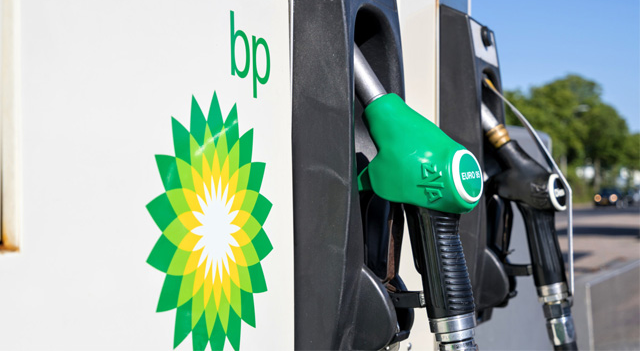
    BP PLC (LSE:BP)has announced Albert Manifold as its incoming chairman, set to replace Helge Lund starting October 1. This leadership change comes amid BP’s ongoing strategic refocus on oil and gas, driven by shareholder pressures.

    Manifold, who previously served as CEO of the building materials firm CRH (NYSE:CRH), will join BP’s board on September 1 as a non-executive director and chair-elect, the company confirmed on Monday. Lund will step down from his roles as chairman and board member at the beginning of October.

    Following the announcement, BP shares saw a modest increase of 0.2% during early London trading.

    This shift in leadership aligns with BP’s broader adjustment in strategy, moving away from the green initiatives championed by Lund and former CEO Bernard Looney. Lund had announced his intention to step down “likely” in 2026 but faced mounting investor opposition, leading to reduced shareholder backing in his recent re-election. Activist investor Elliott Management and environmental groups had criticized his tenure.

    Manifold’s decade-long leadership at CRH included significant portfolio restructuring and the company’s primary listing relocation to New York last year.

    “(Manifold’s) impressive track record of shareholder value creation at CRH demonstrates he is the ideal candidate to oversee BP’s next chapter,” said Amanda Blanc, BP’s senior independent director responsible for managing the succession.

    Separately, BP has been the focus of takeover rumors. Last month, the Wall Street Journal reported that Shell had held discussions about acquiring BP, citing insiders. Shell denied these claims, stating it had not made any offer and was not actively seeking a deal. Under UK takeover rules, Shell’s explicit denial bars it from submitting a formal bid for BP for the next six months.

    This content is for informational purposes only and does not constitute financial, investment, or other professional advice. It should not be considered a recommendation to buy or sell any securities or financial instruments. All investments involve risk, including the potential loss of principal. Past performance is not indicative of future results. You should conduct your own research and consult with a qualified financial advisor before making any investment decisions.
  • Oxford Nanopore Surpasses First-Half Projections, Confirms 2025 Outlook

    Oxford Nanopore Surpasses First-Half Projections, Confirms 2025 Outlook

    On Monday, Oxford Nanopore Technologies (LSE:ONT) announced first-half revenues of £105 million, outperforming analyst forecasts and marking a 28% increase on a constant currency basis.

    The company’s growth was largely fueled by robust sales in its PromethION product line, which saw a 59% year-over-year jump, alongside a 33% rise in Applied markets, including BioPharma, Clinical, and Industrial sectors.

    Despite challenges in the U.S., Oxford Nanopore’s Research segment still managed to grow by 22% compared to last year.

    Regionally, the EMEAI (Europe, Middle East, Africa, and India) and APAC (Asia-Pacific) markets drove growth with over 30% gains in constant currency, while the Americas expanded by 17%, propelled mainly by increased demand in Applied markets.

    The company’s gross margin took a hit due to a non-cash inventory write-down and currency headwinds during the period.

    Nonetheless, adjusted EBITDA losses narrowed compared to the previous year, reflecting disciplined cost control and improved gross profits.

    Oxford Nanopore reaffirmed its full-year 2025 targets, forecasting revenue growth between 20-23% at constant currency, a gross margin of 59%, and adjusted operating expenses rising by 3-4%.

    Cash reserves stood at £337 million at the half-year mark, down from £403.8 million at the close of fiscal 2024, a change the company attributes to better cash flow conversion driven by its new pricing approach and greater uptake of customer capital expenditures.

    This content is for informational purposes only and does not constitute financial, investment, or other professional advice. It should not be considered a recommendation to buy or sell any securities or financial instruments. All investments involve risk, including the potential loss of principal. Past performance is not indicative of future results. You should conduct your own research and consult with a qualified financial advisor before making any investment decisions.

  • Gold Edges Higher as Markets Weigh U.S. Tariffs and Japan’s Political Shake-Up

    Gold Edges Higher as Markets Weigh U.S. Tariffs and Japan’s Political Shake-Up

    Gold prices ticked upward in Asian trading on Monday, supported by safe-haven demand amid growing uncertainty around upcoming U.S. trade tariffs and political volatility in Japan following recent elections.

    Over the weekend, Japan’s upper house elections saw the ruling Liberal Democratic Party lose its majority, raising questions about the future direction of the country’s leadership. The yen strengthened after the vote results, a signal of increased risk aversion among investors.

    Meanwhile, a slight retreat in the U.S. dollar, after a sustained two-week climb, lent additional support to the precious metals market. Still, gold continues to trade within a narrow $200 range it has maintained since April.

    Other precious metals, particularly platinum and silver, extended their strong run, driven by expectations of tightening supply conditions and improving demand outlooks.

    Spot gold rose 0.4% to $3,364.21 an ounce, while September gold futures also gained 0.4% to $3,371.42 by 01:20 ET (05:20 GMT).

    Trade Tensions Reinforce Gold’s Safe-Haven Appeal

    Sunday reporting by the Wall Street Journal added fresh momentum to gold’s rise, revealing that the European Union is preparing countermeasures in response to the U.S.’s planned tariffs under President Donald Trump’s administration.

    The article noted that EU negotiators were caught off guard by Washington’s push for greater concessions, including a proposed minimum tariff of 15%. With Trump’s August 1 tariff deadline looming, anxiety over global trade policy remains high.

    U.S. Commerce Secretary Howard Lutnick reaffirmed on Sunday that the August 1 date is final, with new tariffs potentially reaching up to 50% on certain imports from major economies.

    Political Uncertainty in Japan Adds to Market Caution

    Gold also found support amid political turbulence in Japan, where the ruling LDP, led by Prime Minister Shigeru Ishiba, lost its upper house majority. The defeat clouds the outlook for ongoing U.S.-Japan trade talks and complicates Japan’s economic reform agenda. Investors responded by turning to traditional safe-haven assets.

    Platinum and Silver Extend Strong Gains

    Across the broader metals complex, prices were mostly higher as the U.S. dollar softened slightly.

    Spot platinum rose 1% to $1,439.59 per ounce, while spot silver increased 0.3% to $38.3045. Both metals have posted stronger gains than gold so far in 2025, with platinum up 29.2% and silver surging 53.5%, compared to gold’s 28.4% year-to-date rise.

    Platinum remained close to its highest level in over a decade, and silver hovered near a 14-year peak—supported by bargain hunting and an improving fundamental backdrop.

    Copper Sees Modest Uptick

    Among industrial metals, copper prices also moved higher. London Metal Exchange copper futures climbed 0.6% to $9,846.45 a ton, while COMEX copper added 0.2% to $5.6170 a pound.

    The moves in copper reflect continued optimism about global infrastructure investment and cautious optimism around global trade negotiations—despite persistent geopolitical risks.

    This content is for informational purposes only and does not constitute financial, investment, or other professional advice. It should not be considered a recommendation to buy or sell any securities or financial instruments. All investments involve risk, including the potential loss of principal. Past performance is not indicative of future results. You should conduct your own research and consult with a qualified financial advisor before making any investment decisions.

  • European Markets Tread Water as Earnings and U.S.-EU Trade Talks Weigh on Sentiment

    European Markets Tread Water as Earnings and U.S.-EU Trade Talks Weigh on Sentiment

    European equities started the week on a cautious note, with investors carefully digesting a fresh wave of corporate earnings and the latest developments in high-stakes trade negotiations between the U.S. and the European Union.

    By 08:06 GMT on Monday, the Stoxx 600 index hovered near the flatline, mirroring muted moves in Germany’s DAX. France’s CAC 40 edged 0.2% lower, slipping by 16 points, while London’s FTSE 100 posted a modest 0.1% gain, rising 12 points.

    Mixed Corporate Earnings Shape Market Mood

    Investors were weighing a mix of earnings reports, including upbeat results from low-cost airline Ryanair (LSE:0RYA). The carrier more than doubled its net profit in the April–June period, benefiting from higher last-minute fares and the timing of the Easter holiday. Ryanair also noted solid booking momentum for the peak summer travel season.

    In contrast, shares in Stellantis (BIT:STLAM) came under pressure after the carmaker warned of a projected €2.3 billion net loss for the first half of 2025. The news sent its Milan-listed shares lower in early trading.

    Tense Trade Talks with Washington Under Scrutiny

    Beyond earnings, market attention remained fixed on sensitive trade talks between Brussels and Washington, as both sides attempt to avert a tariff standoff.

    U.S. Commerce Secretary Howard Lutnick expressed optimism over reaching a deal before President Trump’s proposed “reciprocal” tariffs take effect on August 1. However, significant uncertainty remains.

    While EU negotiators have pushed for the U.S. to stick with a 10% baseline tariff, reports suggest Washington may seek a tougher deal, possibly pushing the rate to 15% or higher. According to the Wall Street Journal, the U.S. also wants additional concessions from Europe.

    In response to rising pressure, Germany—Europe’s leading exporter—has shifted to a more confrontational tone, aligning with France in support of a tougher EU stance. Officials are reportedly considering further retaliatory measures against U.S. companies beyond those already on the table.

    Meanwhile, EU leaders including Commission President Ursula von der Leyen and Council President Antonio Costa are expected to meet with Chinese President Xi Jinping later this week, adding another layer of complexity to the bloc’s global trade strategy.

    Eyes on the ECB

    Markets are also preparing for the European Central Bank’s upcoming policy announcement on July 24. Economists broadly expect the ECB to keep its deposit rate steady at 2% following last month’s 25-basis-point cut.

    That June move marked the eighth rate reduction in 12 months, but policymakers signaled a pause for July amid ongoing trade uncertainty and lingering inflation risks.

    “The ECB’s policy path is likely to remain highly dependent on how trade tensions evolve and how they affect the eurozone’s economic outlook,” analysts at Erste Group wrote in a research note.

    Oil Drifts Lower on Demand Concerns

    Crude prices eased on Monday amid concerns that escalating trade tensions could dampen global demand. European sanctions on Russian energy flows also added to market jitters.

    By 04:23 ET, Brent crude futures were down 0.3% at $69.08 per barrel, while WTI futures also slipped 0.3% to $65.89.

    The latest EU sanctions targeting Russia’s energy sector include measures against India’s Nayara Energy, which has been refining Russian crude. ING analysts noted that traders seemed skeptical about the impact of the sanctions, though they flagged a potentially significant clause: a ban on imports of oil products made from Russian crude in third-party countries.

    This content is for informational purposes only and does not constitute financial, investment, or other professional advice. It should not be considered a recommendation to buy or sell any securities or financial instruments. All investments involve risk, including the potential loss of principal. Past performance is not indicative of future results. You should conduct your own research and consult with a qualified financial advisor before making any investment decisions.

  • Deutsche Bank Maintains Bullish View on Euro Stoxx 50 with 6% Upside Target for 2025

    Deutsche Bank Maintains Bullish View on Euro Stoxx 50 with 6% Upside Target for 2025

    Deutsche Bank expects the Euro Stoxx 50 index to gain approximately 6% by the end of 2025, holding firm on its year-end target despite persistent global trade frictions. The bank’s forecast incorporates expectations of a 10% baseline tariff and targeted sector levies, which it believes have already been factored into market pricing.

    “Much of this pressure appears to be priced in already,” said Maximilian Uleer, Deutsche Bank’s Head of European Equity and Cross Asset Strategy. He pointed to the 10% downward revision in 2025 earnings forecasts since October 2024 as evidence that the market has largely accounted for the potential fallout, even with a weaker U.S. dollar in play.

    Uleer estimates the earnings impact from the base-case tariff scenario to be slightly under 4%, a figure he believes is manageable given the existing downgrade in expectations. A more pessimistic scenario involving 20% tariffs could fully erase earnings growth for the year and cut equity valuations by about 10%, but Uleer views this outcome as improbable due to the potential damage it would inflict on the U.S. economy and financial markets.

    European stocks have shown resilience this year, helped in part by strong fiscal spending, particularly in Germany. Deutsche Bank’s favored MDAX index has gained 10% over the STOXX 600 since February, and its basket of German recovery stocks has delivered a 28% return since its launch.

    Despite this strong performance, Uleer continues to prefer small- and mid-cap companies over large-cap peers. Regionally, he has shifted to a neutral stance between U.S. and European equities following a temporary tilt toward U.S. stocks in April, when trade tensions showed signs of easing. Nevertheless, he retains a long-term preference for European markets, citing robust fiscal support, recovering sentiment, and a pickup in manufacturing activity.

    Looking ahead, Uleer expects valuations in the Euro Stoxx 50 to stabilise, with earnings growth likely to return in the second half of 2025 and carry into 2026. Positive policy developments—such as front-loaded German fiscal spending, recent U.S. tax legislation, and renewed NATO defence funding commitments—further strengthen the case for European equities.

    Sector-wise, Deutsche Bank remains constructive on Banks, Construction, and Industrials (excluding Defence), while maintaining a cautious view on Health Care and Consumer Staples.

    This content is for informational purposes only and does not constitute financial, investment, or other professional advice. It should not be considered a recommendation to buy or sell any securities or financial instruments. All investments involve risk, including the potential loss of principal. Past performance is not indicative of future results. You should conduct your own research and consult with a qualified financial advisor before making any investment decisions.

  • Empyrean Energy Strengthens Development with £1 Million Fundraising

    Empyrean Energy Strengthens Development with £1 Million Fundraising

    Empyrean Energy PLC (LSE:EME) has successfully raised £1 million through a placing of new shares to fund ongoing development and general working capital, focusing on its 8.5% stake in the Mako Gas Field. A recent Gas Sales Agreement with Indonesia’s state utility PLN Persero marks a key milestone for the Mako project, highlighting strong natural gas demand amid Indonesia’s shift away from coal. This progress is expected to boost operational momentum and reinforce Empyrean’s market position.

    Despite these positive developments, Empyrean faces severe financial difficulties, including ongoing losses and negative equity. Technical indicators signal a bearish trend, and valuation metrics reflect high risk due to negative earnings. While the fundraising and strategic progress offer some support, substantial financial and operational challenges continue to weigh on the company’s outlook.

    About Empyrean Energy

    Empyrean Energy PLC is an oil and gas development firm with assets in Australia, Indonesia, and the United States. Its core focus is on exploring and developing energy resources, with a major interest in the Mako Gas Field in Indonesian waters.

    This content is for informational purposes only and does not constitute financial, investment, or other professional advice. It should not be considered a recommendation to buy or sell any securities or financial instruments. All investments involve risk, including the potential loss of principal. Past performance is not indicative of future results. You should conduct your own research and consult with a qualified financial advisor before making any investment decisions.