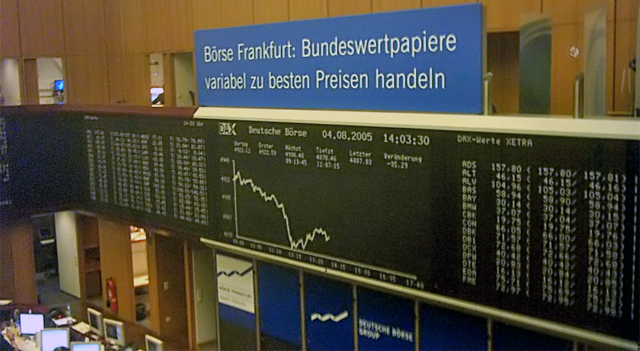
European equities drifted modestly lower on Wednesday as investors worked through a busy slate of corporate results while staying cautious ahead of the U.S. Federal Reserve’s interest rate decision later in the day.
By 08:02 GMT, Germany’s DAX was down 0.1% and France’s CAC 40 had slipped 0.5%, while the UK’s FTSE 100 was broadly flat.
Fed decision keeps investors on edge
Markets across Europe were subdued as attention turned to the Federal Reserve, even after a strong overnight session on Wall Street saw the S&P 500 reach fresh record highs, supported by gains in technology and AI-linked stocks ahead of major U.S. earnings.
The Fed is widely expected to leave interest rates unchanged on Wednesday, shifting the spotlight to comments from Chair Jerome Powell for signals on when rate cuts could begin later this year. Powell’s term expires in May, and U.S. President Donald Trump said on Tuesday that he will soon announce his choice for the next Fed chair.
Trump has repeatedly urged Powell to cut rates more aggressively, criticising the pace of monetary easing. This has raised concerns among investors that a leadership change could weaken the central bank’s independence.
German consumer confidence improves
On the macro front, sentiment among German consumers showed signs of recovery. The GfK forward-looking consumer confidence index rose to -24.1 in February from -26.9 the previous month, comfortably ahead of forecasts for a smaller improvement to -26.0.
The European Central Bank meets next week and is expected to keep interest rates unchanged at 2% for a fifth straight meeting, with euro zone inflation remaining subdued and economic activity proving more resilient than previously feared. However, Austrian central bank governor Martin Kocher told the Financial Times that further appreciation of the euro could eventually force the ECB to consider another rate cut.
The single currency climbed to a more than four-year high on Tuesday, as the dollar weakened amid worries over U.S. policy direction and ongoing geopolitical tensions.
ASML in focus as earnings season accelerates
Corporate earnings were firmly in the spotlight, with reporting season moving into high gear. ASML (EU:ASML) drew particular attention after the Dutch semiconductor equipment maker topped fourth-quarter expectations and delivered optimistic guidance for 2026, citing a sharp increase in orders and continued strong demand for advanced AI-related chips.
Volvo (BIT:1VOLVB) posted a smaller-than-expected drop in fourth-quarter operating profit, though the Swedish truckmaker cut its total annual dividend by more than the market had anticipated.
Swiss contract drug manufacturer Lonza (TG:LO3) forecast 2026 sales growth of 11%–12% at constant exchange rates, with core EBITDA margins expected to expand beyond 32%, signalling solid momentum despite currency headwinds.
Germany’s Wacker Chemie (TG:WCH) reported fourth-quarter earnings below expectations and offered limited detail on its €300 million cost-reduction programme.
Late on Tuesday, LVMH (EU:MC) exceeded fourth-quarter sales forecasts, lifting hopes of a broader recovery in the luxury sector, even as margin pressures from trade tensions, a weaker dollar and elevated gold prices persisted.
In the U.S., attention later turns to results from major technology names, with Meta Platforms (NASDAQ:META), Tesla (NASDAQ:TSLA) and Microsoft (NASDAQ:MSFT) all set to report after the Wall Street close.
Oil steadies as U.S. storm disrupts supply
Oil prices were little changed on Wednesday after recent gains, as markets assessed the impact of a severe winter storm in the United States.
Brent crude slipped 0.1% to $66.50 a barrel, while U.S. West Texas Intermediate edged up 0.1% to $62.45. Both benchmarks jumped around 3% on Tuesday, ending last week at their highest levels since January 14.
Estimates suggest the storm knocked out as much as 2 million barrels per day of U.S. production — roughly 15% of national output — after disrupting energy infrastructure and power networks.
Leave a Reply