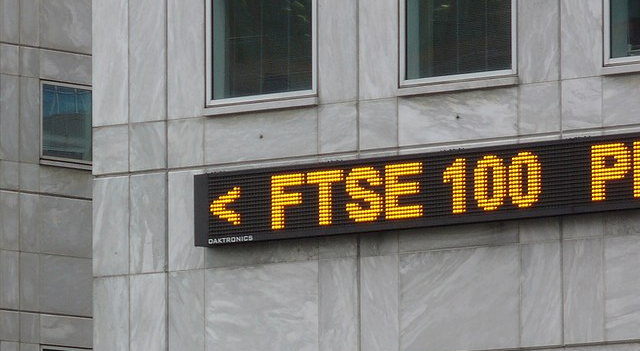
UK equities opened lower on Monday while the British pound slipped to around $1.33, as escalating tensions involving Iran, the United States and Israel dampened investor sentiment. Market participants remain sceptical that the current geopolitical flare-up will ease in the near term.
Recent developments showed U.S. President Donald Trump expressing willingness to engage with Iran’s new leadership, while senior Iranian official Ali Larijani indicated that Tehran is not ready to enter talks with Washington.
Investors are heading into a busy week in which market direction is expected to be heavily influenced by geopolitical headlines and any indications that tensions could begin to de-escalate.
“From a market perspective, we see further downside in the coming days. We had lowered our risk profile early last week as we thought that the market was being too complacent around geopolitical risks. We are still happy to remain in the low risk mode and keeping our powder dry. At some point we would be ready to buy the dip, but that some point seems far for now,” according to a Jefferies economist.
As of 08:14 GMT, the FTSE 100 index was down 0.7%, while the pound weakened roughly 1% against the U.S. dollar to 1.3352. European markets also declined, with Germany’s DAX falling 2.3% and France’s CAC 40 dropping 1.7%.
UK market roundup
Smith+Nephew PLC (LSE:SN.) reported fourth-quarter revenue that exceeded consensus forecasts by 1.6%, while reiterating its full-year 2026 guidance despite ongoing market headwinds. The medical technology group delivered underlying revenue growth of 6.2% in the quarter, beating expectations by around 1.5 percentage points. Second-half EBIT margin exceeded consensus by 7 basis points, and earnings per share came in 2.6% ahead of forecasts.
Bunzl (LSE:BNZL) released full-year results broadly in line with expectations, showing modest improvement in organic growth during the fourth quarter and a slower pace of margin compression in the second half. Revenue grew 3% excluding currency effects, at the top end of its 2%–3% guidance range, while organic growth reached 0.4% compared with flat guidance. Adjusted EBIT declined 7% to £910 million, slightly above the £896 million consensus estimate. Operating margin fell 60 basis points to 7.7%, though the rate of decline eased in the second half, driven by improved performance in North America.
Oxford Nanopore Technologies PLC (LSE:ONT) issued 2026 revenue guidance below analyst expectations but projected tighter control over operating expenses. The company forecasts revenue growth of 21–25% at constant exchange rates, compared with consensus expectations of 27.5% on a reported basis. Currency movements are expected to create a headwind of around 1.5 percentage points. Operating expenses excluding depreciation and amortisation are expected to rise between 0% and 5%, below the company’s typical annual range of 3%–8%.
Big Yellow Group (LSE:BYG) confirmed that Chief Executive Jim Gibson will retire on July 20 following the company’s Annual General Meeting, with Chief Operating Officer John Hunter set to succeed him. Gibson, who co-founded the company in September 1998 and has served as CEO since 2003, is widely credited with building Big Yellow into a market leader after launching the business from a small 600-square-foot office in Bagshot.
Meanwhile, UK house prices edged higher in February, according to Nationwide data. The average property price rose by 0.3%, or £817, to £273,176 on a seasonally adjusted basis, matching January’s increase. On an annual basis, prices were up 1%, or £2,660, compared with February 2025 — a slight acceleration from the 0.99% yearly growth recorded the previous month. Housebuilders have indicated that prices have remained largely stable so far this year.
Leave a Reply