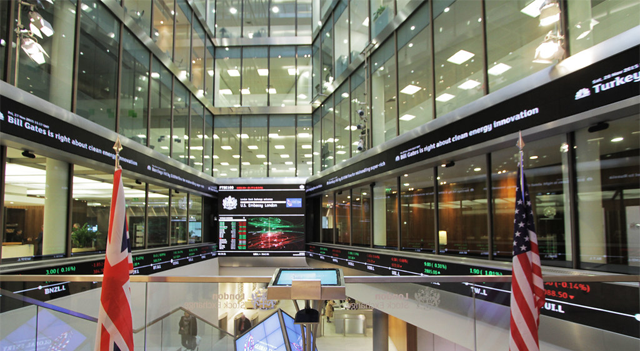
European equity markets opened lower on Thursday as investors tracked fast-moving developments surrounding the conflict in Iran and the possibility of a ceasefire.
At around 08:10 GMT, the pan-European Stoxx 600 was down 0.7%. Germany’s DAX had fallen 0.9%, France’s CAC 40 declined 0.5%, and the UK’s FTSE 100 dropped 0.6%.
According to media reports, Tehran is currently examining a 15-point peace proposal put forward by the United States. However, the two sides still appear far apart from reaching a near-term agreement that could bring an end to the conflict, which has now lasted nearly a month.
U.S. President Donald Trump has reportedly told advisers that he hopes to see a quick end to the fighting, indicating that the White House may be seeking an exit strategy from the joint military campaign conducted alongside Israel, the Wall Street Journal reported.
Trump has argued that Iran is eager to reach a deal to stop the hostilities. This claim contrasts with comments from Iran’s foreign minister, who stated that Tehran has no plans to enter negotiations intended to slow the conflict.
Oil prices have remained elevated as markets continue to worry about the potential prolonged closure of the Strait of Hormuz, a vital shipping route through which about one-fifth of the world’s oil and natural gas supplies pass. Concerns over possible Iranian attacks have effectively kept the strait shut for weeks, pushing crude prices higher and reviving fears of rising inflation worldwide.
In response, some central banks have begun signaling that interest rate increases could return to the agenda. On Wednesday, European Central Bank President Christine Lagarde said higher borrowing costs could still be considered even in the case of “not-too-persistent” inflation caused by an energy shock linked to the Iran conflict.
Brent crude futures for May delivery, the global oil benchmark, were last trading 2.8% higher at $105.04 per barrel. Prices have eased from around $110 per barrel seen last week as hopes grew that the conflict might soon end, though they remain well above levels recorded before the war began in late February.
Analysts have also warned that even if hostilities end soon, oil markets may continue to price in a geopolitical risk premium in the near term, meaning crude prices may not quickly return to pre-conflict levels.
Leave a Reply