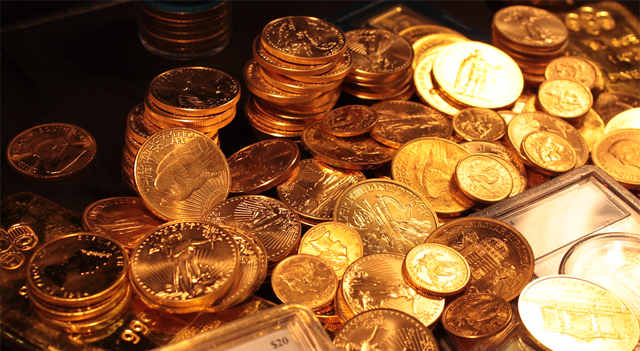
Gold prices moved lower during Asian trading on Thursday, continuing their recent decline and briefly slipping beneath a key trading band, as uncertainty surrounding the Iran conflict and U.S. interest rate expectations strengthened the dollar and reduced appetite for bullion.
Spot gold declined 0.6% to $4,712.50 per ounce, while gold futures eased 0.5% to $4,728.69/oz by 02:30 ET (06:30 GMT). Spot prices briefly dipped to $4,694.23/oz, falling below the $4,700–$4,900 range that had held over the past two weeks.
Safe-haven flows favor dollar over gold
The yellow metal struggled to gain momentum as markets remained unsure about the prospects for renewed U.S.-Iran negotiations, even after President Donald Trump extended the ceasefire indefinitely.
Tehran and Washington showed limited willingness to return to talks after planned discussions failed earlier in the week. Iran reiterated that the U.S. must lift its blockade before negotiations can begin, while Washington insisted on the full reopening of the Strait of Hormuz.
With Iran continuing to restrict passage through Hormuz and the U.S. maintaining its naval presence while monitoring Iranian shipping in the region, the situation remains at a standstill.
Oil prices climbed back above $100 per barrel this week, reflecting ongoing supply constraints through the strait.
Rate expectations weigh on metals
Broader metals markets also came under pressure from a firmer dollar, which hovered near a one-and-a-half-week high on Thursday.
Spot silver dropped 2% to $76.1295 per ounce, while platinum fell 1.4% to $2,050.65 per ounce.
The U.S. currency found support after Kevin Warsh, President Donald Trump’s nominee for Federal Reserve Chair, said he had made no promises to cut interest rates, despite pressure from the administration. Warsh is widely viewed as less dovish, and his nomination in late January had already triggered steep declines in gold and other precious metals.
Separately, a Reuters poll indicated that investors do not expect the Federal Reserve to lower rates for at least six months, amid ongoing uncertainty linked to the Iran conflict.
The inflationary impact of the conflict—driven by higher oil prices—has also continued to weigh on metals. Traders are concerned that energy-driven inflation could push major central banks toward a more hawkish stance, with both the European Central Bank and the Bank of England already signaling such risks.
Leave a Reply