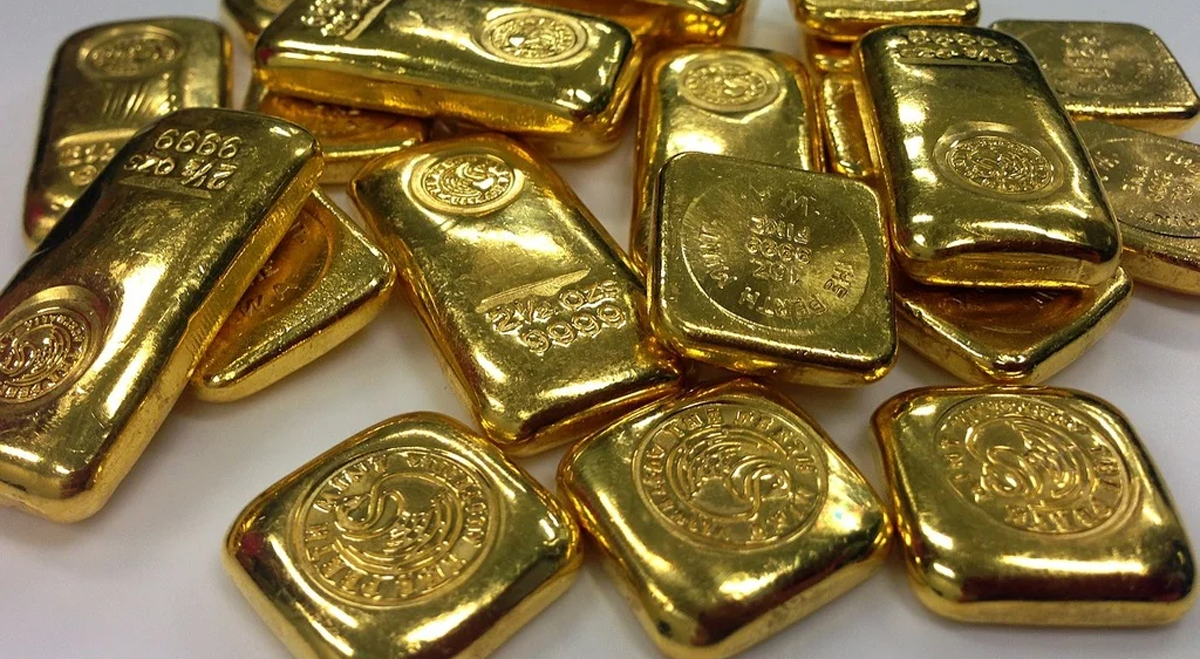
Gold prices retreated on Thursday, falling to their lowest level in two months as escalating tensions between the United States and Iran drove oil prices higher and renewed fears of persistent inflationary pressures.
At 05:33 ET (09:33 GMT), spot gold was down 1.4% at $4,392.88 per ounce, while gold futures declined 1.3% to $4,423.37 per ounce. The latest move pushed spot prices below the key $4,400-per-ounce threshold, breaking out of the broad $4,400 to $4,600 range that had remained largely intact since mid-May.
Renewed Military Action Pressures Safe-Haven Demand
Iran’s Islamic Revolutionary Guard Corps said it had targeted a U.S. airbase in Kuwait in retaliation for earlier American strikes against the Iranian port city of Bandar Abbas.
Separately, Kuwaiti officials confirmed that the country’s defense systems intercepted incoming missiles and drones, although authorities did not specify who launched the attacks.
The renewed exchange of strikes highlighted the fragile state of relations between Washington and Tehran despite repeated U.S. claims that a ceasefire remained in place. Earlier this week, the United States characterized its attacks on Iran as defensive operations.
Thursday’s escalation also followed comments from U.S. President Donald Trump, who rejected reports suggesting Iran could reopen commercial shipping routes through the Strait of Hormuz within weeks. Trump later indicated that he remained dissatisfied with current efforts to secure a peace agreement aimed at ending the nearly three-month-long conflict.
Higher Oil Prices Reinforce Inflation Fears
Crude oil prices advanced again following the latest developments, remaining below the $100-per-barrel mark but still significantly above levels seen before the conflict began.
Investors continue to worry that sustained increases in energy prices could fuel another global inflation surge, potentially forcing central banks to tighten monetary policy further through additional interest rate hikes.
That outlook tends to weigh on gold, which offers no yield and often loses appeal during prolonged periods of elevated interest rates.
“Rates markets are still displaying elevated central bank pricing,” analysts at ING said in a note.
Markets Focus on Upcoming U.S. PCE Inflation Data
Attention is now turning toward Thursday’s release of the U.S. personal consumption expenditures (PCE) price index for April, a key inflation measure closely monitored by the Federal Reserve.
Analysts expect annual headline PCE inflation to rise to 3.8% from 3.5%, while the monthly reading is projected to slow to 0.5% from 0.7%.
Core PCE inflation, which strips out food and energy prices, is forecast to edge up to 3.3% year-on-year while remaining unchanged at 0.3% on a monthly basis.
The PCE index remains one of the Federal Reserve’s preferred gauges for tracking inflation, and recent comments from Fed officials have underscored growing disagreements within the central bank over the future path of interest rates.
Leave a Reply