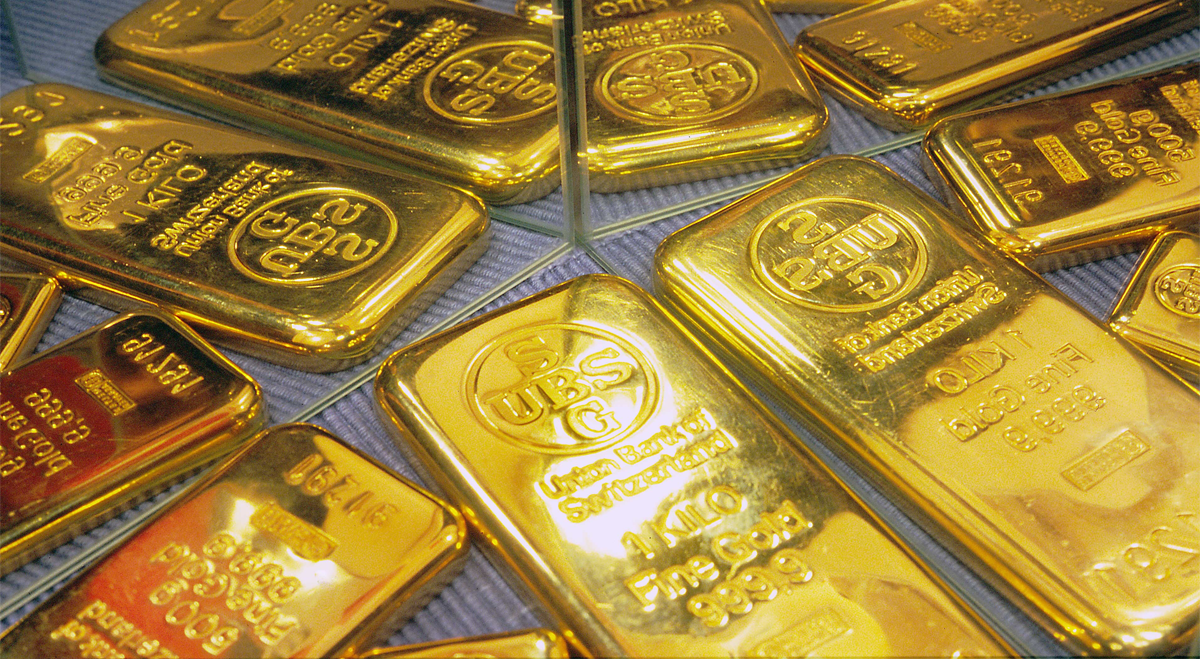
Gold prices continued their upward momentum on Monday, marking a third straight day of gains and climbing to their highest level since 9 June, even as hopes for peace in the Middle East improved investor sentiment.
The precious metal advanced while oil prices retreated sharply, reflecting expectations that an agreement between the United States and Iran could restore energy supplies through the Strait of Hormuz.
Precious Metal Reaches Recent Highs
During early trading, spot gold touched $4,335 per ounce, while August gold futures rose to $4,356 per ounce.
At the same time, Brent crude fell around 5% to a low of $83 per barrel as traders reacted to the prospect of renewed oil flows from the Gulf region.
Trump Praises Ceasefire Agreement
U.S. President Donald Trump described the agreement between Washington and Tehran as a “major agreement that will bring peace and security to the entire region.”
Writing on Truth Social, Trump said: “Many presidents have tried to achieve peace with Iran, but all have failed before me. For the first time, the leaders of the region have found a president capable of helping them achieve real peace.”
He also noted that, with the reopening of the Strait of Hormuz, “scheduled for Friday, in conjunction with the signing of the agreement and to allow for mine clearance operations, oil will flow freely again, to the benefit of both the region and the rest of the world!”
Iran Outlines Conditions for Future Negotiations
The agreement was later confirmed by Iranian Deputy Foreign Minister Kazem Gharibabadi, who stated that discussions on a comprehensive settlement would continue during a 60-day period focused largely on sanctions relief.
According to Gharibabadi, Iran would only move forward with the next phase of negotiations after the release of frozen assets, the removal of the U.S. blockade and the formal end of the conflict.
Central Bank Decisions Remain Key Focus
The diplomatic breakthrough comes ahead of a busy week for central banks, including the first Federal Reserve meeting under new Chair Kevin Warsh.
Prior to the agreement, markets had increasingly expected U.S. interest rates to move higher by the end of 2026. However, expectations moderated after the announcement.
Data from the CME FedWatch Tool showed the probability of a December rate increase falling to 48%, compared with 69% a week earlier.
Lower Rate Expectations Offer Support
Gold generally struggles in periods of elevated interest rates because it does not provide a yield.
Since fighting began in late February, gold had largely moved inversely to oil prices, declining around 18% as investors worried that higher energy costs could keep inflation elevated and force central banks to maintain tighter monetary policies.
Christopher Wong, FX strategist at Oversea-Chinese Banking, said the agreement “makes the macroeconomic scenario less hostile for gold,” but cautioned that “the agreement has yet to be formalized, so we could see mixed trading in the meantime.”
He added: “For gold to regain stronger bullish momentum, a more sustained improvement in the external environment would be needed, including lower yields, lower oil prices, and clearer evidence that the Fed’s hawkish hike has peaked.”
Leave a Reply