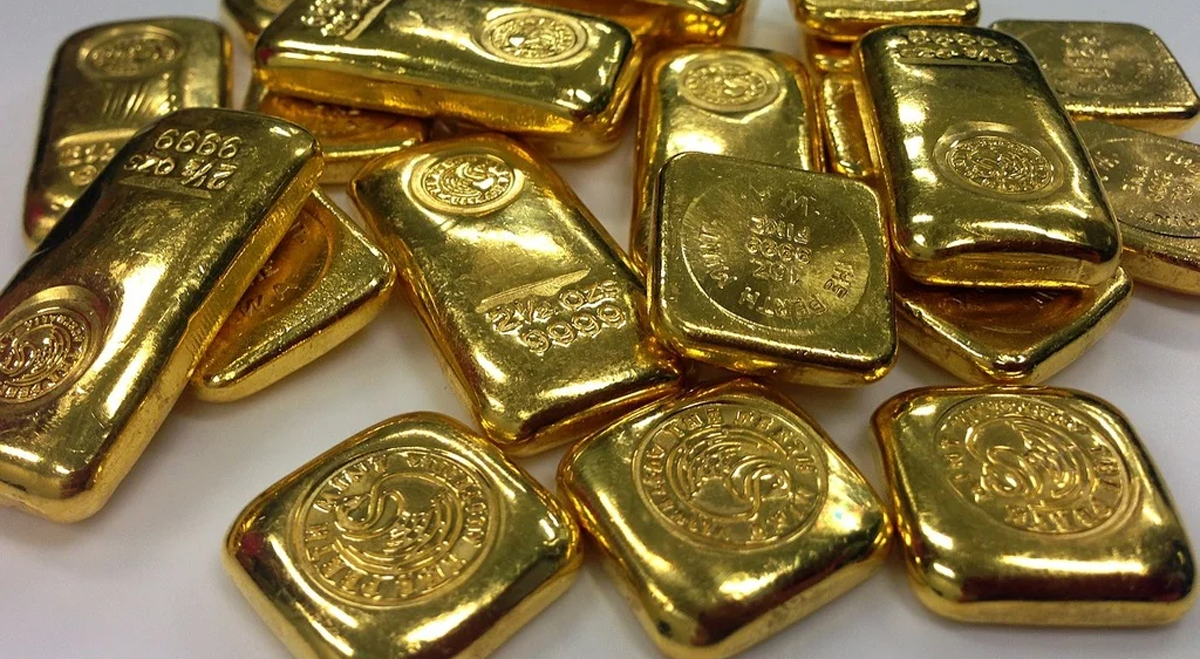
Gold prices moved lower on Tuesday after briefly reaching their highest level in more than three months, with investors taking some profits while awaiting U.S. inflation data and Federal Reserve Chair Kevin Warsh’s speech for fresh signals on monetary policy.
At 01:00 ET (05:00 GMT), XAU/USD declined 0.3% to $4,688.96 an ounce. Gold futures, meanwhile, were up 1.0% at $4,746.09. XAG/USD gained 0.8% to $69.51 an ounce, while XPT/USD advanced 0.5% to $1,889.32. The U.S. Dollar Index was broadly steady at 98.98.
The modest pullback comes after gold extended its recent rally to a more-than-three-month high, supported by renewed concerns over U.S. fiscal policy and the longer-term outlook for the dollar.
U.S. Treasury Strategy Revives Debasement Concerns
Gold’s recent momentum accelerated after the U.S. Treasury announced last week that it planned to at least double purchases of longer-dated government debt in an effort to contain elevated yields.
The announcement pushed Treasury yields lower and weakened the dollar, improving the affordability of gold for buyers using other currencies. At the same time, the intervention raised fresh questions about U.S. government finances and whether attempts to directly influence borrowing costs could undermine confidence in the dollar.
Treasury Secretary Scott Bessent has indicated that purchases of longer-dated debt could be expanded further, although he provided no new indication of additional action on Monday. He has also said the administration is preparing a fiscal initiative designed to address high government borrowing costs.
The developments have revived interest in the so-called debasement trade, a theme that helped gold surge roughly 65% during 2025.
Under this strategy, investors turn to assets such as gold as protection against the possibility that expansionary fiscal policies and easier financial conditions could gradually erode the purchasing power of the dollar.
Markets are now looking towards upcoming U.S. inflation figures and Warsh’s first speech at Jackson Hole. Softer inflation could reinforce expectations of a more accommodative Federal Reserve, potentially benefiting gold, while a hawkish message from Warsh could challenge the rally because the precious metal does not offer a yield.
Geopolitical and Trade Risks Add to Gold’s Appeal
International trade and geopolitical tensions are providing another reason for investors to consider gold as a portfolio diversifier.
Washington has threatened economic penalties against countries that continue trading with Iran as part of its campaign to isolate Tehran. Separately, trade tensions between the U.S. and Canada have escalated following unsuccessful negotiations, with Washington imposing 50% tariffs on certain Canadian goods and threatening equivalent duties on Canadian cars, trucks and automotive components from January 2027.
The combination of fiscal uncertainty, geopolitical risk, trade friction and questions surrounding monetary policy has strengthened attention on gold’s traditional role as an alternative store of value.
Tony Sycamore, senior market analyst at IG, said recent price action suggests gold has likely established a floor around its late-June low near $3,942.
According to Sycamore, the initial rally in August was partly driven by optimism that diplomatic progress in the Middle East could lower oil prices and reduce pressure on central banks to raise interest rates.
Those expectations did not materialise, but gold continued to climb as Treasury intervention brought the debasement trade back into focus and provided the market with a fresh catalyst.
Sycamore noted that gold has broken through trendline resistance around $4,420 and moved above its 200-day moving average near $4,515, strengthening the technical outlook. He expects declines to attract buying interest as traders turn their attention towards the next major resistance zone between $4,900 and $5,000.
Leave a Reply