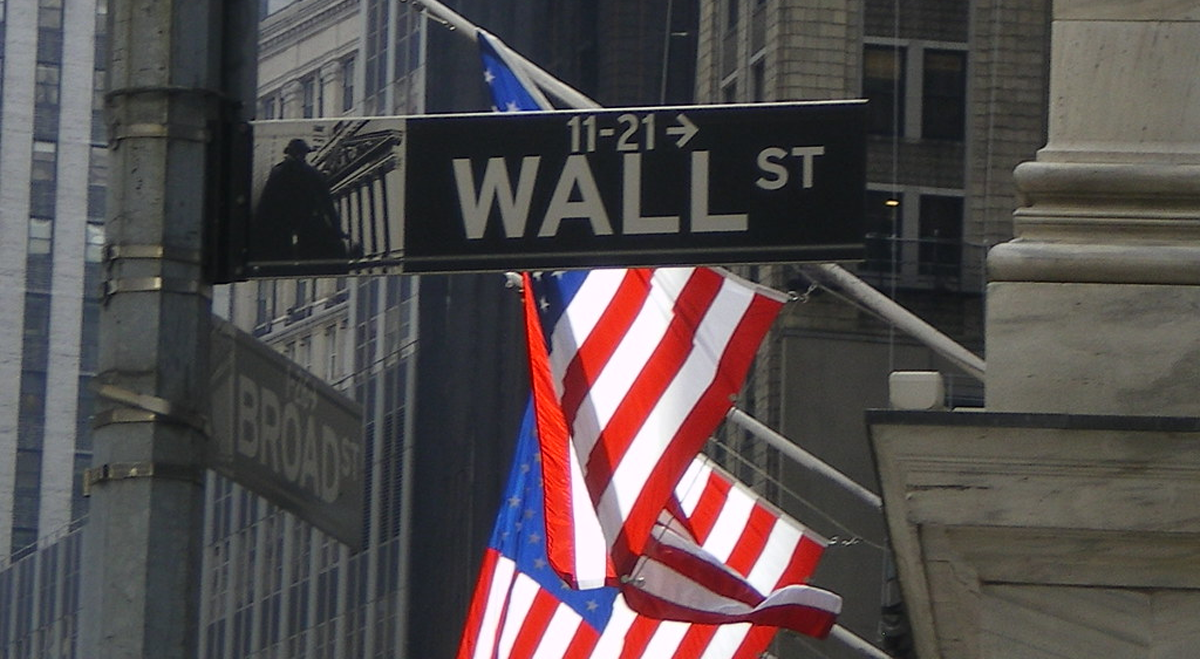
US equity futures moved higher on Thursday as markets considered the Federal Reserve’s latest policy decision, expectations for additional interest-rate increases and developments in the Middle East energy market.
At 06:59 GMT, Dow Jones futures were 366 points higher, representing a gain of 0.7%. S&P 500 futures advanced 52 points, or 0.7%, while Nasdaq 100 futures increased 215 points, also gaining 0.7%.
The advance followed losses across the main US stock indices on Wednesday after the Federal Reserve delivered an anticipated 25-basis-point rate increase.
Updated projections from policymakers indicated that another increase could take place before the end of 2026.
Vital Knowledge analysts characterised Fed Chair Kevin Warsh’s subsequent press conference as “net hawkish”, suggesting that his remarks reinforced expectations of further monetary tightening.
The two-year US Treasury yield subsequently climbed to its highest level since July 2024, reflecting changes in interest-rate expectations.
Fed Statement Highlights Inflation Objective
Changes to the Federal Reserve’s September policy statement attracted particular attention.
The central bank removed earlier references suggesting that persistent inflation was partly attributable to supply disruptions and price increases in specific sectors, including energy.
Instead, the latest statement described inflation simply as “elevated”.
Bill Adams, chief US economist at Fifth Third Commercial Bank, said the revision demonstrated the committee’s commitment to meeting its inflation target without attributing a potential shortfall to external factors.
Warsh also emphasised the importance of ensuring that price increases affecting individual industries do not spread across the wider economy.
According to Adams, the comments indicated that higher energy and electronics prices, associated with the Middle East conflict and artificial intelligence investment, would not prevent the central bank from pursuing its inflation objective.
He nevertheless warned that controlling inflation could be challenging while diesel prices continued to reach record levels.
Arthur Azizov, chief executive of B2BROKER Group, suggested that the decision could strengthen investor confidence in the Fed’s determination to address inflation, even though higher borrowing costs can place pressure on equity markets.
The rate increase also contrasts with President Donald Trump’s preference for lower interest rates.
Oil Prices Decline Despite Continuing Middle East Disruptions
Brent crude futures retreated on Thursday but remained above $100 a barrel following their move beyond that threshold earlier in September.
Energy markets continued to monitor disruptions to major oil transport routes resulting from the Middle East conflict.
The Strait of Hormuz remained effectively closed following the commencement of joint US and Israeli military operations against Iran in late February.
In Yemen, advances by Houthi forces in the country’s western region raised additional concerns about access to the Bab el-Mandeb Strait, an important shipping passage connecting the Red Sea and the Gulf of Aden.
Attacks by the Houthis have also disrupted a major Saudi Arabian pipeline running across the country from east to west, adding to uncertainty over regional oil exports.
Some supply developments offered potential relief.
Bloomberg reported that Saudi Arabia expected the affected pipeline to resume operations within days, while Libyan oil production had returned to normal following temporary closures at several fields.
Adams identified the energy-price shock as a significant uncertainty for the Federal Reserve’s forthcoming policy meetings.
Bank of England Expected to Leave Rates Unchanged
Attention was also turning to the Bank of England’s interest-rate announcement.
A Reuters survey indicated that economists expected the central bank to keep its benchmark rate at 3.75% throughout the remainder of 2026 and until at least mid-2027.
Survey participants generally considered UK inflation insufficient to warrant an immediate rate increase.
However, sustained energy-price pressures associated with the Middle East conflict meant that respondents did not anticipate discussions about a potential rate reduction until late 2027.
Deutsche Bank analysts expected the Bank of England’s Monetary Policy Committee to adopt a comparatively cautious approach to interest-rate decisions.
The European Central Bank, meanwhile, had increased rates for the second time this year during the previous week and raised its inflation forecasts in response to higher energy costs linked to the Iran conflict.
Holtec Nuclear Postpones Planned IPO
Separately, Holtec Nuclear suspended its planned US initial public offering on Thursday, attributing the decision to market conditions.
The nuclear technology company, based in Camden, New Jersey, had planned to offer 50 million shares at between $15 and $18 each, targeting proceeds of up to $900 million.
Pricing for the offering had been scheduled for Thursday.
Holtec said it would continue to assess the timing of a future flotation. Bloomberg initially reported the suspension.
Leave a Reply