For investors looking for exposure to the infrastructure that underpins the modern economy, 3i Infrastructure (LSE:3IN) offers a strategy built around essential businesses, long-term structural trends and active ownership.
In a recent Capital Compass interview, James Dawes, Chief Financial Officer of 3i Infrastructure, outlined how the company seeks to identify attractive infrastructure businesses, grow them through active management and ultimately realise value for shareholders.
The approach is centred on investing in mature businesses with hard-to-replicate assets that provide essential services. Rather than simply owning projects or concessions, 3i Infrastructure looks for established companies with employees, management teams and identifiable opportunities for further growth.
As Dawes explains, the objective is straightforward: buy businesses, grow them and ultimately sell them on.
Investing behind long-term structural trends
A key attraction of the strategy is its focus on what 3i Infrastructure describes as “mega trends”, developments that can extend well beyond the normal economic cycle.
Digitalisation, the energy transition and the renewal of essential infrastructure are creating investment opportunities that could continue for decades.
The portfolio already provides exposure to several of these themes. Within energy transition, for example, Infinis operates in renewable and low-carbon power generation, while the group’s digitalisation exposure includes fibre businesses and its recently announced investment in a major data centre platform in Norway.
For investors, the attraction is not simply identifying a short-term trend, but finding businesses that can benefit from structural demand over many years.
Active ownership at the heart of the model
Another important part of 3i Infrastructure’s strategy is active ownership and control.
The company will often take majority or 100% ownership positions in portfolio companies and play an active role at board level. This can include appointing experienced non-executive directors, strengthening management teams and working alongside those teams to develop and execute a growth strategy.
That approach gives 3i Infrastructure significant influence over how its investments develop.
Capital can then be directed towards expanding the underlying asset base, while management teams are supported in delivering the agreed strategy.
For shareholders, this creates a model where value creation is intended to come not only from owning infrastructure assets, but from actively developing the businesses behind them.
Norway data centre highlights digital infrastructure opportunity
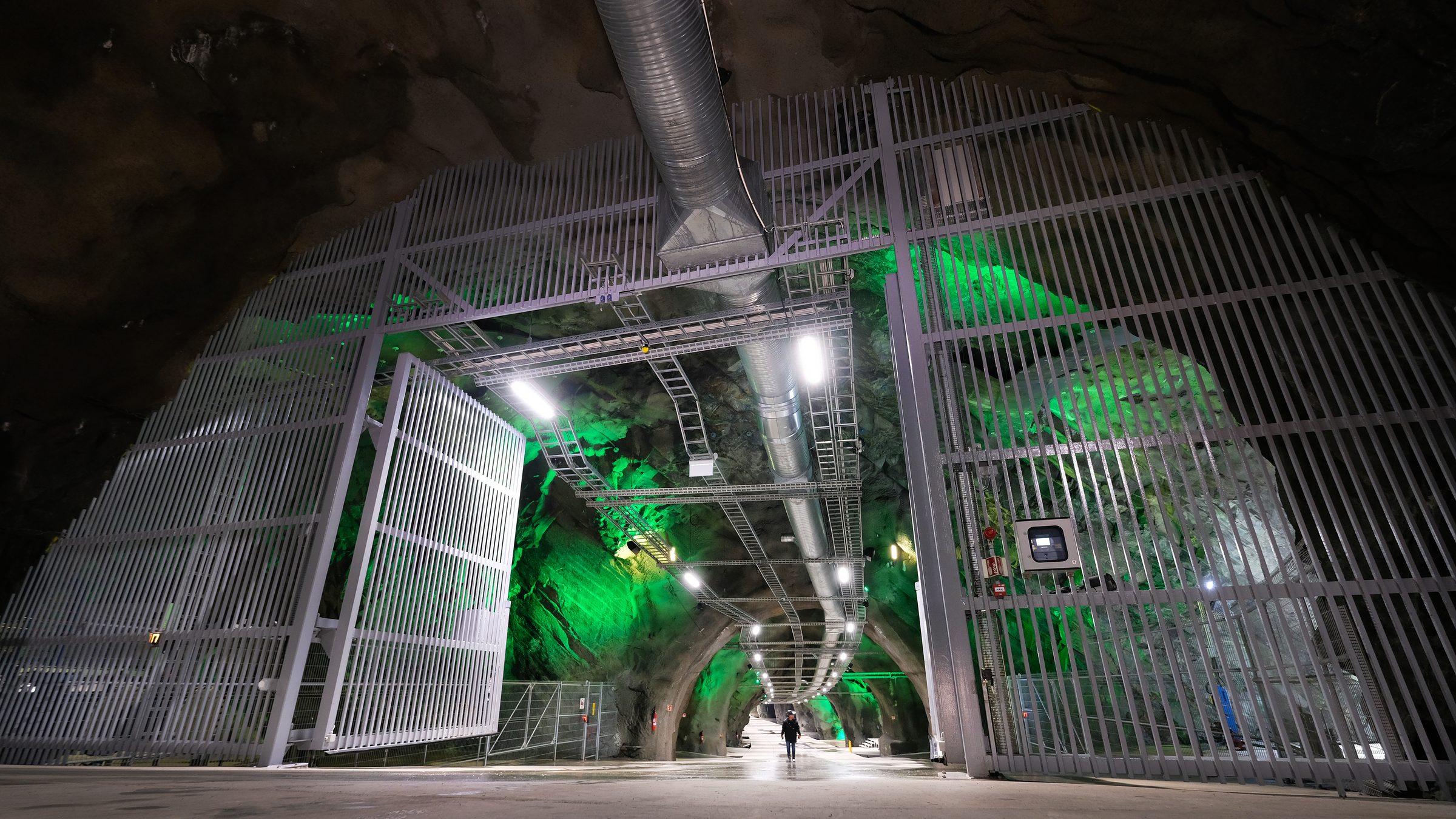
One of the most interesting examples discussed by James Dawes is the group’s recent investment of approximately €263 million in a data centre platform in Norway.
The facility is located within a disused mine on Norway’s west coast, providing a naturally cool environment. Cooling can also be supported by water from a nearby fjord, while the electricity supply is entirely renewable and predominantly hydroelectric.
The site currently has 80MW of power allocated, with that capacity already fully contracted. Importantly, there is also potential for further expansion, with the platform consisting of six levels within the mine and only one currently being used.
3i Infrastructure is also in the queue for an additional 120MW of grid power.
That combination of renewable energy, cooling efficiency, existing contracted capacity and expansion potential illustrates why data centres have become such an important part of the digital infrastructure investment landscape.
TCR demonstrates the value of the approach
The strategy is also demonstrated by 3i Infrastructure’s experience with TCR, its airport ground support equipment business.
When 3i Infrastructure invested around a decade ago, TCR operated across approximately 100 airports. By the time of the exit, that figure had grown to 237 airports worldwide, transforming the company into a significantly larger global platform.
The eventual sale generated a material uplift, with Dawes highlighting that TCR was sold at a valuation 50% above its valuation at the start of the year.
The example illustrates the wider investment philosophy: identify a smaller business, use active ownership to build its scale and capabilities, establish a clear growth pathway and ultimately position it for a larger investor.
Recycling capital to create further opportunities
For 3i Infrastructure, selling successful investments is not simply about taking profits. It is also an important part of the portfolio management strategy.
Dawes explained that the portfolio is designed to deliver target returns of 8–10% per annum, including the dividend, while outperformance can come from growing businesses beyond their original investment cases and achieving attractive valuations when assets are sold.
Because 3i Infrastructure maintains control over many of its investments, it can also have greater flexibility around the timing of exits — seeking to sell when both the company and the wider market conditions are appropriate.
That creates a potentially powerful cycle: invest, develop, grow, realise value and recycle capital into the next opportunity.
Infrastructure with a focus on value creation
The Capital Compass discussion with James Dawes provides an insight into a business model that goes beyond simply owning infrastructure.
From digitalisation and data centres to energy transition and essential services, 3i Infrastructure is targeting areas where long-term demand can provide a supportive backdrop for portfolio companies.
At the same time, its active ownership model is designed to give the company an active role in developing those businesses and creating additional value.
The combination of essential infrastructure, structural growth trends, active ownership and disciplined capital recycling forms the core of 3i Infrastructure’s investment approach — with the Norway data centre and TCR providing two clear examples of how that strategy is being applied in practice.
For investors assessing the infrastructure opportunity, the key message from James Dawes is that 3i Infrastructure is not simply looking to own assets for the long term. It is looking to build better businesses, grow them and ultimately crystallise the value created.
Leave a Reply