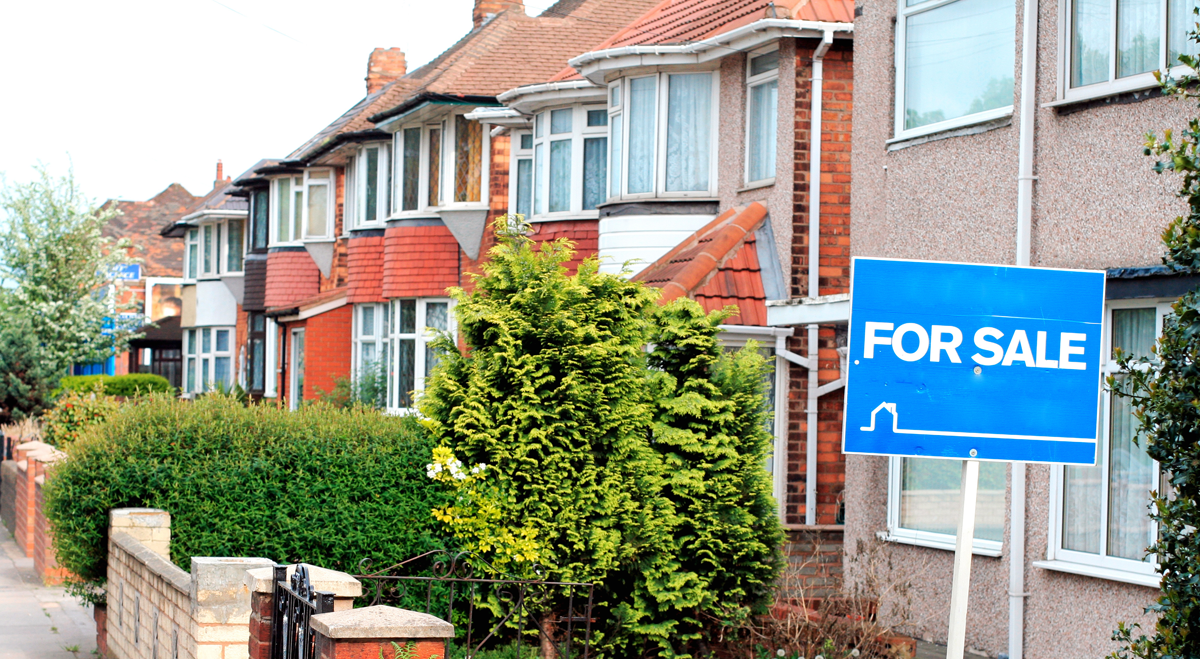
UK house prices remained broadly unchanged in October 2026, extending a six-month period of weakness as inflation concerns and expectations of higher Bank of England interest rates continued to affect housing market activity, according to the latest Nationwide House Price Index.
The seasonally adjusted monthly change was effectively zero, compared with a 0.3% decline in September. Annual house price growth slowed to 0.5%, down from 0.8% the previous month and its weakest rate since January 2024.
The average UK property price stood at £273,566 in October, compared with £274,251 in September and £278,880 in April, leaving prices approximately 1.9% below their spring peak.
Annual House Price Growth Slows to 0.5%
Nationwide’s October figures indicate that the UK housing market has struggled to regain momentum following its earlier increase in prices.
Annual house price inflation declined to 0.5%, compared with 3% in April, reflecting a substantial slowdown over the past six months.
On a seasonally adjusted basis, prices were unchanged during October, following September’s 0.3% monthly decline.
The three-month-on-three-month measure showed a 0.2% fall in October, compared with a 0.4% decrease in September.
The average unadjusted house price declined by £685 between September and October, while remaining £5,314 below the April level.
The figures suggest that housing market conditions remain subdued, with higher borrowing costs and uncertainty over the economic outlook limiting demand.
Inflation Concerns Increase Pressure on Mortgage Rates
Nationwide attributed part of the market weakness to rising energy prices and growing expectations that the Bank of England could increase interest rates.
Geopolitical tensions in the Middle East have contributed to higher oil and energy costs, raising concerns that inflation could remain elevated for longer than previously anticipated.
Nationwide Chief Economist Robert Gardner commented:
“Geopolitical tensions remain high, with the conflict in the Middle East exerting upward pressure on energy prices, fanning inflation concerns,”
These developments have prompted financial markets to increase expectations of a potential rise in Bank Rate.
Higher market interest rates have also placed upward pressure on the borrowing costs used by mortgage lenders when setting fixed-rate mortgage products.
This environment has created additional uncertainty for prospective homebuyers, particularly those considering purchases that require substantial mortgage financing.
Buyer Enquiries Remain Weak as Household Confidence Declines
Survey evidence indicates that demand for residential property remains under pressure.
According to Nationwide, surveyors have continued to report weak levels of new buyer enquiries, suggesting limited near-term improvement in housing market activity.
Household confidence also weakened during October, with consumers becoming less optimistic about both the wider economy and their personal financial circumstances over the coming year.
Gardner said:
“Forward-looking indicators suggest further softness in the near term,”
The combination of weaker confidence, higher expected borrowing costs and economic uncertainty is likely to remain an important influence on housing market activity in the coming months.
Employment and Income Growth Offer Longer-Term Support
Despite the subdued near-term outlook, Nationwide identified several factors that could support a recovery in housing market activity once energy price pressures ease.
Employment conditions and inflation-adjusted household incomes have remained relatively resilient, providing some support for potential buyers.
Household debt has also fallen to around its lowest level in two decades relative to disposable income, suggesting that household balance sheets are in a stronger position than during previous periods of financial pressure.
Nationwide also highlighted improvements in housing affordability over the past two years.
Although recent increases in market interest rates have reversed some of those gains, income growth has significantly exceeded house price growth over the period.
This relative improvement in affordability could help support demand when borrowing conditions become more favourable.
For now, however, the housing market remains sensitive to changes in inflation expectations, mortgage pricing and the Bank of England’s monetary policy outlook.
Leave a Reply