European equity markets opened Monday without a clear trend, while oil prices climbed again as the joint U.S.-Israeli conflict with Iran moved into its second month.
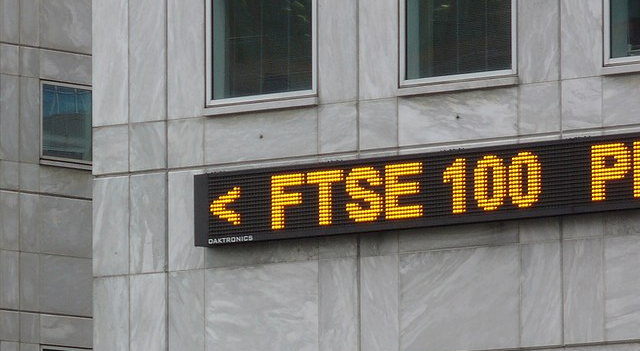
At around 08:10 GMT, the pan-European Stoxx 600 was largely flat, with France’s CAC 40 also little changed. Germany’s DAX slipped 0.2%, while the UK’s FTSE 100 edged 0.2% higher.
As fighting in the Middle East continues, media reports indicate that President Donald Trump is weighing a complex and potentially risky military mission aimed at removing nearly 1,000 pounds of uranium from Iran.
At the same time, troops from the U.S. 31st Marine Expeditionary Unit have been deployed to the region, a step reportedly intended to give Trump additional military options as he considers the next stage of the conflict. According to a Washington Post report, the Pentagon is preparing for the possibility of several weeks of ground operations inside Iran.
Tehran has responded by warning it would destroy any U.S. forces attempting to launch a ground invasion.
Over the weekend, at least 12 U.S. service members were injured in Iranian attacks on an air base in Saudi Arabia. Yemen’s Houthi rebels also entered the conflict for the first time, launching strikes against Israel and intensifying concerns about potential disruptions to major global energy routes.
Analysts at Vital Knowledge warned that if the Houthis were to target the Bab al-Mandab Strait, the impact of the global shipping disruption already caused by the effective closure of the Strait of Hormuz off Iran’s southern coast could be “dramatically amplif[ied].” The Bab al-Mandab Strait is a critical maritime chokepoint connecting the Red Sea with the Gulf of Aden and the Indian Ocean.
Last week, Trump extended a deadline until April 6 for Iran to reopen the Strait of Hormuz or risk U.S. missile strikes on power facilities. Despite the extension, investors remain cautious as uncertainty persists over the direction of the conflict and its broader implications for the global economy. Equity markets declined last week, bond yields moved higher, and Brent crude—the international oil benchmark—remained above $100 per barrel.
By 03:09 ET on Monday, Brent crude had climbed 3.0% to $108.55 per barrel.
Although rising oil prices have raised fears that higher energy costs could trigger renewed inflation and force governments and central banks to respond with tighter policy, markets do not appear to be “too concerned, yet, about fiscal and inflation risks,” according to Thomas Mathews, Head of Markets, Asia Pacific, at Capital Economics.
However, Mathews noted in a research note that “[t]he war’s effects on markets may continue to elude an easy solve.”
Leave a Reply