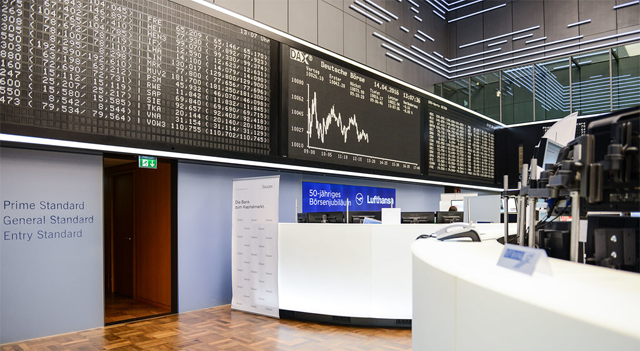
European equity markets moved in a narrow range on Tuesday, hovering close to flat even as oil prices continued their sharp surge. Sentiment was somewhat supported by reports that U.S. President Donald Trump may be prepared to wind down the conflict with Iran even if the Strait of Hormuz remains largely closed.
By 07:10 GMT, the pan-European Stoxx 600 index was up about 0.1%. Germany’s DAX had gained 0.2%, the UK’s FTSE 100 edged 0.1% higher, and France’s CAC 40 was broadly unchanged.
According to a report from the Wall Street Journal, Trump has signaled openness to bringing the more than month-long military campaign against Iran to a close even if Tehran maintains effective control over the Strait of Hormuz. The strategic waterway carries roughly one-fifth of global oil shipments, and its disruption for several weeks has triggered a sharp rise in energy prices while increasing recession concerns worldwide.
Brent crude futures, the global benchmark for oil, were trading above $110 per barrel, compared with roughly $70 before the conflict began.
The report said Trump and his advisers concluded that a full effort to reopen the strait would extend the military campaign beyond the four-to-six-week timeframe initially envisioned. Instead, the administration has reportedly opted to target Iran’s naval forces and missile capabilities while seeking to gradually reduce hostilities and intensify diplomatic pressure on Tehran. U.S. officials added that Washington could also rely on European and Gulf allies to address the strait if negotiations fail.
Markets may receive additional signals about the economic consequences of the Middle East conflict later in the day with the release of Eurozone inflation figures for March. The regional conflict, which has expanded beyond a joint U.S.–Israeli offensive against Iran to involve several countries across the Middle East, has raised concerns about energy supply disruptions.
Europe depends heavily on natural gas imports from Gulf countries, particularly Qatar, where energy infrastructure has reportedly been targeted in Iranian air strikes.
Officials at the European Central Bank (ECB) have indicated that interest rate increases may become necessary if the surge in energy prices reignites inflation across the Eurozone. ECB President Christine Lagarde has suggested policymakers may still need to respond even if the rise in prices proves temporary.
Economists currently forecast that headline consumer inflation in the Eurozone will increase to 2.6% in March, up from 1.9% in February. The ECB’s medium-term inflation objective remains 2.0%.
Anticipation of potential ECB tightening has pushed European government bond yields higher in recent sessions, although yields were largely steady ahead of Tuesday’s inflation release. Bond yields typically move in the opposite direction of bond prices.
Leave a Reply