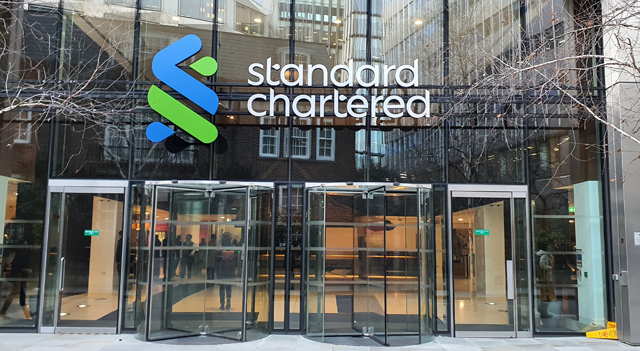
Standard Chartered (LSE:STAN) plans to eliminate more than 7,000 roles over the next four years as the bank accelerates the use of artificial intelligence and automation across its operations while pursuing higher profitability targets.
The London-based lender said it intends to reduce corporate function roles by 15% by 2030. Based on Reuters calculations, this would equate to more than 7,000 job reductions from a workforce of over 52,000 employees in those functions. Standard Chartered employs nearly 82,000 people globally.
Chief Executive Bill Winters said the reductions would mainly result from automation and wider AI adoption, alongside efforts to retrain some employees as the business evolves.
“It’s not cost-cutting. It’s replacing in some cases lower-value human capital with the financial capital and the investment capital we’re putting in,” he said.
The planned restructuring forms part of the bank’s broader long-term transformation strategy, which has aimed to reposition Standard Chartered from a former takeover target into a more consistently profitable global lender. Shares listed in Hong Kong rose 2.5% following the announcement.
Management said the roles most affected are expected to be concentrated in back-office operations, including centres in Chennai, Bangalore, Kuala Lumpur and Warsaw. Winters added, “Of course we’re using AI along the way and AI will be a huge facilitator and enabler of that,” referring to the bank’s wider programme to automate core banking systems.
Higher Return Targets and Strategic Focus
Standard Chartered also unveiled updated financial targets, forecasting a return on tangible equity (ROTE) above 15% by 2028, compared with around 12% expected in 2025. The bank aims to increase this further to approximately 18% by 2030.
The group said growth will continue to focus on higher-margin businesses, including affluent retail banking clients and financial institutions served by its corporate and investment banking division.
The lender also accelerated a key wealth management target, now aiming to attract US$200 billion in net new money by 2028 instead of the previously stated 2029 goal. During the first quarter, Standard Chartered reported record wealth revenue and its strongest level of new client money inflows.
The strategy update comes amid ongoing market speculation regarding succession planning after Winters’ 11 years as chief executive. The bank said Winters is expected to remain in the role for the coming years to oversee delivery of the latest strategy.
Geopolitical Risks Remain a Key Watchpoint
Standard Chartered acknowledged continued geopolitical uncertainty across several of its core Asia-Pacific and African markets.
The bank set aside US$190 million in precautionary provisions linked to conflict in the Middle East during the first quarter. Analysts have warned that Asia-Pacific lenders could face rising loan-loss provisions if the conflict persists and leads to higher energy costs and weaker economic growth.
“We are extremely resilient,” Winters said when asked about geopolitical and market risks affecting the bank’s long-term targets.
Separately, Standard Chartered confirmed the appointment of Manus Costello as permanent chief financial officer. Costello, previously head of investor relations, succeeds Diego De Giorgi, who stepped down earlier this year.
More about Standard Chartered
Standard Chartered PLC is an international banking group focused primarily on Asia, Africa and the Middle East. The bank provides retail, corporate and investment banking services, with growing emphasis on wealth management, affluent banking and cross-border financial services across emerging markets.
Leave a Reply