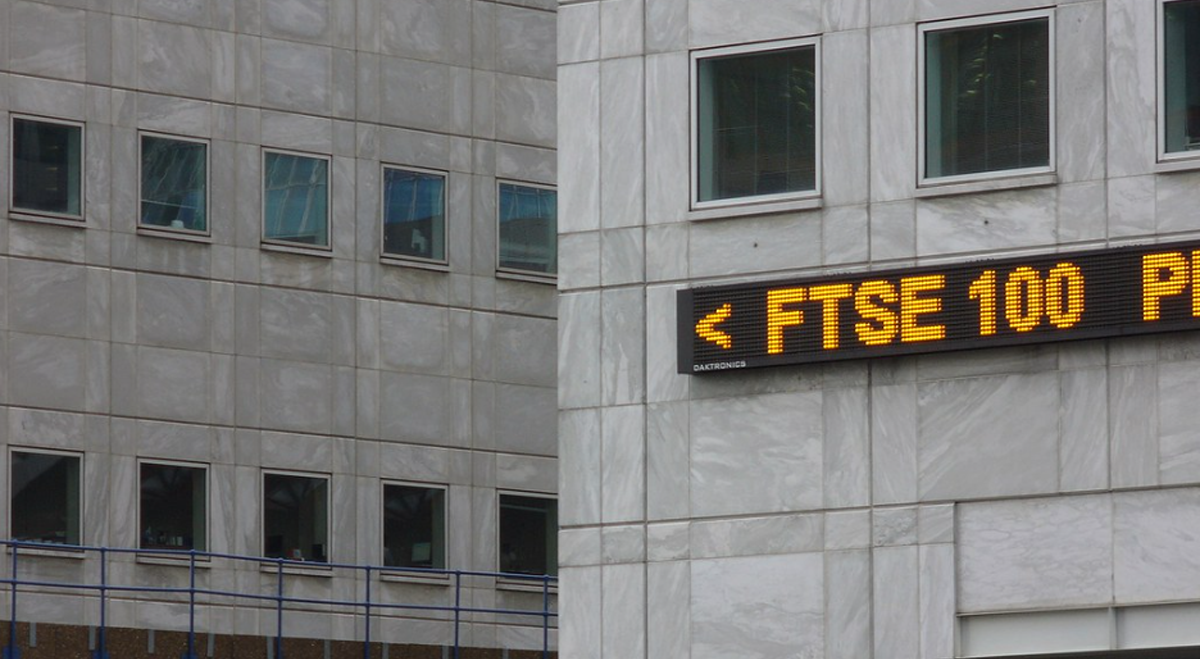
UK equities edged lower on Wednesday as investors reacted to escalating geopolitical tensions in the Middle East, rising oil prices and renewed concerns over international trade policy.
The FTSE 100 fell 0.13% in early trading, while sterling weakened 0.15% against the US dollar to 1.3449. European markets also traded lower, with Germany’s DAX declining 0.72% and France’s CAC 40 down 0.34%, reflecting broader risk aversion across the region.
Proposed US Tariffs Add to Market Uncertainty
Investor sentiment was further dampened by fresh trade proposals from the United States. The Office of the US Trade Representative proposed additional tariffs of 12.5% on imports from 54 economies, including the UK, China, Japan and India, after determining that these countries had not adequately prohibited or enforced restrictions on goods produced using forced labour.
A lower tariff rate of 10% was proposed for six economies, including the European Union and Canada, where existing bans were judged to be insufficiently enforced.
US Trade Representative Ambassador Jamieson Greer described the situation as “unacceptable,” stating that the United States would “no longer tolerate this disparity.” Public hearings on the proposals are scheduled for 7 July, while written submissions will be accepted until 6 July.
Middle East Conflict Drives Risk-Off Sentiment
The primary source of market concern remained the escalating conflict in the Gulf region. Iran launched missile and drone attacks targeting Kuwait International Airport, causing significant damage to Terminal 1, injuring several people and prompting the suspension of Kuwait Airways operations, according to local authorities.
Elsewhere, Bahrain reported that its air defence systems intercepted multiple Iranian missiles and drones aimed at civilian targets, leading the kingdom to place its military forces on heightened alert.
The US military stated that attacks directed at American forces in the region were unsuccessful, contradicting claims made by Iran’s Islamic Revolutionary Guard Corps.
Diplomatic efforts also appeared stalled. US President Donald Trump said discussions between Washington and Tehran were continuing, dismissing reports of a breakdown in communication. However, Iranian media reported that exchanges between the two countries had ceased several days earlier.
At the same time, the United States intensified economic pressure on Iran by imposing sanctions on four Iranian digital asset exchanges, including Nobitex. Separately, US forces reportedly disabled another vessel attempting to reach Iran, increasing the number of ships affected by the maritime blockade.
Corporate Updates: DiscoverIE, B&M, Debenhams and Currys in Focus
Among UK-listed companies reporting developments, DiscoverIE (LSE:DSCV) announced record adjusted pre-tax profit of £51.9 million for the year ended March 2026, supported by a return to organic growth following a prolonged period of inventory destocking across industrial markets.
B&M European Value Retail (LSE:BME) reported a 37.5% decline in adjusted pre-tax profit to £284 million, despite achieving a 3.6% increase in annual revenue to £5.78 billion. Margin pressure and rising costs contributed to a significant reduction in earnings.
Debenhams Group (LSE:DEBS) reported its first return to sales growth following a multi-year restructuring programme, with first-quarter gross merchandise value rising 0.5% and May trading accelerating to approximately 8%.
Meanwhile, Currys (LSE:CURY) appointed Fredrik Tønnesen as its next Group Chief Executive Officer. Tønnesen, who previously led the company’s Nordic operations, will assume the role on 3 August after overseeing a significant improvement in profitability within that division.
Market Focus Remains on Geopolitics and Economic Policy
With geopolitical tensions escalating and trade policy uncertainty increasing, investors remain focused on developments that could affect global growth, inflation and energy markets. Rising oil prices and concerns over supply disruptions continue to influence market sentiment, while upcoming decisions on US tariffs may add further volatility in the weeks ahead.
Leave a Reply