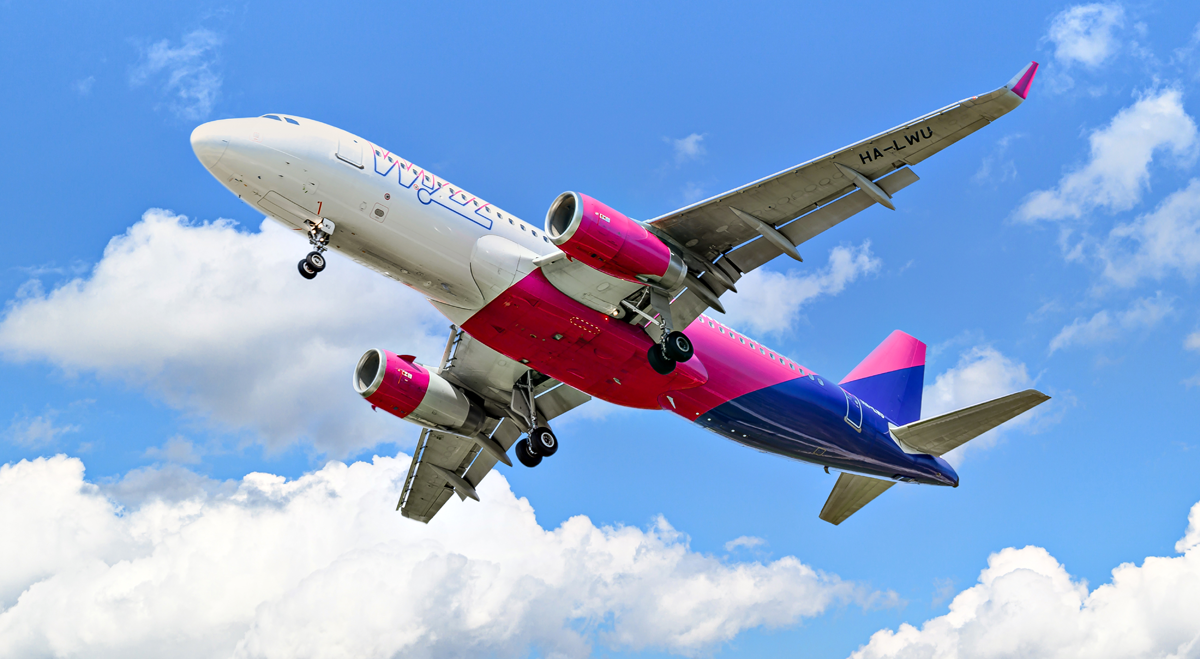
Wizz Air (LSE:WIZZ) delivered strong passenger growth during the first quarter, with traffic increasing 25% year on year as the airline continued to expand capacity through its predominantly Airbus A321neo fleet. Despite the increase in demand, higher fuel prices and pressure on ticket yields resulted in a net loss of €198.2 million. The airline nevertheless maintained one of the strongest liquidity positions in the European aviation sector, continued returning aircraft affected by Pratt & Whitney GTF engine inspections to service, expanded its network with new bases in Spain and Kosovo, and confirmed plans to introduce satellite-based in-flight internet to enhance the customer experience.
Operational performance also improved during the period, with stronger on-time performance and a completion rate close to 100%. While higher fuel costs increased unit costs (CASK) and rapid capacity expansion weighed on unit revenues, management continued to focus on disciplined cost control and careful capacity allocation. Wizz Air remains committed to further double-digit capacity growth, supported by extensive fuel hedging, a substantial aircraft order book and a strategy designed to capture additional market share as European airline supply and demand continue to rebalance.
The investment outlook remains mixed. Recent profitability has been affected by higher operating costs, while the company’s relatively high debt levels increase financial risk within the cyclical airline industry. However, improving cash generation, an attractive valuation based on earnings multiples and technical indicators pointing to a moderately positive share price trend provide support for the longer-term investment case.
About Wizz Air Holdings
Wizz Air Holdings is one of Europe’s leading ultra-low-cost airlines, operating short- and medium-haul routes across Central and Eastern Europe as well as major Western European markets. The company operates one of the youngest and most fuel-efficient fleets in the industry, centred on the Airbus A321neo aircraft.
Its business model focuses on maintaining low operating costs through high aircraft utilisation, efficient point-to-point networks and disciplined capacity management, enabling the airline to offer competitive fares while pursuing long-term market share growth.
Leave a Reply