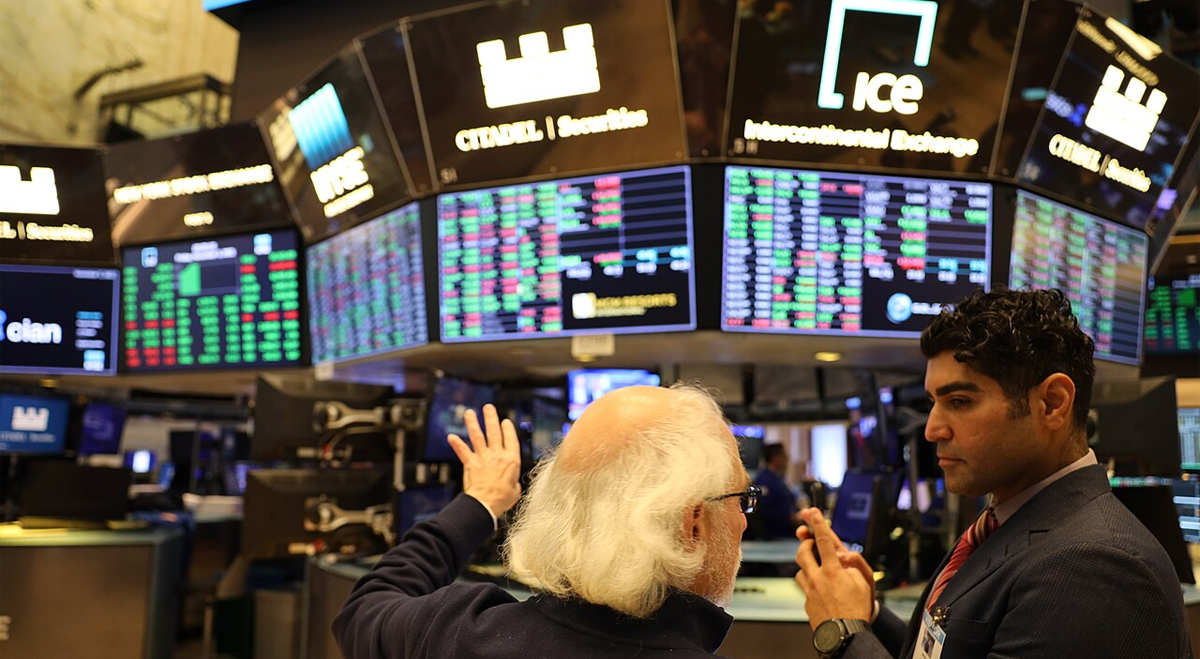
U.S. stock futures were cautiously higher on Monday as traders confronted fresh uncertainty surrounding the Iran conflict while preparing for a key U.S. inflation report later in the week. Berkshire Hathaway (NYSE:BRK.B) was also in focus after its latest quarterly results showed chief executive Greg Abel deploying more of the conglomerate’s substantial cash reserves into equities.
Wall Street futures hold near flat
Futures linked to the S&P 500 and Nasdaq 100 edged higher, while Dow futures slipped as markets balanced weaker U.S. employment data against fading expectations for a quick geopolitical breakthrough in the Middle East.
At 03:05 ET (07:05 GMT), Dow futures were 25 points, or 0.1%, lower. S&P 500 futures added 8 points, equivalent to 0.1%, while Nasdaq 100 futures climbed 86 points, or 0.3%.
The major Wall Street indices had advanced on Friday after the latest employment report showed an unexpected loss of 23,000 U.S. jobs in July. Substantial downward revisions to the previous two months further undermined perceptions that the labour market remained resilient.
The weaker employment picture prompted investors to reduce expectations for a Federal Reserve interest rate increase next month. Treasury yields moved lower following the figures, while the U.S. dollar also weakened.
Iran raises the stakes over Strait of Hormuz reopening
Prospects for an easing of tensions in the Middle East suffered another setback after Tehran detailed a broad range of conditions that it says Washington must satisfy before the Strait of Hormuz is fully reopened.
Iranian state news agency IRNA reported that the secretary of the country’s Supreme National Security Council called for the permanent termination of the war, removal of the naval blockade, elimination of sanctions and release of frozen Iranian assets. Tehran is also seeking war reparations, an end to threats and insults and the cessation of U.S. military action against Iranian allies.
The demands reinforce the strategic leverage associated with the Strait of Hormuz. Roughly one-fifth of worldwide oil and liquefied natural gas supplies move through the waterway, meaning prolonged restrictions on shipping could have far-reaching consequences for energy prices, inflation and global economic activity.
Crude prices moved higher as traders assessed the latest developments. Brent futures gained 0.5% to $83.95 a barrel by 03:23 ET, extending the volatile trading conditions seen throughout the conflict.
Berkshire Hathaway steps up equity investment under Greg Abel
Berkshire Hathaway (NYSE:BRK.B) reduced its enormous cash position to $364.7 billion in the second quarter as chief executive Greg Abel increased the conglomerate’s activity in the equity market.
Berkshire became a net buyer of stocks for the first time in 15 quarters, marking a notable change in capital deployment under Abel, who succeeded Warren Buffett at the beginning of the year. Billions of dollars were directed towards major holdings, including Google parent Alphabet.
The company also spent $4.53 billion repurchasing its own shares during the quarter through June, representing a substantial increase from the relatively modest level of buyback activity during the first quarter.
Berkshire had only resumed share repurchases earlier this year following a period of more than 12 months without buying back its own stock.
The increased investment activity accompanied a doubling in quarterly net profit, while the reduction in cash provides an early indication of how capital allocation could evolve under Berkshire’s new leadership.
U.S. CPI could shape the Federal Reserve outlook
Wednesday’s U.S. Consumer Price Index report is set to become the next major macroeconomic test for investors as markets assess the potential direction of Federal Reserve policy.
Economists expect headline inflation to moderate to 3.4% year-on-year in July from 3.5%. Energy remains an important source of uncertainty after gasoline prices increased following the outbreak of the Iran conflict in late February.
Core CPI, which removes food and energy prices, is forecast to ease to 2.5% from 2.6%.
Vital Knowledge analysts noted that these inflation rates would still be substantially above the Federal Reserve’s target. Policymakers therefore face an increasingly complicated environment in which persistent inflation must be weighed against signs of deterioration in the U.S. labour market.
Chinese inflation undershoots forecasts
Chinese inflation figures provided another signal of subdued domestic price pressures, with consumer inflation slowing more sharply than economists had predicted during July.
Official figures showed CPI increasing 0.5% year-on-year, compared with 1.0% in June and expectations for a 0.8% rise. The reading represented the slowest annual increase in six months.
Consumer prices declined 0.1% from the previous month, missing forecasts for a 0.2% increase. That followed a 0.3% monthly decline in June.
ING analysts pointed to transportation fuels as one of the largest changes in the inflation picture, with annual price growth in the category slowing to 0.8% in July from 15.3% the previous month.
“Other than volatility in energy prices, we continue to see the main drags on inflation coming from food and rent,” analysts wrote.
Leave a Reply