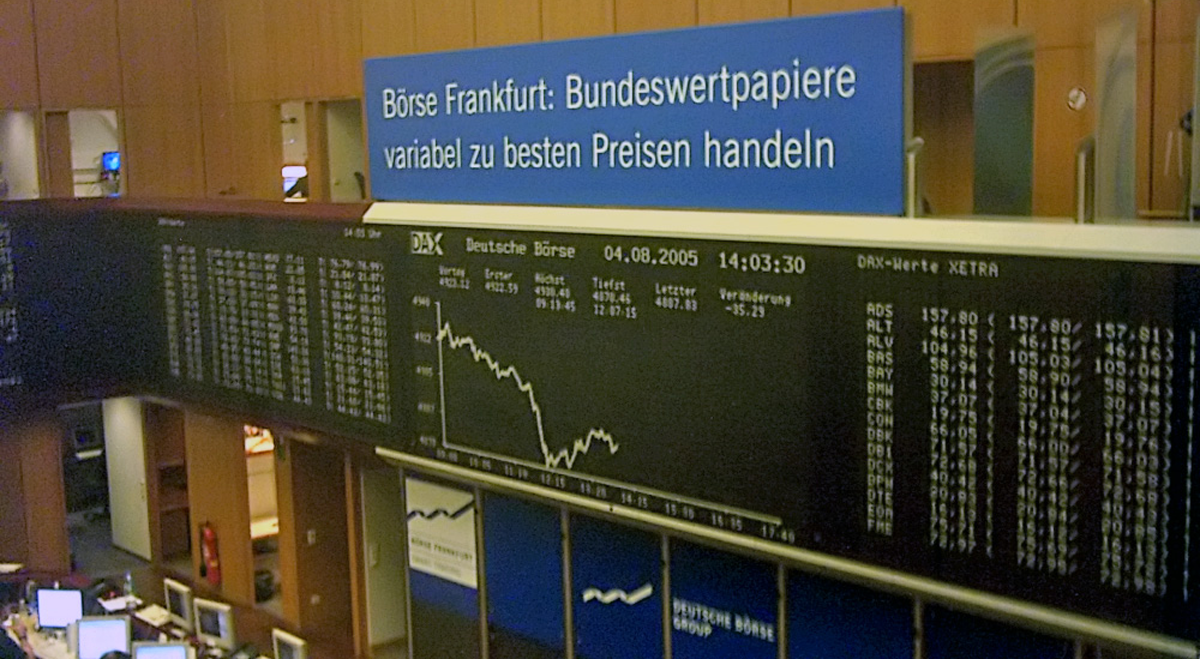
European equities were on track to end a volatile week under pressure, with escalating tensions in the Middle East, higher crude prices and elevated bond yields putting the region’s benchmarks on course for their weakest weekly performance in almost two months.
The pan-European Stoxx Europe 600 Index was down 1.14% for the week, its steepest five-day decline since July 6. Friday’s session was considerably calmer, with the index broadly unchanged alongside Germany’s DAX and France’s CAC 40, while the FTSE 100 edged 0.1% higher.
The weekly decline represents a reversal from the strong momentum seen entering August, when European markets benefited from an upbeat second-quarter earnings season. Strong banking profits, resilient luxury-sector margins and better-than-expected energy results had helped push several benchmarks to record levels.
Trump sanctions threat sends Brent to one-month high
A renewed escalation in rhetoric from Washington provided the main geopolitical headwind on Friday.
U.S. President Donald Trump pledged to unleash “economic warfare” against Tehran and warned that Washington would impose the toughest sanctions in history on Iran, including measures targeting countries that provide economic support to the regime.
The prospect of aggressive secondary sanctions further reduced investor expectations of a rapid diplomatic agreement capable of restoring normal commercial shipping through the Strait of Hormuz.
Brent crude futures consequently climbed to a one-month high of $93.12 a barrel, putting the international benchmark on course for a weekly increase of more than 5%.
Commercial tanker traffic through the Persian Gulf remains severely restricted, prompting energy markets to increasingly factor in the possibility of an extended disruption to global seaborne crude oil and liquefied natural gas supplies.
Bond market turmoil adds to equity pressure
Geopolitical concerns were only one source of volatility during the week, with a sharp global bond selloff also weighing heavily on European equities.
Germany’s 10-year Bund yield climbed to 3.22%, its highest level since 2011, while the US 30-year Treasury yield moved above 5.33%.
The rapid increase in sovereign borrowing costs compressed the relative attractiveness of European equities and raised fresh concerns about the implications of higher interest rates for economic growth and corporate valuations.
A surprise move by the US Treasury to double purchases of longer-dated bonds through its buyback programme temporarily eased the pressure in fixed-income markets, but the relief proved short-lived as central banks delivered more hawkish signals.
Rate hike expectations return to focus
Minutes from the Federal Reserve’s July meeting indicated that US policymakers were prepared to raise interest rates again if inflation remained elevated.
In Europe, European Central Bank Chief Economist Philip Lane warned that eurozone inflation running close to 3% remained unacceptable.
The combination of persistent inflation and hawkish central-bank commentary has prompted money markets to assign a high probability to an ECB interest rate increase in September.
That shift has renewed concerns that restrictive monetary policy could persist even as economic growth remains under pressure.
European markets face tougher autumn backdrop
With the positive momentum from second-quarter earnings now fading, investors are increasingly focused on the combination of elevated energy costs, stubborn inflation, higher bond yields and geopolitical uncertainty.
Brent crude holding above $93 a barrel adds another source of inflationary pressure at a time when markets are already reconsidering the outlook for European interest rates.
The resulting environment presents an increasingly difficult backdrop for continental equities, with concerns over stagflation and developments in the Middle East likely to remain key drivers of market sentiment heading into the autumn.
Leave a Reply