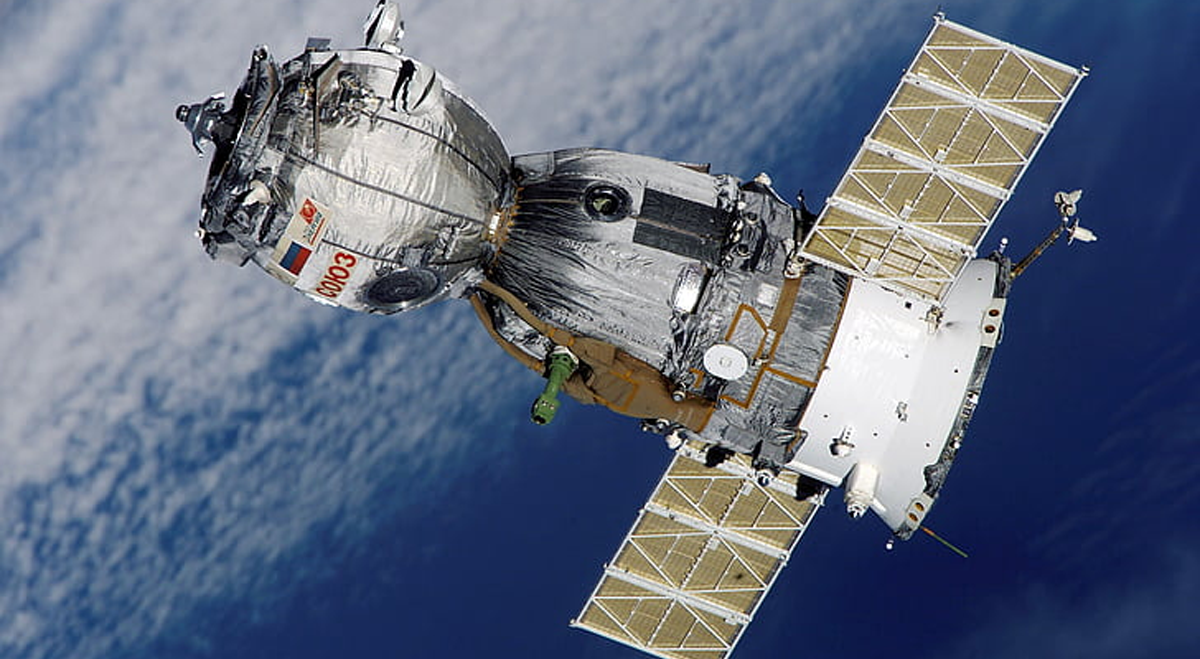
The commercialisation of space is creating a new generation of companies building the infrastructure, connectivity and data services underpinning the New Space economy.
Seraphim New Space Index has been designed to track listed companies with meaningful exposure to this growing ecosystem. Drawing on Seraphim Space’s specific sector knowledge, the rules-based Index spans areas including satellite communications, Earth observation, launch, defence and emerging in-space infrastructure.
This index is tracked by Seraphim New Space UCITS ETF. HANetf is the manager and operator of the ETF, while Seraphim Space is responsible for the design of the Index and determines its constituents in accordance with the published methodology.
A distinctive feature of the Index is its inclusion of Seraphim Space Investment Trust plc (LSE:SSIT), a London-listed investment trust focused predominantly on private, growth-stage SpaceTech businesses. This provides investors with indirect exposure to more than 20 private and pre-IPO companies alongside the Index’s listed holdings, broadening access to the next generation of potential SpaceTech leaders.
A New Space Economy Worth $1.8 Trillion
The sector represents a growing area of economic and investment activity.
The global space economy already exceeds $600 billion annually and is forecast by McKinsey to reach approximately $1.8 trillion by 2035.
Importantly, around 80% of space activity is now commercially driven, highlighting the fundamental shift taking place from government-led programmes towards businesses delivering communications, connectivity, navigation, intelligence, climate monitoring and critical infrastructure from space.
At the same time, the economics of accessing space have changed dramatically.
Launch costs have fallen by approximately ten times, while satellite manufacturing costs have declined by around one hundred times. These technological advances have made it possible for commercial companies to deploy satellite constellations and other space infrastructure at a scale and speed that would previously have been difficult to imagine.
The result is the emergence of what is increasingly being described as the New Space economy.
Moving Beyond Traditional Aerospace
This investment case is increasingly moving beyond the traditional aerospace companies that have historically dominated exposure to the space sector.
New Space companies are developing commercial business models around recurring revenues, scalable technologies and rapidly expanding markets.
These businesses are helping to deliver:
- Direct-to-device connectivity
- Satellite communications
- Earth observation
- AI-enabled intelligence
- Secure communications
- Navigation
- Defence and sovereign capabilities
- Satellite launch and deployment
- In-space transportation and logistics
- Climate and environmental monitoring
The convergence of these technologies with artificial intelligence could be particularly significant. AI requires enormous quantities of data, while satellites are increasingly becoming an essential source of real-time information across defence, climate, communications, logistics and intelligence.
At the same time, governments are increasing defence expenditure and placing greater emphasis on sovereign technological capabilities, creating additional demand for commercially developed SpaceTech infrastructure.
A Specialist Approach to Identifying SpaceTech Leaders
The Seraphim New Space Index has been developed specifically around these structural trends.
Rather than simply weighting companies according to their market capitalisation, the methodology uses a conviction-weighted approach designed to identify businesses that Seraphim Space believes are best positioned to benefit from the continued commercialisation of space. Companies are assessed across a number of factors, including New Space revenue exposure, technology leadership, business quality, growth trajectory, capital efficiency and strategic alignment with major investment themes.
These include Defence & Resilience, Big Tech in Orbit and the emerging In-Space Economy.
The approach is informed by over a decade of Seraphim Space’s experience in the sector, across private and public SpaceTech markets.
Since 2016, Seraphim Space has invested in more than 150 SpaceTech companies across 33 countries. Its portfolio companies have collectively raised more than $12 billion, with ten companies reaching unicorn status and six completing IPOs.
This breadth of experience gives Seraphim Space a perspective across private and public SpaceTech markets and the wider global SpaceTech ecosystem.
Companies Building the Commercial Infrastructure of Space
The index provides exposure across a broad range of SpaceTech subsectors, rather than concentrating on a single technology.
Representative holdings include Seraphim Space Investment Trust (SSIT), SpaceX, AST SpaceMobile, Rocket Lab, Firefly Aerospace, HawkEye 360, Planet Labs, BlackSky, Redwire, York Space Systems, Intuitive Machines and Astroscale, among others.
The universe also includes major technology companies such as Amazon and Alphabet, reflecting the increasingly important role that Big Tech is expected to play in the development of space-based infrastructure.
The inclusion of companies across communications, Earth observation, launch, intelligence, defence, satellite technology and in-space infrastructure provides exposure to the different layers within a developing commercial ecosystem.
Defence and Sovereign Capability
One of the most important drivers behind the growth of New Space is the increasing strategic importance of commercial satellite technology.
Governments across Europe and beyond are increasingly working with private companies to provide intelligence, surveillance, communications and other critical capabilities.
ICEYE, an SSIT portfolio company, provides a notable example.
The company has emerged as one of the global leaders in synthetic aperture radar satellite intelligence, with its technology increasingly being used for defence and sovereign intelligence applications.
Its €1.7 billion programme with Rheinmetall and the German Armed Forces illustrates the growing role commercial SpaceTech businesses can play in delivering sovereign intelligence, surveillance and defence capabilities.
This trend is particularly relevant as governments seek to strengthen domestic and European technological capabilities while reducing dependence on legacy infrastructure.
Big Tech Moves Into Orbit
Another major theme is the convergence between SpaceTech and the world’s largest technology companies. The involvement of companies such as Amazon and Alphabet demonstrates that space is no longer an isolated technology sector.
Satellite connectivity, cloud computing, artificial intelligence, Earth observation and global communications are becoming increasingly interconnected. As the cost of deploying space infrastructure continues to fall, the opportunity for technology companies to integrate satellites into broader digital ecosystems is expanding. This may contribute to the development of new commercial activities while supporting existing markets.
The Emerging In-Space Economy
Beyond communications and Earth observation, a further opportunity is developing above the Earth’s surface. Companies such as D-Orbit are working on space logistics and orbital transportation, helping to establish the infrastructure required for a future in-space economy.
The development of satellite servicing, orbital transportation, manufacturing and other in-space activities could eventually create a new layer of economic activity beyond traditional launch and satellite operations. Italy is emerging as an important hub for this development, with D-Orbit having attracted significant investment and secured contracts with the European Space Agency. These developments demonstrate how the commercial space sector is diversifyingbeyond simply putting satellites into orbit.
Why the Investment Thesis is Changing
The space industry is undergoing an important transformation. For decades, space was predominantly the domain of governments and a small number of large aerospace contractors. Falling technology costs, private capital and advances in computing have changed that equation. Commercial companies are now building infrastructure that governments, businesses and consumers increasingly depend upon.
The combination of:
Artificial intelligence + connectivity + defence + sovereign capability + falling launch costs + cheaper satellites – is creating a range of structural factors contributing to the sector’s development.
The Seraphim New Space Index seeks to identify and track companies with meaningful exposure to the commercialisation of space through a specialist, conviction-weighted methodology.
Seraphim’s Long-Term SpaceTech Perspective
Seraphim Space CEO Mark Boggett believes the transformation could have implications for investors and other market participants over the coming decade.
He said:
“Old Space put humans on the Moon. New Space is building the commercial infrastructure of the global economy.”
He added that the convergence of AI and SpaceTech, alongside rising demand for connectivity, defence and sovereign capability, may be relevant to investors seeking exposure to the next generation of space infrastructure.
That thesis is increasingly supported by the development of the industry itself.
From satellite broadband and Earth observation to AI-enabled intelligence, launch systems and orbital logistics, SpaceTech is becoming increasingly embedded in the wider global economy.
A Broader Consideration for Investors
The New Space opportunity extends beyond rockets and satellites. It encompasses the infrastructure supporting global communications, the data powering AI systems, intelligence for national security, climate-monitoring technology and the emerging commercial economy in orbit. Companies across these markets demonstrate the breadth of the opportunity, while the involvement of Amazon and Alphabet highlights the increasingly important relationship between space and the wider technology sector. As the industry commercialises, investors are gaining new ways to access companies participating in a global space economy that could approach $1.8 trillion by 2035.
Leave a Reply