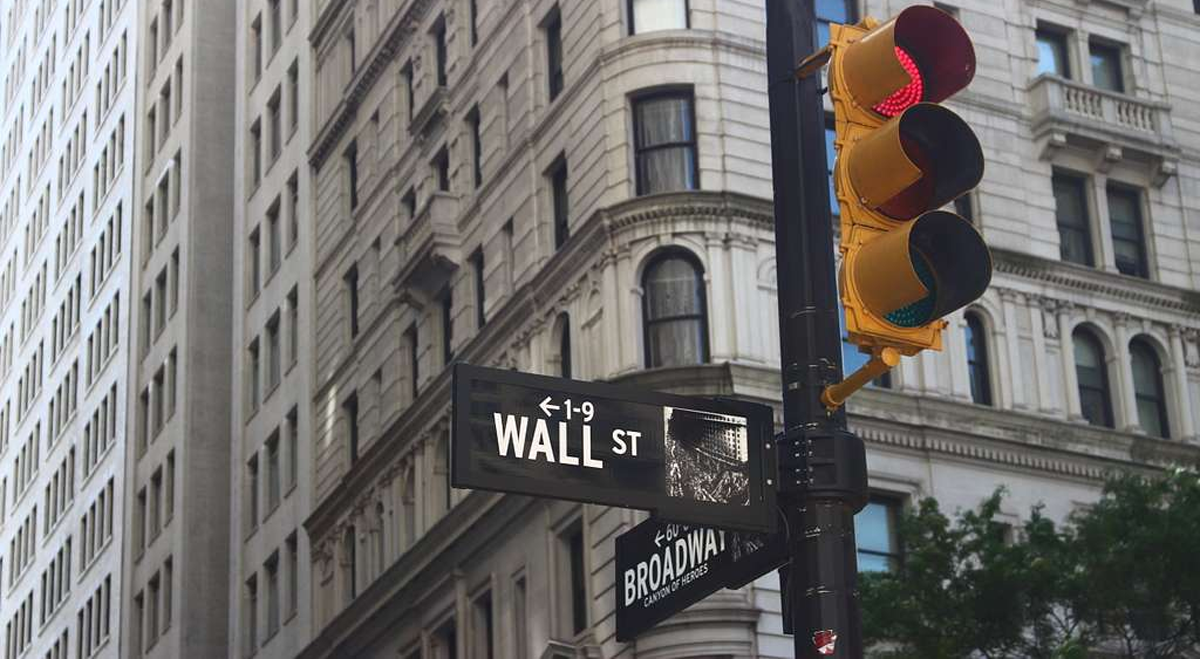
Wall Street futures traded lower on Thursday as rising government bond yields and higher oil prices remained in focus ahead of talks between U.S. President Donald Trump and Chinese President Xi Jinping.
At 02:55 ET, futures linked to the Dow Jones were 155 points lower, a decline of 0.3%. S&P 500 futures fell 37 points, or 0.5%, while Nasdaq 100 futures dropped 211 points, or 0.7%.
U.S. stocks had also moved lower during the previous session as stronger business activity figures contributed to an increase in Treasury yields and prompted investors to reassess the outlook for interest rates.
Energy markets added another consideration, with Brent crude returning above $100 a barrel after five consecutive sessions of declines.
U.S.-China Talks Put Trade Policy in Focus
Trade relations are expected to be among the subjects discussed when Trump and Xi meet in Washington.
The United States and China have been operating under a temporary pause in their tariff dispute, and markets are monitoring whether the existing arrangements will be extended or followed by additional agreements.
U.S. Treasury Secretary Scott Bessent said the extension would provide more time for negotiations, although he indicated that it remained uncertain whether a broader agreement could be reached before the updated deadline.
Artificial intelligence is also among the issues under discussion between the two countries.
According to Bessent, U.S. and Chinese officials discussed a proposed notification mechanism covering AI safety incidents. The information provided did not establish whether Beijing had agreed to the proposal.
Business Activity Data Changes Interest Rate Expectations
Preliminary S&P Global data showed U.S. business activity exceeding forecasts in September, with the composite PMI reaching its highest level in more than five years.
Manufacturing and services readings also came in above expectations.
Similar developments were recorded in Europe, where the eurozone composite PMI reached a three-year high.
Deutsche Bank analysts said “this was part of a global theme.”
“So if anything, the initial signal from the PMIs suggested that growth was accelerating in September across many of the world’s biggest economies,” the analysts said.
The data contributed to increased market expectations for further Federal Reserve monetary tightening. Such expectations represent market pricing and remain subject to incoming economic data and future decisions by the central bank.
Oil Prices Rebound as Iran Developments Remain in Focus
Brent crude rose more than 3%, ending a five-session decline and returning above $100 a barrel.
Oil traders continued to assess diplomatic developments involving the United States and Iran, as well as the outlook for shipping through the Strait of Hormuz.
The supplied information said Iranian officials had set out conditions for renewed mediated talks, including measures related to shipping through the Strait of Hormuz, the U.S. naval blockade and frozen Iranian assets.
Iranian President Masoud Pezeshkian also said Tehran would not allow unrestricted navigation through the strait while the blockade and sanctions remained in place.
Earlier in the week, Brent had moved below $100 amid reports that Saudi Arabia was restarting operations at a damaged East-West Pipeline.
“Collectively, that strong data and the oil rebound led to growing speculation about faster rate hikes,” Deutsche Bank analysts said.
Costco Earnings on the Calendar
Costco (NASDAQ:COST) is scheduled to report fiscal fourth-quarter results.
The retailer’s previous quarterly sales exceeded projections, with demand for lower-priced gasoline among the factors cited in the supplied information.
Its earlier results also indicated that U.S. consumers remained cautious about larger purchases amid elevated inflation, while the company’s efforts to limit price increases on some food products affected third-quarter margins.
Costco shares had gained more than 5% since the beginning of the year at the time covered by the source.
Leave a Reply