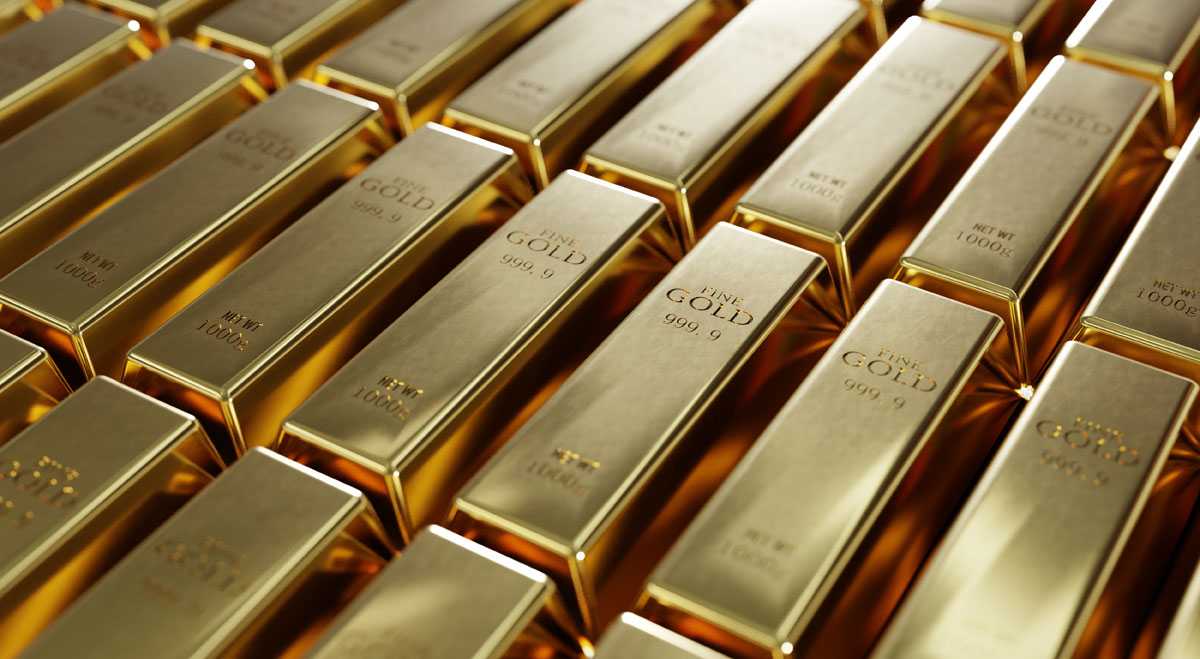
Gold prices edged higher on Tuesday as softer crude oil prices and a weaker US dollar supported demand for precious metals ahead of closely watched American inflation data.
Spot gold (XAU/USD) rose 0.4% to $4,189.12 an ounce at 04:47 ET (08:47 GMT), while gold futures advanced 0.5% to $4,213.25 an ounce.
The gains followed a decline in oil prices after Russia indicated that diesel exports could exceed the quantities previously outlined in a supply agreement with the United States.
Although the prospect of additional fuel supplies helped ease some inflation concerns, oil prices remained elevated amid continuing geopolitical tensions in the Middle East.
Recent attacks attributed to Iran-backed Houthi forces against Saudi Arabia’s international airport in Riyadh have reinforced concerns about the security of regional energy infrastructure and shipping routes.
These developments have left gold investors balancing the potential benefits of geopolitical uncertainty against the risk that higher energy prices could prolong inflation and encourage further interest-rate increases.
Energy Market Volatility Complicates Gold’s Safe-Haven Appeal
Gold has traditionally attracted interest during periods of political instability and financial uncertainty, but its performance during the Middle East conflict has reflected the competing effects of geopolitical risk and monetary policy expectations.
According to the reported market figures, bullion has fallen approximately 20% since the United States and Israel launched a joint military operation against Iran in late February.
The decline has been associated with concerns that higher oil prices could increase inflation and prompt the Federal Reserve to maintain restrictive borrowing conditions.
Gold does not provide interest payments, meaning its relative appeal can diminish when yields on government bonds and other interest-bearing investments increase.
As a result, expectations for additional monetary tightening can outweigh some of the support normally provided by geopolitical uncertainty.
Tuesday’s decline in crude oil offered temporary relief by reducing immediate concerns about the effect of energy prices on inflation.
However, risks to oil shipments from the Gulf remain elevated, particularly following attacks affecting Saudi Arabia and concerns about regional transport routes.
The possibility of increased Russian diesel exports could help ease global fuel market pressures, although uncertainty surrounding the conflict continues to influence energy prices.
For gold investors, the key issue is whether inflationary pressures begin to moderate or remain sufficiently persistent to require further action from central banks.
Central Bank Reserve Diversification Supports Bullion Demand
Despite recent market weakness, central bank purchases continue to provide an important source of longer-term demand for gold.
Analysts at The Gold Bullion Company noted that monetary authorities have continued expanding their gold reserves as part of broader efforts to diversify international holdings.
The strategy is intended to reduce dependence on individual reserve assets and limit exposure to changes in the value of major currencies.
According to the analysts, central banks are seeking to “spread their reserves across different assets and reduce reliance on any single reserve holding”, including the US dollar.
Gold remains an established component of official reserves because of its international marketability and its role in diversifying currency-related exposures.
Continued institutional buying may help support demand over longer periods, even when short-term prices are affected by higher interest rates or movements in the dollar.
However, reserve purchases do not eliminate the metal’s sensitivity to changes in monetary policy expectations.
US Consumer Price Report Takes Centre Stage
Investors were looking ahead to Wednesday’s US consumer price inflation report, which could influence expectations for the Federal Reserve’s next policy decisions.
The central bank increased interest rates in September for the first time since 2023, citing the need to contain inflation.
Nevertheless, financial markets have increasingly anticipated that policymakers will leave rates unchanged at their October meeting.
Interest-rate swaps suggested an approximately 20% probability of another increase during the October gathering.
Markets continued to price in one additional rate rise before the end of 2026.
The inflation figures will be particularly important given the recent increase in energy prices, which could contribute to broader consumer price pressures.
An unexpectedly strong inflation reading could strengthen expectations for further monetary tightening and weigh on non-yielding assets such as gold.
Alternatively, evidence that inflation is moderating could reduce expectations for additional rate increases, potentially providing support for bullion.
Federal Reserve Bank of Cleveland President Beth Hammack said on Monday that smaller and more frequent adjustments to monetary policy could help prevent inflation expectations from becoming unanchored.
She did not, however, explicitly advocate raising interest rates at the central bank’s October meeting.
Her remarks reinforced the importance of incoming economic indicators as policymakers consider how to balance inflation risks against broader economic conditions.
Silver and Platinum Rise Alongside Gold
Other precious metals also strengthened during Tuesday’s trading session.
Spot silver gained 0.3% to $60.4830 an ounce, while spot platinum climbed 0.7% to $1,704.03 an ounce.
The advances coincided with weakness in the US currency.
The US Dollar Index, which measures the greenback against a basket of major currencies, declined 0.3% to 102.33.
Because precious metals are generally priced in dollars, a decline in the currency can make them less expensive for buyers holding other currencies.
This relationship can support international demand, although actual price movements also depend on investment flows, interest rates and broader market conditions.
Dollar weakness therefore provided an additional source of support for precious metals during the session.
Inflation Outlook Remains Central to Gold Prices
Gold’s modest recovery reflected improving sentiment following the decline in oil prices, together with a weaker dollar and continued demand for precious metals.
Nevertheless, the outlook remains complicated by the interaction between geopolitical developments and monetary policy.
Further disruption to Middle Eastern energy supplies could increase inflation risks, potentially strengthening expectations for additional Federal Reserve tightening.
At the same time, geopolitical uncertainty may continue to encourage some investors to maintain exposure to gold as a defensive asset.
Wednesday’s US inflation report will provide a clearer indication of whether recent energy market developments are contributing to persistent price pressures.
Investors will also be monitoring Federal Reserve commentary, movements in government bond yields and central bank gold purchases for further signals about the metal’s near-term and longer-term prospects.
Leave a Reply