Author: Fiona Craig

  • British Land boosts leasing activity and reiterates earnings guidance on firm campus and retail demand

    British Land boosts leasing activity and reiterates earnings guidance on firm campus and retail demand

    British Land (LSE:BLND) delivered a strong third-quarter performance to 31 December 2025, highlighting sustained occupier demand across its London campuses and retail park portfolio. During the period, the group leased 882,000 square feet of space on terms materially ahead of estimated rental values and prior passing rents, with a further 1.8 million square feet currently under offer.

    Leasing momentum was most pronounced within the campus portfolio, where Science & Technology occupiers continue to drive take-up at key assets including One Triton Square and Broadgate. Retail parks also performed well, with occupancy at 99% and rising footfall supporting income growth and asset resilience.

    On the back of this activity, management reaffirmed its outlook for earnings, guiding to underlying earnings per share of at least 28.5p for FY26 and growth of at least 6% in FY27. The update signals confidence in British Land’s income trajectory and reinforces its focus on higher-quality, supply-constrained segments of the UK commercial property market.

    Overall, the company appears well positioned, supported by positive leasing dynamics, constructive sentiment from recent earnings communications and attractive valuation metrics. That said, management continues to monitor potential risks around earnings volatility and cash flow consistency as it executes its strategy.

    More about British Land Company plc

    British Land Company plc is a UK-focused commercial property owner and manager, concentrating on London campuses and retail parks where it sees the strongest structural demand. The group controls or manages a £15.2bn property portfolio, with a British Land share of £9.8bn as at 30 September 2025, and aims to deliver long-term sustainable value through development, repositioning and active asset management, guided by its sustainability framework of Greener Spaces, Thriving Places and Responsible Choices.

  • Rio Tinto posts solid 2025 production growth and reaffirms 2026 output plans

    Rio Tinto posts solid 2025 production growth and reaffirms 2026 output plans

    Rio Tinto (LSE:RIO) recorded an 8% year-on-year increase in copper-equivalent production in 2025, supported by a combination of record iron ore output in the Pilbara, higher copper volumes and expanding exposure to future-facing commodities. The group achieved or exceeded its production guidance across all major product categories and confirmed its output targets for 2026.

    Iron ore production in the Pilbara reached a record quarterly level during the year, while copper volumes rose 11% following the completion and ramp-up of the Oyu Tolgoi underground mine. Output also increased in bauxite and lithium, reflecting continued operational momentum and investment in growth assets.

    Looking ahead, Rio Tinto reaffirmed its 2026 guidance, which includes further growth in Pilbara and Simandou iron ore sales, resilient copper production levels and expanding lithium output. Exploration and evaluation spending fell to $795 million as qualifying costs related to the Rincon lithium project were capitalised, marking progress in the group’s development pipeline.

    Management highlighted several strategic milestones, including the first shipment from the Simandou project, record lithium production in Argentina and operational improvements across the aluminium value chain. These developments strengthen Rio Tinto’s diversification and growth profile at a time when markets for copper and aluminium are tightening, even as iron ore and alumina face more mixed conditions amid broader macroeconomic uncertainty.

    Overall, the company’s outlook is underpinned by strong operational delivery, disciplined capital allocation and a robust balance sheet. While some technical indicators suggest the shares are approaching overbought territory, the valuation continues to offer an attractive blend of growth exposure and income potential.

    More about Rio Tinto

    Rio Tinto is a global mining and metals group producing iron ore, aluminium, copper, bauxite, lithium and other industrial minerals. It operates major assets in Australia, Canada and Mongolia, with a portfolio aligned to long-term demand from steelmaking, electrification, energy transition and industrial end markets. This positions the group as a key supplier to both traditional industries and low-carbon value chains.

  • Premier Foods raises profit guidance after robust Christmas sales and market share gains

    Premier Foods raises profit guidance after robust Christmas sales and market share gains

    Premier Foods (LSE:PFD) delivered a strong performance over the thirteen weeks to 27 December 2025, driven by a solid Christmas trading period that saw branded revenue increase by 5.2% and total revenue rise 4.1%. On the back of this momentum, the group now expects full-year trading profit to come in at the upper end of current market forecasts.

    Both the Grocery and Sweet Treats divisions continued to gain market share, supported by an active innovation programme. New product launches during the period included OXO Bone Broth, Paxo Stuffing Wreaths and Mr Kipling Cake Bites, while premium seasonal ranges performed particularly well as shoppers opted to trade up over the festive period.

    Growth in New Categories remained a standout, with revenue up 29%, led by strong demand for FUEL10K yogurt and granola and wider distribution for Cape Herb & Spice. The company’s three acquired brands – The Spice Tailor, FUEL10K and Merchant Gourmet – all recorded double-digit growth, reflecting the benefits of Premier Foods’ scale in marketing, innovation and route-to-market execution.

    Internationally, the group returned to double-digit revenue growth. This was driven by strong cake sales in Australasia, expanding distribution for Mr Kipling in the US, and additional European listings secured for FUEL10K granola. Management said the breadth of growth across core, premium, acquired and overseas brands underlines the resilience of its brand-led strategy and supports confidence in the group’s medium-term outlook.

    Overall, the updated guidance reflects solid financial execution and positive trading momentum. While some technical indicators point to near-term volatility, management’s strategic focus and confidence in brand investment continue to underpin expectations for sustainable growth.

    More about Premier Foods

    Premier Foods is one of the UK’s largest food manufacturers, employing more than 4,000 people across 13 sites. The group supplies retail, wholesale, foodservice and other channels, and owns a portfolio of well-known brands including Ambrosia, Batchelors, Bisto, Loyd Grossman, Mr Kipling, Oxo and Sharwood’s. Its focus is on everyday, affordable food products that feature in millions of households and support convenient, balanced meals.

  • Oil prices inch higher on upbeat China GDP, but Greenland dispute keeps markets cautious

    Oil prices inch higher on upbeat China GDP, but Greenland dispute keeps markets cautious

    Crude prices edged up on Tuesday after economic data showed China’s growth was slightly stronger than expected, offering some support to demand expectations. However, gains were capped as investors remained wary of renewed trade tensions following the Trump administration’s threat to impose tariffs on several European countries over the Greenland issue.

    By 08:05 ET (13:05 GMT), Brent crude futures for March delivery were up 0.8% at $64.41 a barrel, while U.S. West Texas Intermediate crude rose 0.8% to $59.83 a barrel, after markets were closed on Monday.

    China data boosts demand outlook

    Figures released on Monday showed China’s economy expanded 1.2% quarter-on-quarter in the final three months of 2025, beating expectations of 1.1%, as government stimulus and firmer consumer spending helped activity meet Beijing’s annual growth target.

    As a result, China’s full-year GDP growth for 2025 reached 5%, in line with official goals set for a third straight year, despite a subdued post-pandemic recovery and ongoing trade frictions with the United States.

    Separate official data also showed China’s refinery throughput rose 4.1% year on year in 2025, while crude oil production increased 1.5%, with both hitting record levels. Given China’s status as the world’s largest crude importer, signs of economic stabilization are seen as supportive for oil markets that are struggling with oversupply concerns.

    Tariff threats tied to Greenland unsettle sentiment

    Oil markets were volatile on Monday after U.S. President Donald Trump warned he could impose tariffs on several major European economies until an agreement is reached to transfer Greenland to U.S. control.

    Trump floated the possibility of duties of up to 25% on countries including France, Denmark and the U.K., and did not rule out the use of military force in connection with Greenland. He has repeatedly argued that U.S. ownership of the territory is critical for national security, while recent U.S. actions in Venezuela have added to investor caution around potential military escalation.

    IEA report and U.S. stockpiles in focus

    Beyond geopolitical developments, attention this week is firmly on the International Energy Agency’s monthly report due on Wednesday. The update is expected to provide further guidance on supply conditions, after the IEA has repeatedly warned of a possible surplus emerging in 2026, and is also likely to include projections for 2027.

    The IEA’s outlook follows a recent report from the Organization of Petroleum Exporting Countries, which struck a more optimistic tone on oil demand growth in 2026 and 2027.

    Investors are also awaiting upcoming U.S. oil inventory data, which could offer additional insight into supply and demand trends in the world’s largest crude producer.

  • Wall Street Braces for Weak Open as Trade War Anxiety Returns: Dow Jones, S&P, Nasdaq, Futures

    Wall Street Braces for Weak Open as Trade War Anxiety Returns: Dow Jones, S&P, Nasdaq, Futures

    U.S. stock futures are signalling a sharply lower start to Tuesday’s session, pointing to renewed selling pressure as markets reopen after the long holiday weekend.

    Investor nerves have been rattled by fresh concerns over a potential escalation in trade tensions between the United States and Europe, stemming from President Donald Trump’s renewed push to take control of Greenland. Trump has warned that countries opposing the move could face new tariffs, arguing that ownership of the Danish territory is essential to U.S. national security.

    In a post on Truth Social, Trump outlined plans to impose a 10% tariff on imports from Denmark, Norway, Sweden, France, Germany, the U.K., the Netherlands and Finland starting February 1. He added that the duties would increase to 25% from June 1 and remain in force until an agreement is reached allowing the U.S. to purchase Greenland.

    “Investors will be hoping for some sort of de-escalation deal on Greenland which removes the risk of a break-up or at least serious rupture in the Nato alliance,” said AJ Bell investment director Russ Mould. “If the crisis deepens it is unlikely to spell good news for global equities.”

    He added, “Nasdaq looks set to chalk up the biggest declines amid concern about possible retaliatory action from Europe against America’s big tech contingent.”

    U.S. equities ended last week on a soft note. Stocks initially moved higher early on Friday but quickly lost momentum, with trading remaining choppy and directionless for most of the session. The major indices hovered around flat levels before closing modestly lower.

    The Dow Jones Industrial Average slipped 83.11 points, or 0.2%, to 49,359.33. The Nasdaq Composite fell 14.63 points, or 0.1%, to 23,515.39, while the S&P 500 edged down 4.46 points, or 0.1%, to 6,940.01.

    For the week as a whole, the Nasdaq declined 0.7%, while the S&P 500 and the Dow posted losses of 0.4% and 0.3%, respectively.

    Market volatility was also influenced by comments from Trump that cast doubt on whether National Economic Council Director Kevin Hassett remains his preferred candidate to succeed Jerome Powell as Federal Reserve chair.

    “I see Kevin’s in the audience, and I just want to thank you. You were fantastic on television today,” Trump said during at appearance at the White House. “I actually want to keep you where you are, if you want to know the truth.”

    Hassett had been widely viewed as the frontrunner to replace Powell, whose term ends in May, but prediction markets now suggest former Fed Governor Kevin Warsh has moved into the lead following Trump’s remarks.

    The uncertainty around the Fed leadership transition has added another layer of caution for investors already grappling with rising geopolitical risks. Traders remain wary as tensions surrounding Greenland persist, alongside ongoing concerns tied to Venezuela, political unrest in Iran and the war between Russia and Ukraine.

    On the economic front, data from the Federal Reserve showed U.S. industrial production rose more than expected in December. Output increased 0.4%, matching an upwardly revised gain in November, while economists had forecast a modest 0.1% rise.

    Most sectors ended Friday with only small moves, contributing to the muted market close. Commercial real estate stocks were a notable exception, with the Dow Jones U.S. Real Estate Index rising 1.2%.

    Semiconductor stocks also extended their rally from Thursday, lifting the Philadelphia Semiconductor Index by 1.2% to a new record closing high. In contrast, steel stocks retreated, with the NYSE Arca Steel Index falling 1.2% after posting its strongest close in more than 17 years the previous session.

  • European Shares Slide as Greenland Standoff and Tariff Threats Rattle Markets: DAX, CAC, FTSE100

    European Shares Slide as Greenland Standoff and Tariff Threats Rattle Markets: DAX, CAC, FTSE100

    European equities moved lower on Tuesday, extending the previous session’s losses after the United States sent military aircraft to Pituffik Space Base in Greenland, prompting Denmark to dispatch its army chief and additional troops to the Arctic territory in a sharp escalation of tensions.

    Adding to market unease, U.S. President Donald Trump warned he could impose 200% tariffs on French wine and champagne after Paris declined an invitation to join his proposed Board of Peace initiative aimed at resolving global conflicts, saying it “does not intend to answer favorably.”

    On the economic front, Germany’s statistics office Destatis said producer prices fell 2.5% year on year in December, accelerating from a 2.3% decline in November, largely due to a steep drop in energy prices.

    In the U.K., the Office for National Statistics reported that the unemployment rate was unchanged at 5.1% in the three months to November, in line with expectations and the previous period.

    By mid-session, Germany’s DAX was down 1.2%, while France’s CAC 40 and the U.K.’s FTSE 100 were each lower by around 0.9%.

    In corporate news, shares of AstraZeneca (LSE:AZN) fell after the drugmaker said it plans to delist its American Depositary Shares and debt securities from Nasdaq.

    Big Yellow Group (LSE:BYG) also traded lower after the self-storage operator reported that closing occupied space declined by 82,000 square feet across its 111 stores in the third quarter, a period that is typically seasonally weaker.

    Ibstock (LSE:IBST) came under pressure as the building products group said market uncertainty had continued into the start of the new year.

    In contrast, shares of food flavourings specialist Treatt (LSE:TET) rose in London after the company formalised its relationship with major shareholder Dohler Finance.

    French carmaker Renault (EU:RNO) also moved higher after reporting a 3.2% increase in sales volumes in 2025.

    Meanwhile, Informa (LSE:INF) advanced after lifting its growth targets for 2026.

  • Marks & Spencer CTO Josie Smith Exits After Cyberattack Fallout

    Marks & Spencer CTO Josie Smith Exits After Cyberattack Fallout

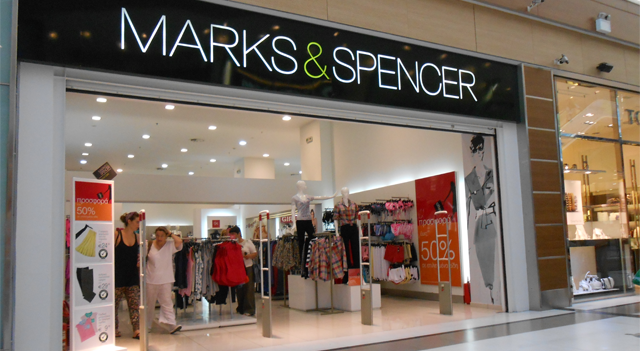
    Marks & Spencer (LSE:MKS) said on Tuesday that its Chief Technology Officer, Josie Smith, has stepped down from the business.

    Her departure comes less than a year after a major cyberattack in April that caused significant disruption to the British clothing and food group’s online operations. The incident had a material financial impact, with the company estimating lost profits of around £300 million ($404 million).

    “Josie Smith, Chief Technology Officer (CTO), has decided to leave M&S. We thank Josie for her significant contributions, and wish her well for the future,” an M&S spokesperson said, confirming an earlier report by Sky News.

  • FTSE 100: Shares Slide Further on Trump Tariff Warnings and Soft UK Jobs Data; Sterling Holds Firm

    FTSE 100: Shares Slide Further on Trump Tariff Warnings and Soft UK Jobs Data; Sterling Holds Firm

    UK stocks remained under pressure on Tuesday, extending recent losses as fresh tariff threats from U.S. President Donald Trump linked to Greenland weighed on risk appetite, while domestic labour market data added to the negative tone, showing unemployment stuck at elevated levels in November and a slowdown in pay growth.

    By 10:09 GMT, the FTSE 100 was down 1.4%. Sterling, however, strengthened, with GBP/USD up 0.4% at 1.34. Elsewhere in Europe, Germany’s DAX fell 1.6% and France’s CAC 40 slipped 1.3%.

    FTSE 100 round-up

    Shares in RAPT Therapeutics Inc (NASDAQ:RAPT) soared 63.6% after GSK plc (LSE:GSK) said it plans to acquire the company for $58 per share in an all-cash deal that values RAPT at $2.2 billion. The transaction gives GSK access to RAPT’s food allergy pipeline, led by the anti-IgE antibody ozureprubart, which is in Phase IIb development for the prevention of reactions to multiple food allergens including peanut, milk, egg, cashew and walnut.

    In contrast, CPP Group Plc (LSE:CPP) slumped 43.8% after the group said it is reviewing strategic options that include cancelling its AIM listing and moving to a private company structure. The board pointed to difficulties facing smaller listed companies, including “persistent undervaluation, limited liquidity, and the ongoing costs and administrative burden” associated with a public listing.

    Wise PLC (LSE:WISE) jumped more than 13% after the money transfer group beat quarterly revenue expectations and upgraded its profit margin outlook. Wise reported underlying income of £424.4 million for the third quarter of fiscal 2026, up 21% year on year and above the £412 million analyst consensus.

    QinetiQ Group PLC (LSE:QQ.) said it remains on course to meet full-year targets, guiding for an operating margin of around 11% and earnings per share growth of 15% to 20%, after reporting more than £3 billion of orders year to date.

    Big Yellow Group PLC (LSE:BYG) posted third-quarter revenue of £52.3 million, up from £51 million a year earlier, as higher net achieved rents offset lower occupancy during a seasonally weaker period. Like-for-like store revenue increased to £51.9 million from £51 million.

    Shares in Informa PLC (LSE:INF) traded higher after the company lifted its 2025 adjusted earnings guidance to around 55.5p per share, implying underlying growth of 10–15%. Informa also announced a new £200 million share buyback and said it expects full-year revenue of about £4 billion.

    Ibstock PLC (LSE:IBST) dropped 7% after its full-year 2025 update signalled a sharper-than-expected downgrade to future earnings, despite results for the year broadly matching guidance, with adjusted EBITDA expected to be around £71 million.

    Kier Group PLC (LSE:KIE) said first-half trading was in line with board expectations, leaving full-year FY26 guidance unchanged, supported by consistent project delivery and tighter cash management.

    Finally, DFS Furniture PLC (LSE:DFS) rallied 6.8% after upgrading its full-year profit outlook above market expectations. The retailer now expects underlying profit before tax and brand amortisation of £43–50 million, compared with current consensus forecasts of around £41 million.

  • Gold Breaks Above $4,700/oz to New Peak as Greenland Uncertainty Fuels Safe-Haven Buying

    Gold Breaks Above $4,700/oz to New Peak as Greenland Uncertainty Fuels Safe-Haven Buying

    Gold prices surged to fresh record highs during Asian trading on Tuesday, pushing beyond a key psychological level as ongoing uncertainty surrounding U.S. demands over Greenland kept investors firmly in risk-off mode and boosted demand for safe-haven assets.

    Both gold and silver had already climbed to unprecedented levels earlier in the week after U.S. President Donald Trump said European countries could face tariffs unless they relinquish Greenland. While silver saw some profit-taking in the latest session, gold continued to attract strong buying interest.

    Spot gold rose 0.4% to $4,696.07 an ounce, while February gold futures gained 0.5% to $4,701.96 an ounce by 00:04 ET (05:04 GMT). Intraday, spot prices briefly touched a new record of $4,701.78 an ounce.

    Bullion rallies as Trump–Greenland dispute rattles markets

    Gold remained well supported as uncertainty over Trump’s intentions regarding Greenland reinforced demand for defensive assets.

    The geopolitical unease also weighed on the U.S. dollar, providing additional support for precious metals. On Monday, Trump reiterated his claims over Greenland and, in an interview with NBC News, stopped short of ruling out the use of military force to secure the island.

    Market anxiety intensified earlier this year after the United States launched an incursion into Venezuela and captured President Nicolas Maduro. Trump is now set to attend the World Economic Forum in Davos, Switzerland, where he is expected to meet with several European leaders.

    “When US foreign policy tilts toward a transactional, unpredictable approach that bypasses multilateral frameworks, it risks undermining policy credibility and encourages diversification away from the USD,” analysts at OCBC wrote.
    “In such an environment, precious metals like gold are supported not by extended conflict itself, but by a sustained backdrop of geopolitical uncertainty and policy unpredictability.”

    Silver retreats from highs; platinum also softens

    Heightened global uncertainty has prompted investors to trim exposure to speculative assets and rotate further into physical stores of value such as gold — a shift that helped drive a broad rally across metals toward the end of 2025.

    Silver and platinum had also benefited from that move, but both saw some profit-taking on Tuesday. Spot silver slipped 0.1% to $94.2890 an ounce after hitting a record in the previous session, while spot platinum declined 0.6% to $2,361.47 an ounce.

    Industrial metals were likewise influenced by the demand for tangible assets. Benchmark copper futures on the London Metal Exchange eased 0.4% to $12,927.58 a tonne, though prices remained close to recent all-time highs.

  • U.S. Futures Weaken as Greenland Tariff Tensions Loom; Netflix Results Ahead: Dow Jones, S&P, Nasdaq, Wall Street

    U.S. Futures Weaken as Greenland Tariff Tensions Loom; Netflix Results Ahead: Dow Jones, S&P, Nasdaq, Wall Street

    Futures tied to the main U.S. equity benchmarks edged lower as investors assessed the risk of new American tariffs targeting several European countries over Greenland. President Donald Trump said discussions on Greenland would take place during his attendance at a major economic forum in Switzerland, while European governments consider how to respond to his demand that the territory come under U.S. ownership. In the U.S., markets are also bracing for a potential Supreme Court decision on the legality of Trump’s tariff measures. Meanwhile, Netflix (NASDAQ:NFLX) is set to release its latest earnings.

    Futures point to losses

    U.S. stock futures were under pressure on Tuesday, signalling a weak start to a shortened trading week shaped by geopolitical uncertainty.

    By 03:07 ET, Dow futures were down 677 points, or 1.4%, S&P 500 futures had fallen 102 points, or 1.5%, and Nasdaq 100 futures were lower by 449 points, or 1.8%.

    Wall Street was closed on Monday for Martin Luther King Jr. Day, but global markets have started the week on the back foot. Sentiment has been dented by Trump’s warning that tariffs could be imposed on multiple European nations unless the U.S. is allowed to take control of Greenland. Trump has said the duties would start at 10% and could rise to as much as 25% in June if his demands regarding the semi-autonomous Danish territory are not met.

    Analysts at Capital Economics warned that, if enacted and sustained, the tariffs could shave “something between” 0.2% and 0.5% off euro zone GDP, with Germany likely to bear a significant share of the impact.

    “In practice though, we doubt that they will be implemented as advertised. We also think the [European Union] will be cautious in any retaliation in an effort to avoid further escalation,” the analysts said.

    Trump flags Greenland talks in Davos

    Trump said he plans to hold talks on Greenland during his visit this week to the World Economic Forum in Davos, Switzerland.

    Posting on social media, Trump said he had a “very good” call with NATO Secretary General Mark Rutte. The president, who is scheduled to address business and political leaders in Davos on Wednesday, added that he would meet with “various parties” during the trip, without naming them.

    Reiterating his stance, Trump wrote: “As I expressed to everyone, very plainly, Greenland is imperative for National and World Security. There can be no going back — On that, everyone agrees!”

    European governments are reportedly debating their response, including the possibility of imposing steep tariffs on €93 billion worth of U.S. goods. France has also called on the EU to consider deploying an anti-coercion tool that could extend to restrictions on investment or banking activity.

    Such measures have been described as a potential EU “bazooka”, raising the risk of a serious rift between Brussels and Washington after a trade agreement was reached last summer. The situation has also revived questions about the future cohesion of NATO.

    Supreme Court ruling in focus

    Hovering in the background is a long-anticipated Supreme Court ruling on the legality of Trump’s sweeping import tariffs on a range of countries.

    Trump has justified the measures under the 1977 International Emergency Economic Powers Act (IEEPA), which grants the president broad authority over international economic transactions during a national emergency. However, justices voiced notable scepticism during hearings late last year, prompting markets to expect a possible ruling against the administration.

    Media reports suggest a decision could be issued as soon as Tuesday. Even so, U.S. Trade Representative Jamieson Greer told the New York Times that officials are preparing alternative duties that would “start the next day” should the court strike down the current tariffs.

    Gold sets fresh record

    Gold prices climbed to new record highs on Tuesday, as uncertainty surrounding U.S. demands over Greenland kept investors cautious and supported demand for safe-haven assets.

    Both gold and silver hit all-time highs earlier in the week following Trump’s latest tariff threats. While silver saw some profit-taking on Tuesday, gold remained well supported, helped by a weaker U.S. dollar.

    Spot gold rose 1.0% to $4,724.83 an ounce, while gold futures jumped 3.0% to $4,730.50 an ounce by 03:49 ET.

    Netflix earnings awaited

    On the earnings front, Netflix is due to report its quarterly results after the close of U.S. trading on Tuesday.

    Bloomberg consensus estimates point to earnings per share of $0.55 on revenue of $11.96 billion. However, investor attention may focus more on any commentary surrounding Netflix’s interest in Warner Bros. Discovery (NASDAQ:WBD), which has also attracted a competing bid from Paramount Skydance.

    The contest for Warner Bros. Discovery is expected to stretch over several months and could face regulatory scrutiny in both the U.S. and Europe. Netflix sees the group’s assets — including HBO Max and franchises such as “Harry Potter” and “Friends” — as a potential growth driver, even as it faces pressure to demonstrate returns from heavy investment in advertising and video games, despite hits like “Stranger Things” and its expansion into live sports.