Author: Fiona Craig

  • Caledonia Mining Adjusts Dividend Payment Timing for AIM Investors

    Caledonia Mining Adjusts Dividend Payment Timing for AIM Investors

    Caledonia Mining Corporation Plc (LSE:CMCL) has announced a slight change to the payment schedule for its quarterly dividend of US$0.14 per share, affecting holders of depositary interests traded on AIM. The payment date has been moved from April 17, 2026 to April 20, 2026, with no changes to the dividend amount or other associated terms.

    This update applies only to investors holding depositary interests on the London AIM market. The broader dividend plan outlined in March 2026 remains fully in place, signaling that the adjustment is purely administrative. There is no indication of any shift in the company’s financial position or dividend strategy, though AIM investors should take note of the revised payment date for cash flow planning.

    More about Caledonia Mining

    Caledonia Mining Corporation Plc is a gold-focused mining company with listings on the NYSE American, AIM, and the Victoria Falls Stock Exchange under the ticker CMCL. The business is centered on precious metals production, offering investors exposure to the global gold mining industry across multiple international markets.

  • Fevara Secures Exclusive Rights to Distribute LithoNutri Across UK and Ireland

    Fevara Secures Exclusive Rights to Distribute LithoNutri Across UK and Ireland

    Fevara plc (LSE:FVA), a London-listed livestock nutrition specialist, has entered into a five-year exclusive distribution agreement with Brazil-based Oceana Minerals to introduce its LithoNutri product to the Great Britain and Ireland markets.

    Fevara develops and commercialises science-led nutritional solutions for livestock, including feed licks, mineral blocks, and boluses for cattle, sheep, and horses. Its portfolio includes well-known brands such as Crystalyx and Horslyx, and the company operates from its Carlisle headquarters with manufacturing facilities spanning the UK, United States, and Brazil, alongside joint ventures in Germany and the U.S. Its products are sold in more than 20 countries, with a focus on enhancing efficiency and sustainability in grazing systems.

    Under the agreement, LithoNutri—a seaweed-based rumen health and digestion enhancer—will be added to Fevara’s product range. The company plans to utilise its established distribution network and strong customer base to expand adoption, aiming to support improved milk production and livestock growth rates. The addition is also expected to strengthen the market position of Fevara’s core brands, including Crystalyx, Scotmin, Horslyx, and Tracesure, across the UK and Ireland.

    The collaboration reflects a model Fevara has successfully implemented in regions such as New Zealand, where partnerships have supported market expansion. Both companies intend to work closely through joint technical development, research initiatives, and commercial efforts to build the GB&I market for LithoNutri. Although the agreement is not considered financially material in regulatory terms, it highlights Fevara’s ongoing strategy of leveraging partnerships and sustainable product innovation to reinforce its role as a research-driven player in livestock nutrition while opening a new European channel for Oceana Minerals.

    Looking ahead, Fevara’s outlook is supported by an expected improvement in FY2025 financial performance, including a recovery in profitability, stronger free cash flow, and relatively low leverage. However, this is balanced by past fluctuations in earnings and less consistent cash conversion. Market indicators remain broadly neutral, with the share price trading below longer-term averages, while valuation appears reasonable and supported by dividend returns.

    More about Fevara plc

    Fevara plc is a global provider of livestock nutritional products, focused on supporting farmers operating in extensive grazing systems with research-based solutions designed to improve productivity, efficiency, and sustainability. The company produces feed licks, mineral supplements, and boluses for cattle, sheep, and horses, marketed under brands such as Crystalyx, Horslyx, Scotmin Nutrition, SmartLic, Tracesure Advanced, and Macal.

    Headquartered in Carlisle, UK, Fevara operates six manufacturing facilities across the UK, U.S., and Brazil, supported by joint ventures in Germany and the United States. Listed on the London Stock Exchange since 1972, the company maintains a broad international distribution network and continues to position itself as a key participant in the global livestock nutrition sector, with a strong emphasis on innovation and sustainable farming solutions.

  • Wall Street Seen Extending Gains as Hopes for U.S.-Iran Talks Support Sentiment: Dow Jones, S&P, Nasdaq, Futures

    Wall Street Seen Extending Gains as Hopes for U.S.-Iran Talks Support Sentiment: Dow Jones, S&P, Nasdaq, Futures

    U.S. stock futures indicate a slightly positive open on Thursday, pointing to a potential continuation of the recent rally across equity markets.

    Investors appear inclined to build on the momentum that pushed both the Nasdaq and the S&P 500 to fresh record closing highs in the previous session.

    Market participants remain encouraged by the prospect of renewed negotiations between the United States and Iran, although no formal date for talks has been confirmed.

    Reports suggest the two sides may agree to extend the current ceasefire by an additional two weeks to allow further diplomatic engagement.

    “It’s like the events of the past month-and-a-half have been placed in the rearview mirror by investors,” said Dan Coatsworth, head of markets at AJ Bell.

    He added, “The market’s sanguine perspective may be tested if the rhetoric about an end to the fighting isn’t matched by reality sooner rather than later.”

    Futures saw modest gains following a Labor Department report showing initial jobless claims in the U.S. fell more than expected for the week ending April 11.

    After a strong start to the week, equities continued to advance on Wednesday, lifting both the Nasdaq and the S&P 500 to new closing records.

    The Nasdaq rose 376.93 points, or 1.6%, to 24,016.02, while the S&P 500 gained 55.57 points, or 0.8%, to 7,022.95. The Dow Jones Industrial Average, however, moved against the broader trend, slipping 72.27 points, or 0.2%, to 48,463.72.

    Technology stocks were a key driver of the Nasdaq’s gains, with Broadcom (NASDAQ:AVGO) among the standout performers.

    Broadcom shares jumped 4.2% after the company announced a long-term strategic partnership aimed at supporting Meta’s (NASDAQ:META) expanding artificial intelligence infrastructure.

    In contrast, the Dow’s decline was partly driven by a notable drop in Caterpillar (NYSE:CAT), with the stock falling 3.0%.

    Investors also continued to express confidence that tensions in the Middle East could ease, while awaiting further clarity on the next phase of U.S.-Iran negotiations.

    In remarks to Fox Business, President Donald Trump said the conflict is “very close to over” and reiterated his view that Iran is keen to reach a deal “very badly.”

    Trump also suggested the “stock market is going to boom” once the conflict involving the U.S., Israel and Iran is resolved.

    Software stocks posted strong gains, with the Dow Jones U.S. Software Index surging 4.6%.

    Brokerage stocks also advanced, as reflected by a 1.9% rise in the NYSE Arca Broker/Dealer Index.

    On the downside, gold-related stocks declined sharply as bullion prices weakened, dragging the NYSE Arca Gold Bugs Index down by 3.1%.

    Housing stocks were also under pressure after data showed a larger-than-expected drop in homebuilder sentiment, sending the Philadelphia Housing Sector Index down 2.0%.

  • European Shares Edge Higher on Hopes for Iran-US Talks: DAX, CAC, FTSE100

    European Shares Edge Higher on Hopes for Iran-US Talks: DAX, CAC, FTSE100

    European equity markets posted modest gains on Thursday, supported by optimism that upcoming discussions between Iran and the United States could help ease tensions in the Middle East.

    Reports suggest both sides are considering extending the current ceasefire by an additional two weeks to allow more time for negotiations.

    Investors also reacted to a fresh wave of corporate earnings releases and newly published economic data across the region.

    France’s CAC 40 rose 0.6%, while both the UK’s FTSE 100 and Germany’s DAX advanced by 0.7%.

    In Frankfurt, Zalando climbed 3.2%, while SAP added around 2.3% and Brenntag gained nearly 2%. Beiersdorf, MTU Aero Engines and Heidelberg Materials also moved higher, rising between 1% and 1.3%.

    On the downside, Qiagen, Merck, Deutsche Telekom, Mercedes-Benz, Daimler Truck Holding, BMW and Volkswagen declined between 0.5% and 1.6%.

    In Paris, Dassault Systèmes gained 2.2%. Capgemini, Teleperformance, Saint-Gobain, Airbus, Publicis Groupe and Michelin rose between 1.2% and 2%.

    Kering slipped 1.7%, while L’Oréal, ArcelorMittal, TotalEnergies and Engie also traded lower.

    In London, Entain surged 7.5% after reaffirming its revenue outlook. Halma, B&M European Value Retail, Vistry Group, Frasers Group, JD Sports Fashion, Pershing Square Holdings, Rightmove and Persimmon posted gains of between 2% and 3.5%.

    Tesco also jumped following strong sales and profit growth, alongside the announcement of a £500 million share buyback.

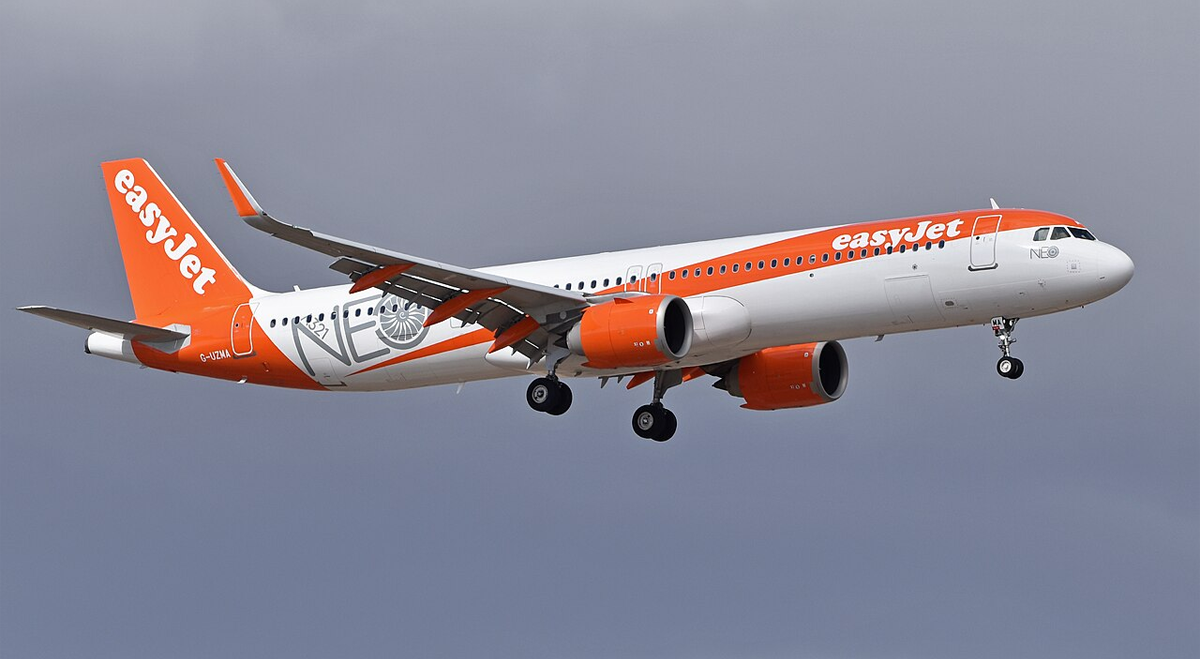
    EasyJet fell about 5% amid ongoing uncertainty linked to the Middle East situation. Airtel Africa, Convatec Group, Unite Group, Vodafone and Antofagasta declined between 1.6% and 2%.

    On the economic front, figures from the Office for National Statistics showed UK GDP expanded by 0.5% in February, exceeding the 0.1% growth recorded in January.

    Economists had expected growth to remain at 0.1%. On an annual basis, the economy grew by 1% in February.

    From a sector perspective, services—the largest part of the economy—rose 0.5%, while construction output increased by 1%.

    Industrial production grew 0.5%, following declines of 0.1% in January and 0.4% in December. Manufacturing output, however, slipped 0.1%, reversing January’s 0.2% increase.

    Year on year, industrial production fell 0.4%, while manufacturing output declined 0.5% in February.

    Meanwhile, final data from Eurostat showed eurozone inflation rose more than initially estimated in March, reaching its highest level since mid-2024.

    The harmonised consumer price index increased 2.6% year on year, revised up from an initial estimate of 2.5%, and compared with 1.9% growth in February.

  • Oil Holds Steady as Doubts Over US-Iran Talks Linger, Hormuz Flows Remain Disrupted

    Oil Holds Steady as Doubts Over US-Iran Talks Linger, Hormuz Flows Remain Disrupted

    Oil prices were broadly unchanged on Thursday, trimming earlier losses as investors remained unconvinced that ongoing negotiations between the United States and Iran will quickly lead to a resolution of the conflict that has constrained supply from the Middle East.

    Brent crude futures fell 26 cents to $94.67 per barrel by 06:11 GMT, while U.S. West Texas Intermediate crude edged up 14 cents to $91.43 per barrel. Both benchmarks ended the previous session near flat levels, although trading was marked by significant intraday swings.

    The conflict involving the U.S., Israel and Iran has triggered major disruptions to global oil and gas supply, largely due to Iran restricting movement through the Strait of Hormuz—a critical corridor that typically handles around 20% of worldwide oil and LNG shipments.

    “While there are hopes for de-escalation, many investors remain sceptical, given that U.S.-Iran talks have repeatedly broken down even after appearing to make progress,” said Toshitaka Tazawa, an analyst at Fujitomi Securities.

    “Until a peace deal is reached and free navigation through the strait is restored, WTI prices are expected to continue fluctuating between $80 and $100,” he added.

    ING analysts estimate that approximately 13 million barrels per day of oil flows have been impacted by the disruption, even after factoring in alternative pipeline routes and limited tanker movements through the strait. They warned that the situation could deteriorate further following Washington’s decision to impose a blockade on Iranian ports after negotiations collapsed over the weekend.

    “The physical market is becoming tighter every day that passes without a restart of oil flows through the Strait of Hormuz,” the ING analysts said.

    A source with knowledge of discussions in Tehran told Reuters that Iran may consider allowing vessels to pass via the Omani side of the Strait of Hormuz if an agreement is reached to prevent renewed hostilities after the two-week ceasefire that began on April 8.

    Officials from both the U.S. and Iran are reportedly considering returning to Pakistan for additional talks as early as this weekend. Pakistan’s army chief arrived in Tehran on Wednesday to help mediate and avoid a fresh escalation.

    U.S. Treasury Secretary Scott Bessent said on Wednesday that Washington will not extend waivers that previously allowed certain purchases of Iranian and Russian crude without triggering sanctions.

    Highlighting the strain in global supply, U.S. government data showed declines in crude, gasoline and distillate inventories last week, as reduced imports and increased exports reflected efforts to compensate for disrupted flows.

  • Gold Edges Higher as Dollar Weakness Persists; Iran Talks Remain Key Focus

    Gold Edges Higher as Dollar Weakness Persists; Iran Talks Remain Key Focus

    Gold prices climbed during Asian trading on Thursday, supported by an extended decline in the U.S. dollar, while investors continued to watch for developments around potential ceasefire negotiations between the United States and Iran.

    The metal hovered close to a one-month peak reached in the previous session, as expectations of easing tensions in the Iran conflict lifted market sentiment and reduced concerns about stubborn inflation pressures.

    Spot gold rose 0.9% to $4,835.09 per ounce, while gold futures added 0.7% to $4,857.05 per ounce as of 01:21 ET (05:21 GMT).

    Other precious metals also moved higher. Silver gained 2.4% to $80.8165 per ounce, and platinum advanced 1.6% to $2,147.21 per ounce, with both trading near recent monthly highs.

    Dollar slide underpins metals; Iran developments in spotlight

    Gold and other metals were supported by continued dollar weakness, as improving risk appetite reduced demand for the U.S. currency as a safe haven.

    The dollar fell to a six-week low on Thursday, weighed down in part by softer producer inflation data released earlier in the week.

    U.S. President Donald Trump indicated that further discussions with Iran could take place in the coming days and suggested that an end to the Middle East conflict may be within reach. He also said that separate talks between Israel and Lebanon are scheduled in Washington.

    However, these remarks came alongside reports of increased U.S. troop deployments in the region and the full rollout of a naval blockade targeting Iran.

    Even so, the ceasefire between the two sides appeared to be holding.

    Markets remain focused on the likelihood of further negotiations, particularly with the current ceasefire set to expire on April 21.

    Copper supported by solid Chinese growth data

    Among industrial metals, copper prices also pushed higher after stronger-than-expected economic data from China, the world’s largest importer.

    Benchmark copper futures on the London Metal Exchange rose 0.5% to $13,350.33 per tonne, while COMEX copper futures gained 0.8% to $6.1250 per pound.

    Data released Thursday showed China’s economy expanded 5% year on year in the first quarter, exceeding expectations and pointing to a strong start to 2026.

    The expansion was largely driven by exports, as global demand for Chinese goods remained firm. This trend is expected to continue in the near term, supporting demand for copper.

    However, China still faces risks tied to the Iran conflict. Higher energy costs could weigh on domestic consumption, while disruptions to global shipping routes may also impact export activity.

  • Markets Monitor Iran Negotiations as Futures Climb; TSMC Delivers Strong Earnings: Dow Jones, S&P, Nasdaq, Wall Street Futures

    Markets Monitor Iran Negotiations as Futures Climb; TSMC Delivers Strong Earnings: Dow Jones, S&P, Nasdaq, Wall Street Futures

    U.S. stock futures moved higher on Thursday as investors followed developments around a potential new round of discussions between Washington and Tehran. Efforts are ongoing to prolong a temporary ceasefire and restore traffic through the Strait of Hormuz. Oil prices edged up but stayed below the $100 per barrel level. Meanwhile, China reported better-than-expected first-quarter growth, and semiconductor leader TSMC (NYSE:TSM) posted record-breaking profits.

    Futures point upward

    Futures linked to major U.S. indices indicated a stronger open, supported by optimism over possible progress toward a lasting ceasefire in the Middle East, along with encouraging early signals from corporate earnings.

    At 03:38 ET, Dow futures were up 56 points, or 0.1%, S&P 500 futures gained 15 points, or 0.2%, and Nasdaq 100 futures advanced 114 points, or 0.4%. Outside the U.S., Japan’s Nikkei reached a new all-time high, while European stocks traded modestly higher.

    In the prior session, both the S&P 500 and Nasdaq Composite closed at record levels, largely driven by hopes that the Iran conflict could soon de-escalate.

    Executives from leading Wall Street banks also suggested the U.S. economy remains broadly resilient despite the energy shock tied to disruptions in the Strait of Hormuz, a critical route for global oil shipments.

    “[W]hile it’s still early in the [calendar first-quarter] reporting season, and the full fallout from the Iran war hasn’t been felt yet in the economy, we’ve been positively surprised by corporate results thus far, especially the ‘status quo’ messaging from bank CEOs,” analysts at Vital Knowledge said in a note.

    Additional earnings reports are expected later today, with PepsiCo scheduled before the opening bell and Netflix after market close.

    Attention on Iran talks

    Analysts noted that expectations for an extension of the current truce between the U.S. and Iran have become widely priced in, meaning further headlines around negotiations may have a reduced impact on markets.

    Although no formal agreement has been reached, recent reports suggest diplomatic progress is being made.

    Mediators continue working toward a more permanent ceasefire as the existing two-week truce nears its end. According to the Wall Street Journal, both sides have agreed in principle to resume talks after an initial round in Pakistan failed to produce a breakthrough, though no date or location has been set.

    The WSJ also reported that Vice President JD Vance is expected to head the U.S. delegation in future discussions.

    President Donald Trump has also indicated that talks between Israel and Lebanon are expected to take place today, with the Financial Times reporting that a ceasefire between the two parties could be reached “soon.”

    Oil remains below $100

    Tensions remain, particularly surrounding the ongoing U.S. naval blockade of Iranian ports. A senior Iranian military official has warned Washington against maintaining the blockade, while U.S. Central Command insists that no Iranian-linked vessels have managed to bypass it.

    Other reports suggest that some ships and tankers have successfully navigated the Strait of Hormuz in recent days. Reuters also indicated that Iran may allow vessels to pass through the Omani side of the strait without interference as part of a broader agreement.

    Against this backdrop, oil prices moved slightly higher but stayed under $100 per barrel, still significantly above pre-conflict levels. On a weekly basis, however, crude has come under pressure, with gains limited by expectations of easing tensions between the U.S. and Iran.

    China growth exceeds expectations

    China’s economy expanded more than forecast in the first quarter of 2026, supported by strong exports and a rebound in domestic consumption.

    Gross domestic product rose 5% year on year, matching the upper end of the government’s annual target.

    The data provided some support for expectations around oil demand in the world’s largest importer, although other indicators pointed to slowing momentum toward the end of the quarter.

    China’s outlook remains uncertain, particularly given its reliance on crude imports from Iran.

    TSMC posts record results

    Taiwan Semiconductor Manufacturing (NYSE:TSM) reported first-quarter earnings that exceeded expectations, benefiting from continued strong demand driven by artificial intelligence.

    The company posted net profit of T$572.48 billion ($18.15 billion) for the three months to March 31, beating Bloomberg estimates of T$542.38 billion and marking a 58.3% increase from a year earlier.

    Revenue rose 35% to T$1.134 trillion during the quarter.

    TSMC warned that disruptions to chemical and energy supplies linked to the Middle East conflict could weigh on margins, although it does not expect a material impact in the near term.

  • European Markets Edge Higher on Hopes of Progress in Iran Peace Talks: DAX, CAC, FTSE100

    European Markets Edge Higher on Hopes of Progress in Iran Peace Talks: DAX, CAC, FTSE100

    European equities opened slightly higher on Thursday, following gains in global markets as investors remained optimistic about a potential resolution to the Iran conflict.

    By 07:05 GMT, the pan-European Stoxx 600 was up 0.2%, while France’s CAC 40 rose 0.1% and the UK’s FTSE 100 gained 0.2%. Germany’s DAX, however, slipped marginally by 0.1%.

    The Stoxx 600 is gradually recovering losses recorded since the escalation of the Iran conflict in late February. Even so, European markets have lagged behind Wall Street, with traders pointing to the region’s reliance on natural gas imports from Middle Eastern facilities affected by missile strikes. In contrast, the United States, as a net energy exporter, may be better shielded from the economic impact of the conflict.

    Diplomatic efforts to secure a lasting ceasefire between the United States and Iran are ongoing, with a temporary two-week truce set to expire later this month.

    According to the Wall Street Journal, Washington and Tehran have agreed in principle to resume negotiations after initial talks held last weekend in Pakistan failed to produce an immediate agreement. Officials familiar with the discussions indicated that no date or location has yet been confirmed.

    The newspaper also reported that Vice President JD Vance is expected to lead the US delegation in any upcoming talks with Iran.

    U.S. President Donald Trump has said that discussions between Israel and Lebanon are scheduled to take place later today. The Financial Times, citing Lebanese officials, reported that a ceasefire between the two sides, which have posed a risk to the broader US-Iran truce, could be reached “soon.”

    Despite these developments, tensions persist, particularly over the ongoing US naval blockade of Iranian ports. A senior Iranian military official has warned Washington against continuing the blockade, while US Central Command maintains that no Iranian-linked vessels have managed to bypass it.

    Oil prices edged higher, remaining below $100 per barrel but still significantly above pre-conflict levels, as markets assess the potential impact of a prolonged disruption in the Strait of Hormuz. The key shipping route off Iran’s southern coast has been largely inaccessible to tanker traffic for several weeks, tightening global energy supply and supporting crude prices.

    Meanwhile, Europe’s earnings season is gathering pace, offering insight into how companies are navigating the challenges posed by the Iran conflict.

  • Eurozone Inflation Accelerates to 2.6% in March, Above Initial Estimate

    Eurozone Inflation Accelerates to 2.6% in March, Above Initial Estimate

    Consumer price growth across the Eurozone picked up more strongly than first reported in March, remaining above the European Central Bank’s 2% target and reflecting the impact of higher energy costs linked to the Iran conflict.

    According to Eurostat, annual inflation across the 21 countries using the euro rose to 2.6% over the twelve months to March, exceeding the preliminary estimate of 2.5% and up from 1.9% in February.

    On a monthly basis, consumer prices increased by 1.3%, slightly above the initial reading of 1.2% and compared with a 0.6% rise in the previous month.

  • TotalEnergies Expects Strong Q1 Earnings Boost Despite Conflict Impact

    TotalEnergies Expects Strong Q1 Earnings Boost Despite Conflict Impact

    TotalEnergies SE (EU:TTE) said it anticipates a solid uplift in first-quarter earnings, supported by higher oil and gas prices and robust trading activity, even as ongoing tensions in the Middle East continue to affect production levels.

    The company’s U.S.-listed shares rose around 3% in premarket trading.

    Output for the quarter is expected to remain broadly stable compared with the previous period, at approximately 2.55 million barrels of oil equivalent per day. New project startups, including developments in Libya and Brazil, are helping offset around 100,000 barrels per day of lost production linked to the conflict, which has disrupted operations in Qatar, Iraq, and offshore UAE. A refinery complex in Saudi Arabia was also recently shut following damage.

    Despite these challenges, the group expects a notable increase in earnings from its exploration and production segment, with stronger hydrocarbon prices contributing an estimated $2 billion to $2.5 billion to working capital during the quarter.

    Liquefied natural gas performance is also set to improve significantly compared with the fourth quarter, driven by around 10% growth in output and strong trading conditions amid heightened market volatility.

    Refining margins in Europe remained firm at $11.40 per ton, comfortably above market expectations, with utilization rates exceeding 90%.

    Results from the Integrated Power segment are projected at about $500 million, broadly unchanged year on year, while Marketing and Services are also expected to perform in line with the previous year.

    Mark Wilson of Jefferies described the update as a “small positive,” noting that TotalEnergies appears to be managing working capital pressures more effectively than some peers, including Shell and BP.

    The analyst added that first-quarter net income could come in roughly 10% above consensus forecasts of €4.8 billion, with LNG trading likely to be the main driver of upside.

    TotalEnergies is scheduled to report its full first-quarter results on April 29.