Author: Fiona Craig

  • European markets trade mixed as oil rally fuels inflation concerns: DAX, CAC, FTSE100

    European markets trade mixed as oil rally fuels inflation concerns: DAX, CAC, FTSE100

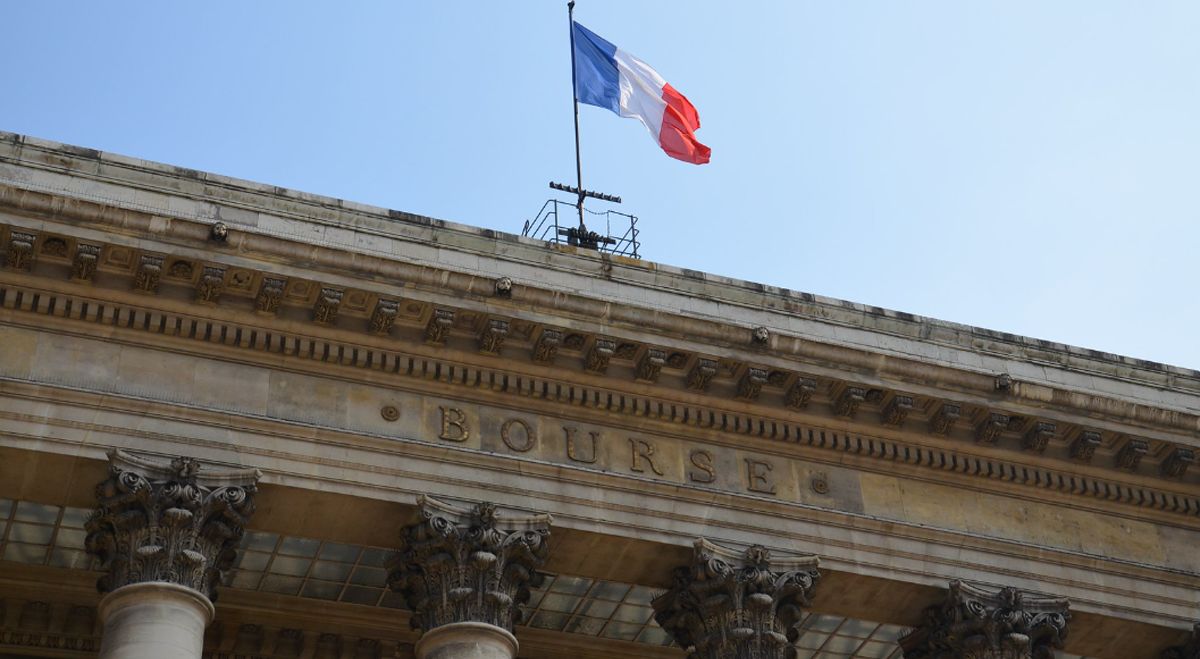
    European equities delivered a mixed performance on Monday after escalating tensions in the Middle East lifted Brent crude above $90 per barrel for the first time in a month, renewing concerns that higher energy prices could add to inflationary pressures, influence interest rate expectations and weigh on economic growth.

    Market participants are also preparing for earnings reports from major U.S. technology companies and this week’s European Central Bank policy meeting. The ECB is widely expected to keep interest rates unchanged after delivering its first rate increase in almost three years on June 11.

    German producer prices extend annual gains

    German government bond yields climbed to their highest level in two years after fresh data showed producer prices increased for a third consecutive month in June.

    According to Destatis, producer prices rose 1.8 percent year over year in June, easing from the 2.2 percent increase recorded in May.

    The latest increase marked the third straight month of annual growth, supported mainly by higher intermediate goods costs and rising energy prices.

    On a monthly basis, producer prices declined 0.3 percent, compared with economists’ expectations for a 0.2 percent decrease.

    FTSE falls while DAX and CAC advance

    The U.K.’s FTSE 100 Index fell 0.3 percent, while Germany’s DAX Index gained 0.2 percent and France’s CAC 40 Index added 0.4 percent.

    In company news, budget airline Ryanair (LSE:0A2U) declined after reporting a 34 percent fall in fiscal first-quarter profit, missing analysts’ expectations.

    Self-storage specialist Big Yellow Group (LSE:BYG) also traded lower after announcing first-quarter revenue growth of 3 percent.
  • BP agrees to sell Austrian fuel station and EV charging business to volenergy

    BP agrees to sell Austrian fuel station and EV charging business to volenergy

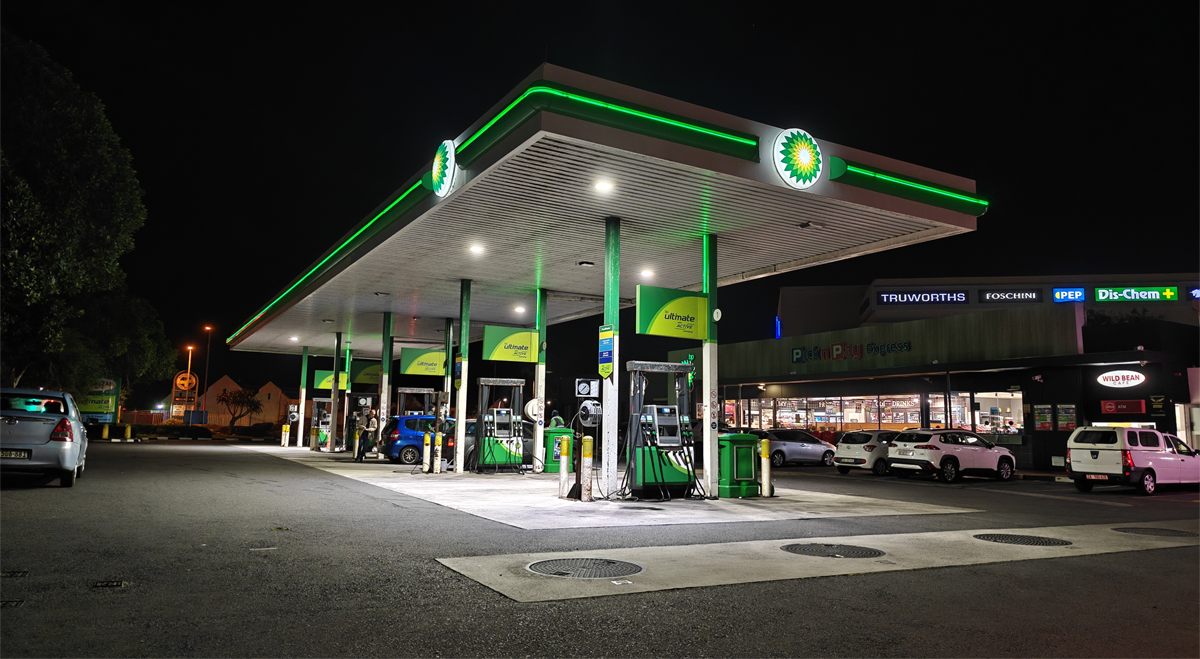
    BP (LSE:BP.) has reached an agreement to divest its retail fuel, convenience and electric vehicle charging operations in Austria to volenergy AG as the energy group continues to simplify its downstream portfolio.

    The transaction forms part of BP’s broader strategy to focus investment on markets and businesses where it believes it can generate stronger long-term returns.

    Deal includes 250 BP-branded service stations

    The sale covers 250 BP-branded retail locations across Austria, including around 115 company-owned and franchise-operated sites. It also includes the company’s electric vehicle charging network and its associated fleet business.

    Although ownership will transfer to volenergy AG, the sites will continue operating under the BP brand through a licensing agreement once the transaction has been completed.

    BP will divest its entire stake in BP Retail Austria GmbH, subject to the required regulatory approvals. The agreement also includes the Austrian fleet business as well as BP’s interests in three non-operated joint ventures: Erdöl-Lagergesellschaft m.b.H., Autobahn – Betriebe Gesellschaft m.b.H. and TLM Tanklager Management GmbH in Linz.

    The companies did not disclose the financial value of the transaction.

    BP continues downstream portfolio reshaping

    “By concentrating our capital on the assets and markets where BP can be most competitive and best serve customers, we are strengthening our balance sheet and creating a stronger downstream portfolio,” said Richard Harding, interim EVP Downstream at BP.

    Melanie Milchram-Pinter, head of country Austria at BP, said the company has spent decades building its Austrian mobility and convenience business and believes volenergy AG is well placed to lead the next phase of its development.

    Transaction expected to close in 2026

    The sale is expected to be completed by the end of 2026, pending regulatory approval.

    The agreement follows BP’s previous disposals of its mobility and convenience businesses in Switzerland in 2022, Türkiye in 2024 and the Netherlands in 2025 as the company continues to streamline its international operations.

    BP confirmed that its aviation fuels business and Castrol operations in Austria are not part of the transaction.

  • Oil prices retreat after Brent briefly tops $90 on renewed Middle East tensions

    Oil prices retreat after Brent briefly tops $90 on renewed Middle East tensions

    Oil prices gave back part of their earlier gains on Monday after comments from an Iranian foreign ministry spokesperson raised the possibility of renewed talks with the United States based on Iran’s national interests.

    By 05:00 ET (09:00 GMT), Brent crude was trading 0.2% higher at $88.26 a barrel after earlier touching $90.75, its highest level in more than five weeks. U.S. West Texas Intermediate crude fell 0.4% to $82.18 a barrel.

    US-Iran conflict continues to support crude prices

    The latest price swings came as the United States carried out military strikes against Iran for a ninth consecutive day, adding to concerns that shipping through the Strait of Hormuz could remain disrupted.

    Iran said two oil tankers had been struck and disabled, while the Islamic Revolutionary Guards Corps claimed responsibility for attacks targeting U.S. aircraft in Jordan as well as American military assets in Kuwait and Syria.

    Authorities in Bahrain also confirmed that emergency warning sirens had sounded on Monday morning.

    The renewed military exchanges have raised fresh questions over the security of one of the world’s most important energy shipping routes, with markets closely monitoring any threat to oil flows through the Strait of Hormuz.

    Supply outlook remains tight

    ANZ analysts said, “The supply narrative has become more bearish. The anticipated recovery in shipping has effectively stalled, with Strait of Hormuz transit volumes falling to single digits.”

    They added that although U.S. crude production has increased, it has not materially changed the overall market balance, while declining global inventories continue to support crude oil and refined fuel prices.

    Brent has remained highly volatile since fighting intensified in late February. Prices briefly surged above $110 a barrel before falling back towards $70 after the June ceasefire agreement. However, renewed hostilities have once again injected uncertainty into global energy markets.

  • Gold trades near $4,000 as Middle East conflict and Fed policy outlook pull investors in opposite directions

    Gold trades near $4,000 as Middle East conflict and Fed policy outlook pull investors in opposite directions

    Gold prices were little changed on Monday as markets assessed the impact of escalating tensions between the United States and Iran while weighing expectations that higher oil prices could keep U.S. interest rates elevated for an extended period.

    At 22:17 ET (02:17 GMT), XAU/USD edged 0.1% higher to $4,020.63 an ounce, while Gold Futures advanced 0.8% to $4,030.2. Silver outperformed, with XAG/USD rising 1.8% to $56.97 an ounce, while platinum gained 0.2% to $1,598.45.

    Rising oil prices revive inflation worries

    Gold remained under pressure after losing more than 2% last week as investors questioned whether the renewed military conflict in the Middle East could slow the recent progress in reducing inflation.

    Brent crude moved back above $90 a barrel after military activity between the United States and Iran intensified during the weekend. The latest escalation included an attack on a major oil installation in Kuwait and strikes involving vessels transiting the Strait of Hormuz, increasing concerns over the security of global energy supplies.

    Tehran said the ceasefire between the United States and Iran had effectively collapsed, raising the possibility of prolonged disruption along one of the world’s busiest oil shipping routes.

    As the conflict enters its fifth month, higher energy and commodity prices continue to influence market sentiment, while uncertainty surrounding U.S. President Donald Trump’s strategy toward Iran remains a key focus for investors.

    Interest rate expectations continue to drive gold

    Although recent U.S. inflation and employment data have pointed to moderating economic conditions, markets remain focused on whether rising energy prices could delay the Federal Reserve’s progress in bringing inflation back to target.

    Higher oil prices risk keeping inflation elevated, increasing the likelihood that the Federal Reserve maintains restrictive monetary policy. Higher interest rates generally strengthen the U.S. dollar and Treasury yields, reducing the attractiveness of non-yielding assets such as gold.

    ANZ analysts said last week’s escalation in the Middle East briefly pushed market expectations for a Federal Reserve rate increase at the July 29 meeting to around 40% before easing to roughly 10%, highlighting the close relationship between gold prices and interest rate expectations.

    The bank added that the bar for another Fed rate increase remains high and continues to expect policymakers to leave rates unchanged this year. It believes the central bank will likely look through higher energy prices unless they trigger broader second- and third-round inflationary effects. ANZ also expects gold to find support between $3,800 and $4,000 an ounce as expectations for additional policy tightening continue to ease.

    Gold has remained close to the psychologically important $4,000 level in recent weeks after falling 14% during the second quarter, its weakest quarterly performance since 2013, illustrating how monetary policy expectations continue to outweigh traditional safe-haven buying.

  • US stock futures rise as oil tops $90 and investors await Big Tech earnings: Dow Jones, S&P, Nasdaq, Wall Street

    US stock futures rise as oil tops $90 and investors await Big Tech earnings: Dow Jones, S&P, Nasdaq, Wall Street

    U.S. equity futures moved modestly higher on Monday as investors monitored escalating tensions in the Middle East while preparing for a busy week of earnings from some of the world’s largest technology companies.

    Dow Jones futures gained around 0.1% in early trading, while S&P 500 futures advanced 0.2%. Nasdaq 100 futures led the gains, rising 0.5% as markets looked ahead to quarterly results from several major technology names.

    Wall Street ended Friday’s session lower after renewed concerns emerged over the sustainability of heavy investment in artificial intelligence. Although AI-related stocks have been a major driver of market performance this year, some investors have begun reducing exposure as valuations come under greater scrutiny.

    The semiconductor sector remained under pressure, with the Philadelphia Semiconductor Index falling more than 20% from its June high, placing the benchmark in bear market territory.

    Analysts at Vital Knowledge said, “For tech investors, bears won the week overwhelmingly, although the slump was more a function of narrative shift and technical dislocation (extremely crowded and complacent positioning and bullish but stale sentiment) than incrementally negative news flow.”

    Geopolitical tensions keep energy markets in focus

    Markets also continued to react to developments in the Middle East after the United States carried out military operations against Iran for a ninth consecutive day.

    Iran reported that two oil tankers had been disabled, while the Islamic Revolutionary Guards Corps said it had targeted U.S. military assets in Jordan, Kuwait and Syria. Bahrain also activated emergency warning sirens, highlighting the growing regional tensions.

    The continuing conflict has increased uncertainty over shipping through the Strait of Hormuz, a key route for global oil and liquefied natural gas exports.

    Oil prices extend gains

    Brent crude climbed 2.8% to $90.56 per barrel, returning above the $90 mark, while U.S. West Texas Intermediate crude rose 2.3% to $84.39 per barrel.

    The renewed rally has intensified concerns that higher energy prices could fuel inflation and encourage central banks to keep interest rates elevated for longer.

    Moonshot AI eyes Hong Kong IPO

    Bloomberg News reported that Chinese artificial intelligence company Moonshot AI is preparing for a potential Hong Kong listing within the next six months.

    The company is also said to be completing a private fundraising round that could value the business at more than $30 billion, following strong investor interest in its Kimi K3 AI model.

    SpaceX targets next Starship launch

    SpaceX (NASDAQ:SPCX) said it aims to conduct the thirteenth test flight of Starship on Thursday after last week’s launch attempt was called off because of engine issues.

    The mission will seek to complete a successful launch, stage separation and landing while deploying Starlink V3 satellites.

  • Market Open: Craneware Cyber Security Incident, Gulf Keystone Suspends Shaikan Production

    Market Open: Craneware Cyber Security Incident, Gulf Keystone Suspends Shaikan Production

    FTSE 100 opens flat as oil tops $90 on Middle East tensions. Craneware contains a cyber incident while Gulf Keystone halts Shaikan production.

    Market Overview

    The FTSE 100 opened broadly unchanged at 10,600.27, while the Euronext 100 slipped 0.02 per cent and Germany’s DAX fell 0.16 per cent. US markets closed weaker on Friday, with the Nasdaq ending at 25,520.24 and the S&P 500 finishing at 7,457.69. Market sentiment remained under pressure as escalating US-Iran tensions drove oil prices sharply higher, while investors also looked ahead to the European Central Bank meeting and the latest US technology earnings.

    Commodity markets reflected the heightened geopolitical backdrop, with Brent crude extending gains while copper, gold and natural gas were little changed. Bitcoin weakened slightly against sterling. Sterling strengthened modestly against the US dollar and Australian dollar, was broadly steady against the euro, and softened slightly against the Swiss franc and Japanese yen as investors continued to favour defensive assets.


    Market Numbers

    FTSE 100: Down (0.001%), 10,600.27

    Euronext 100: Down (-0.02%), 1,905.03

    DAX: Down (-0.16%), 24,790.34

    NASDAQ: Down, 25,520.24

    S&P 500: Down, 7,457.69


    In the Headlines

    Cyber security – Craneware (LSE:CRW)
    Craneware said it has contained a cyber security incident, with customer-facing services remaining fully operational. The company continues to investigate the incident while maintaining business continuity, helping to limit operational and market disruption.

    Production halt – Gulf Keystone Petroleum (LSE:GKP)
    Gulf Keystone has temporarily suspended production at its Shaikan oil field in the Kurdistan Region of Iraq due to deteriorating regional security conditions. The move highlights the growing operational risks facing energy producers as geopolitical tensions intensify.


    Currencies (vs GBP)

    USD: Up (0.00%), $1.3445

    CHF: Down (-0.02%), Fr.1.087

    EUR: Up (0.00%), €1.1766

    JPY: Down (-0.00%), ¥218.521

    AUD: Up (0.00%), $1.9266

    Bitcoin (BTC/GBP): Down, £47, 599.95


    Commodities

    Copper: Up

    Gold: Down

    Brent Crude: Up

    Natural Gas: Up

  • European stocks slip as investors await ECB decision, US tech earnings and higher oil prices: DAX, CAC, FTSE100

    European stocks slip as investors await ECB decision, US tech earnings and higher oil prices: DAX, CAC, FTSE100

    European equity markets traded slightly lower on Monday as investors adopted a cautious approach ahead of a busy week featuring major U.S. technology earnings, the European Central Bank’s latest policy meeting and several key political developments in the UK.

    The pan-European STOXX 600 index slipped 0.2% in early trading, extending the subdued mood that followed last week’s sharp sell-off in global technology stocks as investors reassessed artificial intelligence-related valuations.

    London’s FTSE 100 fell 0.4%, while Germany’s DAX declined 0.2%. Spain’s IBEX 35 also lost 0.4% during the morning session.

    Market sentiment remained under pressure as the conflict involving the United States and Iran continued, raising concerns about energy supplies and the broader economic outlook.

    Brent crude climbed a further 2.2% on Monday, adding to recent gains and increasing concerns that sustained higher energy prices could reignite inflationary pressures across the eurozone.

    The rise in oil prices has added another layer of uncertainty ahead of Thursday’s ECB policy meeting. While markets broadly expect policymakers to leave the benchmark interest rate unchanged at 2.25% following June’s rate increase, investors will be watching closely for any signals on the future direction of monetary policy.

    Many analysts believe the recent rebound in oil and gas prices could encourage ECB President Christine Lagarde to maintain a cautious tone, leaving the possibility of further interest rate increases if inflation risks persist.

    US technology earnings take centre stage

    Although European stock markets have a smaller technology sector than their U.S. counterparts, many listed companies remain closely linked to spending by America’s largest technology groups.

    Investors are preparing for quarterly earnings from Alphabet (NASDAQ:GOOG), Tesla (NASDAQ:TSLA) and Intel (NASDAQ:INTC), with their outlooks expected to provide important insight into demand for artificial intelligence infrastructure, semiconductors and enterprise technology spending.

    The results are also likely to influence sentiment towards European suppliers operating across the semiconductor, industrial technology and engineering sectors.

    Energy stocks outperform while airlines retreat

    Higher crude oil prices supported gains across Europe’s energy sector, with Shell (LSE:SHEL), BP (LSE:BP.) and TotalEnergies (LSE:TTE) each rising by more than 1%.

    Airline shares moved in the opposite direction as investors assessed the impact of higher fuel costs. Ryanair (LSE:0A2U) and Lufthansa (TG:LHA) both declined by more than 2%.

    Among individual company movers, Segro (LSE:SGRO) fell around 1.5% after rejecting an improved takeover proposal from Prologis.

  • Eurozone bond yields rise as higher oil prices reinforce expectations of a hawkish ECB

    Eurozone bond yields rise as higher oil prices reinforce expectations of a hawkish ECB

    Eurozone government bond yields moved higher on Monday as rising oil prices and renewed geopolitical tensions strengthened expectations that the European Central Bank (ECB) will maintain a restrictive monetary policy stance for longer.

    Borrowing costs increased across both short- and long-term maturities, extending the upward trend seen earlier this month as investors reassessed the inflation outlook.

    Germany’s 10-year Bund yield, the benchmark for the euro area, climbed to around 3.14%, remaining close to its highest level since late May.

    Shorter-dated bonds also came under pressure, with the yield on the rate-sensitive two-year German Bund rising to approximately 2.79%, reflecting growing expectations that interest rates could remain elevated for an extended period.

    The latest move in bond markets comes as the ongoing conflict involving the United States and Iran continues to fuel concerns over global energy supplies. Brent crude gained a further 2.2% on Monday, increasing fears that higher energy costs could feed through into consumer prices across the eurozone.

    Investors are increasingly concerned that a sustained rise in oil prices could complicate the ECB’s efforts to bring inflation back towards its target, prompting markets to factor in a more cautious approach to future rate cuts.

    Attention is now turning to Thursday’s ECB policy meeting. While the central bank is widely expected to leave its deposit facility rate unchanged at 2.25% following June’s 25-basis-point increase, investors will closely watch President Christine Lagarde’s comments for guidance on the policy outlook.

    Market participants expect the ECB to reiterate its data-dependent approach while signalling that further policy tightening remains possible if inflationary pressures, particularly those linked to energy prices, continue to build.

  • European gas prices hit multi-month high as Strait of Hormuz tensions fuel LNG supply concerns

    European gas prices hit multi-month high as Strait of Hormuz tensions fuel LNG supply concerns

    European wholesale natural gas prices climbed sharply on Monday, reaching their highest levels since late March as renewed geopolitical tensions in the Middle East heightened concerns over potential disruptions to global liquefied natural gas (LNG) supplies.

    The Dutch front-month gas contract, Europe’s benchmark, rose 3.45% during mid-morning trading, while the equivalent UK wholesale gas contract advanced 3.52%, reflecting growing anxiety across regional energy markets.

    The latest rally followed reports that a commercial tanker caught fire after an attack in the Strait of Hormuz, one of the world’s most strategically important shipping routes for energy exports.

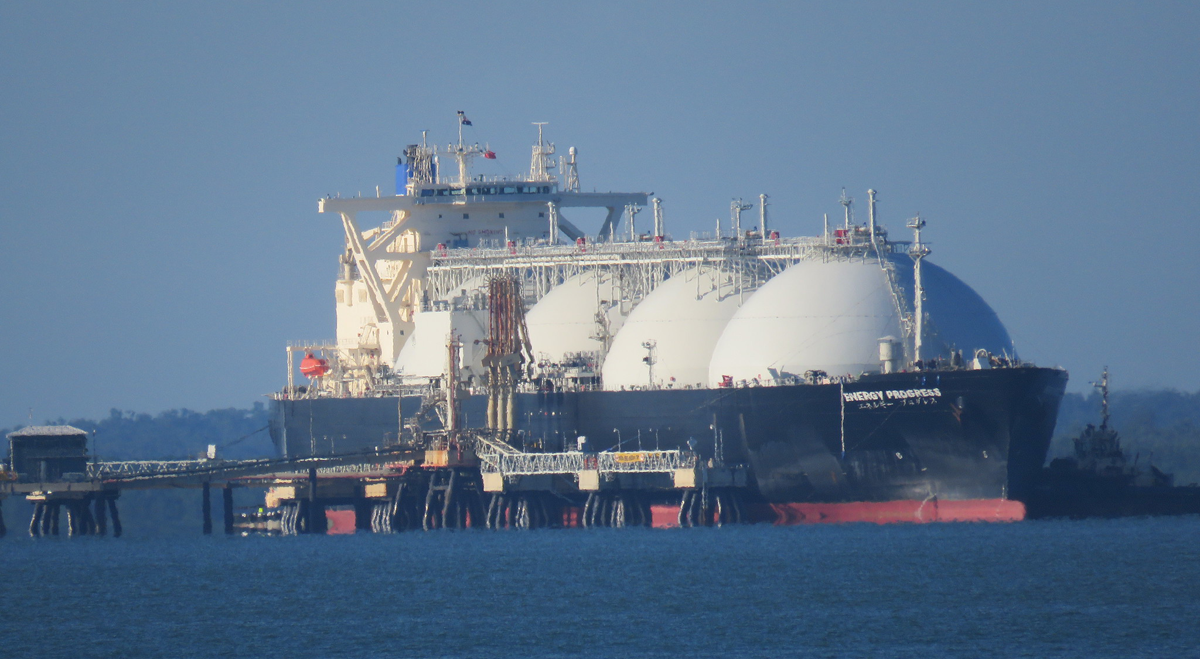
    Around one-fifth of global LNG shipments pass through the Strait of Hormuz, with cargoes primarily originating from major Gulf producers. Any threat to the passage is closely monitored by European energy markets, given the region’s increasing dependence on imported LNG.

    Following the sharp reduction in Russian pipeline gas supplies in recent years, Europe has become significantly more reliant on seaborne LNG to meet residential heating demand and support industrial activity.

    The renewed maritime tensions also coincided with a 2.2% rise in global crude oil prices, adding further upward pressure to oil-linked gas contracts.

    Although LNG cargoes continue to transit the Strait of Hormuz under heightened security measures, traders said the market is increasingly pricing in geopolitical risk. Reports of active security incidents have driven insurance costs sharply higher, with elevated war-risk premiums feeding directly into European gas prices.

  • FTSE 100 falls as US-Iran tensions push oil prices higher

    FTSE 100 falls as US-Iran tensions push oil prices higher

    UK equities moved lower on Monday as escalating tensions between the United States and Iran weighed on investor sentiment, driving energy prices sharply higher and prompting a broad risk-off move across European markets.

    The FTSE 100 fell 0.61% in early trading, while Germany’s DAX lost 0.16% and France’s CAC 40 slipped 0.05%. Sterling edged 0.08% higher against the US dollar to trade at 1.3466.

    Geopolitical concerns intensified after Kuwait’s military said its air defence systems were intercepting Iranian drones, describing the attacks on social media as “sinful Iranian aggression.” The announcement followed confirmation from U.S. Central Command that it had completed a ninth consecutive night of military strikes targeting Iranian command centres, missile launch sites, coastal surveillance systems, maritime capabilities and communications infrastructure. CENTCOM said the operations were intended to “further diminish Iran’s ability to attack commercial vessels and civilian mariners transiting the Strait of Hormuz.”

    Separately, UK Maritime Trade Operations issued a warning after a vessel caught fire near Kumzar, off the coast of Oman, although the cause of the incident has yet to be determined.

    Speaking to reporters while returning from the FIFA World Cup final, U.S. President Donald Trump said the military action honoured fallen American service members, adding that Iran “has been very badly damaged” and had “almost lost everything militarily,” before stating, “We control the Strait, they don’t control anything.”

    U.S. Secretary of State Marco Rubio told CNN that Washington was receiving “signals through multiple channels of Iran’s desire to negotiate, but there is a growing split within the regime,” while stressing that any agreement would need to be “real” and enforceable.

    In the UK, Andy Burnham is expected to become prime minister on Monday after pledging to ease pressure on household finances. His position on North Sea oil policy has attracted attention after President Trump welcomed proposals to expand drilling in a Truth Social post. However, Labour deputy leader Lucy Powell told the BBC that Burnham would maintain the party’s commitment to ending new exploration licences, while supporting further development of existing fields such as Jackdaw and Rosebank.

    Oil prices extended recent gains as concerns over potential disruption to shipping through the Strait of Hormuz intensified. Brent crude rose 2.35% to $90.18 a barrel, while West Texas Intermediate gained 2% to $83.40. Brent reached its highest level in more than a month following its strongest weekly advance since April.

    Gold prices eased despite heightened geopolitical tensions, with gold futures slipping 0.24% to $4,009.12 an ounce and spot gold falling 0.32% to $4,004.77.

    UK market highlights

    Ryanair (LSE:0A2U) reported a 34% decline in first-quarter profit after weaker ticket prices and higher fuel costs offset continued growth in passenger demand.

    Big Yellow Group (LSE:BYG) posted a 3% increase in first-quarter revenue, supported by higher occupancy levels and contributions from newly opened storage facilities.

    Segro (LSE:SGRO) rejected an improved £13.5 billion takeover proposal from Prologis, with the board maintaining that the revised offer undervalues the business.