Author: Fiona Craig

  • Segro shares fall after board rejects Prologis’ revised £13.5 billion takeover proposal

    Segro shares fall after board rejects Prologis’ revised £13.5 billion takeover proposal

    Shares in Segro Plc (LSE:SGRO) declined on Monday after Prologis Inc (NYSE:PLD) revealed that the UK logistics property company had rejected its latest £13.5 billion takeover proposal.

    Segro’s shares fell 1.7% to 882 pence in London trading, underperforming the FTSE 100, which was down 0.4% during the session.

    Prologis said its revised offer, submitted on 16 July, valued Segro at approximately £13.5 billion, or around 993 pence per share. The proposal consisted of 0.0890 newly issued Prologis shares for each Segro share, together with a partial cash alternative worth up to £2.7 billion.

    According to Prologis, Segro’s board unanimously rejected the proposal the following day. The latest approach was the third made by the U.S. logistics real estate group since discussions began in June, after an earlier all-share proposal was also turned down.

    Analysts at Jefferies said the revised offer increases pressure on Segro’s board, noting that the proposal values the company at roughly 993 pence per share. This represents a premium of approximately 9.7% to Segro’s pro forma June 2026 net asset value and 33.8% above the company’s unaffected share price before the takeover approach became public.

    Jefferies added that Prologis continues to question Segro’s standalone valuation assumptions while highlighting its own operational performance and expanding data centre development pipeline as part of the rationale for the proposed transaction.

    The brokerage also noted that Prologis faces a key deadline under the UK Takeover Code. By 22 July, the company must either announce a firm intention to make an offer for Segro or withdraw its interest, unless the UK Takeover Panel agrees to extend the timetable.

    If completed, the transaction would represent the largest takeover involving a publicly listed European real estate company. While Segro has rejected each of Prologis’ proposals to date, the U.S. group continues to argue that combining the two businesses would create greater long-term value for shareholders.

  • Computacenter shares gain after Berenberg upgrades stock and raises profit forecasts

    Computacenter shares gain after Berenberg upgrades stock and raises profit forecasts

    Shares in Computacenter PLC (LSE:CCC) climbed on Monday after Berenberg upgraded the IT services provider to “buy” from “hold” and significantly increased its price target to 5,300 pence from 3,450 pence. The broker said the company is well placed to deliver earnings ahead of current market expectations.

    Computacenter’s shares rose 3.6% to 4,746 pence during London trading, comfortably outperforming the FTSE 100, which declined 0.3% over the same period.

    Berenberg said its more optimistic outlook followed Computacenter’s first-half trading update, which highlighted stronger-than-expected demand from hyperscale customers in North America, continued solid growth in the UK and improving trading conditions in Germany.

    The broker expects adjusted profit before tax for the first half to reach around £163 million, ahead of the market consensus of £155 million. It also noted that management now expects full-year results to be comfortably above existing market forecasts.

    Reflecting the stronger outlook, Berenberg increased its gross profit forecasts by 4% for 2026, 5% for 2027 and 6% for 2028. The brokerage also raised its adjusted operating profit estimates by 17% for 2026, 15% for 2027 and 17% for 2028.

    Berenberg now forecasts adjusted operating profit of £349 million for 2026, compared with the previous consensus estimate of approximately £318 million. The broker said the upgrade reflects expectations that a larger proportion of gross profit will convert into operating earnings, supported by stronger operational leverage.

    Looking ahead, Berenberg believes continued momentum in North America and the UK, combined with an improving performance in Germany, could drive further earnings growth. It also highlighted management’s long-term objective of achieving a 30% operating profit-to-gross profit conversion rate as a positive indicator for future profitability. However, the broker cautioned that any slowdown in hyperscale data centre investment, particularly from Meta, remains the principal risk to the investment case.

  • Ryanair shares slide after first-quarter profit misses expectations and softer fares outlook

    Ryanair shares slide after first-quarter profit misses expectations and softer fares outlook

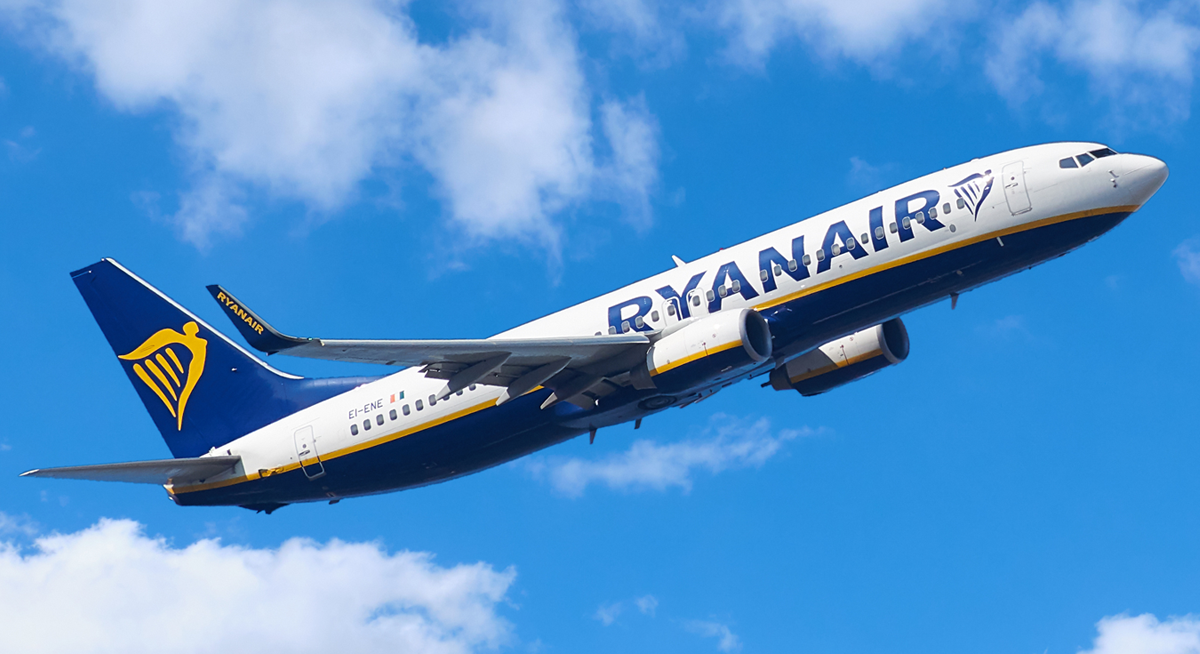
    Shares in Ryanair Holdings Plc (LSE:0A2U) fell more than 7% on Monday after the low-cost airline reported first-quarter net income that missed market expectations and warned that second-quarter fares are now likely to be lower than previously forecast.

    The airline generated net income of €538 million during the quarter, a decline of 34.4% from €820 million in the same period last year. The result fell short of the consensus analyst forecast of €579 million by 7.1% and was 15.8% below Morgan Stanley’s estimate of €639 million.

    Morgan Stanley said the earnings shortfall was largely driven by weaker revenue rather than costs. Non-fuel costs per passenger came in 1.5% below consensus estimates and matched the broker’s expectations, while fuel costs were broadly in line with market forecasts but around 6% higher than Morgan Stanley had anticipated.

    Quarterly revenue increased 1.1% year-on-year to €4.43 billion. Although this represented modest growth, it was still below the consensus estimate of €4.48 billion by 1.1%. Revenue, however, came in slightly ahead of Morgan Stanley’s forecast of €4.38 billion.

    According to Morgan Stanley, the main weakness came from scheduled revenue per passenger, which was around 3% below consensus after average fares declined 6% year-on-year. That fall was steeper than the mid-single-digit decline Ryanair had previously guided.

    Despite the weaker quarter, Ryanair maintained its full-year traffic forecast, expecting passenger numbers to rise 4% to 216 million, broadly in line with both consensus and Morgan Stanley forecasts. However, the airline no longer expects unit cost inflation to increase by a mid-single-digit percentage, instead stating that the outcome will depend on movements in unhedged fuel prices. Analysts had previously been forecasting unit cost growth of around 1% to 2%.

    “Principal cause of this was the price of our 20% unhedged fuel doubled in the quarter and fares fell 6%, primarily, we think, due to the impact of the Middle East conflict and the first part of Easter falling into our prior year Q4,” group chief executive Michael O’Leary said on the earnings call.

    Average fares fell 6%, exceeding both the company’s previous guidance and analysts’ expectations. Ryanair attributed the weakness to softer booking trends linked to geopolitical tensions in the Middle East, which encouraged customers to delay making travel reservations until closer to departure.

    The airline’s load factor remained unchanged at 94%. O’Leary also provided an update on Boeing’s MAX-10 programme, stating that certification is expected “sometime in September or October of this year,” while adding that Boeing remains on schedule to deliver the first 15 aircraft during spring 2027.

    Group chief financial officer Neil Sorahan highlighted the widening cost advantage Ryanair continues to hold over competitors, saying, “If we look at our two nearest competitors, before COVID, Wizz were 26% behind Ryanair. Now that’s over 81%, we would expect that to continue to grow over the next number of quarters and years.”

    Sorahan added that the unit cost gap with easyJet has also widened significantly, increasing from around 70% before the pandemic to approximately 150%. On fuel hedging, O’Leary said Ryanair has hedged 15% of its fiscal 2028 fuel requirements at $85 per barrel, while 90% of fiscal 2027 operating expenses are hedged at $1.15 to the euro and 30% of first-half fiscal 2028 operating expenses are hedged at $1.20.

    The company also confirmed that 60% of its order for 150 Boeing MAX-10 aircraft has been hedged against euro-dollar exchange rate movements at just above 1.23.

    Ryanair chose not to provide full-year net income guidance and did not reaffirm its previous outlook for unit cost inflation, citing uncertainty over second-half trading conditions, volatile jet fuel prices, approximately €300 million of additional European Union environmental taxes, rising maintenance expenses and higher employee pay costs.

    Looking ahead, the airline expects second-quarter fares to be modestly lower than a year ago, rather than broadly flat as previously indicated. O’Leary described the anticipated decline as “something low to mid single digits” and said first-half performance would depend heavily on late bookings throughout August and September, despite healthy demand for summer 2026 travel.

    Following the results, Morgan Stanley said it expects market consensus for full-year net income to fall from approximately €2.1 billion to around €1.9 billion. Nevertheless, the broker maintained its “overweight” recommendation on Ryanair with a €27.60 price target, citing strong summer demand and reduced reliance on fare discounting despite expectations for slightly weaker second-quarter pricing.

  • MedPal AI Completes Its Health OS Vision with Strategic eMARx Acquisition

    MedPal AI Completes Its Health OS Vision with Strategic eMARx Acquisition

    MedPal AI plc (LSE:MPAL) has taken another significant step towards becoming one of the UK’s most integrated digital healthcare technology companies with the acquisition of eMARx, a specialist provider of electronic medication administration record (eMAR) software for the UK care home sector.

    The acquisition adds a crucial software layer to MedPal’s rapidly expanding healthcare ecosystem, allowing the company to connect every stage of the medication journey, from prescription and robotic dispensing through to bedside administration and AI-powered patient support.

    Completing the Healthcare Puzzle

    Over the past year, MedPal has been steadily building what it describes as a Health OS, a connected digital platform designed to modernise healthcare delivery.

    The business already operates:

    • NHS distance-selling pharmacies
    • The 23,000 sq ft robotic dispensing facility at Sarus Court
    • A growing care home pharmacy business
    • New Health, its private healthcare clinic
    • Juno, its AI-powered healthcare companion

    With the addition of eMARx, MedPal now gains the software platform used directly inside care homes, where every medication administered to residents is digitally verified, recorded and monitored.

    This creates what management believes is one of the UK’s only fully integrated medication management platforms.

    Entering a Large and Growing Market

    The UK has approximately 16,500 care homes supporting more than half a million residents, representing a market worth an estimated £27 billion.

    Medication management remains one of the most critical operational challenges within the sector.

    Care home residents often take multiple prescriptions each month, while medication errors continue to contribute to avoidable hospital admissions and rising NHS costs.

    By combining robotic dispensing, digital medication administration and artificial intelligence, MedPal believes it can help care providers improve patient safety while reducing operational complexity.

    High-Quality Recurring Revenue

    Beyond the strategic value, eMARx also brings an attractive financial profile.

    For the year ending March 2026, the business generated:

    • £739,000 revenue
    • £106,000 profit after tax
    • Approximately 82% gross margins
    • A largely recurring software subscription model

    Recurring software revenues are highly valued by investors due to their predictability, scalability and attractive margins.

    Even more encouraging is that eMARx has approximately tripled revenue over the past three years, demonstrating growing market demand for digital medication management solutions.

    Cross-Selling Opportunities

    Perhaps the most exciting aspect of the acquisition is the opportunity to expand MedPal’s existing services.

    eMARx already serves established care home groups including Care UK, together with numerous independent care providers across Britain.

    These relationships create a natural pathway for MedPal to introduce additional services including pharmacy supply, robotic dispensing and AI-driven healthcare support.

    Likewise, MedPal’s existing pharmacy customers become ideal candidates for adopting the eMARx platform, creating a powerful cross-selling opportunity that could accelerate growth without the need for significant additional customer acquisition costs.

    A Scalable Platform

    The acquisition also strengthens utilisation of MedPal’s recently developed robotic dispensing infrastructure.

    Management has previously highlighted that Sarus Court was built with significant spare capacity.

    By integrating eMARx across more care homes, MedPal can drive increasing prescription volumes through its automated pharmacy operations while maintaining high efficiency and scalability.

    This creates operational leverage that could become increasingly valuable as the customer base expands.

    Strong Alignment

    The transaction structure also aligns the interests of the acquired business with MedPal’s future success.

    Rather than being a simple cash acquisition, the majority of the consideration includes MedPal shares that are subject to lock-up arrangements.

    Importantly, all seven shareholders of eMARx—including five operational team members, become long-term MedPal shareholders, ensuring continuity, expertise and commitment to future growth.

    Looking Ahead

    For investors, this acquisition appears to represent more than simply adding another business.

    It demonstrates continued execution of a clearly defined strategy to build an integrated healthcare technology platform combining AI, pharmacy automation, software and recurring digital services.

    Healthcare continues to undergo rapid digital transformation, while increasing pressure on the NHS and an ageing UK population create long-term structural demand for more efficient medication management solutions.

    With the addition of eMARx, MedPal has strengthened both its technology offering and its commercial opportunity, positioning itself to pursue nationwide expansion across one of the UK’s largest healthcare markets.

    As MedPal continues executing its Health OS strategy, investors will now be watching closely to see how effectively the company converts this expanded platform into accelerated revenue growth, increased recurring income and greater market penetration across Britain’s care home sector.

    For more information visit – https://medpal.co/

  • Gulf Keystone suspends Shaikan production due to security concerns in Kurdistan

    Gulf Keystone suspends Shaikan production due to security concerns in Kurdistan

    Gulf Keystone Petroleum (LSE:GKP) has temporarily suspended production at its Shaikan Field in the Kurdistan Region of Iraq as a precautionary measure following the deterioration in the regional security environment. The decision mirrors actions taken by several other international oil companies operating in the area. Before production was halted, the Shaikan Field had been producing more than 45,000 barrels of oil per day.

    The company said its facilities and infrastructure have not been affected by the recent security developments and that it is continuing to monitor the situation closely. While there is no indication of how long the shutdown will remain in place, the suspension highlights the geopolitical risks associated with operating in the region and could affect near-term production levels and revenue until operations resume.

    Gulf Keystone continues to benefit from a strong balance sheet and relatively low leverage, providing financial resilience during periods of operational disruption. However, the company’s outlook is tempered by weaker technical indicators, including negative price momentum and a relatively high price-to-earnings ratio. Variability in cash generation, particularly following weaker free cash flow in 2025, also remains a consideration for investors.

    More about Gulf Keystone Petroleum

    Gulf Keystone Petroleum Ltd. is an independent oil and gas producer focused on the Kurdistan Region of Iraq. The company is listed on both the London Stock Exchange and the Oslo Stock Exchange and is the operator of the Shaikan Field, one of the region’s largest producing oil assets.

    The company’s strategy centres on maximising production and value from the Shaikan Field while maintaining operational efficiency and managing the geopolitical risks associated with operating in northern Iraq.

  • Craneware contains cyber security incident with customer services unaffected

    Craneware contains cyber security incident with customer services unaffected

    Craneware (LSE:CRW) has confirmed that it recently identified and contained a cyber security incident involving unauthorised access to part of its data environment. Following the discovery, the company activated its incident response procedures and appointed external cyber security and forensic specialists to work alongside its internal IT team. Craneware said the incident has been contained and that customer services and day-to-day operations have continued without disruption. Relevant regulators and law enforcement agencies in both the UK and the United States have also been informed.

    Initial investigations indicate that a significant number of file names were accessed and copied. The company said the information primarily consisted of non-sensitive or publicly available regulatory data, although some employee, customer and business partner records were also affected. Craneware is continuing its forensic investigation to determine the full scope of the incident, identify any individuals or organisations impacted and complete any notifications required under applicable data protection regulations. The company has committed to providing further updates as the investigation progresses.

    Craneware continues to benefit from strong underlying financial fundamentals, including high gross margins and relatively low leverage. However, its share price remains below key technical levels, while valuation is supported by a moderate price-to-earnings ratio of around 22.6 and a dividend yield of approximately 2.43%.

    More about Craneware

    Craneware plc is a UK-based healthcare technology company that provides financial and operational software solutions for hospitals and healthcare organisations. Its cloud-based Trisus platform combines revenue management, financial intelligence and advanced analytics to help healthcare providers improve operational performance and maximise financial sustainability.

    As a Microsoft partner, Craneware delivers integrated technology solutions designed to simplify complex healthcare finance processes and support data-driven decision-making across the healthcare sector.

  • GCP Infrastructure Investments completes onshore wind sale and increases capital for share buybacks

    GCP Infrastructure Investments completes onshore wind sale and increases capital for share buybacks

    GCP Infrastructure Investments Limited (LSE:GCP) has completed the sale of its operational onshore wind assets at Winscales Moor and Burton Wold, which together have a generating capacity of approximately 26.5MW. The transaction was completed at around a 13% premium to the projects’ net asset value as of March 2026, highlighting continued investor demand for high-quality renewable infrastructure assets.

    The disposal generated immediate cash proceeds of approximately £10.3 million, with an additional £0.8 million in tax-related receipts expected in the near term and a further £0.6 million payable through deferred consideration linked to agreed milestones. The sale reduces GCP Infrastructure Investments’ exposure to equity-style onshore wind investments in line with its capital allocation strategy. The proceeds, together with any surplus cash, will be used to support the company’s ongoing share buyback programme. Separately, the disposal of a supported social housing investment continues to progress and is expected to facilitate the repayment of around £47 million of loans, leaving the company’s revolving credit facility fully undrawn.

    GCP Infrastructure Investments continues to benefit from a conservative balance sheet, improving cash generation and supportive technical indicators. These strengths are balanced against softer revenue trends and a relatively demanding valuation, although the company’s attractive dividend yield, stable income strategy and continued share buybacks provide additional support for shareholders.

    More about GCP Infrastructure Investments

    GCP Infrastructure Investments Limited is a FTSE 250-listed closed-ended investment company focused on providing investors with regular long-term income while preserving capital. The company primarily invests in UK infrastructure debt and related assets that generate stable, availability-based revenues, often supported by public sector counterparties.

    Managed by Gravis Capital Management Limited, GCP Infrastructure Investments also seeks to provide partial protection against inflation where possible through the structure of its investments. The company has been awarded the London Stock Exchange’s Green Economy Mark in recognition of its investment in infrastructure projects that contribute to positive environmental outcomes.

  • Jadestone Energy boosts Malaysia production after record-breaking East Belumut well

    Jadestone Energy boosts Malaysia production after record-breaking East Belumut well

    Jadestone Energy (LSE:JSE) has successfully completed and brought online the second well in its 2026 Malaysia infill drilling programme, with the EBA-07ST1 well producing approximately 2,800 barrels of oil per day. The well was drilled around 13% under budget and features a 930-metre horizontal section, reaching a total measured depth of 5,473 metres. It is the longest well drilled at the East Belumut field and has set a new Malaysian record with an extended reach drilling ratio of 4.1.

    Combined with the first well in the campaign, which reached peak production of around 3,200 barrels of oil per day, the two wells have increased production at the East Belumut field by more than 150%. Together they have added approximately 6,000 barrels of oil per day, encouraging the company to proceed with a third contingent well. Jadestone believes the results demonstrate the potential to unlock additional reserves from mature fields while supporting higher production, stronger cash generation and increased value across its Asia-Pacific asset portfolio.

    Although operational performance continues to improve, the company’s financial outlook remains constrained by negative shareholder equity and relatively high leverage. These challenges are partly offset by stronger operating cash flow, positive technical momentum and a comparatively low price-to-earnings valuation.

    More about Jadestone Energy

    Jadestone Energy plc is an independent upstream oil and gas company focused on the Asia-Pacific region, with producing assets across Australia, Malaysia, Indonesia and Vietnam. The company specialises in acquiring and optimising mature oil and gas fields, using operational improvements and targeted investment to increase production and extend asset life.

    Alongside growing production, Jadestone is expanding its natural gas portfolio and pursuing emissions reductions across its operations. The company has committed to achieving net zero Scope 1 and Scope 2 emissions from its operated assets by 2040 while continuing to invest in existing upstream projects that support long-term energy supply.

  • MedPal AI acquires eMARx to strengthen digital healthcare platform for care homes

    MedPal AI acquires eMARx to strengthen digital healthcare platform for care homes

    MedPal AI plc (LSE:MPAL) has acquired Solid State Technologies Ltd, which trades as eMARx, in a transaction valuing the business at approximately £0.47 million. eMARx provides electronic medication administration record software to UK care homes and pharmacies, and the acquisition adds a recurring, high-margin software business with an established customer base that includes both national care providers and independent operators. The existing eMARx management team will also become long-term shareholders in MedPal AI as part of the transaction.

    The acquisition completes the final software component of MedPal’s integrated Health OS platform, linking NHS prescriptions, automated dispensing from the company’s Sarus Court pharmacy hub, medication delivery and barcode-verified administration within care homes. MedPal plans to offer the eMARx platform at little or no cost to care homes that use its pharmacy services exclusively, a strategy designed to accelerate customer adoption, increase pharmacy revenues and improve medication management, safety and oversight for residents, healthcare providers and the NHS across the UK’s £27 billion care home sector.

    More about MedPal AI

    MedPal AI plc is a UK-based digital healthcare and pharmacy technology company focused on improving medication management across the care home and primary care markets. Its operations include NHS distance-selling pharmacy services, business-to-business pharmacy supply for care homes, a private healthcare clinic and Juno, its AI-powered health assistant.

    The company also operates the Sarus Court robotic dispensing hub in Runcorn, which uses BD Rowa automation technology to provide high-volume pharmacy dispensing. By integrating software, pharmacy services and artificial intelligence into a single healthcare platform, MedPal AI aims to streamline the medicines supply chain and strengthen its position in the growing UK care home market.

  • Helix Exploration launches commercial helium sales from Montana’s Rudyard project

    Helix Exploration launches commercial helium sales from Montana’s Rudyard project

    Helix Exploration PLC (LSE:HEX) has achieved a significant operational milestone by commencing commercial helium sales from its Rudyard facility in Montana. The company has loaded and dispatched its first high-pressure jumbo tube trailer containing approximately 160 Mcf of high-grade helium to an industrial gases customer, marking Helix’s first commercial sale and its transition into a revenue-generating producer just over two years after its IPO. The company expects a combination of customer-owned and company-owned trailers to support regular deliveries going forward.

    Under a spot sales agreement running until late August, Helix’s industrial gases partner has agreed to purchase all current production from the company’s three producing wells. At the same time, Helix is progressing negotiations on longer-term offtake agreements that are expected to be supported by its Keyes helium liquefaction plant. Additional production growth is anticipated as further wells receive regulatory approval and the Inez-1 well re-entry returns to service following weather-related delays. The company is expanding output into a global helium market where limited supply and strong demand from technology, healthcare and industrial sectors continue to support favourable pricing.

    Helix’s strategy is to build a fully integrated helium business by combining production at the Rudyard Project with processing capabilities at the Keyes Helium Complex. This approach is designed to capture value across the entire supply chain, from gas production through to premium liquid helium sales. Management believes growing demand for reliable domestic helium supplies in the United States creates an opportunity for Helix to establish itself as a leading independent producer and processor while also providing liquefaction services for third-party helium volumes.

    Despite reaching the important milestone of generating its first commercial revenue, the company continues to face financial challenges associated with its growth phase, including previous operating losses and negative cash flow. Technical indicators also remain weak, although Helix benefits from a debt-free balance sheet as it continues to expand production and develop its integrated helium business.

    More about Helix Exploration

    Helix Exploration PLC is a helium exploration, production and processing company listed on the London Stock Exchange. Its flagship Rudyard Project in Montana is the state’s first producing helium field and is supported by existing infrastructure and plans for further production growth.

    The company also owns the Keyes Helium Complex in Oklahoma, one of only a handful of operational helium liquefaction facilities in the United States. By combining upstream production with downstream liquefaction, Helix aims to create a vertically integrated business capable of supplying both gaseous and liquid helium to customers across North America.