Author: Fiona Craig

  • Victoria to Unlock €34.4m Through Belgian Hub Sale-Leaseback to Support Turkish Manufacturing Shift

    Victoria to Unlock €34.4m Through Belgian Hub Sale-Leaseback to Support Turkish Manufacturing Shift

    Victoria PLC (LSE:VCP) has agreed to a €34.4 million sale-and-leaseback of its Belgian distribution centre to Avantage Property Holding BV, while continuing to operate the facility as the primary European hub for Balta Rugs following the relocation of most manufacturing to Turkey.

    The transaction price significantly exceeds the asset’s net book value, enabling the company to unlock capital while maintaining uninterrupted operations at a strategically important logistics site.

    Net cash proceeds from the deal will initially remain on the balance sheet. Together with the disposal of two additional surplus properties, the funds are expected to fully cover exceptional costs and capital expenditure tied to the transfer of rug manufacturing to Turkey.

    Management said the production relocation and capacity expansion at Balta’s Turkish facility are expected to be completed during the current financial year. Once operational, the changes are intended to improve efficiency and support Victoria’s goal of increasing earnings and cash flow per share.

    Despite these operational initiatives, Victoria’s broader outlook remains constrained by financial pressures, including declining revenue, substantial losses and a highly leveraged balance sheet with negative equity. Technical indicators show some support through strong momentum trends, although overbought signals suggest potential near-term volatility. Management commentary has highlighted efforts to improve EBITDA and margins, but high net debt levels and macroeconomic headwinds continue to weigh on the company’s investment case, with valuation metrics remaining unappealing amid ongoing losses.

    More about Victoria

    Victoria PLC is an international manufacturer and distributor of flooring products headquartered in Worcester, U.K., and listed on AIM. Founded in 1895, the group produces and supplies carpets, underlay, ceramic tiles, luxury vinyl tiles, artificial grass and related flooring accessories across Europe, the United States and Australia. The company is Europe’s largest carpet manufacturer and the leading producer of underlay in both Europe and Australia, operating more than 30 facilities and employing over 5,000 people worldwide.

  • Zinc Media Secures Expanded BBC Recommission for The Celebrity Inner Circle and Confirms Results Date

    Zinc Media Secures Expanded BBC Recommission for The Celebrity Inner Circle and Confirms Results Date

    Zinc Media Group (LSE:ZIN) has received a recommission from the BBC for a second season of its quiz programme The Celebrity Inner Circle, which will return to BBC One and BBC iPlayer with an expanded order of eight 45-minute episodes.

    The show is produced in Scotland by Zinc’s Tern label and blends celebrity contestants with members of the public in a competitive quiz format. The recommission supports the Group’s strategy of strengthening its entertainment offering alongside its established factual and branded content production.

    Zinc will continue to hold the rights to the programme and underlying format, while BBC Studios will oversee international distribution. This arrangement could open opportunities for further revenue through overseas sales and format licensing. The new season also adds to Zinc’s growing slate of returning intellectual property, which can help provide greater visibility on future revenues.

    Separately, the company confirmed that it will publish its full-year 2025 financial results on 16 April 2026. A live investor presentation will follow the announcement, giving both existing shareholders and potential investors the chance to hear directly from management.

    Zinc Media’s broader outlook continues to reflect financial pressures, including profitability constraints and elevated leverage. Nonetheless, developments such as new strategic initiatives and successful programme launches may support longer-term growth prospects. Market indicators currently point to a bearish technical trend, while valuation metrics underscore the company’s ongoing financial challenges.

    More about Zinc Media

    Zinc Media Group plc is an international producer of television and digital content, specialising in premium factual programming, entertainment formats and branded storytelling for broadcasters and streaming platforms worldwide. Through a collection of specialist production labels, including Scotland-based Tern TV, and a dedicated distribution division, the Group creates documentaries, television series and digital productions for audiences in the UK, the Middle East and global markets.

  • U.S. stocks set for higher open after strong rally: Dow Jones, S&P, Nasdaq, Wall Street Futures

    U.S. stocks set for higher open after strong rally: Dow Jones, S&P, Nasdaq, Wall Street Futures

    U.S. stock index futures pointed to a positive start for markets on Wednesday, indicating equities may continue to rise after the sharp gains recorded in the previous session.

    Investor confidence has been supported by growing expectations that the United States could soon bring its conflict with Iran to an end, following new remarks from President Donald Trump.

    Speaking with reporters at the White House on Tuesday, Trump said American forces could withdraw from Iran within “two or three weeks.”

    Trump also argued that a negotiated settlement would not be necessary to conclude the war, describing a deal as “irrelevant” because “everything’s been bombed out.”

    The White House later announced that Trump will address the nation at 9 p.m. ET on Wednesday to deliver an important update on the situation with Iran.

    Oil prices continued to retreat after the president’s comments, with U.S. crude futures falling below the $100-per-barrel mark.

    Markets surge on easing geopolitical concerns

    Stocks built on early gains throughout Tuesday’s session, ending the day firmly higher across the board, with technology stocks leading the advance.

    By the close, the major benchmarks were near their daily highs. The Nasdaq jumped 795.99 points, or 3.8%, to 21,590.62, while the S&P 500 climbed 184.80 points, or 2.9%, to 6,528.52. The Dow Jones Industrial Average rose 1,125.37 points, or 2.5%, to 46,341.51.

    Even with Tuesday’s rally, the major indexes still recorded sizable losses for March overall. The Dow fell 5.4%, the S&P 500 declined 5.1%, and the Nasdaq dropped 4.8% during the month.

    Reports of potential war wind-down lift sentiment

    The strong move higher on Wall Street followed reports that the U.S. administration may be looking for a way to conclude its military involvement in the Middle East.

    According to the Wall Street Journal, Trump told advisers he would consider ending the U.S. military campaign against Iran even if the Strait of Hormuz remains largely closed.

    Officials cited in the report said Trump and his team believe that attempting to reopen the strait by force would likely extend the conflict beyond his preferred timeline of four to six weeks.

    Those officials also indicated that the administration will continue applying diplomatic pressure on Tehran to restore commercial shipping through the strait. If that effort fails, Washington may push allied countries to lead efforts to reopen the waterway.

    Stocks accelerated further in afternoon trading after Trump appeared to confirm parts of the Journal’s report in an interview with the New York Post, saying the United States would not remain in the region “too much longer.”

    In the same interview, Trump suggested other nations should take responsibility for reopening the Strait of Hormuz, stating: “Let the countries that are using the strait, let them go and open it… because I would imagine whoever’s controlling the oil will be very happy to open the strait.”

    Oil prices moved lower following those remarks, boosting optimism that an eventual end to the conflict could ease energy costs and help reduce inflation concerns.

    Sector performance

    Value hunting also played a role in Tuesday’s rally, with the Nasdaq and S&P 500 rebounding from their lowest closing levels in nearly eight months.

    Gold-related equities surged alongside the rising price of the precious metal, driving the NYSE Arca Gold Bugs Index up 7.2%.

    Semiconductor stocks also posted notable gains, with the Philadelphia Semiconductor Index jumping 6.2% after closing Monday at a three-month low.

    Airline stocks advanced strongly as well, pushing the NYSE Arca Airline Index higher by 5.4%.

    Other areas showing strength included computer hardware, biotechnology, and networking stocks, while energy companies declined as oil prices retreated during the session.

  • European stocks jump after Trump signals possible end to Iran conflict: DAX, CAC, FTSE100

    European stocks jump after Trump signals possible end to Iran conflict: DAX, CAC, FTSE100

    European equity markets moved sharply higher on Wednesday after U.S. President Donald Trump said the war with Iran could come to an end within two weeks even without an agreement to reopen the Strait of Hormuz. The comments helped ease investor concerns after weeks of volatility triggered by the conflict. Still, analysts cautioned that it may take another six to eight weeks before oil shipments return to normal levels.

    “Even if that peace is here tomorrow, still we will not go back to normal in a foreseeable future,” the European Union’s energy commissioner said during a press conference following a meeting of EU energy ministers.

    On the economic front, a new survey showed that the eurozone’s manufacturing sector continued to expand. The region’s manufacturing PMI rose to 51.6 in March from 50.8 in February, reaching its highest level in 45 months.

    Market gains were broad across the region. Germany’s DAX was up 2.5%, France’s CAC 40 gained 1.9%, and the U.K.’s FTSE 100 climbed 1.8%.

    Banking stocks led the rally, with Commerzbank (TG:CBK), Deutsche Bank (TG:DBK), BNP Paribas (EU:BNP), Credit Agricole (EU:ACA) and Barclays (LSE:BARC) posting strong gains.

    Dutch insurer Aegon (EU:AGN) also advanced after announcing plans to extend CEO Lard Friese’s leadership term through 2030.

    Shares of GSK (LSE:GSK) moved higher as well after the British pharmaceutical group and Shionogi & Co. completed a transaction restructuring the ownership of ViiV Healthcare.

    Real estate investment trust Derwent London (LSE:DLN) also surged after agreeing to sell Horseferry House for £131.8 million.

    Meanwhile, online trading platform IG Group Holdings (LSE:IGG) gained ground after unveiling a £125 million share buyback programme.

  • Gold climbs for fourth session as Trump hints at possible Iran war wind-down

    Gold climbs for fourth session as Trump hints at possible Iran war wind-down

    Gold prices advanced for a fourth consecutive day in European trading on Wednesday, helped by a softer U.S. dollar as investors evaluated signals that the conflict between the United States and Iran could move toward a resolution.

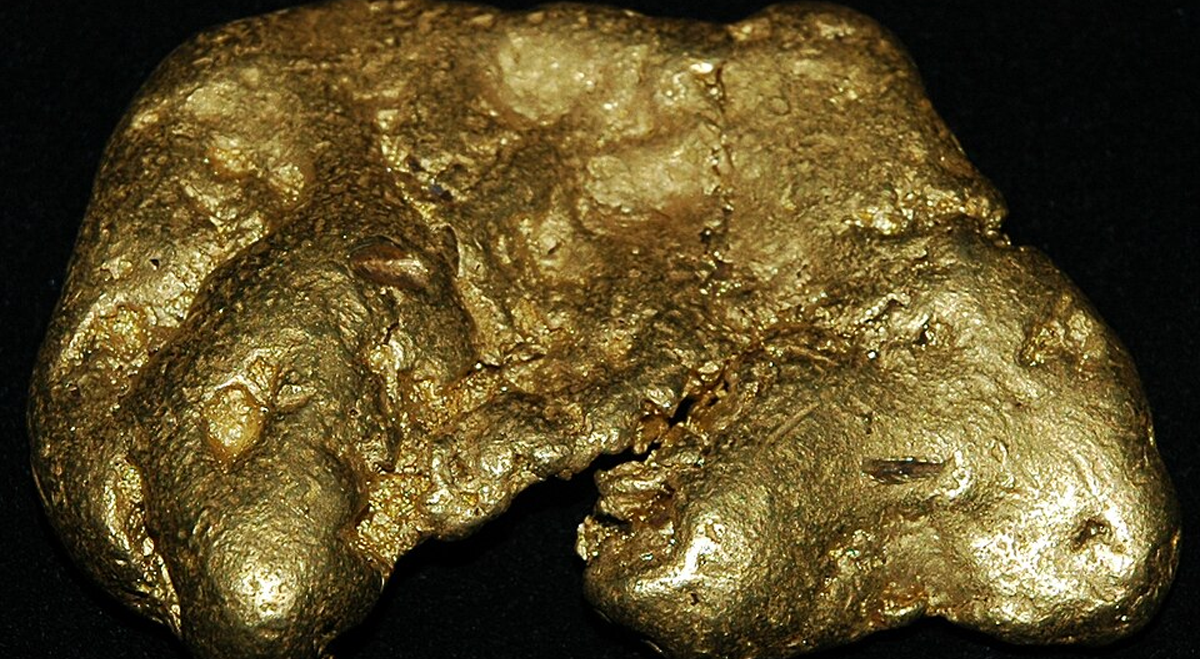
    Spot gold gained 1.6% to $4,742.67 per ounce by 07:20 ET (11:20 GMT), while U.S. gold futures rose 2.0% to $4,770.80.

    The precious metal had surged 3.5% in the previous session as the dollar weakened, though it still recorded a decline of more than 11% for the month of March.

    Trump says U.S. could leave Iran conflict within 2–3 weeks

    Gold’s latest gains followed remarks from U.S. President Donald Trump, who said Washington could withdraw from the Iran conflict within “two to three weeks.” The statement raised hopes that the war, which has lasted more than a month, could soon de-escalate. However, uncertainty about the timeline and the terms of any settlement continued to keep markets cautious.

    In Tehran, state media reported that President Masoud Pezeshkian said Iran is willing to bring the conflict to an end, while reiterating several key demands, including assurances that the country would not face further attacks.

    A weaker U.S. dollar also provided support to bullion prices, as it makes gold cheaper for investors using other currencies. The U.S. dollar index, which tracks the greenback against a basket of major currencies, was last down 0.5%.

    Expectations that tensions could ease also helped push oil prices, which remain elevated after weeks of conflict, slightly lower. That development eased some fears that a spike in energy costs could fuel inflation and potentially prompt central banks to raise interest rates. Gold, which does not pay interest, often struggles in environments where rates are rising.

    Investors are now watching upcoming U.S. economic releases, particularly Friday’s nonfarm payrolls report, for further clues about the direction of monetary policy and currency markets.

    Among other precious metals, silver slipped 0.4% to $74.85 per ounce, while platinum rose 1.2% to $1,976.83 per ounce.

  • Rightmove shares slide after £1.5bn class action launched by estate agents

    Rightmove shares slide after £1.5bn class action launched by estate agents

    Rightmove (LSE:RMV) shares dropped more than 6% on Wednesday after a class action lawsuit seeking £1.5 billion in damages was brought against the UK’s largest property portal, alleging the company has overcharged estate agents for years.

    The FTSE 100 stock fell to a session low of 392p, nearly 10% below its opening level, before recovering slightly to trade near 399p, leaving the company with a market value of around £3.3 billion.

    The case was filed with the Competition Appeal Tribunal by accountant and former Competition and Markets Authority panel member Jeremy Newman. The claim argues that Rightmove abused its dominant position in the online property portal market by imposing excessive subscription fees on thousands of estate agents and home developers.

    In a statement to the London Stock Exchange, Rightmove confirmed that the claim had been filed and said it was “without merit.”

    The company said it would “defend it vigorously,” adding that it remains “confident in the value we provide to our partners and consumers.”

    Rightmove also noted in its regulatory statement that the legal action follows a disclosure made on November 13, 2025, when the company first warned investors that potential proceedings could be initiated.

    Newman told the BBC, which initially reported the lawsuit, that agents were “having to employ fewer people” because of rising subscription costs and accused Rightmove of “exploiting a self-evident dominant market position.” According to the report, a letter of claim requesting just under £1.5 billion in damages has been sent to the company.

    Rightmove, which regularly reports profit margins of roughly 70% and, according to its own research, accounts for about 80% of time spent on property portals in the UK, said its platform “continues to provide a growing range of constantly evolving products and features which facilitate market transparency, liquidity and confidence.”

    Several estate agents told the BBC their subscription costs have more than doubled in recent years. One agent based in London described the increases as “unsustainable.”

    Another agent in Northamptonshire said he pays more than £5,000 per month for a basic membership covering between 30 and 50 properties, which he said is equivalent to the cost of employing two full-time staff members.

    Not all agents are critical of the company’s pricing. A Midlands-based estate agent defended Rightmove’s fees as offering “value for money,” noting that around 80% of his leads originate from the platform.

    Rightmove’s shares had already fallen roughly 25% since the start of the year prior to Wednesday’s drop, reflecting continued pressure on the stock after a takeover approach by Australian property portal REA Group collapsed in late 2024.

  • Oil trades near $100 after Trump hints at possible end to Iran conflict

    Oil trades near $100 after Trump hints at possible end to Iran conflict

    Oil prices eased from recent multi-year highs during European trading on Wednesday, briefly dropping below the $100-per-barrel level after U.S. President Donald Trump suggested Washington may soon wind down its military campaign against Iran.

    Brent crude for June delivery, the global benchmark, was down 1.7% at $102.25 per barrel. Since the war began in late February, Brent has climbed as high as roughly $120 per barrel, compared with about $70 before the conflict started.

    Meanwhile, U.S. West Texas Intermediate crude fell 2.4% to $98.92 per barrel.

    Speaking on Tuesday, Trump said the United States could exit the conflict within “two to three weeks,” adding that Iran would not necessarily need to reach a formal agreement for hostilities to end.

    The president also repeated that discussions with Tehran are progressing, although Iranian officials have often pushed back on that claim. Still, Iran acknowledged that communication channels between the two sides remain open, and the country’s president said Iran has the “necessary will” to bring the war to a close if it receives assurances that it will not face further attacks.

    The White House added that Trump will address the nation on Wednesday to deliver an “important update on Iran.”

    Earlier this week, the Wall Street Journal reported that Trump had told advisers he would consider ending U.S. military action against Iran even if the Strait of Hormuz—a critical passageway that carries roughly one-fifth of the world’s oil supply—remains largely closed.

    Tanker traffic through the strait has nearly halted amid fears of Iranian attacks on ships, keeping pressure on global oil prices. Analysts have warned that if the strait remains blocked for an extended period, or if Iran imposes tolls on vessels passing through the waterway, oil prices could stay elevated in the near term.

    U.S. crude inventories rise unexpectedly – API

    Separately, data from the American Petroleum Institute (API) showed that U.S. crude stockpiles rose by 10.26 million barrels last week, far exceeding expectations for a 1.3-million-barrel draw and following the previous week’s 2.3-million-barrel increase, suggesting softer demand conditions.

    API chief executive Mike Sommers highlighted the broader supply risks tied to the ongoing conflict.

    According to Sommers, reopening the Strait of Hormuz remains “the critical piece” needed to stabilize global energy markets, warning that without the restoration of shipping flows, oil prices could continue rising across major consuming regions.

  • Tesla registrations rebound across Europe as early March data point to renewed momentum

    Tesla registrations rebound across Europe as early March data point to renewed momentum

    Tesla (NASDAQ:TSLA) appears to be heading for another positive month in Europe, with early registration figures indicating strong growth in several countries including France and Denmark.

    The electric vehicle maker delivered 17,664 vehicles in February, representing 11.8% year-on-year growth, and the first data released for March across Europe suggest that the company’s sales recovery is continuing. The improvement follows a difficult period last year when Tesla lost nearly half of its European market share amid rising competition and controversy linked to the political stance of CEO Elon Musk.

    Preliminary figures published today show registrations in France jumping 203.1% compared with the same period in 2025, marking the company’s first month of growth since October. Tesla registered 9,569 vehicles, narrowly below its all-time monthly record of 9,572 units set in December 2023.

    In Denmark, registrations climbed 144% to 1,447 vehicles, according to data from bilstatistik.dk. In Sweden, registrations increased 96% to 1,784 vehicles, based on figures released by Mobility Sweden.

    Registration data for Italy, Spain, Norway, Portugal and the Netherlands are expected later today.

    Deliveries remain Tesla’s key metric

    Despite growing attention on Elon Musk’s push into artificial intelligence, robotaxis and humanoid robotics, vehicle deliveries remain the core measure of Tesla’s performance.

    Analysts’ consensus estimates suggest the company will deliver around 365,645 vehicles in the first quarter of 2026. That would represent an increase from the 336,681 units delivered in the same quarter last year, when production was temporarily disrupted by Model Y factory retooling. However, it would still fall short of the 418,227 vehicles delivered in the fourth quarter, implying year-over-year growth of roughly 8–9%.

    At the same time, the forecast implies a sequential decline of about 12.5–13% compared with the previous quarter. Such fluctuations are common in the automotive industry due to seasonal demand, though they have also been amplified by stronger competition and softer demand in major markets including China, the United States and Europe.

    Most of the expected deliveries will likely come from Tesla’s core models. Analysts project 351,179 units of the Model 3 and Model Y, reflecting continued consumer preference for these vehicles.

    Long-term delivery targets

    Looking further ahead, Tesla is projected to deliver 1,689,691 vehicles in 2026, representing 3.3% growth compared with the previous year. This projection is part of Tesla’s broader strategy to expand annual deliveries to 3.032 million vehicles by 2030.

    Reaching that goal will require significant expansion of manufacturing capacity, the launch of additional models and continued expansion into new markets.

    The company’s first-quarter delivery results will therefore be closely watched as an indicator of Tesla’s ability to sustain growth in an increasingly competitive electric vehicle market.

    Energy division becoming more important

    Tesla’s diversification strategy, particularly in energy generation and storage, could become an increasingly important driver of future growth.

    With 14.4 GWh of energy storage installations recorded in the first quarter of 2026, Tesla continues to expand beyond its automotive business. Industry projections suggest installations could reach up to 65.2 GWh annually, positioning Tesla as both a car manufacturer and a major energy technology company.

    This segment could help offset potential slowdowns in vehicle sales.

    Competitive pressure intensifies

    Nevertheless, Tesla continues to face significant challenges. Demand in several major markets remains uncertain, while competition—particularly from Chinese automakers such as BYD—is intensifying.

    Investor caution is reflected in Tesla’s share price, which has fallen about 20% since the beginning of the year. Markets will closely monitor the company’s official delivery figures, scheduled for release on April 2, 2026, to gauge Tesla’s progress toward its growth targets.

    Analysts warn of possible delivery declines

    Although Tesla’s European registrations rose in February—marking the first annual increase since December 2024—rival BYD expanded even faster, more than doubling its registrations and nearly matching Tesla’s 1.8% market share. Volkswagen and Stellantis also reported higher sales, according to Reuters.

    “I’m seeing a decline,” Morningstar analyst Seth Goldstein told Reuters, referring to Tesla’s major markets and warning that deliveries could weaken further this year.

    According to Sam Fiorani of AutoForecast Solutions, recent updates to the Model 3 and Model Y have not been significant enough to attract buyers away from newer and cheaper competitors.

    Tesla shifts attention beyond vehicle deliveries

    Tesla has increasingly attempted to shift investor focus away from delivery numbers. In January, the company said production of its Cybercab robotaxi remains on schedule for this year and announced a $2 billion investment in Musk’s AI startup xAI.

    Meanwhile, Tesla’s energy generation and storage business reported record revenue of $3.84 billion in the fourth quarter, representing 25.5% growth.

    “Tesla is entering a transition phase,” Investing.com analyst Thomas Monteiro told Reuters, noting that investors are increasingly focused on future product launches rather than traditional delivery figures.

    Concerns over cash usage

    If deliveries fall short of expectations or if Tesla introduces further price cuts to support demand, investors may begin focusing more closely on the company’s cash burn.

    According to Morgan Stanley analyst Adam Jonas, Tesla could burn through more than $8 billion in 2026, Reuters reported. This comes despite the company finishing 2025 with $44.06 billion in cash, cash equivalents and investments.

    Robotaxi timeline still uncertain

    Tesla’s plans for a robotaxi service also remain uncertain. In February, Reuters reported that Tesla had not logged a single test mile with autonomous vehicles in California in 2025 and had not yet applied for permits required to operate a commercial driverless ride-hailing service.

    By comparison, Waymo, Alphabet’s autonomous vehicle unit, completed more than 13 million test miles before receiving approval to charge passengers for fully driverless rides.

    Investors focused on delivery trends

    For now, investors appear relatively calm as long as Tesla’s vehicle sales do not deteriorate significantly.

    Gene Munster of Deepwater Asset Management summarized the current sentiment when he told Reuters: “Zero growth would be a ‘win’ for Tesla.”

    However, he warned that a sharper decline in deliveries would quickly change the outlook, adding: “that would be a problem.”

  • BP’s new CEO promises stability and faster performance, internal note says

    BP’s new CEO promises stability and faster performance, internal note says

    BP (LSE:BP.)’s newly appointed chief executive Meg O’Neill told employees on Wednesday that she intends to bring stability to the company while stepping up efforts to improve performance, according to a staff memo reviewed by Reuters. Her appointment comes a year after BP shifted its strategy back toward oil and gas.

    O’Neill officially assumed the role on Wednesday, becoming BP’s fourth CEO since 2020 and the company’s first external leader in more than 100 years. She is also the first woman to head one of the world’s five largest oil companies.

    Previously a senior executive at Australia’s Woodside Energy and Exxon Mobil, O’Neill takes charge as BP moves away from a strategy that heavily emphasized renewable energy investments.

    “Clear direction and consistency”

    “I believe we can safely accelerate performance and drive innovation, sustainability and growth,” O’Neill said in the staff note seen by Reuters. “I’m committed to providing clear direction and consistency so we can move forward together with confidence.”

    She joins BP alongside new chairman Albert Manifold, who took up the position in October and has emphasized the need to further reshape the company’s asset portfolio to improve returns. Manifold has faced pressure from activist investor Elliott Investment Management, one of BP’s largest shareholders, which has criticized the company’s recent performance.

    As part of BP’s restructuring efforts, Manifold recently announced a streamlined board of directors. Among those stepping down was former Shell chief financial officer Simon Henry, with the company saying a smaller board would enable quicker decisions and stronger oversight during its strategic overhaul.

    BP has already scaled back billions of dollars in planned renewable energy investments, while committing to sell $20 billion in assets by 2027 and reduce both debt and costs. The company’s net debt declined to $22 billion from $26 billion in the fourth quarter of last year, and BP reaffirmed its target to bring that figure down to between $14 billion and $18 billion by 2027.

    The company also halted its share buyback programme in February as it focuses on reducing debt and directing more investment toward oil and gas developments.

  • Energy stocks retreat as oil slides after Trump hints at near-term end to Iran war

    Energy stocks retreat as oil slides after Trump hints at near-term end to Iran war

    Oil prices and shares of major energy companies moved lower on Wednesday after Donald Trump suggested the conflict in Iran could conclude within “two to three weeks.”

    Brent crude briefly dropped to $98.35 per barrel before trimming losses to trade slightly above $102, as investors weighed the possibility that the war — which has disrupted global energy flows in recent months — may soon wind down.

    Oil majors fell alongside crude prices. ExxonMobil (NYSE:XOM) and Chevron were each down about 2% in premarket trading at 04:54 ET (08:58 GMT), while ConocoPhillips (NYSE:COP) declined 1.9%. European energy groups also weakened, with BP (LSE:BP.) and TotalEnergies (EU:TTE) each slipping roughly 2%, and Italy’s Eni (BIT:ENI) falling 2.7%.

    Speaking on Tuesday, Trump said: “Now we’re finishing the job. I think in two weeks or maybe a few days longer, we’ll do the job. We want to knock out everything they’ve got.”

    The remarks were the strongest indication so far that Trump intends to bring the month-long conflict to a close. The war has reshaped geopolitical dynamics in the Middle East, unsettled global energy markets and become a defining moment of his presidency.

    The U.S. president also said that a formal agreement with Tehran would not be necessary for the fighting to end.

    Broader financial markets reacted positively to the prospect of de-escalation. Asian equities led the gains, with South Korea’s Kospi surging more than 8% and Japan’s Nikkei climbing 5.2%. Hong Kong’s Hang Seng rose 2%, while China’s CSI 300 advanced 1.7%. European stocks followed suit, with the FTSE 100 up 1.7% and the Stoxx 600 rising 2.2% in early trading.

    Gold prices also continued to move higher, gaining 1.3% to trade above $4,700 per ounce, their highest level in nearly two weeks, after jumping 3.5% in the previous session.

    Trump is scheduled to address the nation at 9 pm ET on Wednesday.