Author: Fiona Craig

  • RC365 Unveils SaaS Wealth Management Platform to Expand Recurring Revenue Streams (RCGH)

    RC365 Unveils SaaS Wealth Management Platform to Expand Recurring Revenue Streams (RCGH)

    RC365 Holding plc (LSE:RCGH) has introduced a new Wealth Management System, a software-as-a-service (SaaS) platform developed for trust companies and wealth management firms. Fully integrated into the group’s existing fintech ecosystem, the platform is designed to help financial institutions across the Asia-Pacific region accelerate digital transformation without the need to build their own technology infrastructure.

    New Platform Creates Multiple Revenue Opportunities

    The Wealth Management System is expected to generate income through three core channels: recurring subscription fees, bespoke customisation services and referral commissions from clients. Based on the company’s illustrative projections, the platform could produce annual revenue of between approximately US$780,000 and US$1.89 million, compared with an initial Phase 1 development cost of around US$150,000.

    The solution is also closely integrated with RC365’s Banking Virtual Account service, creating opportunities for additional SaaS subscriptions, cross-selling and greater customer retention through a more connected fintech ecosystem. The company believes these features will strengthen its recurring revenue model and enhance its competitive position within the regional wealth management market.

    Financial Performance Continues to Present Challenges

    Despite the launch, RC365’s outlook remains constrained by declining revenue, continuing losses, elevated leverage and negative cash flow. Technical indicators also remain weak, with the share price trading below key moving averages and a negative MACD signalling ongoing bearish momentum. Valuation offers limited support as the company remains loss-making and does not currently provide a dividend.

    More about RC365 Holding PLC

    RC365 Holding plc is a fintech and payment services provider offering an integrated ecosystem of digital financial solutions, including SaaS platforms for financial institutions. The group focuses on delivering subscription-based technology to trust companies and wealth management firms, particularly across the Asia-Pacific region. Its services also include a Banking Virtual Account platform that supports virtual banking, client fund management and payment settlement.

    By serving small and medium-sized financial institutions with limited in-house technology capabilities, RC365 provides enterprise-grade digital solutions without the cost and complexity of proprietary development. The company’s strategy centres on building recurring revenue through SaaS subscriptions while expanding cross-selling opportunities and network effects across its growing fintech ecosystem.


  • Knights Group Delivers 28% Revenue Growth as Regional Expansion Strategy Drives Performance (KGH)

    Knights Group Delivers 28% Revenue Growth as Regional Expansion Strategy Drives Performance (KGH)

    Knights Group Holdings plc (LSE:KGH) reported strong full-year results for the year ended 30 April 2026, with underlying revenue increasing 28% to £207.7 million. Organic revenue growth improved to 7% for the year, accelerating to 12% in the second half. Underlying EBITDA rose 20% to £51.5 million, while underlying profit before tax climbed 19% to £33.2 million, supporting a 17% increase in the total dividend. Cash conversion reached 163%, and net debt remained broadly unchanged despite approximately £17 million of acquisition-related payments.

    Organic Growth and Acquisitions Strengthen Market Position

    Knights continued to expand through a combination of organic growth and targeted acquisitions. The group strengthened its regional presence by adding new operations in the South East and Cardiff while growing its Cardiff office further through selective recruitment.

    The company also broadened its expertise by investing in specialist practice areas including tax, ESG and competition law. At the same time, it continued enhancing its technology-led operating model with AI-powered client onboarding and workflow systems designed to improve efficiency across the business.

    To support future expansion, Knights increased its committed revolving credit facility to £159 million through 2029, providing additional financial flexibility as it continues to consolidate the evolving UK regional legal services market through both organic investment and strategic acquisitions.

    Strong Fundamentals Offset by Premium Valuation

    The company’s outlook remains supported by robust financial performance, healthy operating cash generation and positive technical indicators, with the share price continuing to trade above key moving averages. However, these strengths are partly offset by a demanding valuation, reflected in a high price-to-earnings ratio, while technical indicators suggest the shares may be approaching overbought territory, increasing the potential for short-term volatility.

    More about Knights Group Holdings Plc

    Knights Group Holdings plc is one of the UK’s largest legal and professional services businesses, ranking among the country’s top 50 law firms by revenue. Operating from 29 offices across major regional centres outside London, the group provides specialist legal services for businesses and private wealth clients and was one of the first firms to adopt a corporate structure in place of the traditional partnership model.

    The company continues to expand across regional hubs including Birmingham, Manchester, Leeds and Bristol, offering clients a nationally integrated, technology-enabled platform. Its corporate structure, centralised support functions and unified technology systems are designed to improve operational efficiency while attracting experienced legal professionals from traditional law firms.

  • Seraphim Space Investment Trust Enters FTSE 250 as SpaceTech Portfolio Continues to Gather Momentum (SSIT)

    Seraphim Space Investment Trust Enters FTSE 250 as SpaceTech Portfolio Continues to Gather Momentum (SSIT)

    Seraphim Space Investment Trust (LSE:SSIT) has joined the FTSE 250 following the latest index review, a milestone expected to improve the trust’s market profile, trading liquidity and appeal to institutional investors. The company is also increasing its visibility through investor events, media engagement and a new presence on Curation Connect as it seeks to strengthen its position as a listed gateway to the fast-growing commercial SpaceTech sector.

    Portfolio Companies Deliver Major Commercial Milestones

    Several portfolio businesses have achieved notable progress in recent months. ICEYE completed a €450 million Series F funding round at a valuation exceeding €10 billion to expand its sovereign space-based intelligence capabilities, while HawkEye 360 reported 116% year-on-year revenue growth, reached a record order backlog and successfully listed on the NYSE.

    Elsewhere across the portfolio, companies continued advancing technologies in areas including space surveillance, precision positioning and nuclear power systems for space missions. At the sector level, developments such as SpaceX’s record-breaking IPO and EQT’s acquisition of Exolaunch highlighted the growing flow of institutional capital into space infrastructure and related services.

    SpaceTech Investment Trends Continue to Strengthen

    The wider SpaceTech industry continues to benefit from substantial fundraising activity, consolidation and entrepreneurial growth. More than 1,300 former SpaceX employees have gone on to establish companies that have collectively raised $9.2 billion, illustrating the expanding innovation ecosystem.

    Increasing demand for space-enabled defence, climate monitoring and critical infrastructure solutions continues to support the long-term investment case for the sector, reinforcing Seraphim’s view that space technologies are becoming an increasingly important part of the global economy.

    Financial Outlook Remains Mixed

    Despite favourable industry trends, the trust’s outlook remains constrained by consistently negative operating cash flow and earnings that are heavily influenced by portfolio valuation movements. On the positive side, the company maintains a debt-free balance sheet, providing financial flexibility. Technical indicators, however, suggest weak short-term momentum, with the shares trading below key moving averages, while a relatively low price-to-earnings ratio offers only limited support.

    More about Seraphim Space Investment Trust Plc

    Seraphim Space Investment Trust is a London-listed investment company specialising in the SpaceTech sector. Its portfolio includes businesses developing satellite constellations, space-based data services, navigation technologies, defence intelligence platforms and orbital infrastructure.

    As the world’s first listed SpaceTech investment trust, the company invests in high-growth businesses serving government, defence, climate resilience and commercial markets, providing investors with exposure to the expanding global space economy.

  • Panther Metals Extends Obonga Option Agreement and Issues Shares to Support Project Progress (PALM)

    Panther Metals Extends Obonga Option Agreement and Issues Shares to Support Project Progress (PALM)

    Panther Metals (LSE:PALM) has agreed an extension to its sale and purchase agreement with Broken Rock Resources for the Obonga Project in Ontario, moving the option expiry date to 30 April 2027. The revised timetable provides the company with additional flexibility to complete exploration work and fund the CAD$250,000 option payment while advancing its Phase 1 diamond drilling programme, which is being supported by funds raised in June 2026.

    Equity Issued as Part of Extension Terms

    Under the revised agreement, Panther will issue 30,000 new ordinary shares to Broken Rock Resources as consideration for the extension. A further 48,000 shares will be issued to two service providers instead of cash payments, with the combined allotment representing approximately 0.73% of the company’s enlarged issued share capital.

    Management said the share-based payments were a practical response during a period of funding uncertainty and reaffirmed its intention to limit future shareholder dilution while focusing on unlocking value from the Obonga Project and expanding its exploration portfolio.

    Financial Challenges Offset by Positive Market Momentum

    Panther’s outlook continues to be constrained by its early-stage financial profile, characterised by pre-revenue operations, ongoing losses and sustained negative cash flow. However, technical indicators remain supportive, with the share price trading above key moving averages and a positive MACD signalling strong momentum. At the same time, a high Relative Strength Index (RSI) suggests the stock could be approaching overbought conditions. Valuation metrics remain weak due to the absence of earnings and dividend payments.

    More about Panther Metals Plc

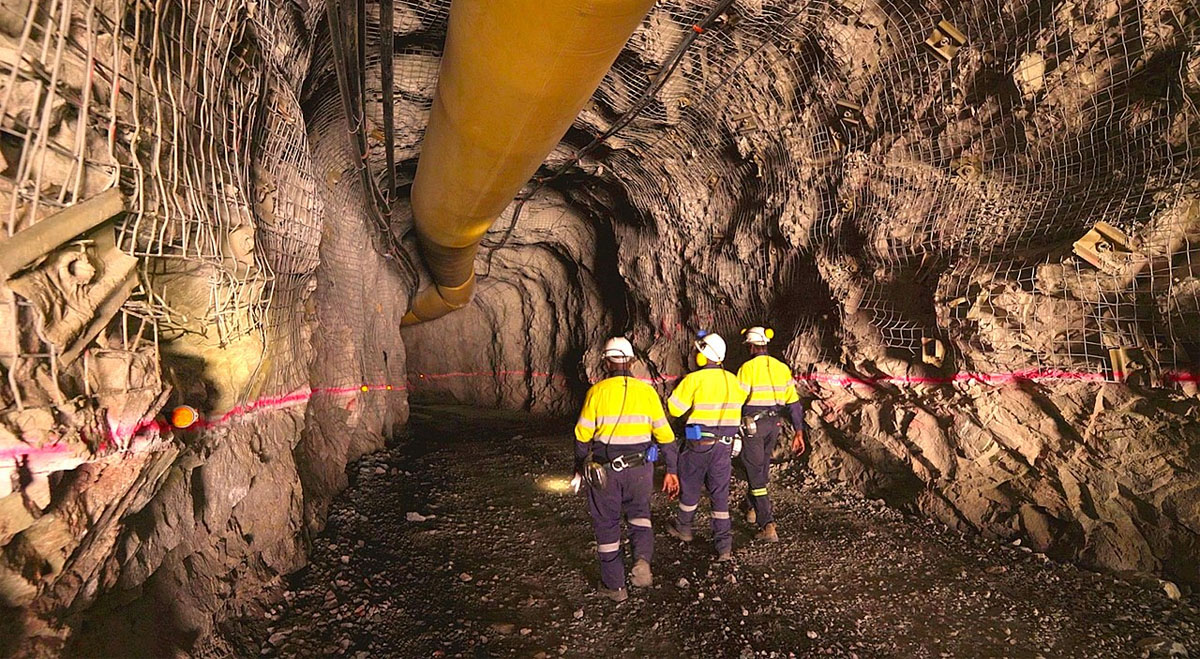
    Panther Metals PLC is a London-listed mineral exploration company with a portfolio of district-scale projects across Canada, including the Obonga Greenstone Belt in Ontario. The company is focused on exploring for base and critical minerals, including volcanogenic massive sulphide (VMS) copper deposits and graphite, while also progressing the Winston Project, which includes the assessment of historic mine tailings.

    Since acquiring the Obonga Project in 2021, Panther has advanced several priority exploration targets, including Wishbone, Awkward, Survey, Ottertooth and Silver Rim. Its strategy combines disciplined capital allocation with systematic exploration designed to support the future supply of critical minerals through ongoing drilling, permitting and geophysical programmes.

  • Gore Street Energy Storage Fund to Release Annual Results on 15 July with Investor Presentations (GSF)

    Gore Street Energy Storage Fund to Release Annual Results on 15 July with Investor Presentations (GSF)

    Gore Street Energy Storage Fund plc (LSE:GSF) has confirmed it will publish its annual results for the financial year ended 31 March 2026 on 15 July, maintaining its scheduled reporting timetable for shareholders. The update will provide investors with fresh insight into the fund’s performance as demand for grid-scale battery storage continues to grow alongside the transition to more flexible, low-carbon electricity networks.

    Investor and Analyst Sessions Planned

    Alongside the results announcement, the company will hold a virtual briefing for analysts and a separate live presentation for investors through the Investor Meet Company platform. Presentation materials will also be made available on the company’s website, reflecting Gore Street’s commitment to maintaining open communication with existing and prospective shareholders while competing for investment within the renewable infrastructure sector.

    Outlook Supported by Strong Balance Sheet

    The fund’s outlook continues to benefit from a solid balance sheet and healthy recent cash generation, complemented by shareholder-focused initiatives including cost-saving measures, strategic actions and director share purchases. However, these strengths are balanced against weak technical indicators, including negative price momentum and a sustained downtrend, as well as inconsistent operating performance. Although the fund offers an attractive dividend yield, the negative price-to-earnings ratio highlights ongoing profitability challenges.

    More about Gore Street Energy Storage Fund

    Gore Street Energy Storage Fund plc is an internationally diversified investment company focused on grid-scale battery energy storage assets that help improve electricity network flexibility and support the integration of renewable energy. The fund provides investors with exposure to the expanding energy storage market across multiple regions.

    The company is positioned as a specialist in energy infrastructure and regularly uses investor presentations and market updates to communicate portfolio progress and strategic priorities. Its performance remains closely monitored as battery storage plays an increasingly important role in strengthening grid resilience and advancing decarbonisation goals.

  • Atlas Metals Sets Late 2026 Target for UPSA Acquisition as Commercialisation Plans Advance (AMG)

    Atlas Metals Sets Late 2026 Target for UPSA Acquisition as Commercialisation Plans Advance (AMG)

    Atlas Metals Group plc (LSE:AMG) is targeting completion of its proposed acquisition of Universal Pozzolanic Silica Alumina Ltd (UPSA) in late Q3 or early Q4 2026, pending regulatory approvals and shareholder consent. As part of the process, the company has appointed SLR Consulting Australia to complete an updated Competent Person’s Report using the latest drilling results, with the aim of upgrading UPSA’s mineral resource from inferred to measured and indicated before the transaction closes.

    Commercial Strategy Focuses on U.S. Concrete Market

    Following completion of the acquisition, Atlas Metals intends to strengthen its commercial strategy by appointing UPSA Advisory Board chairman Robert Ober as a strategic adviser. His experience and industry relationships within the U.S. concrete and construction materials sector are expected to support the group’s expansion plans.

    At the same time, Atlas Metals and UPSA are continuing discussions with prospective customers and off-take partners while progressing Australian regulatory approvals. These initiatives are designed to accelerate commercial development of the UPSA resource and reinforce the company’s position in the high-performance concrete materials market.

    Financial Position Remains Challenging

    Despite progress on the acquisition, the group’s outlook continues to be constrained by weak underlying financials, including limited revenue generation, persistent losses, ongoing cash outflows, negative shareholders’ equity and increasing debt levels. Technical indicators also continue to reflect a sustained downward trend with negative momentum, while valuation metrics offer little support given the absence of earnings and dividend payments.

    More about Atlas Metals Group plc

    Atlas Metals Group plc is a natural resources and energy company listed on the London Stock Exchange under the ticker AMG. Through the planned acquisition of Universal Pozzolanic Silica Alumina Ltd, the company aims to expand into industrial minerals used in high-performance concrete and construction materials, with a strategic emphasis on supplying the U.S. construction market through UPSA’s specialised resource portfolio.

  • AI-Powered Trading Platforms Gain Momentum Across Leading Brokerages

    AI-Powered Trading Platforms Gain Momentum Across Leading Brokerages

    Artificial intelligence is becoming an increasingly important feature of online investing as major brokerage firms continue introducing new AI-driven trading solutions, according to research published by Jefferies.

    Coinbase Global Inc (NASDAQ:COIN), eToro Group Ltd (NASDAQ:ETOR) and Robinhood Markets Inc (NASDAQ:HOOD) have recently unveiled autonomous AI agents capable of analysing markets, building portfolios and executing trades automatically within user-defined limits. These systems are built on Model Context Protocol (MCP) technology, enabling large language models such as Claude and GPT to communicate directly with brokerage platforms.

    Robinhood’s service currently focuses on equities and requires users to open a dedicated agentic trading account. The broker said more than 50,000 customers signed up within weeks of launch, with daily trading activity reaching millions of dollars across stocks and options.

    eToro’s Tori assistant offers trading across equities, commodities, cryptocurrencies, ETFs and foreign exchange. According to the company, the platform completed more than 500,000 trades during its first year while attracting more than one-third of eligible club members.

    Coinbase currently supports cryptocurrency spot and derivatives trading through its AI tools and intends to broaden coverage further. The company said its AI ecosystem generated more than US$4 million in revenue through Virtuals agents and over US$30 million in earnings on Banker during June.

    Interactive Brokers Group Inc (NASDAQ:IBKR) has opted for a more cautious approach, launching a platform that assists with investment research but still requires traders to approve every order under its “human in the middle” framework.

    Meanwhile, The Trade Desk Inc (NASDAQ:TW) and Charles Schwab Corp (NYSE:SCHW) are focusing on conversational AI tools designed to analyse portfolios and answer market questions rather than execute trades.

    Jefferies noted that references to artificial intelligence during earnings calls among the six companies nearly doubled during the first quarter of 2026 compared with the previous quarter, underlining how rapidly AI is becoming embedded across the brokerage sector.

  • UBS says commodities deserve another look as investors rethink portfolio diversification

    UBS says commodities deserve another look as investors rethink portfolio diversification

    Bank outlines the opportunities and limitations of commodity investing

    UBS believes commodities are regaining importance within investment portfolios as inflation concerns, geopolitical uncertainty and changing market dynamics encourage investors to reconsider the asset class.

    In a new report, the bank outlined 10 key lessons for commodity investing, examining how commodities behave, how they fit into diversified portfolios and the risks investors should consider before increasing exposure.

    According to UBS, persistent inflation pressures, competition for strategic raw materials, growing interest in the real economy and declining confidence in bonds as a diversification tool have all contributed to the renewed appeal of commodities.

    Four investment arguments under the spotlight

    The report reviews four widely cited reasons for investing in commodities: portfolio diversification, inflation hedging, downside protection and long-term return enhancement.

    UBS said commodities have generally demonstrated low correlations with stocks and bonds, helping diversify portfolios, although it warned that “these relationships can weaken during market downturns.”

    The bank also said commodities have historically performed well during inflationary environments but may struggle when inflation remains subdued.

    Gold stands out as a defensive asset

    UBS noted that defensive characteristics differ across commodity sectors.

    Gold has consistently acted as a safe-haven asset, while energy commodities can provide protection against supply-related shocks. However, the bank cautioned that commodities as a whole do not always offer dependable downside protection.

    Performance expectations should also be realistic, as returns depend on allocation size, investment timing and changes in roll yield.

    Diversified exposure remains the preferred approach

    For investors seeking exposure, UBS recommends a modest allocation of only a few percentage points within a diversified portfolio.

    The preferred implementation method is “a diversified, regularly rebalanced commodity futures portfolio” because it represents “the simplest way to capture broad benefits.”

    The bank added that “Targeted positions can be useful but involve higher volatility and execution risks.”

    UBS concluded that financing commodity allocations with bonds rather than equities helps preserve portfolio volatility but increases sensitivity to disinflation, while equity-funded allocations have the opposite effect.

    Overall, the bank said commodities “have historically offered diversification and some inflation-hedging characteristics, though both come with limitations,” and investors should be prepared to tolerate extended periods of weaker performance.

  • Citi Says Hotter European Summers Could Boost Demand for U.S. HVAC Manufacturers

    Citi Says Hotter European Summers Could Boost Demand for U.S. HVAC Manufacturers

    More frequent and intense heatwaves across Europe could support long-term growth for U.S. HVAC companies as demand for cooling equipment expands in a market where air-conditioning adoption remains comparatively low, Citi analysts said.

    The brokerage noted that Europe’s current record temperatures highlight a structural opportunity for manufacturers of heating, ventilation and air-conditioning systems, particularly as consumers and businesses seek greater protection from prolonged periods of extreme heat.

    According to International Energy Agency data cited by Citi, only about one in five European households had air conditioning in 2018, compared with roughly nine in ten homes in both the United States and Japan.

    “Relatively low penetration of air conditioning in Europe coupled with seemingly more frequent and hotter heat waves” could support growing use of cooling systems in the region, Citi analysts wrote.

    Among the companies expected to benefit, Citi highlighted Carrier Global (NYSE:CARR), Trane Technologies (NYSE:TT) and Johnson Controls (NYSE:JCI).

    Carrier remains Citi’s preferred name given its significant European presence, with more than 20% of group revenue generated by its Climate Solutions Europe business. The company also maintains leading positions in both the commercial and residential HVAC markets across the region.

    Citi added that Carrier’s European heat-pump business continues to perform well, while demand indicators in Germany remain encouraging despite the latest heatwave.

    Although Europe contributes a smaller proportion of revenue for Trane Technologies and Johnson Controls, both companies are expected to benefit from rising investment in cooling infrastructure and energy-efficient climate technologies across the continent.

  • AI-Driven Cyber Threats Could Become Banking’s Biggest Risk, JPMorgan Says

    AI-Driven Cyber Threats Could Become Banking’s Biggest Risk, JPMorgan Says

    JPMorgan believes cyber risk is emerging as one of the most underestimated threats facing the banking industry, warning that advances in artificial intelligence could make future cyber-driven liquidity crises more severe than traditional credit shocks.

    According to analyst Kian Abouhossein, cutting-edge AI models such as Mythos and GPT-5.5 are dramatically shortening the time needed to identify previously undiscovered software vulnerabilities, reducing banks’ ability to respond before systems are compromised.

    “Significantly reduce the timeline for discovering previously unknown zero-day vulnerabilities from months and years to hours,” the report said.

    Rather than focusing primarily on regulatory capital, JPMorgan argued that supervisors should place greater importance on operational resilience.

    “Looking at cybersecurity risk through the lens of the capital framework is not the best approach,” Abouhossein wrote, recommending broader resilience testing and liquidity stress scenarios that simulate rapid deposit withdrawals triggered by cyber incidents.

    The bank also highlighted the amplifying role of social media, warning it could fuel “unprecedented volatility in deposit flows” during a cyber crisis, similar to the market dynamics witnessed during Credit Suisse’s collapse.

    JPMorgan believes U.S. banks currently hold an advantage because of larger technology investments and faster adoption of advanced AI capabilities, while European lenders remain comparatively more exposed.

    The report concluded that banks with larger, stickier deposit franchises could increasingly command valuation premiums, adding that U.S. globally systemic banks may deserve higher valuations than European and Japanese peers because investors are likely to place greater value on stronger cyber preparedness.