Author: Fiona Craig

  • Rainbow advances Phalaborwa DFS with simplified rare earths processing flowsheet (RBW)

    Rainbow advances Phalaborwa DFS with simplified rare earths processing flowsheet (RBW)

    Feasibility study progresses as engineering work accelerates

    Rainbow Rare Earths (LSE:RBW) has announced further progress on the Definitive Feasibility Study (DFS) for its Phalaborwa rare earths project in South Africa, where the company plans to recover rare earth elements from phosphogypsum waste rather than through conventional mining.

    The pilot plant operated successfully throughout the first half of 2026, allowing approximately 75% of the project’s processing flowsheet to be completed and advanced into the engineering stage.

    Simplified process aims to lower costs and reduce technical risk

    Rainbow has made several changes to streamline the project design, including replacing hydraulic reclamation with a mechanical system, eliminating an entire weak acid leach circuit and reducing the number of leaching stages. The revised approach lowers the requirement for capital-intensive equipment while improving operational efficiency.

    The company has also substituted the more complex acid bake and continuous ion chromatography processes with a continuous ion exchange system linked to a relatively compact solvent extraction circuit. The updated flowsheet is designed to produce high-purity NdPr oxide and other high-value rare earth products more efficiently, with lower operating costs and reduced technical risk, supporting the project’s ambition to become a low-cost producer in the near term.

    Development progress offsets current financial pressures

    Rainbow’s investment outlook continues to be constrained by its current financial profile, with the company remaining pre-revenue while reporting ongoing losses and negative cash flow.

    However, management has highlighted encouraging project economics, successful pilot plant performance, continued progress on the processing route and an improved funding runway. Technical indicators also provide modest support through a generally positive longer-term trend, although short-term momentum remains neutral. Valuation metrics continue to reflect the absence of earnings and dividend income.

    More about Rainbow Rare Earths

    Rainbow Rare Earths is developing an independent and sustainable supply of rare earth elements used in clean energy technologies and advanced industrial applications. The company specialises in recovering rare earths from phosphogypsum, a by-product of fertiliser production, and is advancing the Phalaborwa project in South Africa alongside the Uberaba project in Brazil to serve industrial, energy and defence markets.


  • BRCK completes Jacksons acquisition to expand premium fencing business (BRCK)

    BRCK completes Jacksons acquisition to expand premium fencing business (BRCK)

    Purchase broadens construction products portfolio

    BRCK Group plc (LSE:BRCK) has completed the acquisition of H.S. Jackson & Son (Fencing) Limited, a well-established designer, manufacturer and installer of premium timber and steel fencing, gates and perimeter security systems based in Ashford, Kent.

    The acquisition extends BRCK’s presence across residential, commercial, industrial and high-security markets by adding Jacksons’ specialist fencing and perimeter protection expertise to the group’s portfolio.

    Deal supports diversification and earnings growth

    The transaction represents another step in BRCK’s diversification strategy, broadening its product offering while opening up additional opportunities in the premium fencing sector.

    The company expects the acquisition to be earnings enhancing during its first full financial year of ownership. As part of the consideration, more than one million new ordinary shares have been issued and admitted to trading on AIM, resulting in a modest increase in the company’s issued share capital and a corresponding adjustment to the ownership interests of existing shareholders.

    Strong fundamentals balanced by operational headwinds

    BRCK’s investment outlook is supported by consistent revenue growth, an attractive dividend yield and ongoing strategic acquisitions designed to expand the business.

    These strengths are tempered by pressure on profitability and cash flow management, while technical indicators continue to point to weaker market momentum. Nevertheless, the group’s corporate activity and diversification initiatives provide potential catalysts for longer-term growth.

    More about BRCK Group plc

    BRCK Group plc is a construction materials distributor supplying a broad range of products and services to the building industry. The company continues to expand into adjacent markets through acquisitions, with a strategy focused on diversifying its product portfolio and increasing exposure to sectors including premium fencing and perimeter security.

  • Rockfire reports high-grade germanium and zinc results from Molaoi drilling campaign (ROCK)

    Rockfire reports high-grade germanium and zinc results from Molaoi drilling campaign (ROCK)

    Latest drilling strengthens confidence in Greek zinc project

    Rockfire Resources (LSE:ROCK) has announced additional high-grade germanium and zinc intersections from its ongoing diamond drilling programme at the wholly owned Molaoi zinc project in Greece, supporting efforts to upgrade the deposit’s mineral resource from the Inferred to Indicated category.

    Assay results from drill hole HMO-017 returned germanium grades of up to 52.3g/t, while zinc mineralisation reached 16.1% over a one-metre interval. The hole also delivered elevated silver and lead grades. Meanwhile, portable XRF readings from hole HMO-019 indicate substantial zinc and lead mineralisation, with laboratory assays still pending to confirm the results.

    Drilling results expected to support resource upgrade

    The company said the latest drilling reinforces confidence in its geological interpretation and is expected to play an important role in future underground mine planning. Strong by-product potential from silver and germanium could improve the project’s overall economics if the grades continue across a broader area.

    Investors are now looking ahead to assay results from the remaining drill holes, which are expected to refine the project’s resource estimate and could further strengthen Rockfire’s position in both the zinc and critical minerals markets.

    Financial challenges offset progress at project level

    Rockfire’s investment outlook continues to be limited by its financial profile, with the company remaining pre-revenue, reporting ongoing losses and generating negative free cash flow. However, its debt-free balance sheet provides some financial flexibility.

    Technical indicators have shown modest short-term improvement, although the longer-term trend remains weaker. Valuation metrics also remain challenging, reflecting the absence of earnings and the lack of a dividend yield.

    More about Rockfire Resources PLC

    Rockfire Resources is a London-listed mineral exploration company focused on gold, base metals and critical minerals. Its flagship asset is the high-grade Molaoi zinc, lead, silver and germanium project in Greece. The company also owns a portfolio of gold, copper and silver exploration projects in Queensland, Australia, including the Plateau and Marengo prospects, with some assets covered by farm-in agreements with ASX-listed partners.

  • NatWest completes £2.7bn Evelyn Partners acquisition to expand wealth management business (NWG)

    NatWest completes £2.7bn Evelyn Partners acquisition to expand wealth management business (NWG)

    Deal creates one of the U.K.’s largest private banking and wealth platforms

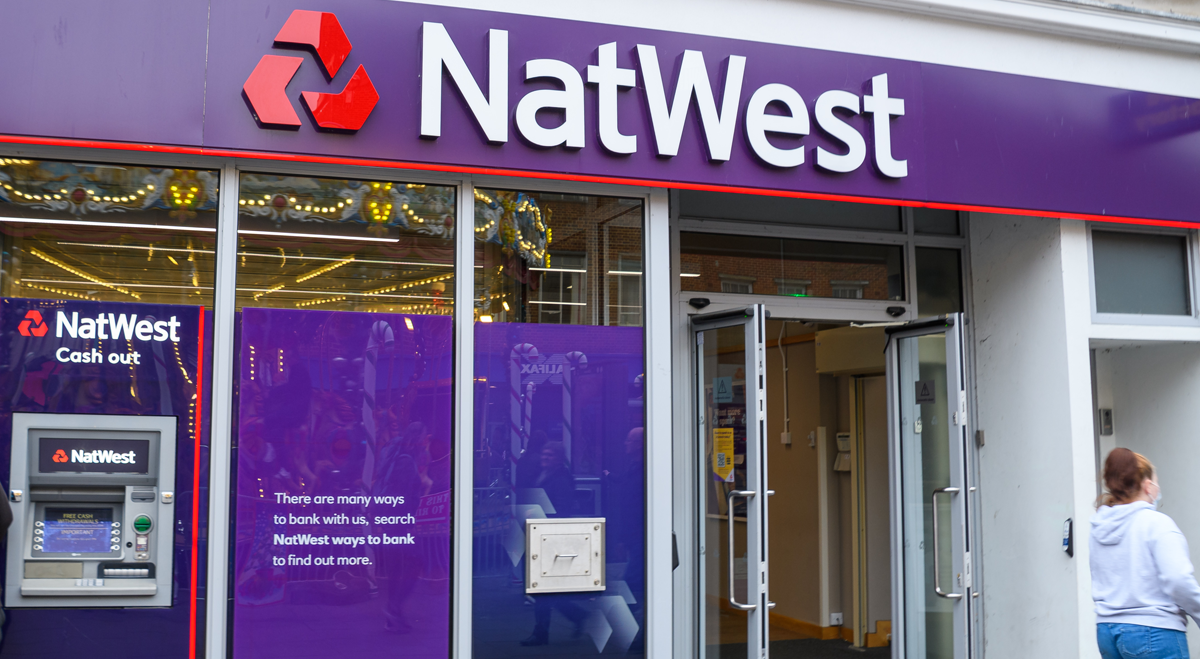
    NatWest Group (LSE:NWG) has finalised its £2.7 billion acquisition of wealth manager Evelyn Partners, strengthening its position in the U.K. wealth sector and creating what the bank says is the country’s leading private banking and wealth management franchise.

    The transaction brings together Evelyn Partners’ £69 billion in assets under management and administration with NatWest’s existing £59 billion, increasing combined AUMA to £127 billion. Total customer assets and liabilities now stand at approximately £188 billion, representing around one-fifth of the group’s overall balance sheet.

    Wealth strategy shifts further toward fee-based income

    NatWest said the acquisition materially expands its financial planning and investment management offering while supporting its strategy to increase recurring fee-based revenues. Before any revenue synergies are realised, fee income is expected to increase by around 20%.

    The group is targeting approximately £100 million in annual cost synergies and expects the acquisition to contribute positively to growth and return on tangible equity from the first year. While the transaction is forecast to reduce the bank’s CET1 capital ratio by around 130 basis points, NatWest believes the investment positions the business to capture opportunities in the faster-growing U.K. wealth management market. The bank also said existing customers should experience a smooth transition throughout the integration process.

    Financial strengths balanced by cash flow concerns

    NatWest’s overall outlook reflects a combination of positive and negative factors. Strong profitability and improving leverage continue to support the investment case, although inconsistent operating and free cash flow, including recent weakness, remain areas of concern.

    Technical indicators also suggest subdued market momentum, with the shares trading below key moving averages. However, these factors are partly offset by an attractive valuation, supported by a relatively low price-to-earnings ratio, a strong dividend yield, and a positive recent earnings update that included higher income guidance and solid capital generation.

    More about NatWest Group

    NatWest Group is one of the U.K.’s largest banking groups, providing retail, commercial and private banking services. Alongside its core banking operations, the company continues to expand its wealth management and financial planning capabilities, offering investment, lending, savings and advisory services to individuals and businesses across the United Kingdom.

  • ADVFN Appoints Jason Paltrowitz as Non-Executive Director

    ADVFN Appoints Jason Paltrowitz as Non-Executive Director

    Former OTC Executive Brings Capital Markets Expertise to Support Global Growth


    LONDON – July 1, 2026 — ADVFN Ltd is pleased to announce the appointment of Jason Paltrowitz as a Non-Executive Director. Jason brings more than 20 years of leadership experience across global capital markets, investor relations, exchange services, and corporate advisory. He served as Executive Vice President at OTC Markets Group, where he played a key role in expanding one of the world’s leading marketplaces for companies accessing U.S. investors. Earlier in his career, he held senior roles at JPMorgan Chase and BNY Mellon. Most recently, Jason founded Crossbridge Advisors, an independent strategic capital markets advisory firm.

    Jason’s appointment supports ADVFN’s strategy to expand its global investor network, deepen relationships with listed companies and accelerate growth across its The Market Link platform. His relationships across exchanges, public companies, brokers, investment banks, investor relations firms and institutional investors are expected to support new commercial partnerships.

    ADVFN CEO Amit Tauman said, “Jason brings a rare combination of capital markets expertise, strategic insight and deep industry relationships. His experience and industry knowledge will be instrumental as we execute the next phase of our strategy. We are delighted to welcome him to the Board.”

    Jason Paltrowitz said, “I am delighted to be joining the Board of ADVFN at such an exciting time in the Company’s evolution. ADVFN has built a highly respected global brand and cultivated an exceptionally loyal user base over many years. I believe there is a significant opportunity to build on that foundation by strengthening the Company’s strategic positioning, broadening its reach, and creating additional value for shareholders. I look forward to working alongside the Board and management team to help shape the next phase of the Company’s growth.”

    About ADVFN:

    ADVFN is a leading global social financial platform providing real-time market data, news, analysis, discussion forums, portfolio management tools, and investment research across international markets. Through its expanding “The Market Link” network which includes InvestorsHub, Stockhouse, HotCopper and ADVFN, ADVFN connects millions of investors worldwide with trusted financial information, listed companies, and investment opportunities.

    For more information, contact [email protected]

  • Wall Street Futures Slip as Investors Pause Following Record Market Rally: Dow Jones, S&P, Nasdaq

    Wall Street Futures Slip as Investors Pause Following Record Market Rally: Dow Jones, S&P, Nasdaq

    Traders lock in gains after Monday’s strong advance

    U.S. stock futures pointed to a modestly lower open on Tuesday as investors appeared ready to take profits after the previous session’s broad rally.

    The cautious tone follows Monday’s powerful advance, which carried the Dow Jones Industrial Average to another record closing high and encouraged some traders to reduce exposure after recent gains.

    Higher oil prices also weighed on sentiment, with U.S. crude futures rising 0.6% after jumping 2.2% during Monday’s session.

    The latest gains in crude have been driven by uncertainty over possible diplomatic talks between the United States and Iran. President Donald Trump said negotiations were scheduled to take place in Qatar on Tuesday, while a spokesperson for Iran’s Foreign Ministry reportedly denied that any meeting had been arranged.

    Investors await key U.S. economic reports

    Despite the weaker outlook for the market open, investors are expected to remain cautious ahead of several important U.S. economic releases due later this week, including the closely watched monthly employment report.

    Those figures are likely to shape expectations for the U.S. economy and the Federal Reserve’s next policy decisions.

    Technology stocks led Monday’s market rebound

    Wall Street ended Monday’s session firmly higher after overcoming early volatility, with all three major U.S. indices posting strong gains.

    The Nasdaq climbed 522.53 points, or 2.1%, to finish at 25,820.14, while the S&P 500 gained 86.41 points, or 1.2%, to close at 7,440.43. The Dow added 306.63 points, or 0.6%, ending the day at a record 52,182.74 after giving back part of its intraday advance.

    Technology companies were the primary driver of the rally, helping the Nasdaq recover following last week’s 4.6% decline.

    Alphabet (NASDAQ:GOOGL) rose 4.8% after the Google parent company joined the Dow Jones Industrial Average.

    Semiconductor stocks outperform broader market

    Chipmakers were among the session’s strongest performers, lifting the Philadelphia Semiconductor Index by 3.8%.

    Networking and computer hardware shares also posted solid gains, with the NYSE Arca Networking Index advancing 3.7% and the NYSE Arca Computer Hardware Index adding 2.4%.

    Elsewhere, brokerage stocks weakened, dragging the NYSE Arca Broker/Dealer Index down 2.2%. Steelmakers, airlines and gold miners also declined, partially offsetting the technology-led rally.

    Markets also remained focused on geopolitical developments after reports suggested the United States and Iran had agreed to temporarily suspend hostilities following weekend military exchanges.

    President Donald Trump later stated on Truth Social that Iran had requested a meeting in Doha, Qatar.

  • European Stocks Advance as Technology Shares Lead Market Higher: DAX, CAC, FTSE100

    European Stocks Advance as Technology Shares Lead Market Higher: DAX, CAC, FTSE100

    AI optimism lifts European equity markets

    European markets traded higher on Tuesday, supported by a strong recovery in technology stocks as investor confidence in artificial intelligence-related companies improved.

    With oil prices retreating to levels seen before the recent Middle East conflict, investors continue to expect that the European Central Bank (ECB) will be able to keep interest rates unchanged in the near term.

    Speaking in Sintra, Portugal, ECB Chief Economist Philip Lane said the secondary effects of higher energy prices are likely to take time to emerge and indicated policymakers are not prepared to commit to a specific interest-rate path.

    Falling oil prices support market sentiment

    Crude oil prices extended their decline and remained on course for a second consecutive monthly loss, despite conflicting comments over whether the United States and Iran would hold talks in Qatar on Tuesday.

    Among the major European indices, Germany’s DAX rose 1.3%, the UK’s FTSE 100 gained 0.8%, and France’s CAC 40 advanced 0.2%.

    Sterling gave back earlier gains against the U.S. dollar after revised figures from the Office for National Statistics confirmed the UK economy expanded as initially estimated during the first quarter, driven largely by the services sector.

    The economy grew 0.6% quarter-on-quarter in the first three months of the year, following revised growth of 0.1% in the fourth quarter.

    Technology sector outperforms

    Technology shares were among the strongest performers, with Infineon (TG:IFX), STMicroelectronics (BIT:STMMI) and ASML Holding (EU:ASML) posting solid gains.

    Elsewhere, French pharmaceutical company Sanofi (EU:SAN) traded little changed after reporting that Nexviazyme achieved all primary and secondary endpoints in a Phase III trial involving the infantile form of Pompe disease.

    British travel and insurance group Saga (LSE:SAGA) declined after stating that trading remained “in line with expectations” during the first four months of the year.

    Meanwhile, supermarket operator J Sainsbury (LSE:SBRY) advanced after reaffirming its full-year profit guidance.

    International Workplace Group (LSE:IWG) also moved sharply higher after announcing a $50 million increase to its 2026 share buyback programme.

  • Kering shares slide as Barclays warns annual targets may be difficult to achieve

    Kering shares slide as Barclays warns annual targets may be difficult to achieve

    Shares in Kering SA (EU:KER) fell more than 5% on Tuesday after the luxury goods group held a pre-results call with analysts ahead of its late-July earnings release. Investors reacted negatively to management’s cautious tone, reinforcing concerns about the company’s short-term trading outlook.

    Following the briefing, Barclays said Kering’s full-year guidance now appears “increasingly unattainable,” sending the stock to its lowest level in three weeks.

    Gucci recovery remains slower than expected

    Barclays expects Gucci to report a 5% organic revenue decline in the second quarter, an improvement from the 8% fall recorded in the first quarter but still highlighting weak momentum at the group’s largest profit contributor.

    The bank forecasts Gucci will generate €1.35 billion in second-quarter revenue, with Asia-Pacific sales expected to decline 11% and Europe down 10%. North America is projected to provide some support with estimated growth of 8%.

    “We believe that 1H results are unlikely to demonstrate a clear path to turnaround, but slight sequential improvement in performance. We expect Gucci at -3% for FY-26,” Barclays analysts wrote in a note dated Tuesday.

    Citi trims growth expectations

    Citi also revised its outlook following the company’s pre-close call, lowering its forecast for Gucci’s full-year constant-currency revenue growth by 90 basis points to -1.2%.

    The bank attributed the downgrade to a difficult macroeconomic backdrop and softer sales trends in the Middle East, which contributes around 5% of Kering’s total revenue. Citi also reduced its price target on Kering to €266 from €268, based on approximately 24 times estimated FY27 earnings.

    “Given the still-gradual Gucci turnaround, a challenging macro and geopolitical backdrop and lower FX headwinds, we reduce FY26E cFX growth assumptions by 40bp and 90bp to +2.5% and -1.2% for Kering and Gucci, respectively,” Citi analysts wrote.

    Cost controls support margins despite weaker sales

    Although revenue expectations remain subdued, both Barclays and Citi noted that cost-cutting measures are helping to protect profitability.

    Barclays forecasts Gucci’s EBIT margin will improve by 30 basis points year-on-year to 16.3% during the first half of 2026, while the group’s overall EBIT margin is expected to ease to 12%, down 36 basis points from a year earlier.

    The modest margin improvement prompted Barclays to raise its FY26-FY28 earnings-per-share forecasts by between 2% and 3%, despite maintaining a cautious revenue outlook.

    Investors await July earnings update

    During the pre-results call, Kering reiterated its gradual recovery strategy, including plans to close more than 100 stores on a net basis and keep operating expenses flat at constant currency.

    However, investors remain unconvinced. When Kering released its first-quarter 2026 results on 14 April, revenue of US$4.21 billion exceeded market expectations by 1.45%, yet the shares still fell 4.7% as uncertainty surrounding Gucci’s recovery continued to overshadow the earnings beat.

    Attention now turns to Kering’s first-half 2026 results, due after the market closes on 28 July, when investors will closely examine Gucci’s organic sales trend, group margins and any revised guidance on the timing of a broader recovery across the company’s brands.

  • Oil slips as possible U.S.-Iran negotiations ease immediate supply concerns

    Oil slips as possible U.S.-Iran negotiations ease immediate supply concerns

    Oil prices traded slightly lower on Tuesday as markets weighed the prospect of renewed diplomatic engagement between the United States and Iran against continuing uncertainty over crude supplies from the Middle East.

    At 04:56 ET (08:56 GMT), Brent crude futures declined 0.6% to US$72.69 per barrel, while West Texas Intermediate (WTI) futures fell 0.5% to US$70.41 per barrel.

    Markets continue to monitor the Strait of Hormuz

    Traders remained focused on developments surrounding the Strait of Hormuz after reports that the United States and Iran had contained a renewed escalation that threatened the interim peace agreement reached earlier this month.

    Following the announcement of the memorandum of understanding, crude prices have retreated sharply and are now trading close to levels seen before the conflict.

    President Donald Trump said fresh peace talks between Washington and Tehran are expected to take place in Doha later on Tuesday. However, Iranian officials have not confirmed that negotiations will resume this week, leaving uncertainty over both the diplomatic process and the security situation in the strategic waterway.

    Shipping concerns remain despite easing tensions

    White House officials have said tanker traffic through the Strait of Hormuz, which carries roughly 20% of global oil supplies, is flowing normally again.

    Iranian Deputy Foreign Minister Kazem Gharibabadi, however, said Tehran intends to continue pursuing a joint system to oversee shipping through the strait, even if neighbouring Oman ultimately chooses not to participate.

    According to ANZ analysts, greater Iranian involvement in supervising maritime traffic could slow the recovery of crude exports from the Persian Gulf, while continued shipping risks remain a source of uncertainty for global oil supplies.

    Fuel markets remain relatively tight

    ANZ also noted that although crude oil has surrendered most of the gains generated during the recent conflict, refined fuel markets continue to show tighter supply conditions.

    The bank said the gap between softer crude prices and firmer refined fuel prices suggests refinery margins should remain healthy even if benchmark oil prices stay relatively subdued.

  • Gold on course for worst quarter since 2013 as higher rate expectations curb demand

    Gold on course for worst quarter since 2013 as higher rate expectations curb demand

    Gold prices remained under pressure on Tuesday and were set to post their largest quarterly decline in more than a decade, as investors continued to price in persistent inflation and the possibility of additional U.S. interest rate increases.

    Spot gold rose 0.1% to US$4,197.54 an ounce at 05:48 ET (09:48 GMT), while gold futures slipped 0.2% to US$4,033.05 an ounce. Bullion has fallen more than 11% during June, putting it on track for a fourth consecutive monthly decline.

    Market watches for signs of a price floor

    “The question for traders to ask now is whether the low is in for gold, given the five-month selloff from the all-time highs hit at the end of January, or has gold got further to fall?” said David Morrison, Senior Market Analyst at Trade Nation, in a note.

    Inflation concerns support expectations of further tightening

    Investors have become increasingly concerned that elevated energy costs and disruption linked to artificial intelligence investment could keep inflation higher for longer, reinforcing expectations that the Federal Reserve may raise interest rates again before the end of the year.

    Such an environment typically reduces the appeal of assets that do not generate income, including gold.

    Although oil prices have eased back to levels seen before the recent conflict following the interim agreement between the United States and Iran, geopolitical uncertainty remains. Pakistan said technical discussions between U.S. and Iranian representatives are expected to take place in Qatar later this week after renewed tensions over the weekend.

    Dollar strength weighs on precious metals

    A stronger U.S. dollar has added to the pressure on bullion as markets increasingly anticipate at least one more Federal Reserve rate increase in 2026.

    Several Fed officials adopted a hawkish stance during the June policy meeting, suggesting that additional tightening could still be appropriate.

    OCBC cuts gold and silver forecasts

    OCBC analysts lowered their outlook for precious metals on Tuesday, citing higher interest rates and a less favourable macroeconomic environment.

    The bank reduced its end-2026 gold forecast to US$4,360 per ounce from US$5,100, while lowering its silver forecast to US$67 per ounce from US$89.50.

    Despite the revisions, analysts stressed that the changes reflect weaker short-term macroeconomic conditions rather than a deterioration in the longer-term outlook for precious metals.