Author: Fiona Craig

  • Dow Jones, S&P, Nasdaq, Wall Street Futures, U.S. Markets Poised for Cautious Open Ahead of Jobs Report

    Dow Jones, S&P, Nasdaq, Wall Street Futures, U.S. Markets Poised for Cautious Open Ahead of Jobs Report

    U.S. stock index futures signaled a muted start on Thursday, with traders showing little inclination to push markets strongly in either direction after Wednesday’s rebound.

    Much of the hesitation stems from anticipation of Friday’s monthly employment data from the Labor Department. Economists expect the report to show payrolls grew by 75,000 in August, following July’s increase of 73,000. The figures are likely to influence expectations for monetary policy.

    Currently, markets see a near certainty that the Federal Reserve will cut interest rates by a quarter point later this month. CME Group’s FedWatch Tool places the probability of such a move at 97.6%.

    Fresh labor market readings on Thursday added to the uncertainty. Payroll processor ADP reported private-sector job growth of 54,000 in August, falling short of the consensus forecast of 65,000 and well below July’s upwardly revised gain of 106,000. Meanwhile, the Labor Department said initial jobless claims rose more than expected for the week ending August 30.

    Stocks ended Wednesday mostly higher despite some intraday swings. The Nasdaq surged 218.10 points, or 1.0%, to close at 21,497.73, while the S&P 500 advanced 32.72 points, or 0.5%, to 6,448.26. The Dow Jones Industrial Average edged lower, slipping 24.58 points, or 0.1%, to 45,271.23.

    Tech stocks led the charge, particularly Alphabet (NASDAQ:GOOG), which soared 9.1% after a favorable ruling in a major antitrust case. U.S. District Judge Amit Mehta determined the company would not be forced to sell its Chrome browser or the Android operating system, calling plaintiffs’ divestiture demands excessive. Apple (NASDAQ:AAPL) also gained 3.8%, benefiting from the decision that allows Google Search to remain preloaded on iPhones.

    Additional support for equities came from a Labor Department report showing U.S. job openings in July fell to their lowest level in ten months. The softer labor market backdrop has further fueled expectations of an imminent Fed rate cut.

    Sector performance, however, was mixed. Gold producers rallied as the NYSE Arca Gold Bugs Index rose 1.8%, with bullion hitting another record high. By contrast, energy shares slumped, dragged down by falling crude prices, with the Philadelphia Oil Service Index sliding 2.7% and the NYSE Arca Oil Index dropping 2.6%.

  • Eurozone retail sales dip 0.5% in July, stoking economic worries

    Eurozone retail sales dip 0.5% in July, stoking economic worries

    Retail sales in the eurozone declined further in July, according to Eurostat data released Thursday, sparking concerns about whether consumer spending can continue to cushion the economy from potential fallout linked to U.S. tariffs.

    Sales across the 20 euro-area countries fell 0.5% month-over-month, steeper than the 0.2% drop predicted by economists. On an annual basis, retail sales rose 2.2%, missing expectations for 2.4% growth.

    The softer-than-anticipated figures come amid external pressures on the eurozone economy, including uncertainty over U.S. tariffs, which many had hoped could be offset by strong domestic consumption.

    This content is for informational purposes only and does not constitute financial, investment, or other professional advice. It should not be considered a recommendation to buy or sell any securities or financial instruments. All investments involve risk, including the potential loss of principal. Past performance is not indicative of future results. You should conduct your own research and consult with a qualified financial advisor before making any investment decisions.

  • Dollar steadies as markets eye U.S. labor data and potential Fed rate cuts

    Dollar steadies as markets eye U.S. labor data and potential Fed rate cuts

    The U.S. dollar found some stability on Thursday after several days of swings, as investors adopted a cautious stance ahead of key American employment reports and amid ongoing global bond market fragility tied to elevated debt concerns.

    By 04:50 ET (08:50 GMT), the U.S. dollar index, which tracks the greenback against a basket of major currencies, rose slightly by 0.1% to 98.19.

    The dollar has oscillated around the 98-point mark this week, fueled by growing speculation that the Federal Reserve could lower interest rates at its September 16-17 meeting. CME’s FedWatch Tool indicated that markets were pricing in over a 97% probability of a 25-basis-point rate cut.

    Data showing weaker-than-expected job openings added to the view that the U.S. labor market is easing, increasing the likelihood of a Fed rate reduction to support employment. Several Fed officials have signaled this possibility, following Chair Jerome Powell’s remarks last month at the Jackson Hole symposium in Wyoming about a potential September cut.

    Friday’s closely watched nonfarm payrolls report is expected to provide fresh insights into the central bank’s next moves. Labor market trends and inflation remain key drivers for Fed policy, though speculation has grown that easing employment may take precedence over persistent price pressures.

    On Thursday, investors will also review weekly jobless claims and an Institute for Supply Management gauge of services sector activity.

    Meanwhile, global bond markets, recently unsettled, were somewhat reassured by statements from Fed policymakers, including Governor Christopher Waller, reinforcing bets that interest rate cuts could be imminent.

    An auction of longer-dated Japanese government bonds showed moderate demand, sufficient to prevent fresh market anxiety, even after the 30-year bond yield recently hit an all-time high. Bond yields typically move inversely to prices.

    Additional debt sales are scheduled later in the day in France and the U.K., two countries that have been focal points of European bond market activity.

    Against this backdrop, the euro remained largely unchanged, while sterling edged up 0.1% to $1.3454, and the Japanese yen weakened slightly.

    This content is for informational purposes only and does not constitute financial, investment, or other professional advice. It should not be considered a recommendation to buy or sell any securities or financial instruments. All investments involve risk, including the potential loss of principal. Past performance is not indicative of future results. You should conduct your own research and consult with a qualified financial advisor before making any investment decisions.

  • DAX, CAC, FTSE100, European Stocks See Mixed Trading as Bond Markets Calm, Eyes on U.S. Jobs Report

    DAX, CAC, FTSE100, European Stocks See Mixed Trading as Bond Markets Calm, Eyes on U.S. Jobs Report

    European equities showed a mixed performance on Thursday, with investors exercising caution despite some stabilization in recent bond market volatility.

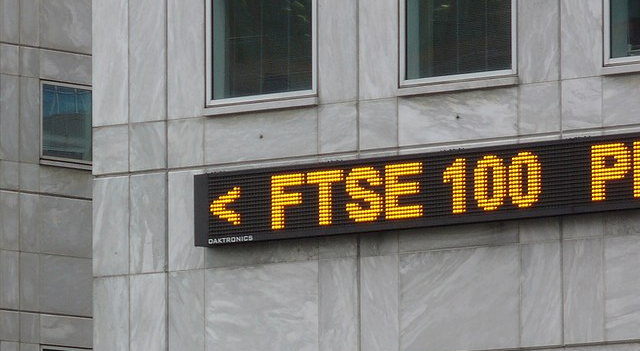
    As of 08:21 GMT, the Stoxx Europe 600 edged up 0.2%, Germany’s Dax gained 0.3%, and France’s CAC 40 fell 0.4%. The FTSE 100 in London remained largely flat.

    Market fluctuations this week have been driven by a global sell-off in long-dated government debt, amid concerns over debt-fueled fiscal pressures in several countries. Bond markets, however, saw some relief following remarks from Federal Reserve officials, including Governor Christopher Waller, which reinforced expectations that the U.S. central bank may resume rate cuts at its upcoming September meeting.

    In Japan, a long-term government debt auction drew only moderate demand, but it was sufficient to avoid further disruption in bond markets. The 30-year Japanese government bond yield had earlier surged to an all-time high, reflecting the inverse relationship between yields and prices. Additional debt sales are scheduled later in the day in France and the U.K., two nations that have been focal points of European bond market volatility.

    Investors are also looking ahead to Friday’s U.S. nonfarm payrolls report, which could offer fresh insight into labor market conditions and influence expectations for future Fed rate adjustments.

    Sector Moves and Company Highlights

    Travel and leisure stocks were among the weakest performers, pressured by Jet2 (LSE:JET2). The U.K. budget airline now anticipates its full-year operating profit to land near the lower end of guidance, sending its shares down more than 13%.

    Porsche (BIT:1PORS) was also dropped from the domestic mid-cap index, reflecting challenges from sluggish demand in China and the looming possibility of U.S. import tariffs. Its shares fell 0.8% in mid-morning trading.

    Gold Retreats from Record Levels

    Gold prices pulled back in European trade as investors took profits after the metal hit record highs. The dollar stabilized ahead of U.S. labor data and potential Fed rate cuts.

    This week, gold reached a series of all-time highs, driven by expectations that the Federal Reserve will reduce rates at its September 16–17 meeting and supported by safe-haven demand amid high government debt in developed economies.

    Spot gold dropped 0.5% to $3,541.78 per ounce, while December futures fell 1.0% to $3,600.10 per ounce by 04:39 ET.

    This content is for informational purposes only and does not constitute financial, investment, or other professional advice. It should not be considered a recommendation to buy or sell any securities or financial instruments. All investments involve risk, including the potential loss of principal. Past performance is not indicative of future results. You should conduct your own research and consult with a qualified financial advisor before making any investment decisions.

  • Dow Jones, S&P, Nasdaq, Wall Street Futures inch higher as Trump escalates tariff battle to Supreme Court

    Dow Jones, S&P, Nasdaq, Wall Street Futures inch higher as Trump escalates tariff battle to Supreme Court

    U.S. stock futures showed modest gains on Thursday as investors monitored stabilizing bond markets and prepared for key economic data due later in the week. Meanwhile, the Trump administration has filed an appeal with the Supreme Court to defend emergency powers that allow the president to impose a wide range of import tariffs. Elsewhere, the Federal Reserve’s latest report indicates minimal change in economic activity in recent weeks, though businesses remain concerned about persistent inflation. Tech newcomer Figma also released its first quarterly earnings report since its high-profile IPO earlier this year.

    Futures see slight uptick

    By 03:55 ET, S&P 500 futures added 8 points, or 0.1%, Nasdaq 100 futures gained 36 points, or 0.2%, and Dow futures remained largely flat. Global bond markets had stabilized after a week of heavy selling, aided by remarks from Fed officials, including Governor Christopher Waller, which reinforced expectations of potential rate cuts at the Fed’s upcoming September meeting.

    An auction of long-term Japanese government bonds drew lukewarm demand but was sufficient to prevent further stress, despite the 30-year yield recently hitting record levels. Bond prices move inversely to yields.

    On Wednesday, the S&P 500 and Nasdaq Composite ended higher, lifted by Alphabet shares after a court ruling allowed Google to retain control of its Chrome browser and Android OS, while barring some exclusive contracts. The decision also preserved a lucrative Google-Apple payments deal, sending Apple shares higher.

    Trump appeals tariff ruling

    The Trump administration has asked the Supreme Court to hear its case to preserve presidential trade tariffs, hoping to overturn a lower court ruling that deemed most levies illegal.

    Imposing higher duties on multiple nations has been a key part of President Donald Trump’s economic strategy since his return to office. He has argued the measures are legal under the 1977 International Emergency Economic Powers Act (IEEPA) and are intended to bring manufacturing jobs back to the U.S. and correct perceived trade imbalances.

    However, a federal appeals court ruled last month that Trump exceeded his authority under IEEPA. Solicitor General D. John Sauer wrote that the “stakes in this case could not be higher” and urged the Supreme Court to hear the case by September 10 and hold arguments in November. The court’s new term begins in October.

    Trump expressed confidence the Supreme Court would side with his administration, warning that a contrary decision could make the U.S. economy “suffer so greatly.” He added that recent trade agreements might have to be unwound if the case is lost.

    Fed’s Beige Book shows little change

    The Federal Reserve’s Beige Book, released Wednesday, indicated the economy was largely steady over recent weeks, although businesses remain cautious about inflation pressures.

    “Most of the twelve Federal Reserve Districts reported little or no change in economic activity since the prior Beige Book period,” the report noted, based on anecdotal data collected through August 25.

    Many districts observed consumers becoming more cautious, as “for many households, wages were failing to keep up with rising prices,” highlighting “economic uncertainty and tariffs as negative factors.”

    On employment, eleven districts reported little net change, though some signs suggested softer job growth, with employers hesitant to hire.

    “The Beige Book […] described an economy facing ongoing stagflationary forces, with cooling growth and softening labor momentum alongside continued inflation pressure,” analysts at Vital Knowledge wrote.

    Figma shares fall after earnings

    Figma (NYSE:FIG) shares dropped over 15% in extended trading after its first quarterly earnings report since its IPO disappointed some tech and AI investors.

    Following its July 31 IPO, Figma’s stock surged to a roughly $50 billion valuation, potentially paving the way for other high-profile tech listings. Shares have since pulled back, partly due to several Wall Street analysts issuing “neutral” ratings in August, citing concerns over valuation and competition.

    Figma provides collaborative design software to clients such as Airbnb (NASDAQ:ABNB) and Netflix (NASDAQ:NFLX), enabling enterprises to build websites, apps, and digital products.

    Second-quarter revenue rose 41% to $249.6 million, versus $248.8 million estimates, with adjusted EPS of $0.09 beating the forecast of $0.08. Full-year revenue is projected between $1.02 billion and $1.03 billion, slightly above analysts’ $1.01 billion estimate.

    Despite the slight beat, analysts noted that Figma’s high valuation could still disappoint some investors.

    Gold eases from record levels

    Gold fell, as some investors took profits after the metal reached record highs, while the dollar steadied ahead of key labor and interest rate indicators.

    Spot gold declined 0.5% to $3,540.12/oz, and December gold futures fell 1.0% to $3,598.20/oz by 03:49 ET, following a week of record peaks driven by expectations that the Fed would cut rates at its Sept. 16-17 meeting. Safe-haven demand was also supported by concerns over high government debt levels in major economies.

    This content is for informational purposes only and does not constitute financial, investment, or other professional advice. It should not be considered a recommendation to buy or sell any securities or financial instruments. All investments involve risk, including the potential loss of principal. Past performance is not indicative of future results. You should conduct your own research and consult with a qualified financial advisor before making any investment decisions.

  • Gold Retreats from Record Levels as Rate Cuts and Payroll Data Grab Attention

    Gold Retreats from Record Levels as Rate Cuts and Payroll Data Grab Attention

    Gold prices eased in Asian trading on Thursday, retreating from record highs as investors took profits and the U.S. dollar stabilized ahead of key labor and interest rate indicators.

    Earlier this week, the yellow metal soared past $3,500 an ounce, driven by expectations that the Federal Reserve could reduce interest rates later this month. Concerns over elevated government debt in developed economies also supported safe-haven demand for gold.

    Spot gold declined 0.8% to $3,531.69 per ounce, while December gold futures dropped 1.3% to $3,589.92 per ounce by 01:14 ET (05:14 GMT).

    Profit-Taking Follows Record Gains

    Gold hit an all-time high of $3,578.80 per ounce earlier in the week, spurred by multiple factors driving safe-haven buying. However, easing worries about the Fed’s independence prompted some profit-taking.

    U.S. trade uncertainty also bolstered gold, after an appeals court deemed most of former President Donald Trump’s tariffs illegal. Trump indicated he plans to appeal to the Supreme Court, warning that rulings against his levies could undermine his administration’s recent trade deals.

    Questions over Fed independence lingered amid legal challenges surrounding Trump’s attempt to remove Fed Governor Lisa Cook. Markets were reassured, however, when Stephen Miran, Trump’s nominee for the Fed, committed to maintaining the central bank’s autonomy.

    A softer dollar earlier this week had lifted gold and other precious metals, though a modest recovery in the greenback prompted a broad pullback from recent peaks. Spot platinum fell 0.9% to $1,411.09 per ounce, and spot silver slipped nearly 1% to $40.83 per ounce.

    Industrial Metals Pull Back

    Benchmark copper on the London Metal Exchange dropped 0.8% to $9,909.50 a ton, while COMEX copper futures fell 1.1% to $4.5685 per pound, retreating from near six-month highs. Copper had risen earlier this week on speculation that China, the world’s largest importer, may release additional stimulus measures to boost domestic growth and metal demand.

    Fed Rate Cuts and U.S. Jobs in Focus

    Expectations that the Fed will lower rates in September have supported metals markets. CME FedWatch data show a nearly 97% probability that the central bank will cut rates by 25 basis points at its September 16-17 meeting.

    Investors are also awaiting Friday’s U.S. nonfarm payroll report for insights into the labor market. Several Fed officials have indicated that a cooling labor market could encourage rate cuts, echoing comments from Chair Jerome Powell in August. July’s JOLTS job openings came in weaker than anticipated, reinforcing signs of a cooling labor market, while August PMI data pointed to ongoing contraction in U.S. manufacturing.

    Lower interest rates tend to benefit non-yielding assets such as gold, as reduced rates diminish the opportunity cost of holding the metal.

    This content is for informational purposes only and does not constitute financial, investment, or other professional advice. It should not be considered a recommendation to buy or sell any securities or financial instruments. All investments involve risk, including the potential loss of principal. Past performance is not indicative of future results. You should conduct your own research and consult with a qualified financial advisor before making any investment decisions.

  • Oil Prices Slip on OPEC+ Output Speculation and Rising U.S. Inventories

    Oil Prices Slip on OPEC+ Output Speculation and Rising U.S. Inventories

    Oil prices declined in early Asian trading on Thursday, extending losses from the previous session as reports suggested OPEC+ may consider another output increase at its upcoming meeting.

    Markets were also weighed down by industry data indicating a weekly rise in U.S. oil inventories, raising concerns about a post-summer slowdown in American fuel demand. Brent crude for November delivery fell 0.4% to $67.35 a barrel, while West Texas Intermediate crude dropped 0.4% to $63.30 a barrel by 20:35 ET (00:35 GMT).

    OPEC+ Production Hike Speculation

    Reuters reported Wednesday that the Organization of Petroleum Exporting Countries and its allies, known as OPEC+, will consider further raising oil output when it meets on Sunday. This news offset earlier expectations that the group would maintain current production levels after increasing output by more than 2.2 million barrels per day so far this year.

    This year’s production boosts partially reversed deep cuts implemented over the past two years to support prices. Additional increases would further unwind previous reductions, reflecting OPEC+ efforts to reclaim market share and offset continued weakness in oil prices. However, actual output from some members has lagged behind pledged levels due to internal dissent, leaving markets well-supplied and potentially weighing on prices in the months ahead.

    U.S. Inventory Data Signals Oversupply

    Industry data from the American Petroleum Institute (API) showed U.S. crude inventories rose by 0.6 million barrels in the week ending August 29, compared with expectations for a 3.4 million-barrel draw. The API figures typically precede official readings from the Energy Information Administration, scheduled for release later Thursday.

    Beyond inventory data, market attention this week focuses on U.S. nonfarm payrolls due Friday, which may offer clues on economic growth and interest rate trends. Soft economic indicators usually weigh on oil prices by dampening demand expectations. Earlier this week, purchasing managers’ index data showed U.S. manufacturing activity contracted for a sixth consecutive month.

    This content is for informational purposes only and does not constitute financial, investment, or other professional advice. It should not be considered a recommendation to buy or sell any securities or financial instruments. All investments involve risk, including the potential loss of principal. Past performance is not indicative of future results. You should conduct your own research and consult with a qualified financial advisor before making any investment decisions.

  • Grafton Shares Rise as FY25 Outlook Reaffirmed on Trading Recovery and Buyback

    Grafton Shares Rise as FY25 Outlook Reaffirmed on Trading Recovery and Buyback

    Shares of Grafton Group (LSE:GFTU) climbed on Thursday after the building materials distributor confirmed its full-year 2025 guidance, supported by a rebound in recent trading.

    The company posted first-half revenue of £1.25 billion, a 10.1% increase from the prior year, with like-for-like sales up 2.4%. Adjusted EBIT rose 9.5% to £91 million, slightly above expectations, representing 49% of consensus forecasts for the full year. Adjusted EPS reached 35.5 pence, a 6.5% increase, while free cash flow totaled £69 million, or 52% of the annual forecast. Net debt stood at £147 million, higher than RBC’s estimate of £103 million.

    RBC analysts commented: “Despite unhelpful macro conditions, Grafton continues to operate well given the circumstances.” Trading momentum strengthened in July and August, with like-for-like sales up 2.3% year-on-year, matching the first-half pace after a slowdown in May and June. RBC noted that “Ireland and the Netherlands performed better against challenging conditions in the U.K. and Finland, in particular.”

    The company declared a dividend of 10.75 pence per share, slightly below RBC’s forecast of 10.8 pence, and extended its share buyback program by £25 million. Consensus forecasts for FY25 point to total sales of £2.51 billion, up 10% from last year, with like-for-like growth of 2.2% and adjusted EBIT expected at £185.7 million. For 2026, consensus projects 4% sales growth and adjusted EBIT of £205 million.

    RBC emphasized: “Despite a normalisation in trading, there is still a high level of caution heading into autumn trading and FY26.” They also highlighted Grafton’s financial strength: “Balance sheet firepower and earnings recovery potential remain core to our investment case, with an expanding pipeline of M&A opportunities.”

    Regional performance varied, with Ireland seeing like-for-like sales rise 3.7% in H1 and accelerate to 5.3% in July and August. The Netherlands showed steady improvement, with summer sales up 2.8%. By contrast, the U.K. market remained subdued, with like-for-like sales of 0.2% in H1 and 0.5% in the summer, while Finland struggled, down 4.2% in H1 and 9% in July and August.

    “Cash generation and net debt continue to be solid,” the analysts said, noting that these factors support Grafton’s stability despite pressure in some markets.

    This content is for informational purposes only and does not constitute financial, investment, or other professional advice. It should not be considered a recommendation to buy or sell any securities or financial instruments. All investments involve risk, including the potential loss of principal. Past performance is not indicative of future results. You should conduct your own research and consult with a qualified financial advisor before making any investment decisions.

  • Jet2 Shares Drop 13% as Later Bookings and Flight Weakness Hit Earnings Forecasts

    Jet2 Shares Drop 13% as Later Bookings and Flight Weakness Hit Earnings Forecasts

    Jet2 (LSE:JET2) shares fell more than 13% on Thursday after the airline and tour operator reported a shift toward later summer bookings and weaker flight-only pricing in its annual general meeting trading update, prompting analysts to lower earnings forecasts.

    The company noted that summer 2025 demand has moved later in the season, with late bookings becoming more common since July. While package holidays remain resilient with modest price increases, flight-only tickets are being positioned as “increasingly attractive.” Summer seat capacity is unchanged at 18.5 million, up 8% from last year.

    Jefferies analysts cut fiscal 2026 and 2027 EBIT estimates by 6% and 8%, reflecting softer capacity, mix, and pricing. EBIT for 2026 is now projected at £462 million, down from £493 million, while the 2027 forecast was reduced to £498 million from £540 million. The company expects EBIT to be “towards the lower end” of the consensus range of £449 million to £496 million.

    Revenue forecasts were revised to £7.58 billion for 2026 and £8.17 billion for 2027, reflecting cuts of 3% and 5%, and earnings per share estimates were lowered to 210p in 2026 from 217p and 214p in 2027 from 226p. For the upcoming winter season, Jet2 reduced capacity plans slightly to 5.6 million seats from 5.8 million, still representing a 9% year-on-year increase. The company said “much of winter seat capacity still to sell” and intends “to maintain attractive pricing.”

    Jefferies also lowered EBITDA forecasts to £772 million for 2026 from £803 million and £818 million for 2027 from £860 million, while reducing its Jet2 price target to £21 from £22, citing “greater UK uncertainty.”

    Jet2 reported £7.17 billion in revenue for fiscal 2025, with EBITDA of £739 million. Shares, which closed at 1,613p on Wednesday, fell to their lowest level in over four months following Thursday’s decline, with a pre-drop market capitalization of £3.5 billion. Jefferies noted that packages remain a “bright spot” for Jet2, with demand and pricing trends unchanged. The analysts highlighted that the company’s vertically integrated model continues to provide flexibility, though later bookings and flight pricing pressure are weighing on earnings.

    Despite these revisions, Jet2 shares trade at a 43% discount to pre-pandemic price-to-earnings multiples, and Jefferies maintained a “buy” rating on the stock.

    This content is for informational purposes only and does not constitute financial, investment, or other professional advice. It should not be considered a recommendation to buy or sell any securities or financial instruments. All investments involve risk, including the potential loss of principal. Past performance is not indicative of future results. You should conduct your own research and consult with a qualified financial advisor before making any investment decisions.

  • Eurowag Maintains Full-Year Outlook After Strong H1 Results, Shares Dip

    Eurowag Maintains Full-Year Outlook After Strong H1 Results, Shares Dip

    WAG Payment Solutions PLC (LSE:WPS), also known as Eurowag, confirmed its full-year guidance following first-half (H1) revenue that exceeded expectations.

    The company reported a 15% year-on-year rise in H1 net revenue to €162 million, 4% above consensus estimates. Payment Solutions revenue climbed 23% to €98 million, while Mobility Solutions increased 4.9% to €64.3 million, or 8% when excluding non-truck revenue from fleet management services. Eurowag shares fell 2% in early London trading.

    Adjusted EBITDA grew 7.7% to €63.9 million, or 11.7% excluding a prior-year commercial settlement. Adjusted cash EBITDA rose 14.1% to €49.2 million, delivering a margin of 30.4%, ahead of consensus of €46 million and 30%. Adjusted profit before tax increased to €27.8 million from €21.6 million, driving a 16.3% rise in adjusted EPS to 2.92 cents per share.

    The company reaffirmed its 2025 guidance, anticipating net revenue growth of 10–13% to €322–331 million, in line with consensus of €323 million. Jefferies analysts note this implies second-half revenue growth of around 8%. Adjusted cash EBITDA is projected between €90–100 million, with margins expected to remain flat year-on-year and R&D costs staying below the €50 million cap.

    “Despite strong results, guidance was only confirmed as visibility remains low, but with toll possibly continuing its run, we could see the high-end as achievable,” Jefferies analysts commented, adding that they expected the stock to rise on the results.

    “Eurowag has delivered an impressive performance for the first half with double-digit net revenue growth and strong cash generation, despite the sustained macroeconomic challenges,” said Founder and Chief Executive Martin Vohánka. He added that the phased rollout of Eurowag Office is progressing as the company transforms into a “data-centric and AI driven company,” while noting that macroeconomic headwinds are expected to continue in the second half.

    This content is for informational purposes only and does not constitute financial, investment, or other professional advice. It should not be considered a recommendation to buy or sell any securities or financial instruments. All investments involve risk, including the potential loss of principal. Past performance is not indicative of future results. You should conduct your own research and consult with a qualified financial advisor before making any investment decisions.