Author: Fiona Craig

  • Poolbeg Pharma Reaches Key Clinical Milestone as POLB 001 Trial Begins Patient Recruitment

    Poolbeg Pharma Reaches Key Clinical Milestone as POLB 001 Trial Begins Patient Recruitment

    Poolbeg Pharma (LSE:POLB) has activated the first clinical trial site and started recruiting patients for its first-in-patient POLB 001 TOPICAL study. The single-arm, open-label trial will enrol approximately 30 patients with relapsed or refractory multiple myeloma who are being treated with the bispecific antibody teclistamab. The study is being conducted by specialist blood cancer research organisation Accelerating Clinical Trials Ltd and will assess POLB 001 as a potential preventative treatment for Cytokine Release Syndrome (CRS).

    The company said the initiation of patient recruitment marks a significant operational milestone for its lead development programme. Due to the acute nature of Cytokine Release Syndrome, management expects a relatively rapid data readout from the study. Interest from investigators has been strong, reflecting the ongoing need for improved management of cancer immunotherapy-related CRS and the potential clinical value of a preventative treatment approach.

    Should interim results prove positive, Poolbeg believes POLB 001 could strengthen its position within the cancer immunotherapy safety market, support future partnering opportunities and potentially expand access to advanced immunotherapies. By improving treatment tolerability, the therapy could help increase the number of patients eligible for these treatments and support wider adoption beyond specialist healthcare centres.

    The company’s outlook continues to be influenced by weak financial fundamentals, including its pre-revenue status, ongoing losses, cash burn and shareholder equity erosion. However, progress towards clinical and regulatory execution, together with the prospect of interim data catalysts, provides a positive counterbalance. Technical indicators remain favourable, reflecting a strong upward trend in the shares, although overbought conditions may increase the risk of near-term volatility. Valuation metrics remain constrained by the absence of profitability and dividend payments.

    More about Poolbeg Pharma Ltd.

    Poolbeg Pharma plc is a clinical-stage biotechnology company focused on improving the safety and accessibility of cancer immunotherapies. Its lead candidate, POLB 001, is being developed to prevent Cytokine Release Syndrome, a potentially life-threatening side effect associated with certain cancer treatments. The company is also advancing an oral GLP-1 obesity therapy programme aimed at addressing a significant and rapidly expanding global market.
  • Wishbone Gold Progresses 9,000-Metre Drilling Programme at Red Setter Project

    Wishbone Gold Progresses 9,000-Metre Drilling Programme at Red Setter Project

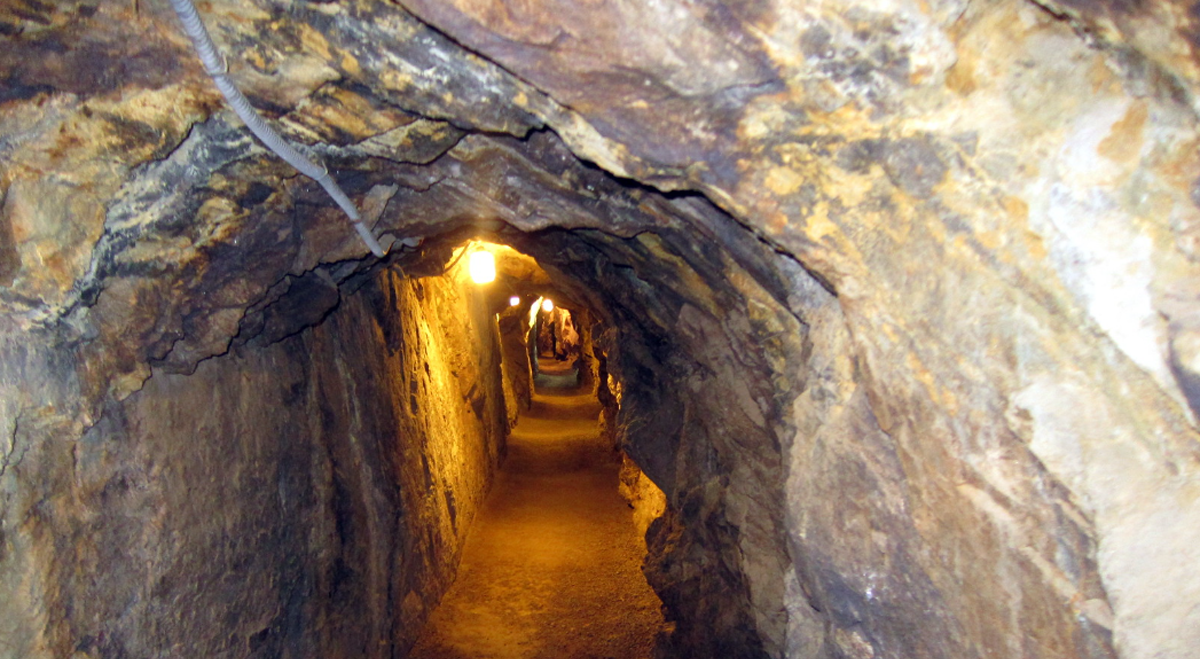
    Wishbone Gold (LSE:WSBN) has launched the first stage of its 2026 drilling campaign at the Red Setter gold-copper project in Western Australia, completing 14 reverse circulation drill holes for a total of 2,182 metres and two diamond drill holes totalling 687 metres. The work forms part of a wider 9,000-metre exploration programme designed to expand understanding of the project’s mineral potential.

    The current campaign is focused on testing extensions to known mineralised zones, assessing continuity along a four-kilometre diorite trend and improving the company’s understanding of the area’s geological structures. In addition, a heritage survey has now been completed, which is expected to facilitate the construction of a new access road and the relocation of the exploration camp. These developments could improve site logistics and support further drilling and exploration activities later in 2026.

    Wishbone Gold’s investment outlook continues to be constrained by weak financial fundamentals, including its pre-revenue status, ongoing losses and negative free cash flow, despite signs of operational improvement. Technical indicators remain mixed, with momentum broadly neutral and no clear directional trend emerging in the shares. Valuation metrics are also limited by the company’s loss-making position and the absence of dividend income.

    More about Wishbone Gold

    Wishbone Gold is an exploration company listed on both AIM and Aquis, with a focus on gold and copper assets in Western Australia. Its flagship Red Setter project is situated within the highly prospective Paterson Province, close to Greatland Gold’s Telfer gold mine and Cyprium Metals’ Nifty copper mine, placing the company in one of Australia’s most active and prospective mining regions.

  • Aeorema Secures Three-Year Climate Week NYC Deal to Strengthen Revenue Visibility

    Aeorema Secures Three-Year Climate Week NYC Deal to Strengthen Revenue Visibility

    Aeorema Communications’ (LSE:AEO) brand experience agency, Cheerful Twentyfirst, has been awarded a significant three-year contract to deliver Climate Week NYC across 2026, 2027 and 2028. The agreement further enhances the agency’s reputation for managing large-scale international events and provides greater visibility over future revenues.

    The contract also expands Aeorema’s long-standing relationship with Climate Group. Over the duration of the agreement, the company plans to focus on innovation, improving global accessibility and enhancing the creative reach of one of the world’s most prominent climate-focused conferences. Management believes the appointment reinforces the group’s position as a trusted partner for major global events while supporting growth opportunities in the years ahead.

    Aeorema’s investment outlook remains mixed. While profitability has been relatively stable, the company continues to face challenges in delivering stronger revenue and cash flow growth. Positive corporate developments and a moderate valuation offer some support, while technical indicators point to cautious optimism. The lack of earnings call data, however, limits visibility into management’s longer-term guidance.

    More about Aeorema Communications

    Aeorema Communications plc is a London-based strategic communications group focused on corporate events, brand experiences and film production for clients around the world. Through its Cheerful Twentyfirst and Eventful Limited agencies, and with offices in New York and Amsterdam, the company delivers live, virtual and hybrid events for a wide range of global brands and organisations.

  • EnSilica Celebrates 25 Years as Strategic Transformation Fuels Long-Term Semiconductor Growth

    EnSilica Celebrates 25 Years as Strategic Transformation Fuels Long-Term Semiconductor Growth

    EnSilica (LSE:ENSI), which was established in 2001 as an ASIC design consultancy and has since developed into an international semiconductor business, is celebrating its 25th anniversary as it completes its transition towards proprietary products and long-term chip supply agreements. The strategic shift has improved revenue visibility through recurring semiconductor supply contracts, particularly across the automotive and industrial sectors, while supporting the company’s goal of becoming Europe’s leading application-specific chipmaker.

    The company pointed to several notable customer projects, including a custom ASIC for AST SpaceMobile’s planned direct-to-smartphone satellite broadband network and a photonics controller ASIC for Oriole Networks’ large-scale optical AI data-centre infrastructure. Together with a recently secured $75 million multi-year automotive chip agreement and ongoing programmes with major original equipment manufacturers, these contracts provide exposure to rapidly expanding markets including satellite communications, photonics, AI infrastructure, automotive technology and industrial applications. Management believes these opportunities will contribute to a growing order book and support long-term revenue growth.

    Despite the strength of its commercial pipeline, EnSilica’s investment outlook continues to be weighed down by weak financial performance, including lower revenue, continuing losses and worsening free cash flow. While the shares have benefited from strong recent technical momentum, overbought indicators suggest the potential for a near-term pullback. Valuation metrics also remain under pressure as the company is loss-making and does not currently offer dividend yield support.

    More about EnSilica PLC

    EnSilica is a UK-based fabless semiconductor company focused on the design and development of application-specific integrated circuits. The business specialises in RF, mmWave, mixed-signal and complex digital integrated circuit design, serving customers across the space and communications, industrial, automotive and healthcare sectors. Through its reusable intellectual property portfolio and silicon platforms, EnSilica delivers production-proven semiconductor solutions that generate long-term supply revenues from design centres located across Europe, India and Brazil.

  • Jangada Mines Highlights Expansion Potential at Brazil Gold Project Following Drilling Success

    Jangada Mines Highlights Expansion Potential at Brazil Gold Project Following Drilling Success

    Jangada Mines (LSE:JAN) said recent drilling at its Paranaíta Gold Project in Brazil has confirmed the presence of a large-scale hydrothermal gold system featuring both high-grade vein-hosted mineralisation and broader disseminated gold zones, strengthening the project’s exploration potential. The company believes the TP2 target could contribute more than 50,000 ounces of additional inferred resources to the current 210,000-ounce resource base, following the identification of a 1.2-kilometre mineralised corridor and strong correlation between drilling results, geological mapping, geophysical data and extensive artisanal mining activity.

    The group intends to undertake additional airborne and ground-based geophysical work, including drone surveys and induced polarisation (IP) studies, before launching an expanded drilling programme. The campaign will focus on growing and upgrading resources at TP2 while increasing geological confidence across the TP1 and TP3 targets. Jangada noted that more than 20 largely unexplored artisanal pits and several northeast-trending mineralised structures remain open along strike, reinforcing the view that Paranaíta represents a significant and developing gold system. The company added that both the Paranaíta project and its 130,000-ounce Molly Gold Project are fully funded for the next stages of exploration through existing cash resources.

    Despite the encouraging exploration results, Jangada’s investment profile continues to be affected by weak financial metrics, including its pre-revenue status, recurring losses and ongoing cash consumption, although the company remains debt-free. From a market perspective, technical indicators appear more constructive, with the share price trading above key moving averages and showing moderately positive momentum. However, valuation measures remain limited by the absence of earnings and dividend payments.

    More about Jangada Mines PLC

    Jangada Mines plc is an AIM-listed natural resources company focused on the exploration and development of mineral assets in Brazil. The company’s portfolio includes the Paranaíta and Molly gold projects, where it is pursuing the development of a multi-asset, high-grade, low-capex open-pit gold production platform within the Alta Floresta-Juruena Gold Province and other prospective mining regions across Brazil.

  • Rockfire Advances Molaoi Resource Upgrade as Drilling Delivers Strong Zinc and Silver Results (ROCK)

    Rockfire Advances Molaoi Resource Upgrade as Drilling Delivers Strong Zinc and Silver Results (ROCK)

    Rockfire Resources (LSE:ROCK) has provided an update on drilling activities at its wholly owned Molaoi zinc deposit in Greece, where an ongoing diamond drilling programme is focused on upgrading the project’s existing JORC Inferred Resource to the higher-confidence Indicated category. Drilling is continuing with hole HMO-019 currently in progress, while recent analytical results from hole HMO-016 have returned strong grades of zinc, silver, lead and germanium.

    The company also reported encouraging portable XRF readings from hole HMO-018, which indicated very high zinc concentrations together with notable lead, silver and copper values. Laboratory assay results for both HMO-017 and HMO-018 remain outstanding. To improve resource confidence and geological understanding, Rockfire is employing a strategy of drilling multiple holes from individual drill pads at different angles, enabling infill testing of the deposit both laterally and vertically.

    Alongside the drilling campaign, SLR Consulting is continuously refining the project’s three-dimensional geological, lithofacies and oxidation models. The updated interpretation has confirmed the quality of the existing dataset while also suggesting that mineralised lodes may extend deeper and be narrower than previously understood. These developments are expected to support the planned resource upgrade and could improve the overall economic definition of the deposit. However, the full impact of the programme will depend on the outcome of pending assay results and the next resource estimate.

    The company’s outlook remains constrained by weak financial fundamentals, including a lack of revenue generation, ongoing losses and negative free cash flow. These challenges are partly offset by a debt-free balance sheet. Technical indicators have shown some short-term improvement, although longer-term momentum remains relatively weak. Valuation metrics also remain under pressure due to negative earnings and the absence of a dividend.

    More about Rockfire Resources PLC

    Rockfire Resources PLC is a London-listed exploration and development company focused on base metals, critical minerals and precious metals. Its principal asset is the high-grade Molaoi deposit in Greece, which contains zinc, lead, silver and germanium and represents the company’s most advanced project.

    The Molaoi project currently hosts a JORC Inferred Mineral Resource of 15 million tonnes grading 7.26% zinc, 1.75% lead and 39.5 grams per tonne silver. In addition to its Greek operations, Rockfire maintains a portfolio of exploration projects in Queensland, Australia, including gold, copper and silver assets that are being advanced through farm-in agreements with ASX-listed partners. The company’s strategy is centred on expanding and upgrading resources while increasing exposure to metals that are critical to industrial and technological applications.

  • U.S. Futures Slip as Fresh Middle East Escalation Clouds Market Outlook: Dow Jones, S&P, Nasdaq, Wall Street

    U.S. Futures Slip as Fresh Middle East Escalation Clouds Market Outlook: Dow Jones, S&P, Nasdaq, Wall Street

    Investors Brace for a Weaker Start

    Wall Street appeared set for a softer open on Wednesday, with index futures trading lower following another turbulent session that ended with mixed performances across the major benchmarks.

    Renewed military tensions between the United States and Iran have revived concerns about geopolitical risks and prompted a cautious tone among investors.

    Washington and Tehran Exchange New Military Actions

    U.S. Central Command confirmed that American forces carried out what it called “self-defense strikes” against Iranian targets on Tuesday after a U.S. helicopter was brought down.

    According to CENTCOM, the strikes targeted Iranian surveillance radar installations, air-defense systems and ground-control facilities near the Strait of Hormuz using precision-guided weapons launched from Air Force and Navy fighter jets.

    Iran responded by launching attacks against U.S. military sites in Bahrain, Kuwait and Jordan, while reiterating that it would leave no attack or threat unanswered.

    President Donald Trump later posted on Truth Social that Iran had “taken too long to negotiate a deal” and would now have to “pay the price!”

    Inflation Report Helps Stabilize Sentiment

    Futures pared some of their earlier losses after inflation data released by the Labor Department showed consumer prices rose broadly in line with market expectations during May.

    While the figures eased some immediate inflation concerns, geopolitical developments remained the dominant market driver.

    Tuesday Trading Marked by Sharp Swings

    Stocks experienced another volatile session on Tuesday as investors navigated conflicting signals from economic data and international events.

    Major indices opened higher before falling sharply and then recovering part of those losses later in the day.

    The Nasdaq finished down 250.84 points, or 1%, at 25,678.82. The S&P 500 declined 19.08 points, or 0.3%, to 7,386.65, while the Dow Jones Industrial Average gained 86.10 points, or 0.2%, to close at 50,872.11.

    Technology Sector Comes Under Pressure Again

    Technology stocks were once again among the weakest areas of the market, weighing heavily on the Nasdaq.

    Semiconductor companies led the declines, with the Philadelphia Semiconductor Index falling 1.9% after posting a 5.6% gain in the prior session.

    Hardware manufacturers, networking firms and software companies also moved lower throughout the day.

    Energy Shares Retreat as Oil Prices Fall

    The energy sector faced selling pressure as crude oil prices dropped sharply.

    U.S. crude futures fell below the $90-per-barrel mark after Trump suggested that a peace agreement between the United States and Iran could be reached within “two or three days.”

    The president also stated that the Strait of Hormuz would reopen “immediately” following a deal, although previous predictions of an imminent agreement have yet to materialize.

    Airlines and Housing Stocks Outperform

    Airline stocks benefited from lower fuel costs, helping the NYSE Arca Airline Index rise 3.7%.

    Housing-related companies also advanced strongly, lifting the Philadelphia Housing Sector Index by 3.6%.

    The gains followed stronger-than-expected data from the National Association of Realtors, which reported that existing home sales climbed 3.2% in May to an annualized rate of 4.17 million units.

    The result exceeded economists’ expectations for a 1.5% increase to 4.08 million units and suggested continued resilience in the U.S. housing market.

  • European Markets Retreat as Rising US-Iran Tensions Weigh on Sentiment: DAX, CAC, FTSE100

    European Markets Retreat as Rising US-Iran Tensions Weigh on Sentiment: DAX, CAC, FTSE100

    Geopolitical Escalation Pressures European Equities

    European equity markets traded lower on Wednesday as investors reacted to a fresh escalation in tensions between the United States and Iran.

    The latest deterioration in relations followed Iranian strikes on U.S. military facilities in Jordan and Bahrain. The attacks came after Washington launched military operations against Iran in response to the downing of an American helicopter by Tehran.

    The renewed conflict has added to uncertainty across global markets, prompting investors to adopt a more cautious stance.

    ECB Meeting Looms Over Markets

    Attention is also turning to Thursday’s European Central Bank policy meeting.

    Economists widely expect the ECB to raise interest rates as policymakers grapple with the inflationary impact of sharply higher energy prices resulting from the Middle East conflict.

    Investors will be watching closely for any signals regarding the future path of monetary policy and the central bank’s assessment of economic risks.

    Major European Indices Move Lower

    The geopolitical backdrop weighed on major European benchmarks.

    Germany’s DAX Index declined 0.7%, while France’s CAC 40 Index fell 0.3%.

    In London, the FTSE 100 Index slipped 0.2% as investors balanced concerns over geopolitical developments and interest rate expectations.

    Systemair Surges After Strong Results

    Among individual stocks, Systemair (TG:52SA) was one of the standout performers.

    Shares in the Swedish ventilation specialist climbed sharply after the company reported fourth-quarter revenue and profit figures that exceeded market forecasts.

    The results boosted investor confidence in the company’s operational performance and growth outlook.

    WHSmith Slides Following Profit Warning

    At the other end of the market, WHSmith (LSE:SMWH) came under significant pressure.

    The British travel retailer saw its shares tumble after lowering its annual profit forecast for the second time this year, raising concerns about trading conditions and earnings momentum.

    The latest downgrade added to investor worries surrounding the company’s near-term outlook.

    More about European Markets

    European equities continue to be heavily influenced by geopolitical developments, central bank policy decisions and energy market volatility. With the ECB meeting approaching and Middle East tensions intensifying, investors remain focused on inflation risks, interest rates and the potential impact on economic growth across the region.

  • Gold Extends Decline to Six-Month Low as Inflation Fears and Geopolitical Risks Weigh on Sentiment

    Gold Extends Decline to Six-Month Low as Inflation Fears and Geopolitical Risks Weigh on Sentiment

    Gold prices remained under pressure on Wednesday, falling to their lowest level in six months as investors focused on the inflationary impact of renewed Middle East tensions and the possibility of tighter U.S. monetary policy.

    Spot gold dropped 2% to $4,168 per ounce during morning trading, marking its weakest level since November 2025. The move followed a 1.6% decline in the previous session. August gold futures also moved lower, trading at $4,188 per ounce.

    Renewed Conflict Clouds Peace Prospects

    The latest military exchanges between the United States and Iran have complicated efforts to secure a lasting ceasefire in the region.

    Tensions escalated after U.S. strikes targeting Iranian-linked assets, prompting a warning from Iranian Foreign Minister Abbas Araghchi, who stated that the country “will not leave any attack or threat unanswered.”

    According to Iranian state media, Tehran subsequently launched a drone attack targeting the U.S. Fifth Fleet in Bahrain.

    The renewed instability threatens to prolong disruptions around the Strait of Hormuz, a strategic route that plays a crucial role in global energy transportation.

    Higher Energy Prices Raise Inflation Concerns

    Oil prices initially climbed following the latest developments, reinforcing worries that elevated energy costs could feed into consumer inflation.

    Brent crude briefly rose above $93 per barrel before easing back toward $91.50 after Washington indicated that its retaliatory military action had concluded.

    The prospect of stronger inflation has increased expectations that the Federal Reserve could maintain a restrictive stance or potentially raise interest rates further.

    Since gold offers no yield, higher interest rates tend to reduce its appeal relative to fixed-income investments.

    Markets Await U.S. Inflation Data

    Investors are closely watching the U.S. consumer price index report scheduled for release later today.

    Economists surveyed by Reuters expect annual inflation to reach 4.2%, which would represent the highest reading in three years.

    Core inflation, excluding food and energy, is expected to rise 0.3% on a monthly basis and 2.9% year over year.

    “The detail that matters, however, is not just the aggregate number,” according to Gabriel Debach, market analyst at eToro, but “the composition of the report will be crucial: a rise mainly driven by energy would be seen as temporary, while broader pressure on core services would have much more significant implications for monetary policy.”

    Technical Signals Point to Further Weakness

    Gold is now trading roughly 20% below the levels seen before the outbreak of the Iran conflict in late February.

    The recent fall below the 200-day moving average has attracted additional selling, as many institutional investors view this indicator as an important measure of long-term market direction.

    “We expect price action to become more vulnerable in the near term,” predicts Suki Cooper, global head of commodity research at Standard Chartered Plc.

    She added that if gold continues to weaken, “were to decline further, additional positions in gold-backed ETFs would become unprofitable, exposing the metal to further downside risk.”

    According to Cooper, the next major support zone is located near $4,100 per ounce.

    Although demand conditions in India have softened, China continues to provide support, with local premiums remaining below $10 per ounce.

  • Oil Trades Near Unchanged Levels as Markets Digest Iran Developments and Inventory Data

    Oil Trades Near Unchanged Levels as Markets Digest Iran Developments and Inventory Data

    Oil prices remained largely steady on Wednesday as investors assessed the latest exchange of military action between the United States and Iran, while stronger-than-expected declines in U.S. crude inventories offered support to the market.

    By 05:47 ET (09:47 GMT), Brent crude for August delivery was little changed at $91.40 a barrel, while U.S. West Texas Intermediate crude held near $88.19 a barrel. Both benchmarks had advanced earlier in Asian trading following renewed tensions across the Middle East.

    The muted performance followed a sharp decline of roughly 3% in the previous session, which pushed oil prices to their lowest levels in seven weeks.

    Traders Take a Measured View of Renewed Conflict

    Iran said it had launched strikes against U.S. military facilities in Jordan and several Gulf nations in retaliation for recent American military action.

    The U.S. strikes followed the destruction of an Apache helicopter, an incident Washington attributed to an Iranian drone attack. Tehran has denied responsibility for bringing down the aircraft.

    Meanwhile, Israeli forces continued operations in southern Lebanon against Hezbollah militants supported by Iran.

    The latest developments raised questions over the durability of recent diplomatic progress after Iran and Israel agreed earlier this week to suspend hostilities following calls from President Donald Trump.

    However, market participants appeared reluctant to price in a major escalation.

    “markets don’t consider the exchange of fire between Washington and Tehran over the last [roughly] 48 hours to be a significant event, as evidenced by the very muted reaction in oil,” analysts at Vital Knowledge said.

    They also pointed to comments from a White House official quoted by Politico, who characterized the latest developments as a “bump in the road toward peace.”

    Focus Remains on the Strait of Hormuz

    Investors continue to monitor negotiations that could eventually lead to a broader peace agreement between Washington and Tehran and result in the reopening of the Strait of Hormuz.

    The passage handles approximately 20% of global oil flows and has effectively remained closed to normal tanker traffic for several months.

    The disruption has kept oil prices elevated compared with levels seen before the conflict, raising concerns that higher energy costs could contribute to inflation and influence monetary policy decisions worldwide.

    The release of U.S. inflation figures later in the day is expected to provide additional insight into the economic impact of sustained energy price pressures.

    Large U.S. Inventory Draw Supports Prices

    Further support came from industry figures showing a significant reduction in U.S. crude inventories.

    The American Petroleum Institute reported that crude stockpiles declined by 9.12 million barrels during the previous week, substantially more than forecasts for a 3.4 million-barrel decrease.

    Gasoline inventories fell by 1.19 million barrels, while distillate supplies increased by 1.32 million barrels.

    Attention now turns to official inventory figures from the U.S. Energy Information Administration, which are scheduled for release later on Wednesday.

    More about the Oil Market

    Oil markets are currently being shaped by a combination of geopolitical developments, supply concerns and inflation expectations. Movements in crude prices remain closely tied to events in the Middle East, inventory trends and economic indicators that could influence future central bank decisions.