Author: Fiona Craig

  • The 2026 buildout that turns a resource into a platform

    The 2026 buildout that turns a resource into a platform

    Part 2 of a 3‑part investor series

    In Part 1 of this series introduced U.S. Energy Corp. (NASDAQ:USEG) as a company undergoing a strategic transformation, then Part 2 marks the point where that transformation becomes visible.

    2026 is a pivotal year—not just because of what U.S. Energy plans to build, but because of what that buildout enables: a fully integrated industrial gas and carbon management hub capable of delivering multi‑stream revenues for decades.

    This is the moment when the vision becomes infrastructure, and when Kevin Dome begins evolving from geological resource into economic engine.

    The processing facility: Where the platform comes to life

    At the centre of the 2026 plan is the company’s planned processing facility, a purpose‑built complex designed to handle roughly 8 million cubic feet per day of inlet capacity. While the number itself tells one part of the story, the real significance lies in what that capacity produces—and how it integrates with the rest of U.S. Energy’s assets.

    Inside this facility, raw gas drawn from the Kevin Dome will be separated into two commercially powerful outputs: high‑purity helium and refined CO, each with its own market, its own set of buyers, and its own strategic purpose within the company’s broader platform.

    To support continuous, industrial‑scale operations, the facility is expected to require approximately 2.5 megawatts of power, sourced primarily from the regional electrical grid. Backup power will come from U.S. Energy’s own natural gas infrastructure—a not‑so‑subtle reminder of why integrated ownership matters in real‑world operations. It’s not just about extracting gas; it’s about controlling the ecosystem that keeps the entire value chain running.

    Once operational, this facility becomes the beating heart of the entire platform.

    Building the arteries: The 2026 infrastructure program

    Spring 2026 will mark the start of a critical phase in Kevin Dome’s development: the installation of roughly 10 miles of in‑field gathering pipelines that will move produced gas from the company’s existing wells to the processing plant. The timing has been structured deliberately, with construction scheduled to finish in the third quarter of 2026—just ahead of anticipated commissioning and first operations.

    This is the kind of infrastructure that doesn’t make headlines, but it defines scalability. It transforms resource potential into operational reliability, and operational reliability into bankable value. By the end of 2026, U.S. Energy expects to have the core midstream backbone in place, enabling long‑term industrial gas production, CO₂ management, and enhanced oil recovery at commercial scale.

    Regulatory advantage: First in Montana, and among the largest in the nation

    While steel in the ground matters, regulatory positioning often determines which companies thrive and which fall behind. In this area, U.S. Energy has distinguished itself early.

    The company’s submission of two Monitoring, Reporting, and Verification (MRV) plans to the U.S. Environmental Protection Agency—covering its Class II injection wells—represents the first MRV submissions ever made in the State of Montana. Once approved, the Kevin Dome program would rank among the 20 largest CCUS projects in the United States.

    This gives U.S. Energy something far more valuable than a permit. It gives the company a defensive moat:

    • A regulatory footprint that establishes leadership
    • A head start in building one of the nation’s major CO₂ sequestration hubs
    • Competitive separation from late‑moving peers in industrial gas and carbon management

    In a sector where compliance and verification are often the biggest barriers to commercial operation, U.S. Energy is positioning itself ahead of the curve.

    A resource of rare scale—and a major asset in a tightening market

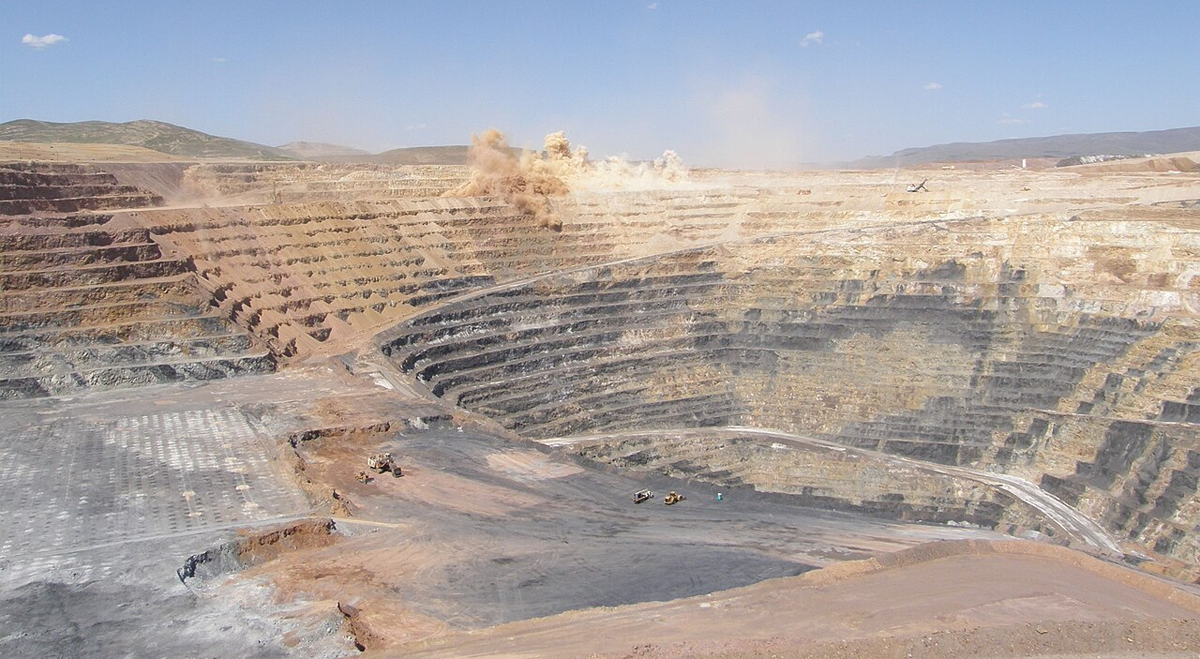
    Behind the 2026 buildout is the sheer magnitude of the Kevin Dome resource. After a multi‑year effort to aggregate land, U.S. Energy now controls nearly 80,000 net acres, a footprint large enough to support long‑duration development and multi‑phase expansion.

    Independent evaluation has confirmed the dome contains approximately 1.3 trillion cubic feet of naturally occurring CO and 2.3 billion cubic feet of helium. These numbers matter not only because of their size, but also because of what they represent: decades of feedstock for both industrial gas sales and carbon management services.

    In a time when helium shortages are disrupting global semiconductor and aerospace supply chains—and when companies across the U.S. are under increasing pressure to secure long‑term CO₂ sequestration—the value of owning such a resource outright cannot be overstated.

    The closed‑loop revenue model: Monetizing both sides of the molecule

    Perhaps the most compelling part of the 2026 plan is how these elements come together economically. U.S. Energy is not simply extracting gas and selling it. Instead, it is creating a closed‑loop revenue model that monetizes both helium and CO₂ through distinct, synergistic pathways.

    The high‑purity helium produced at the processing facility will be sold into premium markets—semiconductors, aerospace, medical technologies—buyers who depend on long‑term, reliable supply and pay accordingly.

    The CO₂, meanwhile, will follow a different path: it will flow into company‑owned oil fields for enhanced oil recovery, increasing output from assets U.S. Energy already controls 100 per cent. The same CO₂ then becomes eligible for permanent geological sequestration, supporting long‑duration carbon credits and providing optionality for additional revenue streams.

    In other words, the company produces two valuable gases—but keeps the CO₂ working internally to uplift another business line, all while strengthening its position in the emerging CCUS economy.

    Few emerging companies offer this level of integration, resource control, and multi‑vertical monetization.

    (Source: U.S. Energy Corp. investor presentation.)

    Why industrial gases are the gold of the digital age

    With the 2026 plan outlined, the next chapter in this series will step back and explore the broader landscape. Why do helium and CO₂ matter so much right now? Why are industrial gases becoming essential inputs to the digital economy? And why might companies like U.S. Energy Corp. hold the key to the next era of critical‑material security?

    Part 3 will examine why industrial gases are increasingly viewed as the “gold of the digital age”—and what that means for investors positioning ahead of long‑term demand.

  • Wall Street Set for Renewed Declines as Middle East Crisis Deepens: Dow Jones, S&P, Nasdaq, Futures

    Wall Street Set for Renewed Declines as Middle East Crisis Deepens: Dow Jones, S&P, Nasdaq, Futures

    U.S. stock futures are signaling a sharply weaker open on Tuesday, pointing to another bout of early selling after markets clawed back heavy initial losses to finish Monday on a mixed note.

    Investor caution is intensifying as the conflict in the Middle East shows signs of escalating further, particularly with oil prices continuing their upward surge. Brent crude has pushed above $80 per barrel, stoking fears that higher energy costs could feed into inflation and complicate the outlook for interest rates.

    The latest spike in crude follows reports that Iran has shut the Strait of Hormuz in retaliation for joint U.S. and Israeli strikes, while warning it would target any vessel attempting to transit the key shipping corridor.

    Steep losses across Asian and European markets are adding to the negative tone and may weigh on U.S. equities at the open. With little major U.S. economic data due, lighter trading volumes could amplify market swings and keep volatility elevated.

    “Investors across the Atlantic are also starting to become more alarmed about the situation in the Middle East,” said Dan Coatsworth, head of markets at AJ Bell. “The suspension of LNG production in Qatar is a particularly sensitive pressure point and has seen gas prices surge globally.”

    He added, “The longer oil and natural gas prices remain elevated, the greater the risk of a meaningful impact on inflation which could mean higher interest rates, an event that’s typically negative for equity markets.”

    On Monday, stocks initially tumbled in response to the unfolding geopolitical crisis but gradually recovered as buyers stepped in. The major indexes rebounded significantly from their intraday lows before ending the session narrowly mixed.

    The Nasdaq, which had dropped as much as 1.6% earlier in the day, closed up 80.65 points, or 0.4%, at 22,748.86. The S&P 500 edged up 2.74 points to 6,881.62, while the Dow Jones Industrial Average slipped 73.14 points, or 0.2%, to 48,904.78.

    The intraday turnaround reflected bargain hunting, with investors taking advantage of the sharp pullback. The Dow notably recovered after touching its lowest level in two months during the session.

    The initial sell-off had followed news that U.S. and Israeli forces carried out coordinated weekend strikes that killed Iranian Supreme Leader Ayatollah Ali Khamenei.

    Iran retaliated with waves of drone and missile strikes targeting several countries across the Middle East, including Kuwait, the United Arab Emirates, Bahrain, Saudi Arabia, Oman and Qatar.

    Hostilities intensified further after Israel conducted airstrikes on Hezbollah positions in Beirut and elsewhere in Lebanon following projectile launches into northern Israel.

    Addressing reporters at the White House, President Donald Trump said the confrontation with Iran could continue for four to five weeks but stressed that the United States has the “capability to go far longer than that.”

    The escalation sent crude prices sharply higher, heightening already persistent concerns about inflation.

    “Scenes in the Middle East have caused widespread nervousness across financial markets,” said Dan Coatsworth, head of markets at AJ Bell. “The U.S. attacks on Iran have caused oil prices to soar amid fears of disruptions to supplies, pushing up costs for businesses and consumers.”

    He added, “If the issues persist then the market will start to worry about new inflationary pressures and that could lower expectations for near-term interest rate cuts.”

    On the economic front, fresh data from the Institute for Supply Management showed U.S. manufacturing growth eased slightly in February. The ISM manufacturing PMI slipped to 52.4 from 52.6 in January, remaining in expansion territory. Economists had expected a reading of 51.8.

    Sector performance was uneven. Networking stocks rallied strongly, lifting the NYSE Arca Networking Index 3.7% to a record closing high.

    Energy producers also outperformed, with the NYSE Arca Oil Index climbing 3.4% as crude prices surged.

    Shares of natural gas companies, software firms and brokerage houses also gained ground. In contrast, airline stocks came under heavy pressure on concerns that escalating tensions could disrupt global travel. The NYSE Arca Airline Index fell 4.1% to its lowest close in two months.

    Housing-related stocks were also notably weaker, with the Philadelphia Housing Sector Index down 2.0%.

  • European Stocks Slide as Rising Middle East Conflict Fuels Market Anxiety: DAX, CAC, FTSE100

    European Stocks Slide as Rising Middle East Conflict Fuels Market Anxiety: DAX, CAC, FTSE100

    European equities tumbled on Tuesday, marking their steepest two-day decline since April, as intensifying tensions in the Middle East drove investors toward safer assets and heightened volatility across financial markets.

    European Central Bank chief economist Philip Lane cautioned that a drawn-out conflict in the region, combined with sustained disruptions to oil and gas supplies, could trigger a “substantial spike” in inflation and a “sharp drop in output” across the euro area, according to an interview with the Financial Times.

    Energy markets reacted sharply. European natural gas prices jumped more than 20% after operations were halted at Qatar’s largest liquefied natural gas export facility, compounding supply concerns.

    The renewed surge in oil and gas prices has revived memories of the 2022 energy crisis sparked by Russia’s invasion of Ukraine — a shock that sent global energy costs soaring and hit Europe especially hard.

    U.S. President Donald Trump indicated that military operations involving Iran could last four to five weeks and added that the United States has the “capability to go far longer than that,” amplifying fears that the conflict could broaden significantly.

    Major European indices were firmly in negative territory. Germany’s DAX fell 3.5%, France’s CAC 40 declined 2.9%, and the U.K.’s FTSE 100 dropped 2.6%.

    On the macroeconomic front, flash data showed eurozone inflation unexpectedly accelerated in February, even before the latest Middle East escalation began. The harmonized index of consumer prices rose 1.9% year-on-year, up from 1.7% in January and compared with expectations for an unchanged 1.7% reading. December had seen a 2.0% increase.

    In the United Kingdom, data from the British Retail Consortium indicated that shop price inflation eased to 1.1% in February from 1.5% the previous month, largely due to declining non-food prices. Economists had anticipated a 1.4% increase.

    Banking stocks extended losses from the prior session. Commerzbank (TG:CBK), Deutsche Bank (TG:DBK), BNP Paribas (EU:BNP), and Barclays (LSE:BARC) all posted sharp declines as investors reassessed risk exposure.

    International Workplace (LSE:IWG) shares also retreated significantly in London, despite the flexible workspace provider reporting largely stable 2025 earnings and a slight rise in revenue.

    Engineering group Smiths Group (LSE:SMIN) fell after announcing a £164 million acquisition of DRC Heat Transfer (DRC), a deal that appeared to weigh on investor sentiment.

    Construction firm Kier Group (LSE:KIE) moved lower as well, even though it delivered solid half-year results.

    French aerospace and technology company Thales (EU:HO) also slipped, despite posting fourth-quarter figures that exceeded market expectations.

  • Oil advances further as Strait of Hormuz risks heighten supply fears

    Oil advances further as Strait of Hormuz risks heighten supply fears

    Crude prices climbed again on Tuesday, building on the previous session’s sharp rally as intensifying Middle East tensions and mounting threats to shipping through the Strait of Hormuz reinforced concerns about potential supply disruptions.

    At 03:25 ET (08:25 GMT), May Brent futures gained 3.7% to $80.58 per barrel, while U.S. West Texas Intermediate (WTI) crude rose 3.5% to $73.72 per barrel.

    Both benchmarks had already finished Monday more than 7% higher after surging as much as 13% to reach their highest levels in a year.

    Hormuz closure threats keep oil bid

    The Middle East has entered one of its most turbulent periods in recent years following the coordinated U.S.-Israeli strike over the weekend that killed Iran’s Supreme Leader Ayatollah Ali Khamenei.

    Market nerves intensified after Tehran warned it could shut down the Strait of Hormuz entirely — a strategic corridor responsible for roughly one-fifth of global seaborne oil flows.

    Iranian officials said they would strike any vessel attempting to pass through the strait, raising the likelihood of disruptions to exports from key Gulf producers such as Saudi Arabia, Iraq and the United Arab Emirates.

    The latest leg higher in oil prices reflects fears that an extended standoff between the U.S., Israel and Iran could destabilize the wider Gulf region and potentially involve additional parties, threatening both output and export routes.

    “While there are concerns about oil flows through the Strait of Hormuz, a greater risk to the market would be Iran targeting additional energy infrastructure in the region. This could lead to more prolonged outages,” ING analysts wrote in a research note.

    “While a full, long-term closure of the Strait remains an extreme scenario, even partial disruption to tanker traffic tightens market balances and could push crude prices materially higher if sustained,” said Laurence Booth, Global Head of Markets, CMC Markets. “Continued military escalation and elevated risk premia in energy markets are likely to dominate price action until there is clearer evidence of de-escalation or alternative supply routes emerge.”

    Brent seen above $100 in worst-case outcome – OCBC

    In a severe scenario involving a sustained blockade of the Strait of Hormuz, Brent could climb past $100 per barrel, analysts at OCBC Bank said Tuesday, as mounting Middle East tensions unsettle energy markets.

    Brent briefly traded near $82 per barrel on Monday amid reported shipping disruptions.

    OCBC cautioned that a prolonged shutdown of the strait could drive prices into triple-digit territory. However, its central scenario does not foresee an extended blockade, pointing to OPEC’s spare capacity as a cushion that could help offset lasting supply losses.

    U.S. signals steps to curb energy cost pressures

    Despite the sharp price swings, traders appear to have already factored in a sizeable geopolitical risk premium ahead of the strikes and are currently pricing in only temporary interruptions to flows through Hormuz — disruptions that the anticipated global supply surplus this year may be able to absorb.

    U.S. Secretary of State Marco Rubio said Washington would unveil measures on Tuesday aimed at easing elevated energy costs, suggesting efforts to blunt the economic impact.

    Even so, oil markets remain highly sensitive to further developments, and volatility is expected to remain elevated as investors continue to assess shifting geopolitical risks.

  • Gold slips as dollar strength offsets geopolitical support from Iran tensions

    Gold slips as dollar strength offsets geopolitical support from Iran tensions

    Gold prices edged lower on Tuesday, surrendering earlier gains as a stronger U.S. dollar weighed on the metal, even as investors continued to monitor the escalating conflict in the Middle East and rising concerns over oil supply risks.

    Spot gold fell 0.4% to $5,303.12 per ounce by 01:24 ET (06:24 GMT), after climbing as much as 1% earlier in the session to $5,379.65 per ounce.

    U.S. gold futures were little changed at $5,316.06 per ounce.

    The precious metal had advanced 1% in the previous trading session.

    Middle East escalation underpins safe-haven demand

    Gold, widely regarded as a defensive asset during periods of geopolitical turmoil, found support following an intense weekend of military escalation in West Asia.

    U.S. and Israeli forces launched sweeping strikes on Iran that reportedly killed Supreme Leader Ayatollah Ali Khamenei along with several high-ranking military officials, prompting Tehran to retaliate with missile attacks across multiple countries in the region.

    The unrest has spread beyond Iran, with Israeli operations expanding into Lebanon after Hezbollah attacks, and reports emerging of an incident in which Kuwaiti air defenses accidentally downed U.S. aircraft.

    President Donald Trump indicated that the military campaign could extend for several weeks and acknowledged uncertainty within Iran’s leadership following Khamenei’s death, highlighting the risk of a prolonged period of instability.

    Iran has also threatened to strike vessels attempting to navigate the Strait of Hormuz, a critical artery for global oil shipments. The warning has heightened fears of supply disruptions and supported safe-haven flows into gold.

    Firm dollar caps rally; silver and platinum decline

    Oil prices have surged on mounting supply concerns, lifting inflation expectations and reinforcing gold’s broader appeal. However, gains in bullion have been constrained by the resilience of the U.S. dollar.

    The U.S. Dollar Index rose 0.4% during Asian trading, after jumping 0.8% in the prior session to its strongest level since late January. A firmer dollar typically pressures gold by raising its cost for holders of other currencies.

    Other precious metals also retreated after early advances. Silver dropped 3% to $88.64 per ounce, while platinum fell 4% to $2,224.06 per ounce.

    Benchmark copper futures on the London Metal Exchange were broadly steady at $13,113.72 per metric ton, while U.S. copper futures declined 0.4% to $5.94 per pound.

  • Bitcoin hovers near $68K as Iran tensions restrain risk-taking

    Bitcoin hovers near $68K as Iran tensions restrain risk-taking

    Bitcoin (COIN:BTCUSD) moved higher on Tuesday but remained below recent peaks, as escalating geopolitical strains tied to the U.S.–Iran conflict continued to curb broader risk appetite.

    The largest cryptocurrency by market capitalization is still trading within the range that has defined most of February and remains deep in negative territory for the year.

    Bitcoin advanced 2.5% to $67,884.4 as of 01:25 ET (06:25 GMT).

    Bitcoin capped below $70K amid geopolitical uncertainty

    The token mirrored Monday’s rebound on Wall Street, climbing to an intraday high of $69,213.3.

    Even so, it once again failed to decisively clear the $70,000 mark — a barrier it has struggled to sustainably overcome since late January.

    Over the past several weeks, Bitcoin has largely fluctuated between $60,000 and $70,000, as investor appetite for high-risk assets has been dampened by mounting global uncertainties. The crypto market has remained particularly fragile, with Bitcoin still down more than 40% from its record highs reached in October.

    Risk sentiment is expected to stay subdued as tensions between the U.S., Israel and Iran show little sign of easing. Officials in all three countries have indicated limited willingness to de-escalate, and reports suggested that military operations in the Middle East were continuing into Tuesday.

    Bitcoin is currently down roughly 22% in 2026. Recent accumulation by Strategy, the cryptocurrency’s largest corporate holder, has done little to significantly improve overall market confidence.

    Altcoins edge higher; U.S. data in focus

    Other major cryptocurrencies also posted gains on Tuesday, though most remained below levels seen earlier in the week.

    Beyond geopolitical developments, traders are closely watching upcoming U.S. economic indicators, particularly February’s nonfarm payrolls report.

    The data is likely to influence expectations for Federal Reserve policy. Several Fed officials are scheduled to speak ahead of the jobs report, which is due Friday.

    Digital assets are highly sensitive to shifts in interest rate expectations because of their reliance on liquidity conditions, meaning any adjustment in the policy outlook could drive volatility across crypto markets.

    Ether, the world’s second-largest cryptocurrency, climbed 2.6% to $1,993.79, while XRP rose 0.9% to $1.3621.

    Solana gained 2.9%, whereas Cardano slipped 1.1%. BNB increased 2.5%.

    Among meme tokens, Dogecoin declined 0.6%, while $TRUMP added 1.5%.

  • Futures retreat and oil rallies as Iran tensions unsettle markets – what’s driving trading: Dow Jones, S&P, Nasdaq, Wall Street Futures

    Futures retreat and oil rallies as Iran tensions unsettle markets – what’s driving trading: Dow Jones, S&P, Nasdaq, Wall Street Futures

    U.S. stock futures are pointing sharply lower, despite Wall Street’s rebound on Monday following the outbreak of renewed hostilities involving Iran. President Donald Trump suggested that the joint U.S.-Israeli military effort could extend for weeks, pledging that Washington will do “whatever it takes.” Oil prices are climbing on concerns about potential supply disruptions through the critical Strait of Hormuz, while spot gold has edged lower as the U.S. dollar strengthens. Investors are also awaiting quarterly earnings from Target (NYSE:TGT).

    Futures signal renewed selling pressure

    U.S. equity index futures fell steeply early Tuesday, indicating a weak open after markets steadied in the previous session even as geopolitical tensions persisted.

    At 03:03 ET, Dow futures were down 540 points, or 1.1%. S&P 500 futures had declined 76 points, also 1.1%, while Nasdaq 100 futures dropped 347 points, or 1.4%.

    On Monday, the S&P 500 and the tech-focused Nasdaq Composite both closed higher, bouncing back from sharp early losses sparked by weekend strikes on Iran carried out by the U.S. and Israel that reportedly killed Iran’s long-serving leader Ayatollah Ali Khamenei. The Dow Jones Industrial Average ended just 0.2% lower, trimming most of its initial slide.

    “[S]tocks saw pressure out of the gate, but the major indices staged an impressive rebound from their lows as U.S. equity investors stayed calm about events unfolding in the Middle East,” analysts at Vital Knowledge wrote in a note to clients.

    They added that although Trump warned the military campaign could last four to five weeks and Iran responded with airstrikes across the region, the “consensus view is that this conflict won’t metastasize into an uncontrolled quagmire.”

    Beyond the Middle East developments, investors were also weighing a rebound in previously out-of-favor technology shares and fresh data showing a spike in input costs for U.S. manufacturers.

    Iran conflict remains central focus

    The outlook for the conflict remains uncertain, with Trump acknowledging that the timeline could extend beyond earlier projections.

    At his first public appearance since the launch of the attacks, Trump said “we’re already substantially ahead of our time projections,” but stressed that “whatever the time is, it’s okay.”

    “Whatever it takes,” Trump said, later adding on social media that the United States has a “virtually unlimited” supply of certain types of weaponry.

    Reuters reported that the joint U.S.-Israeli offensive has led to the sinking of at least 10 Iranian naval vessels and struck more than 1,000 targets. Israel’s military said it is continuing operations in Iran and neighboring Lebanon, and that its forces have advanced into new areas of southern Lebanon.

    According to media reports, Tehran escalated its retaliation early Tuesday, striking sites in the Gulf region, including the U.S. embassy in Saudi Arabia and Dubai International Airport, a key global travel hub. Airline and hotel stocks were among the worst performers on Monday, reflecting fears of widespread travel disruptions.

    Amazon’s cloud computing arm disclosed that two of its facilities in the UAE and Bahrain were hit by drone attacks and were “significantly impaired.”

    Oil prices extend sharp gains

    Crude prices continued to rally Tuesday, adding to substantial gains from the prior session as threats to shipping flows through the Strait of Hormuz intensified supply concerns.

    Brent crude futures jumped 4.3% to $81.10 per barrel, while U.S. West Texas Intermediate crude rose 4% to $74.05 per barrel.

    Both benchmarks had already settled more than 7% higher on Monday after surging as much as 13% to their highest levels in a year.

    Tensions escalated after Iranian officials vowed to target any vessel attempting to pass through the Strait of Hormuz, a strategic chokepoint through which roughly one-fifth of global oil supply transits.

    “While a full, long-term closure of the Strait remains an extreme scenario, even partial disruption to tanker traffic tightens market balances and could push crude prices materially higher if sustained. Continued military escalation and elevated risk premia in energy markets are likely to dominate price action until there is clearer evidence of de-escalation or alternative supply routes emerge,” Laurence Booth, Global Head of Markets at CMC Markets, told Investing.com.

    Some analysts noted that potential output increases from OPEC+ could partially offset any significant supply interruptions.

    Energy-related fears weighed heavily on Asian markets Tuesday, with stocks in South Korea, Japan and Taiwan posting declines. European equities also moved lower.

    Gold slips as dollar firms

    Spot gold eased after early gains, pressured by a strengthening U.S. dollar even as investors monitored escalating geopolitical risks and oil market volatility.

    Spot gold was last down 0.3% at $5,309.17 per ounce, after climbing as much as 1% earlier in the session to $5,379.65 per ounce. U.S. gold futures edged up 0.2% to $5,320.24 per ounce. The metal had advanced 1% in the previous session.

    Gold is typically viewed as a safe-haven asset during periods of geopolitical stress, but it often comes under pressure when the dollar appreciates.

    Target earnings in spotlight

    Target is set to release its latest quarterly results, offering further insight into U.S. consumer spending trends amid persistent cost-of-living pressures.

    Although Trump has described the U.S. economy as “roaring,” recent polling suggests many Americans remain unconvinced. A Reuters/Ipsos survey last month found that 68% of respondents — including members of Trump’s Republican Party — disagreed with that assessment.

    U.S. economic growth slowed more than expected in the fourth quarter, though many analysts attributed the weakness to a temporary government shutdown, noting that underlying consumer and business spending remained solid. Some economists project modest economic expansion in 2026, supported in part by tax cuts included in Trump’s signature budget legislation enacted last year.

    Against this backdrop, Target has struggled to attract budget-conscious shoppers, in contrast to competitors such as Walmart. The retailer’s profit has fallen 14% over the past five years.

    Large shareholders, including public pension funds in New York and California, have since begun openly questioning the company’s strategic decisions and leadership approach.

  • European equities slide as Middle East tensions escalate: DAX, CAC, FTSE100

    European equities slide as Middle East tensions escalate: DAX, CAC, FTSE100

    European stock markets fell sharply on Tuesday, pressured by mounting concerns over the expanding conflict in the Middle East and its impact on global risk appetite.

    By 08:05 GMT, Germany’s DAX had dropped 1.9%, France’s CAC 40 was down 1.2%, and the UK’s FTSE 100 declined 1%.

    Escalation in the Gulf

    Investor sentiment has deteriorated as hostilities between the U.S. and Iran, which erupted over the weekend, show signs of spreading across the wider Gulf region.

    Reports suggested that the U.S. embassy in Riyadh was targeted by missile fire, while Amazon data centres in the UAE and Bahrain were also struck, as Iran launched retaliatory attacks across multiple Middle Eastern countries.

    The developments have cast fresh doubt on the long-held perception of Gulf hubs such as Dubai as safe havens.

    At the same time, Israel said it was conducting operations against both Iran and Lebanon, after the Tehran-backed Hezbollah group launched missiles and drones toward Tel Aviv.

    The U.S. State Department announced on Tuesday that non-essential U.S. government staff and family members had been ordered to leave Bahrain, Iraq and Jordan.

    U.S. President Donald Trump said overnight that Washington would do “whatever it takes” to accomplish its military objectives, indicating that operations could continue for several weeks.

    Earnings remain in focus

    Despite geopolitical tensions dominating headlines, investors are also assessing a fresh batch of corporate results.

    Thales (EU:HO) delivered fourth-quarter figures ahead of expectations, supported by robust performance in its Aerospace and Defence divisions, though its Cyber & Digital segment remained subdued.

    Swiss packaging firm SIG Group reported a loss for 2025 after booking €350.7 million in one-off charges related to a strategic review, while revenue remained broadly flat in a weak market environment.

    Kuehne & Nagel (TG:KNIA) posted a 24.8% decline in annual profit for 2025, citing currency headwinds and margin pressure. The Swiss logistics group’s equity ratio fell to 18.5%, compared with 27.8% the previous year.

    Lottomatica (BIT:LTMC) exceeded expectations for 2025, reporting 21% profit growth as the Italian gaming operator expanded its online market share.

    Inflation data awaited

    Markets are also looking ahead to the release of Eurozone flash inflation data for February later in the session, particularly given the renewed rise in energy prices.

    Annual headline inflation is forecast at 1.7%, unchanged from January, while core inflation — which excludes food and energy — is expected at 2.2% year-on-year.

    Oil prices extend rally

    Crude prices surged further on Tuesday, building on the previous session’s sharp gains, as concerns over potential disruptions to shipments through the Strait of Hormuz intensified.

    Brent futures jumped 4.3% to $81.10 per barrel, while U.S. West Texas Intermediate crude advanced 4% to $74.05 per barrel.

    Both benchmarks had already closed more than 7% higher on Monday after spiking as much as 13% to one-year highs.

    Tensions escalated after Iranian officials threatened to target any vessel attempting to transit the Strait of Hormuz, raising fears of significant disruptions to oil exports from major Gulf producers.

  • FTSE 100 Slides as Geopolitical Tensions Weigh; Pound Falls Ahead of UK Budget

    FTSE 100 Slides as Geopolitical Tensions Weigh; Pound Falls Ahead of UK Budget

    The FTSE 100 extended its recent decline, tracking broader European weakness as escalating tensions in the Middle East dampened investor sentiment. Market participants were also digesting a fresh wave of UK corporate earnings while keeping a close eye on the upcoming UK Spring Budget.

    By 0821 GMT, the blue-chip index was down 1.4%. Sterling weakened 0.7% against the U.S. dollar to 1.3322. On the continent, Germany’s DAX fell 2.3% and France’s CAC 40 dropped 1.6%.

    Overnight, U.S. President Donald Trump said Washington would do “whatever it takes” to achieve its military objectives, signalling that operations could extend for several weeks. Analysts at Jefferies suggested that identifying a clear exit strategy may prove challenging, noting that any leadership change in Iran without broader structural shifts would likely be insufficient for U.S. or Israeli objectives. They added that further escalation could occur before diplomatic progress is achieved.

    UK Corporate Round-Up

    Greggs plc (LSE:GRG) reported full-year profit before tax of £171.9 million for the 52 weeks to 27 December 2025, down 9.4% year-on-year but broadly in line with analyst expectations. Total sales rose 6.8% to £2.15 billion, supported by new store openings, while like-for-like sales growth slowed to 2.4% amid tougher trading conditions and an unusually warm summer.

    Inchcape Plc (LSE:INCH) posted 2025 pretax profit of £443 million, matching consensus forecasts, and announced a £175 million share buyback — its second in under a year. Earnings per share rose 13% on a constant currency basis to 80.8 pence, ahead of expectations, while the dividend increased 13% to 32.3 pence.

    Aberdeen Group plc (LSE:ABDN) reported adjusted operating profit up 4% to £264 million, with IFRS profit before tax jumping 76% to £442 million. Assets under management and administration rose 9% to £556 billion, and operating profit at its interactive investor platform climbed 34%. The company deferred its £1 billion net inflow target to 2027.

    Fresnillo plc (LSE:FRES) delivered strong 2025 results, with adjusted revenue up 27.6% to $4.65 billion and EBITDA surging 80.7% to $2.80 billion, benefiting from higher precious metal prices and improved cost discipline.

    Keller Group plc (LSE:KLR) reported revenue of £3.09 billion and adjusted operating profit of £218.2 million, alongside a new £100 million share buyback programme.

    International Workplace Group Plc (LSE:IWG) posted adjusted EBITDA of $531 million for 2025, up 6%, and lifted its 2026 buyback programme to $100 million.

    Morgan Advanced Materials plc (LSE:MGAM) reported 2025 sales of £1,030 million, ahead of consensus, though organic growth declined 3.3%. Management said 2026 guidance aligns with market expectations.

    Johnson Service Group plc (LSE:JSG) announced full-year adjusted EBITA of £72.5 million, broadly matching analyst forecasts.

    With geopolitical uncertainty persisting and fiscal policy under scrutiny, markets remain sensitive to both global developments and domestic economic signals.

  • IWG Delivers Record 2025 EBITDA and Expands Share Buyback to $100m

    IWG Delivers Record 2025 EBITDA and Expands Share Buyback to $100m

    International Workplace Group Plc (LSE:IWG) reported record results for 2025, with adjusted EBITDA rising 6% to $531 million and system-wide revenue increasing 4% year-on-year to $4.5 billion.

    The company also raised its 2026 share buyback programme by $50 million, bringing the total planned repurchases to $100 million.

    Growth was led by the Managed & Franchised division, where fee income surged 60% to $126 million. Recurring management fees more than doubled to $45 million. The segment opened a record 731 centres during the year and signed 1,089 new agreements, 99% of which were structured under capital-light arrangements. System-wide revenue in this division climbed 28% to $876 million.

    In company-owned operations, adjusted gross profit margin improved by 97 basis points to 26.4%, despite a 1% revenue decline to $3.6 billion as management prioritised occupancy optimisation. The group noted encouraging pricing and revenue trends entering 2026.

    Group revenue remained broadly flat at $3.8 billion, reflecting the strategic pivot toward capital-light operations, where only fee income — rather than total centre revenue — is recognised. Cash flow before corporate activities increased 60% to $162 million.

    IWG returned $144 million to shareholders in 2025, including $130 million through buybacks and $14 million in dividends. The board proposed a final dividend of 0.93 cents per share, up 3% year-on-year.

    The company reaffirmed its 2026 adjusted EBITDA guidance of $585 million to $625 million and reiterated its medium-term ambition to generate at least $1 billion in EBITDA. Net debt declined to $715 million from $729 million the prior year, with no refinancing needs before 2029.

    Chief executive Mark Dixon said the group’s capital-light growth strategy, outlined at its December 2023 Investor Day and reiterated in December 2025, continues to deliver improved cash flow and operational simplification, positioning IWG for further scalable expansion.