Author: Fiona Craig

  • U.S. dollar hovers near five-week low amid Fed caution and trade tariff uncertainty

    U.S. dollar hovers near five-week low amid Fed caution and trade tariff uncertainty

    The U.S. dollar held steady around a multi-week low on Tuesday as investors weighed the prospects of a potential Federal Reserve rate cut and ongoing uncertainty surrounding U.S. trade tariffs.

    As of 04:39 EST (08:39 GMT), the U.S. dollar index, which tracks the greenback against a basket of major currencies, was up 0.6% at 98.30, yet remained close to the five-week trough reached on Monday. Meanwhile, the euro fell 0.5% versus the dollar ahead of new Eurozone inflation data, and the pound declined 1.0%.

    Market eyes upcoming U.S. jobs report

    Attention is now on Friday’s nonfarm payrolls release for August, a critical indicator that could shape expectations for a September Fed rate cut. According to CME FedWatch, the market currently assigns an 87% probability that the Fed will trim its benchmark rate by 25 basis points at the September 16-17 meeting.

    Expectations gained momentum after Fed Chair Jerome Powell noted last month at an economic symposium that policymakers were ready to adjust monetary policy if inflation continued to moderate and the labor market showed signs of cooling.

    “Recall it was the July jobs report – and especially the 258,000 [of] downwards back month revisions – which reversed the July rally in the dollar and was the catalyst for Fed Chair Jerome Powell opening the door to a September rate cut,” analysts at ING said in a note.
    “Once again, expect a lot of focus on the back-month revisions, given that only 60% of survey respondents are answering within the first month,” they added.

    In addition, the Institute for Supply Management is set to release its manufacturing sector activity index on Tuesday, followed later in the week by a report covering the critical services segment. Manufacturing represents roughly 10% of U.S. GDP, while services account for more than two-thirds of economic activity.

    Trade tariffs remain a source of uncertainty

    Markets are also keeping an eye on the fate of U.S. tariffs. Last week, a U.S. appeals court ruled most of President Donald Trump’s levies illegal, though it allowed them to remain in place until October 14 to give the administration time to appeal to the Supreme Court.

    The economic impact of these tariffs has long been debated by investors and Fed officials alike. Despite Trump’s repeated calls for rapid rate cuts, the Fed has maintained a cautious, “wait-and-see” stance so far this year. Recent moves by Trump to push for the dismissal of Fed Governor Lisa Cook have further fueled speculation that the White House may be seeking appointments to the central bank who favor quicker rate reductions.

    This content is for informational purposes only and does not constitute financial, investment, or other professional advice. It should not be considered a recommendation to buy or sell any securities or financial instruments. All investments involve risk, including the potential loss of principal. Past performance is not indicative of future results. You should conduct your own research and consult with a qualified financial advisor before making any investment decisions.

  • Eurozone Inflation Rises Modestly in August

    Eurozone Inflation Rises Modestly in August

    Consumer prices across the Eurozone edged slightly higher in August, remaining near the European Central Bank’s 2% target, suggesting a relatively stable inflation environment that may encourage policymakers to maintain interest rates after a series of swift reductions.

    Reports in the media have indicated that the ECB is expected to hold rates steady at its upcoming meeting this month. However, concerns over a slowing broader Eurozone economy could reignite discussion about potential rate cuts in the autumn.

    The ECB kept its key interest rate at 2% in July, with President Christine Lagarde describing policy as being in a “good place.” This decision concluded a year-long cycle of rate cuts, even as trade tensions and geopolitical volatility continued to cast uncertainty over the economic outlook.

    Flash estimates from Eurostat show the headline consumer price index for the twelve months to August at 2.1%, up slightly from 2.0% in July, in line with expectations.

    “The small increase in headline inflation […] makes little difference for policymakers at the ECB who look certain to leave interest rates unchanged at next week’s meeting and probably for several months beyond that,” analysts at Capital Economics noted.

    They highlighted that inflation in the services sector, a key area closely watched by the ECB, “came down a touch” from 3.2% in July to 3.1% in August. This represents the lowest rate of services inflation since March 2022 and “should provide some reassurance for policymakers that domestic” price pressures are continuing to ease.

    Meanwhile, underlying “core” CPI, which excludes volatile items such as food and energy, ticked up to 2.3%, matching July’s pace and slightly above the 2.2% forecast by economists.

    The ECB’s next policy meeting is scheduled for September 11, with expectations that rates will be left unchanged. Looking further ahead, some analysts see the possibility of a rate cut near the end of 2025 or early 2026 to prevent inflation from persistently falling below the 2% target.

    This content is for informational purposes only and does not constitute financial, investment, or other professional advice. It should not be considered a recommendation to buy or sell any securities or financial instruments. All investments involve risk, including the potential loss of principal. Past performance is not indicative of future results. You should conduct your own research and consult with a qualified financial advisor before making any investment decisions.

  • DAX, CAC, FTSE100, European Shares Slip as Nestlé Faces Leadership Shake-Up Ahead of Inflation Data

    DAX, CAC, FTSE100, European Shares Slip as Nestlé Faces Leadership Shake-Up Ahead of Inflation Data

    European equities edged lower on Tuesday as investors weighed an unexpected management change at Nestlé and prepared for the release of key Eurozone inflation figures.

    By 08:16 GMT, the Stoxx 600 pan-European index fell 0.6%, Germany’s Dax dropped 0.9%, and the U.K.’s FTSE 100 declined 0.4%, while France’s CAC 40 remained largely flat.

    The food and beverage sector underperformed, dragged down by a 1.7% decline in Switzerland-listed Nestlé (LSE:0RR6) shares. CEO Laurent Freixe was removed on Monday following a board review into a previously undisclosed romantic relationship with a subordinate that breached the company’s code of conduct. Philipp Navratil, a long-serving executive who led Nestlé’s Nespresso division, assumed the CEO role immediately.

    The sudden shake-up adds pressure to a company already dealing with years of subdued sales and share price performance, following the departure of former CEO Mark Schneider last year. Long-serving Chair Paul Bulcke has also announced plans to step down in 2026.

    Investors are now focused on the Eurozone consumer price index, expected later this morning. Headline inflation is forecast at 2.1% year-on-year for August, slightly above the European Central Bank’s 2% target, while core inflation, which excludes volatile items like food and energy, is seen at 2.2%.

    Analysts at ING noted that the ECB anticipates CPI to ease to 1.6% next year, potentially supporting arguments for further rate cuts to stimulate the Eurozone economy. “Having said that, the direction of inflation from here is still a live debate at the Governing Council,” they wrote.

    In individual stock moves, Kering (EU:KER) shares jumped after HSBC upgraded its rating on the Gucci parent from “hold” to “buy,” while Partners Group (LSE:PEY) rose following its half-year earnings report.

    This content is for informational purposes only and does not constitute financial, investment, or other professional advice. It should not be considered a recommendation to buy or sell any securities or financial instruments. All investments involve risk, including the potential loss of principal. Past performance is not indicative of future results. You should conduct your own research and consult with a qualified financial advisor before making any investment decisions.

  • Gold retreats slightly after hitting record on rate-cut speculation and tariff uncertainty

    Gold retreats slightly after hitting record on rate-cut speculation and tariff uncertainty

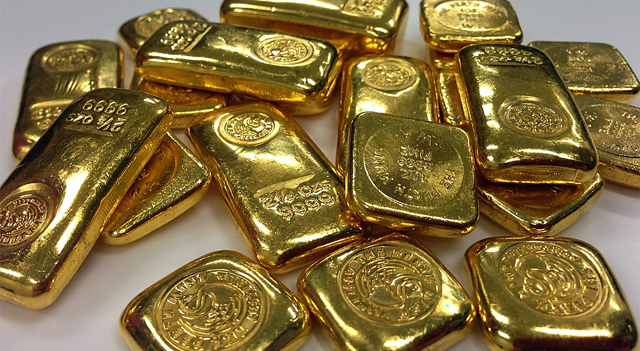
    Gold prices briefly climbed to an all-time high on Tuesday as markets weighed expectations for U.S. interest rate reductions alongside uncertainty surrounding President Donald Trump’s trade tariffs. This boosted demand for bullion as a safe-haven asset.

    Other precious metals also posted strong gains, with silver surging to nearly a 14-year peak and platinum approaching an 11-year high. The moves came as the U.S. dollar dropped to a five-week low amid growing anticipation of lower interest rates.

    Spot gold jumped 0.8% to a record $3,508.54 per ounce, while December Gold Futures hit $3,578.20/oz. By 03:27 ET, spot gold had eased slightly, trading 0.2% higher at $3,482.28/oz.

    Tariff rulings and rate-cut bets drive precious metals

    The rally was fueled by increased uncertainty over Trump’s tariffs after an appeals court deemed them unlawful last week. The ruling allows tariffs to remain in place until mid-October, though the president criticized the decision and intends to challenge it in the Supreme Court. This uncertainty, particularly regarding economic effects of tariffs implemented in August, reinforced demand for gold.

    Expectations of a Federal Reserve rate cut in September further supported precious metals. CME FedWatch data showed nearly an 85% probability of a 25-basis-point reduction, even as the July personal consumption expenditures (PCE) index indicated inflation staying above the Fed’s 2% target. Fed Chair Jerome Powell had earlier hinted at a potential 25-basis-point cut but has not confirmed the move due to persistent inflation pressures.

    Lower rates helped push the dollar down to a five-week low, giving additional support to non-yielding assets such as metals, which become more attractive relative to government debt when interest rates fall.

    Among other metals, spot silver added 0.1% to $40.7545/oz, briefly surpassing the $40 mark for the first time since late 2011. Spot platinum rose 0.7% to $1,421.55/oz, staying close to an 11-year high. In recent months, silver and platinum have outperformed gold, as relatively lower prices per ounce and a consolidation in gold spurred speculative buying in both metals.

    Industrial metals also showed gains. Copper prices rose despite somewhat disappointing PMI data from China, the world’s top copper importer, as investors speculated on potential stimulus measures. Benchmark copper futures on the London Metal Exchange gained 0.3% to $9,919 per ton, while COMEX copper futures advanced 0.4% to $4.5905 per pound.

    This content is for informational purposes only and does not constitute financial, investment, or other professional advice. It should not be considered a recommendation to buy or sell any securities or financial instruments. All investments involve risk, including the potential loss of principal. Past performance is not indicative of future results. You should conduct your own research and consult with a qualified financial advisor before making any investment decisions.

  • Oil Prices Hold Steady as Russia Supply Concerns Persist Ahead of OPEC+ Meeting

    Oil Prices Hold Steady as Russia Supply Concerns Persist Ahead of OPEC+ Meeting

    Oil markets were relatively stable in Tuesday’s Asian session, maintaining gains from the previous day as investors balanced concerns over potential supply disruptions from the Russia-Ukraine conflict against rising output from OPEC+ members.

    At 21:03 ET (01:03 GMT), November Brent crude futures were up 0.3% at $68.33 per barrel, following Monday’s gain of over 1%. WTI futures, which did not trade Monday due to the U.S. Labor Day holiday, rose 1.3% from Friday’s close to $64.81 per barrel.

    Supply Risks from Russia in Focus

    Prices climbed on Monday amid reports of renewed Ukrainian strikes on Russian refining and export infrastructure. Expectations for a peace agreement between Russia and Ukraine have cooled after U.S. President Donald Trump encouraged direct talks between President Zelenskyy and President Putin last month, prior to a potential trilateral summit in Washington.

    The intensified attacks have increased the likelihood of additional sanctions on Russia, potentially disrupting oil supplies and pushing prices higher. The U.S. and its allies have also reinforced secondary sanctions on Russian crude, although these measures have so far only modestly affected shipments to Asia. Washington recently imposed an extra 25% tariff on Indian imports of Russian crude, raising total duties to 50% from August 27, in response to New Delhi’s increased purchases.

    OPEC+ Meeting in the Spotlight

    Offsetting these concerns, production gains from OPEC+ in recent months have sparked worries of a global supply surplus. Market participants are now eyeing the cartel’s upcoming meeting on September 7 for guidance on production policy.

    Bloomberg surveys suggest that OPEC+ is likely to maintain current output levels, pausing after a period of accelerated supply increases. Traders are also watching for U.S. nonfarm payrolls data due Friday, which could reinforce expectations for a Federal Reserve rate cut this month. Lower interest rates tend to support oil by stimulating economic activity, weakening the dollar, and making commodities more appealing to investors.

    This content is for informational purposes only and does not constitute financial, investment, or other professional advice. It should not be considered a recommendation to buy or sell any securities or financial instruments. All investments involve risk, including the potential loss of principal. Past performance is not indicative of future results. You should conduct your own research and consult with a qualified financial advisor before making any investment decisions.

  • Dow Jones, S&P, Nasdaq, Wall Street Futures, Markets Eye Economic Data as Gold Hits Record High and Nestle Shares Slide

    Dow Jones, S&P, Nasdaq, Wall Street Futures, Markets Eye Economic Data as Gold Hits Record High and Nestle Shares Slide

    U.S. stock futures pointed lower ahead of a shortened holiday week, with investor attention focused on key economic indicators that could influence the path of U.S. interest rates. Meanwhile, Swiss food giant Nestle saw its shares fall after the sudden exit of its CEO, and gold surged to record levels amid expectations of lower U.S. rates and trade-related uncertainties.

    Futures Drop

    Tuesday saw U.S. futures decline as traders returned from the Labor Day holiday. By 03:37 ET, Dow futures were down 113 points (0.3%), S&P 500 futures lost 15 points (0.2%), and Nasdaq 100 futures fell 65 points (0.3%).

    Although August is traditionally a challenging month for equities, the S&P 500 rose 1.9% over the month, lifting its year-to-date gain to around 10%, and keeping the index near record highs. The rally follows an extended recovery since April, when concerns over sweeping U.S. tariffs briefly weighed on markets.

    ISM Manufacturing PMI in Focus

    Investors are now awaiting key economic reports, including Friday’s U.S. nonfarm payrolls data. Analysts suggest that a weak reading for August—after July’s surprisingly soft numbers and revisions to prior months—could strengthen expectations that the Federal Reserve may cut interest rates at its September 16-17 meeting. Economists forecast a modest addition of 74,000 jobs for August, up slightly from July’s 73,000.

    Other data, such as Tuesday’s Institute for Supply Management (ISM) manufacturing index, are also in focus. The August reading is projected at 49.0, up from 48.0 in July but still below the 50-point threshold signaling expansion.

    Nestle CEO Departure Shakes Shares

    Nestle (LSE:0RR6) shares dropped more than 3% in early trading following the abrupt exit of CEO Laurent Freixe. The board announced his departure on Monday after an investigation found a violation of company policy due to an undisclosed romantic relationship with a subordinate.

    Philipp Navratil, a longtime Nestle executive who previously led the Nespresso division, has been appointed as Freixe’s replacement effective immediately. The leadership shake-up comes amid ongoing challenges for Nestle, including muted sales growth and the departure of former CEO Mark Schneider last year. Long-time Chair Paul Bulcke has also indicated plans to step down in 2026.

    Gold Reaches New Heights

    Gold prices hit all-time highs on Tuesday as investors sought safe-haven assets amid expectations of U.S. rate cuts and uncertainty around trade policies. Spot gold surged 0.8% to $3,508.54 per ounce, while December gold futures touched $3,578.20 per ounce. By 03:27 ET, spot prices moderated slightly to $3,482.28 per ounce.

    Silver rose to a near 14-year peak, and platinum remained close to an 11-year high. The dollar fell to a five-week low as markets priced in potentially lower borrowing costs. Non-yielding assets such as precious metals tend to benefit from lower interest rates, making them more attractive relative to government debt.

    The gains were also driven by legal uncertainty surrounding U.S. trade tariffs, following a court ruling that found certain tariffs imposed by President Trump illegal. The ruling allows tariffs to remain until mid-October, but Trump has pledged to challenge the decision in the Supreme Court.

    Oil Extends Gains

    Crude prices advanced, with Brent November futures up 0.9% to $68.74 per barrel, building on Monday’s 1% gain. West Texas Intermediate (WTI) crude rose 1% to $65.24 per barrel following the U.S. holiday.

    Traders weighed potential supply disruptions from the Russia-Ukraine conflict against rising output from OPEC+ members. Hopes for a peace deal have faded after calls for direct talks between Ukrainian President Zelensky and Russian President Putin. Increased airstrikes have raised the risk of sanctions on Russia, potentially affecting supply, while OPEC+ production increases have sparked concerns about oversupply. Markets now await the September 7 OPEC+ meeting for signals on future output.

    This content is for informational purposes only and does not constitute financial, investment, or other professional advice. It should not be considered a recommendation to buy or sell any securities or financial instruments. All investments involve risk, including the potential loss of principal. Past performance is not indicative of future results. You should conduct your own research and consult with a qualified financial advisor before making any investment decisions.

  • Johnson Service Group Rises on Strong H1 Results and £25 Million Buyback Plan

    Johnson Service Group Rises on Strong H1 Results and £25 Million Buyback Plan

    Shares of Johnson Service Group Plc (LSE:JSG) jumped 11% on Tuesday following the release of robust first-half results and the announcement of a new £25 million share buyback program by the textile rental and laundry services provider.

    The company recorded an adjusted operating profit of £28.7 million for H1 2025, up 13.9% from £25.2 million in the same period last year. Revenue grew 5.5% to £257.5 million, including 1.4% organic growth across its operations. Adjusted earnings per share increased 17.9% to 4.6p.

    Johnson Service Group also saw its adjusted operating profit margin improve by 80 basis points to 11.1%, despite significant labor cost pressures. The company successfully counterbalanced a 170 basis point rise in labor costs with a 160 basis point drop in energy costs and a 90 basis point reduction in other expenses.

    “I am pleased to report that we have delivered further progress in the first half of 2025,” said Peter Egan, Chief Executive Officer. “Our continued focus on operational excellence and margin improvement has positioned us well to achieve our target of at least a 14.0% adjusted operating profit margin in 2026.”

    The interim dividend was increased by 23.1% to 1.6p per share. In addition, the company confirmed plans for a further £25 million share buyback, following the completion of a £30 million program announced in March.

    In the HORECA division, which serves hotels, restaurants, and catering businesses, revenue rose 7.2% to £185.4 million. The Workwear division reported a 1.3% revenue increase to £72.1 million, with customer retention improving to 94%, up from 93% at the end of 2024.

    Looking ahead, Johnson Service Group remains confident in achieving its full-year adjusted operating profit targets and reaching its goal of at least a 14% margin by 2026.

    This content is for informational purposes only and does not constitute financial, investment, or other professional advice. It should not be considered a recommendation to buy or sell any securities or financial instruments. All investments involve risk, including the potential loss of principal. Past performance is not indicative of future results. You should conduct your own research and consult with a qualified financial advisor before making any investment decisions.

  • Ithaca Energy Shares Fall After Delek and Eni Sell $143 Million Stake

    Ithaca Energy Shares Fall After Delek and Eni Sell $143 Million Stake

    Delek Group (USOTC:DLKGF) and Italy’s Eni (BIT:ENI) have sold shares worth approximately £106 million ($143 million) in Ithaca Energy (LSE:ITH), reducing their holdings in the London-listed oil and gas producer. The announcement triggered a drop of over 12% in Ithaca’s share price during London trading by 07:50 GMT on Tuesday.

    Through their U.K. subsidiaries, the two major shareholders sold 49.6 million ordinary shares at 213.75 pence each via an accelerated bookbuild, arranged by Peel Hunt. The transaction represents roughly 3% of Ithaca’s total share capital. Following the sale, Delek retains a 50.5% stake, while Eni holds around 36%.

    The share disposal comes shortly after Ithaca raised its 2025 production guidance for the second time in three months. Production in the first half of the year more than doubled to 123,600 barrels of oil equivalent per day, up from 53,000 boepd a year earlier, driven by acquisitions including Eni’s U.K. portfolio and an increased stake in the Cygnus gas field. The company reported adjusted EBITDAX of $1.1 billion for H1, up from $533 million, and now forecasts full-year production between 119,000 and 125,000 boepd, compared with the previous guidance of 109,000–119,000 boepd.

    This content is for informational purposes only and does not constitute financial, investment, or other professional advice. It should not be considered a recommendation to buy or sell any securities or financial instruments. All investments involve risk, including the potential loss of principal. Past performance is not indicative of future results. You should conduct your own research and consult with a qualified financial advisor before making any investment decisions.

  • Centrica Receives Nuclear Boost as Heysham and Hartlepool Granted One-Year Life Extension

    Centrica Receives Nuclear Boost as Heysham and Hartlepool Granted One-Year Life Extension

    Centrica plc (LSE:CNA) confirmed that the Heysham 1 and Hartlepool nuclear power stations in the UK have been approved for a one-year life extension, allowing operations to continue until March 2028. Centrica holds a 20% stake in both facilities, with EDF owning the remaining 80%.

    The extensions are expected to generate approximately 3 terawatt-hours of additional electricity. The decision followed a licensee board review on 1 September, which considered the 2025 inspection results of the graphite cores, supporting continued operation. Heysham 1, located in Lancashire, has a capacity of 1.1 GW, while Hartlepool in County Durham can produce 1.2 GW, forming part of Centrica’s nuclear energy portfolio in the UK.

    Jefferies described the development as a modest positive for Centrica’s stock, projecting a potential 1–2% uplift in market capitalization. The brokerage maintains a “buy” rating with a price target of 200p, following the shares’ close at 159.60p. Centrica’s market value currently stands at £9.2 billion.

    This content is for informational purposes only and does not constitute financial, investment, or other professional advice. It should not be considered a recommendation to buy or sell any securities or financial instruments. All investments involve risk, including the potential loss of principal. Past performance is not indicative of future results. You should conduct your own research and consult with a qualified financial advisor before making any investment decisions.

  • Ryanair Records 21 Million Passengers in August, Setting New Monthly High

    Ryanair Records 21 Million Passengers in August, Setting New Monthly High

    Ryanair Holdings PLC (LSE:RYA) reported a record-breaking August, transporting 21.0 million passengers, marking the highest monthly total for the airline in its history. Traffic grew 2% compared with the same month last year, while the carrier maintained a strong load factor of 96% across its network.

    Throughout August, Ryanair operated over 114,000 flights, highlighting the scale of its summer operations during the peak travel season. This milestone reinforces Ryanair’s status as one of Europe’s largest airlines by passenger numbers.

    This content is for informational purposes only and does not constitute financial, investment, or other professional advice. It should not be considered a recommendation to buy or sell any securities or financial instruments. All investments involve risk, including the potential loss of principal. Past performance is not indicative of future results. You should conduct your own research and consult with a qualified financial advisor before making any investment decisions.