Author: Fiona Craig

  • FTSE 100 Slips After Rate Cut; TBC Bank Shares Drop Despite Strong Q2 Earnings

    FTSE 100 Slips After Rate Cut; TBC Bank Shares Drop Despite Strong Q2 Earnings

    UK equities edged lower on Friday, with the FTSE 100 down slightly as investors digested the Bank of England’s recent interest rate cut. The British pound also dipped, while TBC Bank Group PLC (LSE:TBCG) slid sharply following its quarterly earnings report.

    As of 12:44 GMT, the FTSE 100 index had slipped 0.1%, while sterling declined 0.07% against the U.S. dollar to $1.34. Elsewhere in Europe, the German DAX was down around 1%, while France’s CAC 40 inched up 0.1%.

    TBC Bank Reports Higher Earnings, Shares Fall

    TBC Bank reported a year-on-year increase in second-quarter earnings, with pretax profit climbing 3.1% to 402,294 Georgian lari (approximately $147,360). Operating income rose 23% to 834,627 lari, while net profit also rose 3.1% to 346,275 lari. Despite the improved financials, shares of the London-listed bank dropped over 5% following the announcement. TBC operates primarily in Georgia and is expanding its presence in Uzbekistan.

    Barclays Downgrades Just Group After Price Surge

    Barclays (LSE:BARC) downgraded Just Group PLC (LSE:JUST) to “equal weight” from “overweight,” even as it raised its price target to 220p from 185p. The brokerage cited the company’s recent share price gains and reduced its discount rate on the stock valuation from 14% to 12%, reflecting solid capital strength and organic growth. However, Just Group’s first-half 2025 results missed analyst forecasts on key metrics, with adjusted operating profit down 23% to £192 million.

    Goldman Sachs Upgrades Diageo

    Meanwhile, Diageo PLC (LSE:DGE) received an upgrade from Goldman Sachs (NYSE:GS), which shifted its rating to “neutral” from “sell” while keeping its 12-month price target at 2,000p. The move follows a 20.4% slide in Diageo’s share price since July 2024—significantly worse than the 2% decline in Goldman’s consumer staples coverage and contrasting with an 8.2% gain in the MSCI World Europe index. Analysts pointed to attractive valuation and potential portfolio shifts, though challenges in the U.S. spirits market remain a concern.

    This content is for informational purposes only and does not constitute financial, investment, or other professional advice. It should not be considered a recommendation to buy or sell any securities or financial instruments. All investments involve risk, including the potential loss of principal. Past performance is not indicative of future results. You should conduct your own research and consult with a qualified financial advisor before making any investment decisions.

  • Oil Prices Struggle Despite Modest Rebound as Weekly Losses Deepen

    Oil Prices Struggle Despite Modest Rebound as Weekly Losses Deepen

    Crude prices saw a slight recovery on Friday but remained on track for steep weekly declines, weighed down by growing concerns over demand amid new trade tariffs and a potential surge in global supply.

    As of 08:50 ET (12:50 GMT), Brent crude futures for October delivery were up 0.6% to $66.85 per barrel, while West Texas Intermediate (WTI) futures rose 0.5% to $64.18 per barrel. Despite the modest uptick, both benchmarks were still over 4% lower for the week.

    Worst Weekly Performance Since Late June

    The sharp drop in oil this week marks its weakest performance since late June. A key driver has been anxiety over weakening global demand, with recent U.S. tariff actions exacerbating fears that international trade flows—and energy consumption—could cool significantly.

    Fresh data indicating a softening U.S. labor market added to those worries, raising doubts about fuel demand in the world’s largest economy. However, ongoing inventory drawdowns in the U.S. have helped limit the downside, suggesting that current consumption remains relatively resilient for now.

    OPEC+ Output Moves Keep Supply Risks Elevated

    On the supply side, markets are still digesting the latest OPEC+ decision to raise output quotas for September. The alliance continues to unwind supply restrictions put in place over the past three years, increasing fears of a market oversupply.

    Geopolitical Focus on Russia-Ukraine Talks

    Meanwhile, diplomatic developments involving Russia also weighed on sentiment. On Thursday, Moscow confirmed that President Vladimir Putin is set to meet with U.S. President Donald Trump in the coming days, fueling speculation about a possible breakthrough in the Russia-Ukraine conflict.

    Although the prolonged war had previously supported oil markets due to the potential for supply disruptions from Russia, the prospect of a ceasefire has weakened that argument.

    “However, it is important to note that President Trump’s deadline for a Russia-Ukraine peace deal expires today, leaving open the risk that the U.S. will still tighten sanctions against Moscow,” analysts at ING said in a note.

    The U.S. president also introduced new trade measures this week, imposing up to 50% tariffs on India for its purchases of Russian crude. He has similarly threatened tariffs against China, one of Russia’s top oil buyers.

    Amid this uncertainty, some Indian state-owned refiners are reportedly reconsidering their purchases of Russian oil.

    “Indian exports to the US dwarf the savings that India receives from buying discounted Russian crude oil. Therefore, we believe that India will likely switch to alternative crude supply in order to avoid these additional tariffs. This should lead to increased demand for other grades from the Middle East, continuing to provide support to Dubai relative to Brent,” ING analysts added.

    This content is for informational purposes only and does not constitute financial, investment, or other professional advice. It should not be considered a recommendation to buy or sell any securities or financial instruments. All investments involve risk, including the potential loss of principal. Past performance is not indicative of future results. You should conduct your own research and consult with a qualified financial advisor before making any investment decisions.

  • DAX, CAC, FTSE 100 Mixed as U.S. Tariffs Begin and Putin-Trump Meeting Eyed

    DAX, CAC, FTSE 100 Mixed as U.S. Tariffs Begin and Putin-Trump Meeting Eyed

    European equities were mixed on Friday as investors digested the impact of newly enacted U.S. tariffs and monitored geopolitical developments. Higher tariff rates imposed by the Trump administration on several trading partners officially took effect at midnight, while confirmation from Moscow that Russian President Vladimir Putin and U.S. President Donald Trump are arranging a meeting has raised hopes for a possible ceasefire in Ukraine.

    As of the latest trading, the French CAC 40 Index edged up by 0.1%, while both Germany’s DAX Index and the U.K.’s FTSE 100 Index slipped 0.1%.

    On the economic side, France’s unemployment rate remained stable at 7.5% in the second quarter, in line with expectations, according to the country’s statistics agency INSEE. The number of unemployed individuals rose by 29,000 compared to the previous quarter, reaching a total of 2.4 million.

    In corporate developments, British pharmaceutical company GSK (LSE:GSK) advanced after announcing it would receive $370 million through a patent litigation settlement in the U.S.

    German real estate firm Deutsche Wohnen (TG:DWNE) also moved higher following a report showing a narrower first-half loss.

    Dutch insurance and asset management group NN Group (EU:NN) jumped after posting first-half earnings that surpassed analyst estimates.

    Conversely, German reinsurer Munich Re (TG:A2TSS7) saw its shares drop sharply after the company lowered its insurance revenue outlook for 2025.

    This content is for informational purposes only and does not constitute financial, investment, or other professional advice. It should not be considered a recommendation to buy or sell any securities or financial instruments. All investments involve risk, including the potential loss of principal. Past performance is not indicative of future results. You should conduct your own research and consult with a qualified financial advisor before making any investment decisions.

  • Dow Jones, S&P, Nasdaq, Wall Street Futures, U.S. Markets Poised for Mild Gains as Futures Point Higher

    Dow Jones, S&P, Nasdaq, Wall Street Futures, U.S. Markets Poised for Mild Gains as Futures Point Higher

    U.S. stock index futures suggest Wall Street could open modestly higher on Friday, hinting at a possible rebound after a choppy performance in the previous session.

    However, overall market activity might remain muted due to the absence of significant economic data releases, potentially leading some investors to stay on the sidelines.

    On Thursday, stocks started the session in positive territory but lost momentum throughout the day. The major indices pulled back from their early highs, ultimately closing the session mixed.

    The Nasdaq, buoyed by strong tech momentum, extended Wednesday’s rally, climbing 73.27 points or 0.4% to end at 21,242.70. In contrast, the S&P 500 dipped slightly by 5.06 points or 0.1% to finish at 6,340.00, while the Dow Jones Industrial Average slid 224.48 points or 0.5% to 43,968.64.

    Markets were initially lifted after former President Donald Trump unveiled a sweeping 100% tariff on imported semiconductors and chips, while exempting firms that manufacture domestically.

    “The good news for companies like Apple is if you’re building in the United States or have committed to build, without question, committed to build in the United States, there will be no charge,” Trump said.

    “So in other words, we’ll be putting a tariff on of approximately 100 percent on chips and semiconductors,” he added. “But if you’re building in the United States of America, there’s no charge.”

    The announcement coincided with Apple (NASDAQ:AAPL) CEO Tim Cook joining Trump to confirm the company’s intention to invest an additional $100 billion in its U.S. operations.

    Following reports of the planned investment, Apple shares helped lead Wednesday’s gains and added another 3.2% on Thursday.

    Despite the initial optimism, buying appetite faded as investors processed the broader economic implications of Trump’s escalating trade measures, which include fresh tariffs on numerous countries taking effect today.

    Adding to the market pressure was a sharp decline in Intel (NASDAQ:INTC), with its shares falling 3.0% after Trump demanded the resignation of CEO Lip-Bu Tan, labeling him “highly conflicted.”

    On the economic front, the Labor Department reported that first-time applications for unemployment benefits increased more than anticipated. Jobless claims rose to 226,000 for the week ending August 2, up by 7,000 from the revised prior-week figure of 219,000. Economists had forecast a smaller increase to 221,000.

    Meanwhile, a separate report showed that labor productivity saw a notable rebound in the second quarter, offering a more positive view of the labor market.

    Sector-wise, most industries saw only slight movements, but pharmaceutical stocks took a significant hit. The NYSE Arca Pharmaceutical Index sank 2.1%, marking its lowest close in nearly three months. Eli Lilly (NYSE:LLY) led the downturn, plummeting 14.1% despite surpassing Q2 expectations and boosting its full-year forecast. Disappointment around late-stage trial results for its obesity drug appeared to drive the selloff.

    Oil services stocks also came under pressure as crude oil prices fell, pushing the Philadelphia Oil Service Index down 1.4%. Software and transportation stocks lagged as well, while gains were seen in semiconductors, utilities, and computer hardware names.

    This content is for informational purposes only and does not constitute financial, investment, or other professional advice. It should not be considered a recommendation to buy or sell any securities or financial instruments. All investments involve risk, including the potential loss of principal. Past performance is not indicative of future results. You should conduct your own research and consult with a qualified financial advisor before making any investment decisions.

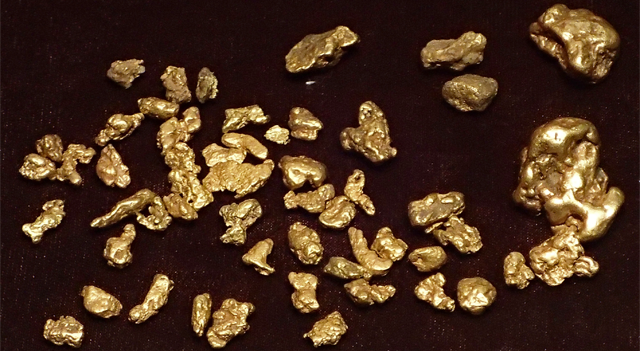
  • Gold Gains Ground Amid Tariff Concerns; New U.S. Duties on 1-Kilo Bars Spark Supply Worries

    Gold Gains Ground Amid Tariff Concerns; New U.S. Duties on 1-Kilo Bars Spark Supply Worries

    Gold prices climbed in Asian trading on Friday, set to close the week with gains as escalating U.S. trade tariffs fueled uncertainty in the global economy. Market attention also turned to the potential impact of new U.S. tariffs on imports of one-kilogram gold bars, which could disrupt the physical bullion market and tighten available supplies.

    Spot gold inched up 0.1% to $3,398.65 per ounce, while December futures on the COMEX surged 1% to $3,488.60 per ounce by 00:26 ET (04:26 GMT). For the week, spot gold was up roughly 0.8%, with futures poised to rise about 2.6%.

    U.S. Imposes Tariffs on 1-Kilo Gold Bars, Financial Times Reports

    According to a Thursday report from the Financial Times, the United States has introduced import tariffs on one-kilo gold bars, a move that could shake up the global bullion trade and negatively affect Switzerland.

    The U.S. Customs and Border Protection (CBP) agency determined that one-kilogram and 100-ounce gold bars fall under a customs classification subject to duties, referencing a ruling dated July 31. This decision deviates from earlier expectations that gold bars would be exempt from the broad tariffs enacted under President Trump’s administration. One-kilo bars represent the most commonly traded size on the COMEX, the world’s largest gold futures market, with many of these bars originating from Switzerland.

    These tariffs add further pressure on Switzerland, which already faces a 39% duty on exports to the U.S. The country is a leading global gold refiner and a major exporter of gold to the American market.

    News of the tariffs contributed to a sharp rally in COMEX gold futures this week, which outperformed spot prices significantly.

    This year, gold prices have surged to historic highs, driven by increased safe-haven demand amid rising global economic uncertainties largely tied to the trade tensions sparked by Trump’s tariff policies.

    Meanwhile, other precious metals retreated on Friday as investors favored gold amid fears of supply disruptions. Spot platinum dipped 0.5% to $1,334.14 per ounce, and spot silver fell 0.2% to $38.2065 per ounce.

    Among industrial metals, copper prices saw modest gains. London Metal Exchange copper futures rose 0.4% to $9,716.65 per ton, while COMEX copper futures edged up 0.2% to $4.4235 per pound.

    COMEX copper initially rallied above $5 per pound following Trump’s announcement of 50% tariffs on copper imports. However, his subsequent exemption of refined copper from these tariffs triggered a notable pullback in U.S. copper prices.

    Dollar Weakness Supports Metal Prices; Fed Leadership in Spotlight

    The dollar’s recent weakness has bolstered metal prices this week, as investors increasingly price in a Federal Reserve interest rate cut in September.

    This expectation follows a series of disappointing labor market data, indicating a steady slowdown in employment growth.

    In related news, Bloomberg reported that Fed Governor Christopher Waller is emerging as President Trump’s preferred candidate to succeed Jerome Powell, whose term ends in mid-2026.

    Waller was one of two Fed officials who voted for a rate reduction in July, aligning with Trump’s calls for more accommodative monetary policy.

    This content is for informational purposes only and does not constitute financial, investment, or other professional advice. It should not be considered a recommendation to buy or sell any securities or financial instruments. All investments involve risk, including the potential loss of principal. Past performance is not indicative of future results. You should conduct your own research and consult with a qualified financial advisor before making any investment decisions.

  • Dollar slides toward weekly loss as sterling gains on hawkish BoE stance

    Dollar slides toward weekly loss as sterling gains on hawkish BoE stance

    The U.S. dollar dropped on Friday, setting itself up for a weekly decline amid ongoing concerns about U.S. trade tariffs and President Donald Trump’s efforts to increase his sway over the Federal Reserve.

    By 04:20 ET (08:20 GMT), the Dollar Index—which measures the greenback against a basket of six currencies—fell 0.3% to 97.957, heading for roughly a 1% loss over the week.

    Miran appointed to Fed board

    Thursday saw the implementation of Trump’s trade tariffs, imposing levies ranging from 10% to 50% on exports from various regional economies. Though many of these tariffs were previously signaled by Trump, the dollar has weakened amid fears about their repercussions on the U.S. economy.

    Recent economic data has added to worries, including a disappointing jobs report last week, softer U.S. services activity, and a rise in initial jobless claims this week. Markets now price in more than a 90% likelihood of a Fed rate cut in September, up sharply from an even chance just a week earlier.

    Questions about the Federal Reserve’s independence have further weighed on the dollar. On Thursday, Trump appointed Stephen Miran, chairman of the Council of Economic Advisers, to fill a vacant Fed Board seat for the remainder of the term, following last week’s unexpected resignation of Fed Governor Adriana Kugler.

    “Miran has echoed Trump’s dovish calls and Fed criticism of late, as well as downplaying the inflationary impact of tariffs,” analysts at ING noted. “He’s widely expected to join Christopher Waller and Michelle Bowman in the dovish camp for the few meetings he will attend, with a non-negligible risk he might try to build consensus for a 50bp move.”

    Though temporary, this appointment likely strengthens Trump’s influence over the central bank as the administration searches for a replacement for Fed Chair Jerome Powell, whose term expires May 15, 2026. Bloomberg News reported Thursday that Fed Governor Christopher Waller is emerging as a leading candidate for the chairmanship.

    Euro nudged by Ukraine peace discussions

    In Europe, the euro slipped slightly to 1.1662 against the dollar, just below a one-week peak, as investors reacted positively to ongoing talks aimed at resolving the war in Ukraine.

    Russian President Vladimir Putin and U.S. President Donald Trump are expected to meet soon, following talks between Trump’s envoy Steve Witkoff and Putin.

    “Markets now need to assess how realistic a truce is,” ING commented. “We expect they will tread carefully on the topic, considering there are few indications so far that Russia is ready to agree to a total ceasefire in Ukraine.”

    Sterling gains on hawkish Bank of England votes

    GBP/USD rose 0.1% to 1.3447, supported by more Bank of England policymakers than anticipated voting to keep interest rates steady, even as the BoE cut rates by 25 basis points.

    Four of the nine BoE policymakers—concerned about persistent inflation—favored holding borrowing costs steady, suggesting the BoE’s sequence of rate cuts might be nearing its conclusion.

    “The large hawkish dissent places greater emphasis on future inflation prints. A more convincing moderation now appears necessary to have another 2025 cut fully back in the price,” ING said.

    Yen supported by tariff relief

    Elsewhere, USD/JPY edged up 0.1% to 147.23 after household spending data for June came in much weaker than expected, signaling a sustained drop in consumer spending.

    However, losses in the yen were limited after Tokyo received reassurance from Washington regarding trade tariffs. Japan’s chief trade negotiator, Ryosei Akazawa, said Thursday that the effective U.S. tariff rate on Japanese goods would be capped at 15%.

    His statement helped ease fears that the 15% tariff would be stacked on top of existing U.S. tariffs on Japanese products, which would have created a significantly higher overall levy.

    Other markets

    AUD/USD gained 0.3% to 0.6531, with attention turning to the Reserve Bank of Australia’s upcoming meeting next week. The RBA is widely expected to cut interest rates further amid persistent signs of easing inflation. Its August cut follows an unexpected pause in July that surprised markets.

    USD/CNY inched higher to 7.1824.

    This content is for informational purposes only and does not constitute financial, investment, or other professional advice. It should not be considered a recommendation to buy or sell any securities or financial instruments. All investments involve risk, including the potential loss of principal. Past performance is not indicative of future results. You should conduct your own research and consult with a qualified financial advisor before making any investment decisions.

  • Oil prices remain steady but face significant weekly declines amid tariff pressures and supply worries

    Oil prices remain steady but face significant weekly declines amid tariff pressures and supply worries

    In Friday’s Asian trading session, oil prices showed little movement but were still on track for substantial weekly losses, as concerns grow over demand slowing due to new tariffs and an impending oversupply.

    Crude briefly gained some support after U.S. President Donald Trump announced additional restrictions targeting Russia’s oil sector, including hefty tariffs imposed on India. These tariffs, part of Trump’s reciprocal measures against key trading partners that took effect Thursday, have sparked fears of further global economic disruption, which could weigh on oil consumption.

    The dollar’s relative strength also contributed to downward pressure on crude prices, fueled by ongoing speculation about who might replace Federal Reserve Chair Jerome Powell.

    At 21:41 ET (01:41 GMT), October Brent crude futures held steady at $66.43 per barrel, while West Texas Intermediate (WTI) futures were flat at $63.03 per barrel. Both benchmarks have dropped between 4% and 5% over the week.

    Oil on track for worst weekly performance since late June amid demand and supply concerns

    The sharp selloff in oil this week was largely driven by worries that demand is faltering, particularly as rising U.S. trade tariffs impact the global economy.

    Signs of a cooling U.S. labor market added to the pessimism about demand prospects, although ongoing inventory declines helped temper these concerns somewhat.

    On the supply side, oil prices remain pressured by OPEC+’s recent decision to boost production quotas in September, continuing its gradual reversal of nearly three years of output cuts.

    Russia-Ukraine diplomatic developments add uncertainty

    On Thursday, Russia confirmed that President Vladimir Putin plans to meet with Trump in the near future, as repeated calls intensify from Trump and Western leaders to resolve the prolonged Russia-Ukraine conflict.

    The ongoing war, now in its fourth year, has supported oil prices by tightening Russian supply expectations. However, a potential ceasefire could undermine that support.

    Although the U.S. has enacted stringent sanctions on Russia’s oil sector, these have had limited impact so far on global supply levels.

    This week, Trump imposed tariffs of up to 50% on Indian imports of Russian oil and warned China, the top buyer, of similar measures.

    These actions offered only brief relief for oil prices.

    This content is for informational purposes only and does not constitute financial, investment, or other professional advice. It should not be considered a recommendation to buy or sell any securities or financial instruments. All investments involve risk, including the potential loss of principal. Past performance is not indicative of future results. You should conduct your own research and consult with a qualified financial advisor before making any investment decisions.

  • Bitcoin climbs to $116.5K after Trump’s 401(k) directive, altcoins surge

    Bitcoin climbs to $116.5K after Trump’s 401(k) directive, altcoins surge

    Bitcoin (COIN:BTCUSD) extended its upward momentum on Friday, boosted by a new executive order from U.S. President Donald Trump aimed at expanding the use of alternative assets — including cryptocurrencies — within 401(k) retirement accounts.

    Alternative cryptocurrencies saw even stronger advances, with Ether approaching its 2021 highs and XRP surging following the resolution of the prolonged legal dispute between Ripple, the token’s issuer, and the U.S. Securities and Exchange Commission.

    Despite these gains, markets remained cautious amid declining global risk appetite after Trump’s tariffs on several major economies took effect. Bitcoin also traded below its intraday peak during the session.

    By 01:47 ET (05:47 GMT), Bitcoin had risen 1.7% to $116,570.2.

    Trump’s order fuels crypto rally by opening retirement funds to alternative assets

    The presidential directive paves the way for alternative asset managers to capture a larger share of America’s vast retirement savings market. It also simplifies access for investors seeking to include alternative assets in their defined contribution plans.

    Trump argued that “regulatory overreach and litigation risks” have previously blocked retirees from potentially higher returns through alternative investments. However, some critics caution that these assets carry inherently higher risk, making them less suitable for long-term retirement stability.

    This move aligns with Trump’s pro-crypto agenda, which saw the passage of several crypto-friendly regulatory measures earlier this year.

    The announcement helped Bitcoin break out of the $110,000 to $115,000 range it had been stuck in since late July.

    Still, major upside remained limited, especially with spot Bitcoin ETFs seeing four consecutive days of capital outflows. Profit-taking following Bitcoin’s record highs in July, alongside concerns about Trump’s tariffs, contributed to a cautious market stance.

    Crypto prices: Ether nears $4K, XRP jumps after SEC settlement

    Other cryptocurrencies outperformed Bitcoin on Friday, largely recouping last week’s steep declines.

    Ether, the world’s second-largest crypto, surged 5.6% to $3,902.01, inching close to its 2021 peak above $4,000.

    The rally was fueled by a growing number of firms adding Ether to their corporate treasuries, following a trend set by Bitcoin and MicroStrategy. This strategy proved highly successful for Michael Saylor’s company, which enjoyed strong stock gains over the past year.

    XRP rose 10.5% to $3.3149, reaching its highest level in nearly three weeks.

    The boost came as Ripple and the SEC agreed to end their long-standing legal battle. The resolution was widely anticipated after Trump appointed more crypto-friendly officials to the SEC and shifted crypto oversight to the Commodity Futures Trading Commission.

    Other notable moves included Solana’s 3% gain and Cardano’s 7.1% rise.

    Among meme coins, Dogecoin increased 7.1%, while $TRUMP climbed 3.1%.

    This content is for informational purposes only and does not constitute financial, investment, or other professional advice. It should not be considered a recommendation to buy or sell any securities or financial instruments. All investments involve risk, including the potential loss of principal. Past performance is not indicative of future results. You should conduct your own research and consult with a qualified financial advisor before making any investment decisions.

  • Dow Jones, S&P, Nasdaq,, Wall Street Futures climb as Trump picks new Fed governor; TSMC and SoftBank shine on AI boost

    Dow Jones, S&P, Nasdaq,, Wall Street Futures climb as Trump picks new Fed governor; TSMC and SoftBank shine on AI boost

    U.S. stock futures edged higher Friday ahead of the week’s final trading session. President Donald Trump named a trusted adviser to temporarily fill a vacancy on the Federal Reserve’s Board of Governors. Meanwhile, Taiwan Semiconductor Manufacturing Company (TSMC) reported a strong surge in July sales, and Japan’s SoftBank (USOTC:SFTBY) saw shares hit a record high thanks to increased investments in artificial intelligence.

    Futures gain ground

    By 2:56 a.m. ET, Dow futures had added 57 points, or 0.1%, S&P 500 futures climbed 11 points, or 0.2%, and Nasdaq 100 futures advanced 43 points, or 0.2%. Investors were weighing Trump’s appointment and a tapering stream of earnings reports.

    Wall Street’s main indexes closed mixed Thursday, with the S&P 500 and Dow dipping slightly, while the Nasdaq Composite inched up after a volatile day.

    Traders grappled with conflicting economic signals. Analysts at Vital Knowledge noted in a report that fresh “ominous” indicators in the labor market and a rise in inflation expectations were partially offset by solid second-quarter productivity figures.

    The path for U.S. interest rates remains uncertain. While several Federal Reserve officials indicated willingness to cut rates at the September meeting, Atlanta Fed President Raphael Bostic cautioned that there “may only room for just the one reduction this year.”

    Trump nominates temporary Fed governor

    In this environment, Trump announced on Thursday that Stephen Miran, his top economic adviser, is his nominee for a temporary seat on the Fed’s Board of Governors. If confirmed by the Senate, Miran will participate in upcoming interest rate decisions.

    Miran has been a steadfast Trump supporter, who himself criticized the Fed and Chair Jerome Powell for not lowering rates sooner.

    Miran, with prior experience at the Treasury Department during Trump’s first term and as a hedge fund strategist, has argued that sweeping U.S. tariffs will not significantly raise inflation domestically, and that the cost burden will mostly fall on overseas suppliers. However, some economists dispute this view.

    This nomination follows Adriana Kugler’s abrupt resignation last week, before her term was to end in January. Trump described Miran’s appointment as temporary but hinted at a possible extension: “We will continue to search for a permanent replacement.” Notably, that successor could eventually replace Powell when his term ends next year.

    TSMC posts strong July sales

    TSMC reported a 25.8% year-over-year sales increase for July, reaching T$323.17 billion ($10.8 billion), also rising 22.5% from June. The semiconductor giant attributes its impressive 2025 sales growth, now nearly 38% higher than last year’s first seven months, largely to AI demand.

    TSMC shares hit a record high Thursday after Taiwan announced the company will be exempt from a potential 100% U.S. tariff on chip exports unveiled by Trump earlier this week.

    SoftBank shares soar on AI gains

    SoftBank Group Corp. shares surged over 13% Friday in Tokyo, hitting a new high of 14,230 yen, lifting Japan’s Nikkei 225 by more than 2%. The tech conglomerate posted net profit of 421.8 billion yen ($2.87 billion) for its quarter ending June, boosted by strong investor enthusiasm around AI and a corresponding rise in the value of its holdings.

    SoftBank holds stakes in numerous public and private AI ventures, including Nvidia, and is the majority owner of British chip designer Arm Holdings (NASDAQ:ARM).

    OpenAI launches GPT-5

    OpenAI unveiled its newest AI model, GPT-5, powering the widely popular ChatGPT. The chatbot has become central to the ongoing AI boom and has helped OpenAI grow into one of the world’s most valuable private firms.

    Media reports indicate talks are underway to allow OpenAI employees to sell shares at a potential $500 billion valuation—well above its current $300 billion worth.

    This launch coincides with heavy AI investment from major tech players like Meta Platforms (NASDAQ:META), Microsoft (NASDAQ:MSFT), and Alphabet (NASDAQ:GOOGL), all focusing on expanding AI capabilities and data center infrastructure.

    This content is for informational purposes only and does not constitute financial, investment, or other professional advice. It should not be considered a recommendation to buy or sell any securities or financial instruments. All investments involve risk, including the potential loss of principal. Past performance is not indicative of future results. You should conduct your own research and consult with a qualified financial advisor before making any investment decisions.

  • DAX, CAC, FTSE100, European Shares Edge Lower as Week Ends on Mixed Notes; Munich Re Disappoints

    DAX, CAC, FTSE100, European Shares Edge Lower as Week Ends on Mixed Notes; Munich Re Disappoints

    European equity markets showed little movement on Friday, wrapping up a mostly positive week marked by a flood of corporate earnings reports and the rollout of tariffs imposed by the Trump administration.

    By 07:05 GMT, Germany’s DAX slipped 0.2%, while France’s CAC 40 advanced 0.4%, and the UK’s FTSE 100 inched up 0.2%.

    Despite Friday’s subdued trading, major European indices are poised for solid weekly gains, supported by broadly encouraging Q2 earnings. The DAX is set to climb more than 3%, the CAC 40 has risen over 2%, while the FTSE 100 lagged with a modest 0.4% increase.

    “Europe is now about 80% through its earnings season. While top-line sales numbers have been slightly underwhelming, earnings growth has been surprisingly strong. Companies across the region have delivered earnings growth of 10% – with a 14% upside surprise compared to expectations,” noted Charles Stanley in a report.

    Munich Re Lowers 2025 Revenue Outlook

    Friday saw fewer earnings releases from major players. Munich Re (TG:A2TSS7) lowered its insurance revenue forecast for 2025, citing challenging business trends and currency headwinds, alongside softer renewals in July. Nevertheless, the German reinsurer reaffirmed its full-year profit target.

    Meanwhile, Dutch insurer NN Group (EU:NN) posted a sharp decline in net profit for H1 2025, hit by losses from government bond sales, derivative revaluations, restructuring charges, and the sale of Turkish operations, offsetting stronger operational results.

    Swiss real estate firm Mobimo (TG:M1H) reported a significant profit boost in the first half of 2025, driven by gains from property revaluations and increased income from development projects and property sales.

    French game publisher Asmodee Group (TG:2EX) saw first-quarter net sales jump 32% year-on-year, propelled by a 49.9% rise in partner-published game sales.

    Tariffs Come Into Force

    On the trade front, tariffs introduced by the Trump administration took effect Thursday, with duties reaching as high as 50% on some regional economies.

    Though several countries, including the European Union, have negotiated deals with the U.S. to reduce tariff levels, investor concerns linger over the economic consequences.

    Coinciding with the implementation of these tariffs, Tokyo’s trade negotiator said the U.S. government promised on Thursday to adjust some overlapping tariffs on Japanese products to prevent double taxation on certain goods.

    Away from trade tensions, Moscow confirmed that Russian President Vladimir Putin is scheduled to meet with U.S. President Donald Trump in the coming days, fueling hopes for a potential ceasefire in the Ukraine conflict.

    Oil Prices Slide, Set for Sharp Weekly Losses

    Oil prices declined on Friday amid fears that the new U.S. tariffs will dampen global economic growth and curb crude demand.

    At 03:05 ET, Brent crude futures dropped 0.8% to $65.92 per barrel, while U.S. West Texas Intermediate futures fell 0.9% to $63.31 per barrel.

    Both benchmarks are headed for weekly losses between 4% and 5%, their steepest since late June.

    Concerns over the long-term impact on global demand have intensified following the Thursday implementation of higher U.S. tariffs targeting multiple trade partners.

    Adding to the pressure, oil markets have been adjusting to OPEC+’s recent decision to completely roll back its largest round of production cuts in September—months earlier than initially planned.

    This content is for informational purposes only and does not constitute financial, investment, or other professional advice. It should not be considered a recommendation to buy or sell any securities or financial instruments. All investments involve risk, including the potential loss of principal. Past performance is not indicative of future results. You should conduct your own research and consult with a qualified financial advisor before making any investment decisions.