Author: Fiona Craig

  • PeroCycle and Jindal Steel (Oman) Advance Low-Carbon Steelmaking Initiative

    PeroCycle and Jindal Steel (Oman) Advance Low-Carbon Steelmaking Initiative

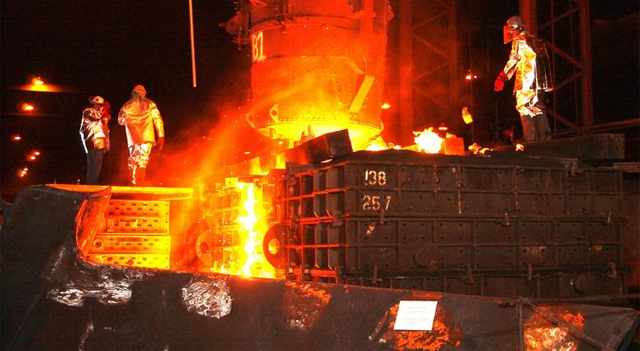
    PeroCycle, a specialist in closed-loop carbon recycling technology, has secured a major feasibility assessment contract with Jindal Steel (Oman) aimed at exploring the deployment of low-emission steelmaking technology at the Port of Duqm.

    The study will assess how PeroCycle’s proprietary carbon recycling system can be integrated into Jindal Steel’s large-scale steel operations, with the goal of converting industrial off-gases into reusable feedstock. The project could help establish a new benchmark for low-carbon steel production in the Middle East.

    Developed at the University of Birmingham in the U.K., PeroCycle’s technology targets the decarbonisation of heavy industries including steel, cement and chemicals. By recycling process off-gases back into production systems, the company says its technology has the potential to cut carbon emissions in sectors such as steelmaking by as much as 90%, while also reducing dependence on fossil-fuel-based reducing agents including coal, coke and natural gas.

    The system is designed to be incorporated into both new industrial facilities and existing plants through retrofitting, potentially helping manufacturers avoid stranded assets and the significant capital costs associated with building entirely new green production sites.

    Feasibility Study to Focus on Integration and Commercial Viability

    The assessment programme is intended to create a detailed framework for potential large-scale deployment. The work will centre on technical integration, system design, economic and environmental analysis, and implementation planning.

    One key area of the study will examine how PeroCycle’s system can operate alongside Vacuum Pressure Swing Adsorption (VPSA) and Pressure Swing Adsorption (PSA) technologies, which are used to separate and recover high-purity gases from industrial off-gas streams.

    The engineering phase will also include the preparation of detailed Process Flow Diagrams and mass and energy balance models to support system design and optimisation. In parallel, on-site evaluations will analyse the commercial value and profitability of the project, while deployment planning will seek to ensure any future installation can be integrated smoothly into existing production schedules.

    Grant Budge, CEO of PeroCycle, said: “We are honoured to be working alongside Jindal Steel (Oman), a company that is clearly at the forefront of the global decarbonisation transition. The feasibility assessment is more than just a study; it could be a blueprint for the future of the industry. By combining PeroCycle’s ability to recycle CO2 with Jindal’s operational excellence, we look to prove that decarbonisation and industrial growth can go hand-in-hand.”

    Harssha Shetty, CEO at Jindal Steel (Oman), commented: “Sustainability is a core pillar of our long-term strategy at Jindal Steel. Exploring innovative technologies like PeroCycle’s reflects our commitment to reducing our carbon footprint while maintaining our competitive edge in the global steel market. We look forward to seeing the technical and economic results of this study as we continue to lead the way in sustainable steelmaking.”

    Strategic Benefits for Both Companies

    For Jindal Steel, the initiative is expected to provide a data-driven pathway for reducing both direct operational emissions and indirect emissions linked to purchased electricity and energy use. The project could also lower long-term operating costs by decreasing reliance on externally sourced carbon inputs.

    For PeroCycle, the collaboration offers an opportunity to validate its technology within a large-scale industrial setting while strengthening its presence in the Middle East, a region increasingly focused on industrial decarbonisation initiatives. The study is also expected to support future engineering, manufacturing and construction work linked to a demonstrator-scale unit.

    Industry Engagement and Upcoming Conferences

    PeroCycle is scheduled to present its technology and decarbonisation strategy at several industry events later this year, including the Green Steel World Conference in Düsseldorf on 23 September, the World CCUS Conference in Edinburgh from 22–24 September, and the APAC CCUS and Hydrogen Decarbonisation Summit in Kuala Lumpur on 24 November.

    About PeroCycle

    PeroCycle is a U.K.-based industrial technology company spun out from the University of Birmingham. The business focuses on advanced carbon recycling technologies for foundation industries such as steel production. Its proprietary perovskite-based catalyst systems are designed to create a closed-loop process that converts carbon emissions into reusable industrial resources, supporting lower-cost decarbonisation pathways.

    About Jindal Steel (Oman)

    Jindal Steel (Oman), part of the global Jindal Group, operates one of the Middle East’s largest integrated steel manufacturing facilities at the Port of Duqm. The company produces a range of high-grade steel products and is focused on combining advanced industrial technologies with sustainable operating practices to support infrastructure and industrial demand worldwide.
  • Oil Prices Climb as Trump Rejects Iran’s Peace Response and Supply Concerns Intensify

    Oil Prices Climb as Trump Rejects Iran’s Peace Response and Supply Concerns Intensify

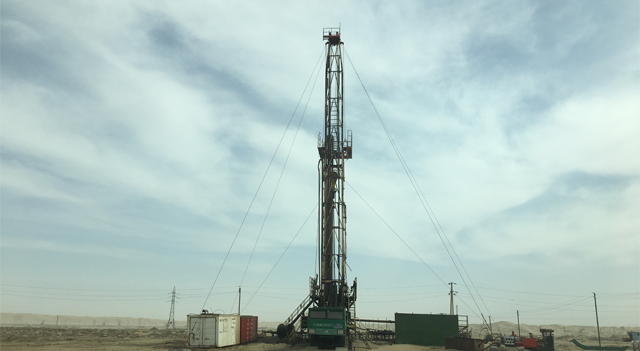
    Oil prices surged on Monday after President Donald Trump rejected Iran’s response to a U.S.-backed peace proposal as “unacceptable,” heightening concerns over global crude supplies while the Strait of Hormuz remained largely shut.

    Brent crude futures rose $4.04, or 3.99%, to $105.33 per barrel by 06:14 GMT. U.S. West Texas Intermediate crude gained $4.43, or 4.64%, reaching $99.85 a barrel.

    The gains followed steep declines last week, when both oil benchmarks lost around 6% amid hopes that the 10-week conflict could soon ease, potentially allowing energy shipments to resume through the Strait of Hormuz.

    “The oil market continues to trade like a geopolitical headline machine, with prices swinging sharply based on every comment, rejection, or warning coming from Washington and Tehran,” said Priyanka Sachdeva, senior market analyst at Phillip Nova.

    Focus Turns to Trump’s China Trip

    U.S. officials said Trump is expected to arrive in Beijing on Wednesday, where he is likely to discuss Iran alongside broader geopolitical and economic issues during meetings with Chinese President Xi Jinping.

    “Market attention now shifts squarely to President Trump’s visit to China this week,” IG market analyst Tony Sycamore said in a note.

    “There is hope he can persuade Beijing to leverage its influence over Iran to push for a comprehensive ceasefire and a resolution to the ongoing disruption in the Strait of Hormuz.”

    Traders are increasingly looking to China as a potential diplomatic influence that could help reduce tensions and restore stability to global oil markets.

    Supply Risks Continue to Support Crude Markets

    Saudi Aramco chief executive Amin Nasser said on Sunday that roughly one billion barrels of oil supply had been lost globally over the past two months, warning that energy markets may require significant time to recover even if exports begin flowing normally again.

    Shipping data from Kpler showed that three additional oil tankers carrying crude passed through the Strait of Hormuz last week with their tracking systems disabled, apparently to reduce the risk of Iranian attacks. The figures highlighted growing efforts by exporters to maintain Middle Eastern crude shipments despite escalating security concerns.

    “Even if the acute oil shock fades by late 2026, the ongoing risk of renewed disruption in the Strait of Hormuz, depleted inventories and weaker policy coordination is expected to keep a geopolitical risk premium embedded in prices,” ANZ analysts said in a note on Monday.

    ANZ analysts forecast that Brent crude will remain above $90 per barrel throughout 2026, before easing toward a range of $80 to $85 per barrel in 2027 as inventories gradually recover and global demand growth strengthens again.

    Chinese Oil Imports Fall to Near Four-Year Low

    Highlighting the impact of ongoing supply disruptions, official data released over the weekend showed that China’s crude oil imports fell in April to their lowest level in almost four years.

    The decline underscored the mounting pressure on global energy supply chains as instability in the Middle East continues to affect the world’s largest crude-importing economy.

  • Gold Falls as Trump Criticizes Iran Response and Oil Rally Fuels Inflation Worries

    Gold Falls as Trump Criticizes Iran Response and Oil Rally Fuels Inflation Worries

    Gold prices declined during Asian trading on Monday after strong gains in the previous week, as higher oil prices and a firmer U.S. dollar weighed on investor appetite for bullion following President Donald Trump’s criticism of Iran’s response to a U.S.-supported peace proposal.

    Spot gold dropped 1% to $4,669.82 per ounce by 02:35 ET (06:35 GMT), while U.S. gold futures slipped 1.1% to $4,678.31.

    The precious metal had risen more than 2% last week amid optimism that the United States and Iran could move closer toward a peace agreement.

    Trump Calls Iran Reply “Totally Unacceptable” as Oil Prices Surge

    President Trump described Tehran’s latest reaction to Washington’s peace initiative as “totally unacceptable,” cooling expectations for a near-term breakthrough in U.S.-Iran negotiations.

    According to The Wall Street Journal, Iran rejected U.S. demands to dismantle its nuclear facilities and refused to suspend uranium enrichment for two decades.

    In its counterproposal, which reportedly spanned multiple pages, Tehran suggested ending the conflict alongside a gradual reopening of the Strait of Hormuz to commercial shipping traffic. Iran also called on the United States to remove its blockade on Iranian vessels.

    The report added that Iran agreed part of its stockpile of highly enriched uranium could be diluted, while the remaining material would be transferred to a third-party country.

    Oil prices jumped nearly 5% in early trading as the closure of the Strait of Hormuz continued to disrupt markets.

    The increase in crude prices strengthened concerns that inflationary pressures could remain elevated globally, potentially forcing central banks — including the U.S. Federal Reserve — to keep interest rates higher for longer. That environment reduced the attractiveness of non-interest-bearing assets such as gold.

    Investors Watch Trump-Xi Talks This Week

    The U.S. dollar also gained ground during Asian trading after stronger-than-expected U.S. employment data released last week reinforced expectations that the Federal Reserve may postpone interest rate cuts. A stronger dollar generally makes gold more expensive for buyers using foreign currencies.

    The U.S. Dollar Index was up 0.2% during Asian market hours.

    Investor attention is now shifting toward upcoming U.S. inflation data as well as Trump’s scheduled visit to China later this week, where discussions with Chinese President Xi Jinping are expected to include Iran, trade tensions, and global energy security.

    Among other precious metals, silver rose 0.2% to $80.51 per ounce, while platinum fell 1.4% to $2,030.04 per ounce.

    Benchmark copper futures on the London Metal Exchange increased 0.3% to $13,608.33 per ton, while U.S. copper futures advanced 0.4% to $6.32 per pound.

  • U.S. Futures Ease as Trump Rejects Iran Proposal and Oil Prices Extend Gains: Dow Jones, S&P, Nasdaq, Wall Street

    U.S. Futures Ease as Trump Rejects Iran Proposal and Oil Prices Extend Gains: Dow Jones, S&P, Nasdaq, Wall Street

    U.S. stock futures moved modestly lower on Monday after President Donald Trump dismissed Iran’s latest response to a U.S.-led peace proposal as “unacceptable,” weakening hopes for a near-term resolution to the conflict in the Middle East. Oil prices also continued climbing as investors reacted to renewed concerns over global energy supply disruptions.

    Market participants were simultaneously tracking ongoing strength in artificial intelligence-linked equities while preparing for a week packed with important economic releases, including closely watched U.S. inflation data.

    Futures Dip Following Another Record Week

    As of 03:36 ET, Dow Jones futures were down 79 points, or 0.2%. Futures tied to the S&P 500 slipped 8 points, or 0.1%, while Nasdaq 100 futures declined 25 points, also by 0.1%.

    The weaker futures follow another strong stretch for Wall Street, where both the S&P 500 and Nasdaq Composite reached fresh record highs and extended their winning streak to six straight weeks.

    Recent gains have been supported in part by expectations that the Trump administration could still find a diplomatic path to end the conflict involving Iran, which has lasted for more than two months and disrupted global trade routes while raising concerns over broader economic stability. At the same time, enthusiasm surrounding artificial intelligence continues to fuel investor sentiment, driven by aggressive spending from major technology firms on expanding AI-related infrastructure and data centers.

    “For stocks stateside, the bull case is simply one that’s too robust to fight right now, as geopolitical optimism combines with stellar earnings growth, and a return of euphoria around the AI theme,” said Michael Brown, Senior Research Strategist at Pepperstone, in a note.

    “Unless and until any of those factors shift, the path of least resistance should continue to lead higher, with dips remaining relatively shallow for now, and likely being used as buying opportunities by most.”

    Trump Rejects Iran’s Reply

    Iranian state media reported that Tehran had submitted a response to the U.S. peace framework, focusing on ending military activity across all fronts while also requesting compensation for war-related damages.

    Iran also reaffirmed its control over the Strait of Hormuz, the strategically critical shipping route through which around 20% of global oil supplies pass. The waterway has been heavily disrupted during the conflict and remains effectively restricted by both Iranian and U.S. forces.

    Soon after reports of Iran’s response surfaced, Trump reacted on social media, writing: “I don’t like it — TOTALLY UNACCEPTABLE.” No additional explanation was provided.

    Washington has been advocating for a rapid end to the war before moving into broader discussions on major issues, especially Iran’s nuclear programme.

    Oil Prices Push Higher

    Oil markets continued to rally as geopolitical uncertainty persisted, with crude prices remaining significantly above levels seen prior to the outbreak of the conflict.

    Brent crude, the global oil benchmark, climbed 3.4% to $104.69 per barrel.

    “One would expect the market to become increasingly fatigued by the deluge of headlines and the back-and-forth. However, oil prices remain highly sensitive to noise around Iran, highlighting the significance of the ongoing supply disruptions in the Persian Gulf,” analysts at ING wrote in a note.

    Trump Expected to Visit China

    Despite the latest diplomatic tensions, analysts suggested Trump’s upcoming trip to China could still support future negotiations.

    Chinese state media reported that Trump is scheduled to visit China from May 13 to May 15 for talks with President Xi Jinping. The visit would mark the first major trip to Beijing by a U.S. president in nearly ten years and is intended to help stabilise relations between the world’s two largest economies.

    In addition to discussions surrounding Iran, Trump and Xi are expected to address trade tariffs and tensions involving Taiwan. Reports also indicate that both countries may seek to extend the trade truce agreed last October.

    Inflation Data Takes Centre Stage This Week

    Investors are also turning their focus toward this week’s U.S. consumer price index release, which is expected to provide further clues on inflation trends.

    The April CPI report, scheduled for release on Tuesday, could offer insight into how the conflict in the Middle East and rising energy prices are affecting inflationary pressures in the U.S. economy. In March, inflation accelerated sharply, driven largely by higher gasoline prices.

    Economists expect annual headline inflation to rise to 3.7% in April from 3.3% previously. On a monthly basis, however, price growth is projected to slow to 0.6% from 0.9%.

    Core CPI, which excludes food and energy prices, is forecast to increase modestly by 0.3%. Analysts remain focused on whether elevated oil prices will begin feeding through into a wider range of consumer goods and services beyond fuel costs.

  • European Stocks Mixed as Trump Rejects Iran’s Peace Proposal Response: DAX, CAC, FTSE100

    European Stocks Mixed as Trump Rejects Iran’s Peace Proposal Response: DAX, CAC, FTSE100

    European equity markets traded without clear direction on Monday as investors weighed renewed geopolitical tensions after U.S. President Donald Trump described Iran’s reply to a U.S.-backed peace proposal as “TOTALLY UNACCEPTABLE.”

    By 07:04 GMT, the pan-European Stoxx 600 index was broadly flat. Germany’s DAX edged 0.1% higher, while London’s FTSE 100 advanced 0.4%. France’s CAC 40 underperformed, slipping 0.5%.

    Iranian state television reported that Tehran had formally responded to a U.S. framework aimed at ending the conflict that has now lasted for more than two months. According to the reports, Iran’s proposal focused on bringing military operations to an end across all fronts while also seeking compensation for wartime damage.

    Tehran also reiterated its control over the Strait of Hormuz, the strategically important shipping corridor through which around 20% of global oil supply passes. The waterway has faced severe disruption during the conflict and is currently subject to blockades from both Iranian and U.S. forces.

    Shortly after details of Iran’s response emerged, Trump reacted on social media, saying he did not “like” the proposal. Washington has been pushing for a rapid conclusion to the conflict before entering broader negotiations on key issues, particularly Iran’s nuclear programme.

    Oil markets continued to react sharply to the escalating tensions. Brent crude futures, the international benchmark, climbed another 3.4% to $104.69 per barrel, extending gains well beyond pre-conflict levels and fuelling concerns over renewed inflationary pressure globally.

    Away from geopolitical developments, investors also remained focused on the ongoing rally in artificial intelligence-linked stocks. Continued enthusiasm surrounding the AI sector has helped U.S. equity markets absorb much of the uncertainty tied to the conflict and reach fresh record highs in recent trading sessions.

    Among individual movers, shares in Delivery Hero (TG:DHER) rose more than 5% after Prosus sold a 5% stake in the company to Hong Kong-based investor Aspex in a deal valued at 335 million euros.

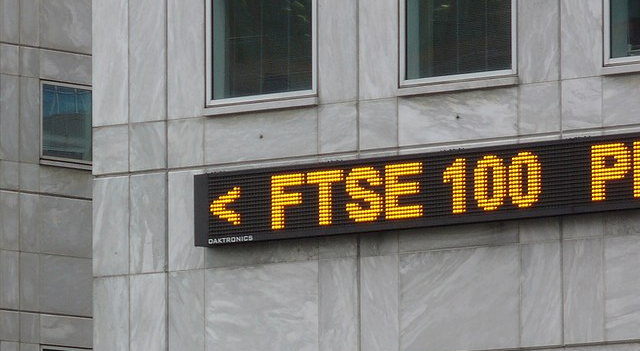
  • FTSE 100 Today: Energy Stocks Support Markets as US-Iran Talks Stall

    FTSE 100 Today: Energy Stocks Support Markets as US-Iran Talks Stall

    British equities traded slightly higher on Monday after weekend ceasefire discussions between the United States and Iran failed to produce a breakthrough, with gains in energy shares helping offset broader geopolitical concerns. Investor sentiment remained cautious after U.S. President Donald Trump rejected Tehran’s latest peace proposal as “totally unacceptable.”

    By 07:30 GMT, London’s benchmark FTSE 100 index was up 0.20%, while France’s CAC 40 declined 0.64% and Germany’s DAX slipped 0.04%.

    Sterling weakened against the dollar, with GBP/USD falling 0.24% to 1.3601 as investors moved toward safe-haven assets. Brent crude oil climbed above $104 per barrel overnight amid renewed fears surrounding Middle East supply disruptions.

    Iran’s latest response, reportedly delivered through Pakistani intermediaries, called for war reparations, recognition of Iranian sovereignty over the Strait of Hormuz, and full sanctions relief within 30 days. Iranian state media quoted an official as saying no one in Tehran drafts proposals designed to satisfy Trump, adding that his dissatisfaction was viewed positively by Iran.

    The Strait of Hormuz remains at the centre of the dispute. Iranian lawmakers and state media maintained that the strategic shipping route would not return to its previous operating conditions following the conflict, a stance firmly opposed by Washington.

    U.S. Energy Secretary Chris Wright reiterated on Sunday that unrestricted passage through the Strait of Hormuz remained non-negotiable for the United States. Trump also suggested the possibility of additional military action, stating that the U.S. had completed around 70% of its intended targets and “could go in for two more weeks.”

    On the domestic front, Prime Minister Keir Starmer is expected to deliver a major speech later today outlining closer ties with the European Union as a central objective of his government. Markets will be watching for any signals regarding trade normalisation, which could provide support for UK mid-cap stocks during the session.

    UK Round-Up

    Palantir (NASDAQ:PLTR) and other contractors have reportedly been granted extensive access to identifiable patient data through administrative privileges on NHS England’s primary data platform, according to the Financial Times. Internal briefing documents acknowledged “considerable public interest and concern” regarding Palantir’s involvement with NHS systems and recommended imposing limits and expiry periods on external access, although the permissions had already been approved.

    Compass Group (LSE:CPG) upgraded its forecast for full-year underlying operating profit growth to above 11%, compared with previous guidance of around 10%, after strong new contract wins drove robust first-half trading. The catering giant said continued demand for workplace dining services is expected to outweigh any impact from companies reducing office space as artificial intelligence reshapes white-collar employment patterns.

    Heathrow Airport reported a 5% decline in passenger traffic during April to 6.7 million travellers, as conflict involving Iran significantly reduced Middle East traffic by more than 50%. However, transfer passenger volumes increased 10% as more travellers rerouted through London. Chief executive Thomas Woldbye described the disruption as “short-term” ahead of an updated 2026 passenger forecast due in June.

  • Empire Metals (EEE) Raises £8 Million to Advance Pitfield Titanium Project and ASX Listing Plans

    Empire Metals (EEE) Raises £8 Million to Advance Pitfield Titanium Project and ASX Listing Plans

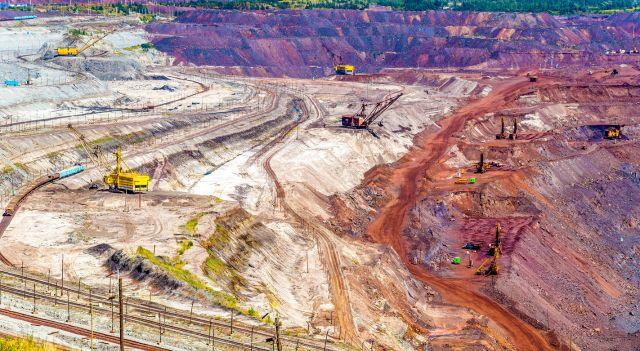
    Empire Metals (LSE:EEE) has secured £8 million through a share subscription involving existing institutional investors, increasing the company’s pro-forma cash position to approximately £14.5 million. The fundraising comes as Empire continues development work at its Pitfield titanium project in Western Australia and moves ahead with plans for a dual listing on the Australian Securities Exchange in the second half of 2026.

    The new capital will be used to accelerate engineering and economic studies at Pitfield, alongside additional drilling aimed at expanding and upgrading the project’s Mineral Resource Estimate. Empire also intends to advance pilot-scale production activities, metallurgical testing, and product development programmes as it targets potential supply opportunities in the TiO₂ pigment and titanium sponge metal markets.

    In addition, the funds will support ongoing offtake discussions, cover costs associated with the proposed ASX listing, and provide general working capital as the company continues to progress the project toward commercialisation.

    Empire Metals’ outlook remains constrained by its lack of revenue generation, recurring losses, and continued cash burn, all of which contribute to ongoing funding dependence. Technical indicators also remain weak, with the shares trading below major moving averages and reflecting negative momentum. While the company maintains a relatively low-debt balance sheet, this has yet to translate into sustainable profitability.

    More About Empire Metals

    Empire Metals is an exploration and resource development company focused on advancing the Pitfield Titanium Project in Western Australia. The project hosts what the company describes as one of the world’s largest and highest-grade titanium deposits, with mineralisation beginning at surface and showing strong grade continuity. Conventional processing testwork has already produced high-purity TiO₂ suitable for both pigment and titanium metal applications.

  • Shoe Zone (SHOE) Falls Into First-Half Loss as Consumer Weakness Pressures Outlook

    Shoe Zone (SHOE) Falls Into First-Half Loss as Consumer Weakness Pressures Outlook

    Shoe Zone (LSE:SHOE) reported a difficult first half, with revenue declining 12% to £62.9 million as weaker consumer confidence, store closures, and softer online demand weighed on performance. The retailer moved to a pre-tax loss of £5.3 million during the period, prompting management to lower its full-year outlook and suspend the interim dividend.

    In response to the weaker trading environment, the company is accelerating its transition toward larger-format stores while tightening capital expenditure and reducing the footprint of its distribution operations. Despite the challenging conditions, Shoe Zone ended the period with a net cash position of £7.5 million, maintaining financial flexibility amid ongoing macroeconomic and geopolitical uncertainty.

    Operationally, the group closed 14 stores and opened four larger-format locations, increasing the number of refitted stores within its estate to 206. The company has also reduced average lease durations to 2.3 years in an effort to preserve operational flexibility.

    Alongside store portfolio changes, Shoe Zone continues to invest in digital initiatives, including the rollout of a new mobile app and expansion through TikTok Shop. Management cautioned, however, that higher transport costs, weaker sterling, and elevated fuel prices are expected to place further pressure on margins, despite improvements in product margins and lower inventory levels aimed at matching softer customer demand.

    The company’s outlook remains constrained by deteriorating profitability and a strongly bearish technical picture, with the shares trading below key moving averages and showing negative MACD momentum. These pressures are partly balanced by comparatively stable cash generation and a moderate valuation based on earnings metrics.

    More About Shoe Zone

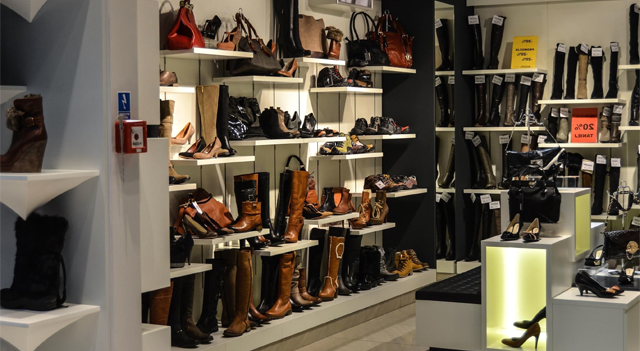
    Shoe Zone PLC is a UK footwear retailer operating a nationwide chain of value-focused stores alongside an expanding digital business. The company sells affordable footwear through 259 retail outlets, with an increasing emphasis on larger-format stores, while also growing its online presence through proprietary e-commerce platforms and third-party marketplace partnerships targeting price-conscious consumers.

  • ASOS (ASC) Agrees £67.5 Million Sale of Lichfield Fulfilment Centre to M&S

    ASOS (ASC) Agrees £67.5 Million Sale of Lichfield Fulfilment Centre to M&S

    ASOS (LSE:ASC) has agreed to sell its Lichfield fulfilment centre, along with the related automation equipment, to Marks and Spencer for £67.5 million. The company expects to realise net proceeds of at least £66 million from the transaction following a competitive sale process.

    Management said the disposal reflects the group’s reduced long-term capacity requirements following the introduction of a more flexible fulfilment model and the rollout of ASOS Fulfilment Services. ASOS believes its remaining distribution facilities in Barnsley and Berlin are sufficient to support future operational growth and customer demand.

    The transaction, which qualifies as significant under UK listing regulations, is expected to generate a one-off pre-tax profit of approximately £85 million. ASOS also anticipates annual cash savings of around £6 million through lower rent and occupancy expenses.

    The company plans to use the proceeds to strengthen its cash position, preserve financial flexibility, and support its ongoing balance sheet restructuring efforts. The sale follows ASOS’s refinancing activities completed in 2025 and the recent repayment of convertible bonds, with management continuing to emphasise disciplined capital allocation.

    ASOS’s broader outlook remains constrained by weak financial fundamentals, including declining revenue, continuing losses, and elevated leverage levels. However, recent earnings guidance has provided some improvement in sentiment through expectations for stronger margins and EBITDA performance, alongside reductions in debt and inventory and the benefits of refinancing measures. Technical indicators remain mixed, while valuation metrics continue to lack support due to the company’s negative price-to-earnings ratio and absence of a dividend.

    More About ASOS plc

    ASOS plc is a global online fashion retailer founded in 2000, serving approximately 17 million active customers across more than 100 markets worldwide. The company offers a combination of owned brands, including ASOS DESIGN, ARRANGE, COLLUSION, Topshop, and Topman, together with products from a wide range of third-party fashion labels. Its operations are supported by an agile fulfilment network that incorporates ASOS Fulfilment Services and partner-led logistics solutions.

  • CelLBxHealth (CLBX) Accelerates Cost Reduction Programme and Targets Stronger 2026 Revenue Growth

    CelLBxHealth (CLBX) Accelerates Cost Reduction Programme and Targets Stronger 2026 Revenue Growth

    CelLBxHealth (LSE:CLBX) has implemented a significant organisational restructuring during the first quarter of 2026 as part of its updated strategic plan, reducing headcount to 39 employees and achieving more than £6.6 million in annualised cash operating cost savings. Management indicated that additional cost reductions are expected during the second quarter as the company continues efforts to streamline operations while retaining the capability needed to meet key commercial objectives.

    The company reported cash reserves of £4.3 million at the end of March, reflecting the impact of restructuring-related expenses. Alongside the cost-cutting measures, CelLBxHealth is intensifying its commercial expansion strategy, including the appointment of a new head of U.S. sales.

    Management is targeting revenue of at least £2.1 million for 2026, representing projected growth of approximately 50% compared with the previous year. The company also disclosed that it is engaged in advanced discussions with a major private U.S. healthcare provider regarding two clinical studies and is nearing a master services agreement with a top ten global pharmaceutical company involving use of its Parsortix platform.

    CelLBxHealth said these potential agreements could represent transformational commercial opportunities, with the potential to further increase revenue expectations and strengthen the company’s position within oncology diagnostics and drug development markets.

    The company’s outlook remains affected by substantial financial challenges and bearish technical indicators, which continue to weigh heavily on sentiment. While recent corporate developments and operational progress provide some positive momentum, concerns surrounding financial performance and valuation continue to dominate the broader investment case.

    More About CelLBxHealth plc

    CelLBxHealth plc is a circulating tumour cell (CTC) intelligence company focused on developing technologies for cancer research, drug development, and clinical oncology applications. Its proprietary Parsortix platform is designed to isolate circulating tumour cells from blood samples for downstream imaging, proteomic, and genomic analysis. The company generates revenue through product sales, laboratory services, and lab-developed testing solutions delivered via CROs, clinical laboratories, and strategic partnerships.