Author: Fiona Craig

  • Phoenix Copper Secures $75M Bond Deal to Fund Empire Mine Development

    Phoenix Copper Secures $75M Bond Deal to Fund Empire Mine Development

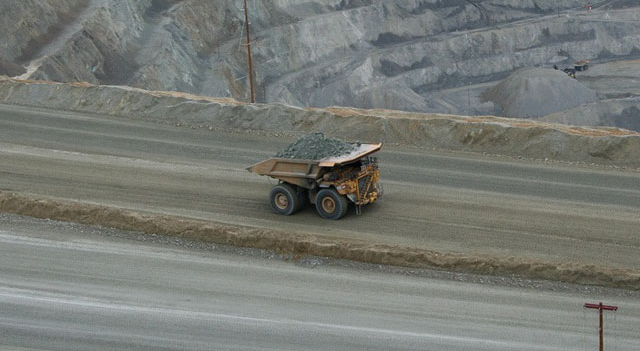
    Phoenix Copper Limited (LSE:PXC) has entered into a Letter of Intent with a U.S.-based investor for a proposed $75 million corporate copper bond issuance. The funds are earmarked for advancing construction at the company’s Empire open-pit mine and initiating a new phase of underground exploration drilling. While the financing deal marks a major step forward in Phoenix’s expansion plans, it remains subject to completion of legal documentation and final due diligence.

    Strengthening the Foundation for Growth

    The proposed bond placement is poised to significantly bolster Phoenix Copper’s financial resources, enabling the company to ramp up its development activities and reinforce its position in the copper production market. The capital will specifically support the infrastructure build-out at Empire Mine and facilitate deeper geological assessment through targeted drilling.

    About Phoenix Copper

    Phoenix Copper is a growth-focused metals exploration and development firm with a primary focus on copper, gold, and silver. Its operations are centered in the western United States, where it oversees the Empire Mine project in Idaho—an area with a long history of high-grade mineral production, including copper, zinc, silver, gold, and tungsten.

    Since acquiring the project in 2017, Phoenix has significantly expanded its open-pit resource estimates and continues to pursue additional exploration opportunities in the surrounding area. The company is positioning itself as a future U.S.-based copper producer with a diversified asset base and a focus on sustainable development.

  • Gold Prices Surge as Israeli Strike on Iran Spurs Safe-Haven Buying

    Gold Prices Surge as Israeli Strike on Iran Spurs Safe-Haven Buying

    Gold prices continued their upward trajectory in Asian markets on Friday, fueled by a spike in safe-haven demand following a significant Israeli military strike on Iran. The attack targeted multiple nuclear and military facilities, raising fears of a broader conflict in the Middle East.

    Earlier in the week, gold had already been gaining ground due to ongoing U.S.-China trade uncertainty. While some progress was reported, the lack of concrete details left investors on edge.

    By 22:50 ET (02:50 GMT), spot gold had climbed 1.5% to $3,436.97 per ounce, while August gold futures advanced 1.6% to $3,459.60.

    Israel’s Preemptive Strike Triggers Market Jitters

    The precious metal’s rally accelerated after Israel launched a wide-reaching airstrike early Friday, hitting dozens of Iranian installations. Media reports noted widespread explosions in Tehran, prompting Iran to activate its air defense systems. Air raid sirens sounded across Israel, which had entered a state of emergency in anticipation of potential retaliation.

    According to Reuters, two U.S. officials confirmed that the military operation was conducted solely by Israel, with no involvement from the United States. U.S. Secretary of State Marco Rubio also emphasized that Israel acted independently, describing the strike as an act of self-defense.

    Macroeconomic Drivers Strengthen Gold’s Appeal

    Beyond geopolitical risk, gold’s gains were also supported by recent U.S. economic data. A rise in jobless claims and subdued producer price inflation increased bets that the Federal Reserve may cut interest rates sooner than expected. These expectations have enhanced the attractiveness of gold, a non-yielding asset, in uncertain times.

    With tensions escalating between Israel and Iran, analysts suggest gold prices could continue to climb as investors seek shelter amid rising geopolitical risk.

    Elsewhere in the metals market, platinum futures slipped 0.8% but remained close to four-year highs. Silver futures gained 1%, hitting $36.625 per ounce — near a 13-year peak. Industrial metals showed a mixed performance, with benchmark copper on the London Metal Exchange edging down 0.3% to $9,678.70 a ton, while U.S. copper futures dipped 0.5% to $4.8195 per pound.

  • Oil Prices Spike Over 8% Following Israeli Airstrikes on Iran

    Oil Prices Spike Over 8% Following Israeli Airstrikes on Iran

    Oil markets saw a dramatic surge in early Asian trading on Friday, following a significant Israeli military operation targeting Iran. The escalation has heightened concerns about a wider conflict in the Middle East and potential disruptions to global oil supply.

    As of 21:22 ET (01:22 GMT), July contracts for Brent crude jumped 8.5%, trading at $75.15 per barrel — the highest level recorded since early February. Meanwhile, West Texas Intermediate (WTI) futures climbed 8.4% to $73.68 per barrel.

    Tensions Soar as Israel Launches Strikes on Iran

    According to media sources, Israel carried out a large-scale preemptive air assault on Iranian territory early Friday, targeting numerous military and nuclear installations. Israeli Defence Minister Israel Katz warned of an imminent retaliatory response, stating that missile and drone attacks on Israeli civilians were anticipated.

    Tehran was rocked by multiple explosions, and Iranian state media confirmed the full activation of air defense systems across the capital.

    Despite the scale of the assault, two U.S. officials told Reuters that the United States was not involved in the operation, emphasizing that Israel acted independently. CNN also reported that former President Donald Trump had convened a cabinet meeting in response to the unfolding situation.

    The sharp increase in oil prices reflects investor anxiety over the geopolitical fallout, with fears that any prolonged conflict between Israel and Iran could severely impact crude production and shipping routes across the region — a key artery for global energy supply.

  • WH Smith Shares Rise Following Report of Investment by Palliser Capital

    WH Smith Shares Rise Following Report of Investment by Palliser Capital

    WH Smith PLC (LSE:SMWH) saw its stock price gain up to 2.9% on Thursday amid news that activist investor Palliser Capital has acquired a significant holding in the company.

    According to a report from Sky News, Palliser has accumulated close to a 5% stake in the British retailer, with the investment valued at roughly £65 million ($88.3 million) based on current market prices.

    The disclosure of Palliser’s position was expected to coincide with a major industry event taking place Thursday.

    Sources familiar with the matter indicated that Palliser views WH Smith’s expansion in the U.S. as a key driver of future growth and believes the retailer’s shares could nearly double in value over the next three years.

  • Dow Jones, S&P, Nasdaq,Wall Street Eyes Lower Open Amid Trade Ambiguity and Middle East Tensions

    Dow Jones, S&P, Nasdaq,Wall Street Eyes Lower Open Amid Trade Ambiguity and Middle East Tensions

    U.S. equity futures were trending downward early Thursday, suggesting a sluggish start to the session as market participants continue to grapple with uncertainty around global trade policies and rising geopolitical risk. The Dow Jones, S&P 500, and Nasdaq futures all pointed toward modest losses, building on the retreat seen in the prior session.

    Trade Deal Doubts Cloud Market Sentiment

    Investors remain skeptical of a preliminary trade arrangement between the U.S. and China announced Wednesday, as crucial details of the framework remain undisclosed. President Donald Trump noted that he would soon dispatch letters to various U.S. trading partners outlining new tariff rates. He also mentioned a willingness to prolong the current 90-day tariff suspension due in early July, though he stated it might not be necessary.

    Commerce Secretary Howard Lutnick added that the tentative agreement includes mutual concessions on export controls for key technologies and commodities. Trump later took to Truth Social, emphasizing that China would front-load the delivery of rare earths and magnets, while the U.S. would enforce a combined 55% tariff rate, compared to China’s 10%.

    Despite these announcements, the lack of specificity and the absence of Chinese President Xi Jinping’s endorsement have led investors to adopt a risk-averse stance.

    Heightened Geopolitical Risks Further Weigh on Markets

    Tensions in the Middle East have also contributed to investor unease. A top Iranian security official warned that Iran is on “maximum military alert” and vowed a swift response to any aggressive moves from the U.S. or Israel. In response to the escalating risks, Trump confirmed the relocation of American personnel from the region for safety.

    These developments have driven oil prices sharply higher, boosting energy stocks but simultaneously stoking broader market anxiety.

    Wednesday’s Volatility: Early Gains Erased

    U.S. markets initially rose Wednesday, buoyed by softer-than-expected inflation data, before surrendering gains and closing in the red. The Nasdaq led the losses, falling 99.11 points, or 0.5%, to close at 19,615.88. The S&P 500 declined 16.57 points (-0.3%) to 6,022.24, and the Dow inched lower by just 1.10 points to finish at 42,865.77.

    The reversal was widely attributed to profit-taking, as indices touched their highest intraday levels in more than three months before pulling back.

    Inflation Update: Cooler Than Anticipated

    New figures from the Labor Department revealed that consumer prices edged up only 0.1% in May, slightly below forecasts of a 0.2% gain. Core CPI, which excludes volatile food and energy components, also increased by 0.1%, falling short of expectations.

    Annually, headline inflation rose to 2.4%, while core inflation held steady at 2.8%. Economists had anticipated slight increases in both metrics, suggesting inflationary pressures may be stabilizing—a development that could influence the Federal Reserve’s upcoming decisions on interest rates.

    Sector Highlights: Airlines Drop, Energy Rallies

    Travel and industrial stocks were among the biggest decliners. Airline shares tumbled, with the NYSE Arca Airline Index down 3.4%. Steel producers also faltered, dragging the NYSE Arca Steel Index lower by 1.5%.

    Retailers and homebuilders posted losses as well, reflecting broader concerns over consumer resilience. On the flip side, energy stocks outperformed, supported by surging crude oil prices amid mounting geopolitical uncertainty.

  • DAX, CAC, FTSE100, European Stocks Move Lower On U.S.-China Trade Tensions

    DAX, CAC, FTSE100, European Stocks Move Lower On U.S.-China Trade Tensions

    European stocks on the DAX, CAC and FTSE100 have moved mostly lower on Thursday, with U.S.-China trade tensions and escalating tensions in the Middle East keeping investors worried.

    There was no relief from the U.S.-China trade truce as the much-hyped framework agreement lacked specifics.

    Elsewhere, U.S. President Donald Trump expressed diminished confidence in reaching a nuclear deal with Iran, emphasizing that Iran must not acquire nuclear weapons.

    Also, the U.S. has initiated a partial evacuation of its embassy in Iraq and authorized voluntary departures from Bahrain and Kuwait, citing heightened security concerns.

    The pan European STOXX 600 Index is down by 0.5 percent after declining 0.3 percent on Wednesday.

    The German DAX Index is down by 0.9 percent and the French CAC 40 Index is down by 0.4 percent, although the U.K.’s FTSE 100 Index has bucked the downtrend and risen by 0.2 percent.

    The British pound edged lower on rate cut bets after official data showed the U.K. economy shrank more than expected in April largely reflecting a fall in services output.

    Real GDP declined 0.3 percent month-on-month in April, following a growth of 0.2 percent in March.

    This was the biggest fall since October 2023. Analysts had expected GDP to drop marginally by 0.1 percent.

    Hexagon AB (BIT:1HEXA)has moved to the downside after it announced an agreement to acquire France’s APEI, a company specializing in aerial mapping capabilities.

    Airbus SE (EU:AIR) has also declined after making a bold prediction about the future of aviation. It was said the global commercial aircraft fleet will double in size to almost 50,000 planes over the next 20 years.

    Travel-related stocks are also moving lower after weak airfare data from the United States and amid concerns about rising fuel costs.

    On the other hand, supermarket chain Tesco (LSE:TSCO) has moved sharply higher as its first quarter sales beat estimates.

    Halma (LSE:HLMA) has also jumped. The health and safety device maker lifted its organic revenue growth guidance for fiscal year 2026 after annual adjusted pretax profit beat expectations.

  • Dow Jones, S&P, Nasdaq, Wall Street Set for Lower Open Amid Trade Uncertainty and Key Inflation Data

    Dow Jones, S&P, Nasdaq, Wall Street Set for Lower Open Amid Trade Uncertainty and Key Inflation Data

    U.S. stock futures drifted lower Thursday morning, as investors weighed mixed signals on trade policy, rising geopolitical risk, and awaited fresh inflation data. President Donald Trump suggested flexibility on the timeline for his planned tariffs, while concerns lingered over mounting tensions in the Middle East.

    Futures Signal Tepid Start

    As of 03:37 ET, 07:37 GMT, Dow Jones futures were down 106 points (-0.3%), S&P 500 futures slipped 13 points (-0.2%), and Nasdaq 100 futures dropped 48 points (-0.2%). This follows a muted session Wednesday where the Dow finished flat, while the S&P 500 and Nasdaq both edged lower.

    Markets reacted cautiously to May’s softer-than-expected consumer price index, with investors digesting the broader implications for Fed policy and economic momentum.

    Trade Talks Remain a Key Risk Factor

    Optimism over a U.S.-China trade breakthrough is being tempered by a lack of concrete details. While Trump praised a framework agreement as “great,” analysts remain skeptical about the durability of any truce, especially with existing restrictions on AI chip exports still in place.

    Adding to the uncertainty, Trump revealed plans to issue letters to dozens of countries detailing proposed trade agreements. While negotiations are underway with 17 nations, only the UK has finalized a deal so far. The president hinted that extending the current 90-day tariff delay beyond the July 8 deadline is a possibility, but not a certainty.

    Inflation in Focus: PPI Data Due

    Attention is now turning to May’s Producer Price Index (PPI), due later today. Economists expect a modest 0.2% monthly increase, reversing April’s 0.5% decline. On an annual basis, PPI is projected to accelerate to 2.6% from 2.4%.

    April’s sharp drop in wholesale services prices—particularly in travel and hospitality—was the steepest since 2009. Analysts suggest reduced tourism may reflect growing unease over Trump’s international policy direction.

    Because components like accommodation, airline fares, and financial services feed into the Fed’s preferred inflation gauge, today’s data could influence rate expectations heading into the second half of the year.

    Oracle Lifts Outlook, Surges in After-Hours Trading

    Oracle Corporation (NYSE:ORCL) jumped in after-hours trading after the company raised its full-year revenue guidance. The tech firm now expects fiscal 2026 revenue to top $67 billion, up from its previous forecast of 15% annual growth to nearly 17%.

    CEO Safra Catz cited strong demand for Oracle’s cloud services and AI infrastructure solutions as key growth drivers. The company anticipates cloud-related revenue, including both applications and infrastructure, to rise over 40% in fiscal 2026—up sharply from 24% last year.

    Analysts welcomed the bullish outlook but noted that meeting such strong demand will require significant capital outlays, potentially weighing on cash flow.

    Oil Prices Pull Back on Geopolitical Tensions

    Crude prices slipped early Thursday, reversing part of Wednesday’s gains. Brent fell 1.3% to $68.89 per barrel, while West Texas Intermediate dropped 1.2% to $67.33.

    Wednesday’s 4% rally was fueled by progress in U.S.-China trade discussions and rising geopolitical risk in the Middle East. Investors remain on edge after the U.S. authorized the voluntary departure of military families from the region, amid fears of escalating conflict with Iran.

  • European Markets Dip Amid Trade Uncertainty and Escalating Middle East Tensions

    European Markets Dip Amid Trade Uncertainty and Escalating Middle East Tensions

    European equities edged lower on Thursday as investor sentiment was rattled by renewed geopolitical concerns in the Middle East and growing skepticism over U.S.-China trade progress. By 03:05 ET, Germany’s DAX had fallen 0.9%, France’s CAC 40 declined 0.4%, and the FTSE 100 in London remained nearly flat.

    Doubts Cloud U.S.-China Trade Agreement

    Optimism around a U.S.-China trade agreement waned overnight despite U.S. President Donald Trump’s assertion that a deal had been finalized. However, with Chinese President Xi Jinping yet to publicly endorse the agreement and key details still unclear, confidence has slipped. U.S. restrictions on advanced AI chip exports to China also remain in force.

    Adding to trade tensions, President Trump stated on Wednesday that formal notifications on new tariffs would be sent to major global economies in the coming weeks. This move has cast doubt on the possibility of sealing additional trade deals before the July 9 deadline, and a recent Schroders survey identified trade-related fears as the top concern among global investors.

    Rising Middle East Tensions Pressure Markets

    Market jitters were further fueled by rising instability in the Middle East. President Trump announced the withdrawal of U.S. personnel from Iraq and neighboring countries, citing increasing security threats. He also expressed fading confidence in nuclear negotiations with Iran, warning that uranium enrichment by Tehran would not be tolerated.

    Reports suggest Israel may be preparing for a potential military strike if U.S.-Iran talks break down, compounding fears of regional conflict. Additional discussions between U.S. and Iranian officials are expected over the weekend.

    UK Economic Data Shows Unexpected Contraction

    The UK economy contracted sharply in April, with GDP falling 0.3% from March, well below expectations. It marks the largest monthly drop since October 2023. According to the Office for National Statistics, the downturn was exacerbated by steep declines in exports to the U.S., linked to the recent imposition of American tariffs.

    ONS director Liz McKeown noted that April saw the most significant monthly drop in goods exports to the U.S. in recent years, affecting nearly every major export category.

    Tesco Reports Solid Q1 Growth

    Retail giant Tesco PLC (LSE:TSCO) posted a 5.5% rise in group like-for-like sales for the first quarter of its 2025–26 financial year. Growth was seen across all key regions, including the UK, Ireland, Booker, and Central Europe, underpinning the company’s strong market position.

    Crest Nicholson Shows Strategic Progress

    UK housebuilder Crest Nicholson (LSE:CRST) delivered stable interim results, suggesting its refreshed business strategy is gaining traction despite ongoing challenges in the property sector.

    Oil Prices Retreat After Geopolitical Surge

    Crude prices slipped early Thursday, reversing some of Wednesday’s sharp gains. Brent crude fell 0.8% to $69.20 a barrel, while West Texas Intermediate declined 0.7% to $67.67.

    The previous day’s rally—over 4%—was driven by fears of conflict in the Middle East, which could disrupt major oil routes and production infrastructure. However, Thursday’s modest retreat reflected cautious profit-taking as markets digested the latest geopolitical developments.

  • FTSE 100 Opens Flat as UK Economy Contracts; Pound Remains Above $1.35

    FTSE 100 Opens Flat as UK Economy Contracts; Pound Remains Above $1.35

    The FTSE 100 index began Thursday’s trading session virtually unchanged, reflecting investor caution after fresh data revealed a surprising contraction in the UK economy. As of 07:15 GMT, the UK’s blue-chip index edged up just 0.01%, while the pound slipped 0.07% against the U.S. dollar but remained above the $1.35 mark.

    Meanwhile, broader European markets saw declines, with Germany’s DAX falling 0.8% and France’s CAC 40 down 0.5%, amid renewed concerns over economic resilience across the continent.

    UK GDP Falls Sharply in April

    The UK economy shrank by 0.3% in April, according to the latest figures from the Office for National Statistics—more than double the anticipated 0.1% decline. The drop partially reverses the 0.7% expansion seen in the first quarter and was driven by rising energy costs and the impact of recent tax increases. On a year-over-year basis, GDP growth slowed to 0.9%, down from 1.1% the previous month.

    Tesco Sees Solid Sales Growth in Q1

    Tesco PLC (LSE:TSCO) reported a 5.5% rise in group like-for-like sales for the first quarter of its 2025–26 fiscal year. Strong performance across the UK, Ireland, Booker, and Central Europe helped push total group sales—excluding fuel and VAT—to £16.38 billion for the 13-week period ending May 24.

    Halma Outperforms Expectations with Profit Boost

    Engineering and technology group Halma PLC (LSE:HLMA) exceeded market expectations for its fiscal year ended March 31, 2025. Adjusted pre-tax profit rose by 16% to £459.4 million, with revenue up 11% to £2.25 billion. The EBIT margin climbed to 21.6%. Halma also reported a strong start to FY2026, forecasting high single-digit organic revenue growth and maintaining margins within its 19–23% target range.

    Wood Group Extends Acquisition Talks with Sidara

    John Wood Group PLC (LSE:WG.) has granted Sidara an extension until June 30 to either submit a formal acquisition offer or step away from the deal. The deadline extension gives Sidara more time to refine its proposal for acquiring the engineering and consulting firm.

    Crest Nicholson Delivers Resilient Interim Performance

    Crest Nicholson Holdings PLC (LSE:CRST) shared a stable set of results for the first half of 2025, suggesting its refined strategic focus is beginning to bear fruit despite continued housing market headwinds. The company completed 739 homes during the period—a 6% drop year-on-year—while private sales, including wholesale deals, fell to 107 units from 177 a year ago.

  • Halma Reports Strong Annual Results and Proposes Dividend Hike

    Halma Reports Strong Annual Results and Proposes Dividend Hike

    Halma plc (LSE:HLMA) has released its financial results for the year ending March 31, 2025, announcing a proposed 7% increase in its final dividend to 14.12p per share. This planned dividend boost—subject to approval at the upcoming Annual General Meeting—reflects Halma’s solid financial performance and ongoing commitment to delivering value to shareholders.

    With a broad international footprint spanning the UK, Europe, North America, and Asia Pacific, Halma continues to strengthen its global presence. The company’s sustained operational success has earned it recognition as one of Britain’s Most Admired Companies for six years running.

    Halma’s outlook remains positive, supported by record revenue figures and constructive earnings call commentary. While technical indicators point to some resistance in share price momentum and valuation metrics suggest the stock may be trading at a premium, the company’s strong cash flow and active acquisition strategy provide a solid foundation for continued growth. However, exposure to the Healthcare sector and potential currency volatility present areas to monitor.

    About Halma plc

    Halma is an international group of companies focused on life-saving technologies that promote safety, environmental stewardship, and healthcare innovation. Operating across three core sectors—Safety, Environmental & Analysis, and Healthcare—the company delivers solutions that protect lives, monitor the environment, and support medical outcomes. Halma employs over 9,000 people in more than 20 countries and is a constituent of the FTSE 100 index.