Author: Fiona Craig

  • Oil Stabilizes After Slide as Markets Monitor US–Iran Diplomacy

    Oil Stabilizes After Slide as Markets Monitor US–Iran Diplomacy

    Oil prices found some footing in Asian trading on Wednesday, following a roughly 2% drop in the previous session, as investors assessed developments in U.S.–Iran negotiations while remaining cautious about the chances of a swift agreement that could ease supply risks.

    Brent crude futures rose 15 cents, or 0.22%, to $67.57 a barrel by 0737 GMT. U.S. West Texas Intermediate (WTI) crude gained 12 cents, or 0.19%, to $62.45. Both benchmarks remained near their lowest levels in about two weeks.

    Tehran and Washington agreed on key “guiding principles” during talks on Tuesday aimed at resolving their long-running nuclear dispute. However, Iranian Foreign Minister Abbas Araqchi stressed that such progress does not imply that a comprehensive deal is close.

    Some analysts questioned how quickly negotiations could move forward.

    “Crude oil prices look poised for a technical rebound … However, a finalised agreement remains distant, and markets remain cautious about the durability of diplomatic momentum,” said Sugandha Sachdeva, founder of SS WealthStreet, a New Delhi-based research firm.

    Separately, Iran and Russia are scheduled to carry out joint naval drills in the Sea of Oman and the northern Indian Ocean on Thursday, according to Iran’s semi-official Fars news agency. The exercises follow recent maneuvers by Iran’s Revolutionary Guards in the Strait of Hormuz.

    Political risk advisory Eurasia Group wrote in a note on Tuesday that it assigns a 65% likelihood of U.S. military strikes against Iran by the end of April.

    Attention is also turning to U.S. supply data, with the American Petroleum Institute set to publish its weekly inventory figures later Wednesday, followed by official statistics from the Energy Information Administration on Thursday.

    A Reuters survey indicated that analysts expect U.S. crude stockpiles to have risen last week, while gasoline and distillate inventories likely declined.

    Forecasts suggest crude inventories increased by about 2.3 million barrels in the week to February 13. Gasoline stocks are projected to have fallen by roughly 200,000 barrels, while distillate inventories — including diesel and heating oil — are seen dropping by around 1.6 million barrels.

    Meanwhile, Ukrainian and Russian officials wrapped up the first day of U.S.-facilitated peace talks in Geneva on Tuesday, as President Donald Trump urged Kyiv to move swiftly toward a settlement to end the four-year war.

    “Any shift in that geopolitical axis could add risk premium (to prices),” Sachdeva added.
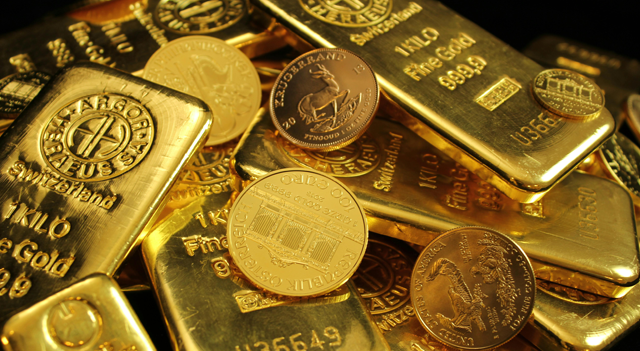
  • Gold Bounces Back as Buyers Step In; Focus Turns to Fed Signals

    Gold Bounces Back as Buyers Step In; Focus Turns to Fed Signals

    Gold prices recovered in Asian trading on Wednesday, rebounding after a drop of more than 2% in the previous session as investors moved to buy on weakness. Market participants are also awaiting further guidance on the Federal Reserve’s policy outlook.

    Spot gold climbed 1.2% to $4,934.16 per ounce by 00:58 ET (05:58 GMT), while U.S. gold futures rose 1% to $4,954.91 per ounce.

    Trading activity in Asia remained subdued, with several major markets closed for the Lunar New Year holiday, keeping volumes light and limiting broader volatility.

    The precious metal had fallen sharply on Tuesday as improving risk sentiment—driven by indications of progress in U.S.–Iran negotiations—reduced demand for traditional safe-haven assets.

    Progress in US-Iran talks; Fed minutes awaited

    Reports indicated that Washington and Tehran had agreed on key “guiding principles” for continued discussions, boosting optimism about a diplomatic breakthrough and weighing on bullion’s appeal.

    Gold’s earlier losses were exacerbated by a stronger U.S. dollar, which makes the metal more expensive for buyers using other currencies, as well as fading expectations for imminent U.S. interest-rate cuts.

    The U.S. Dollar Index edged up 0.1% during Asian hours, following a 0.3% gain in the prior session.

    Investors are now looking ahead to the release of minutes from the Federal Reserve’s January meeting later in the day, which may shed light on the timing and scope of any future monetary easing.

    Attention is also centered on Friday’s U.S. personal consumption expenditures (PCE) price index for December, the Fed’s preferred inflation measure, which could influence expectations around interest rates.

    Higher borrowing costs typically pressure non-yielding assets such as gold, while expectations of lower rates tend to provide support.

    Broader metals rally; silver jumps

    Elsewhere in the metals complex, prices also advanced.

    Silver surged nearly 3% to $75.77 per ounce, and platinum gained 2% to $2,060.60 per ounce.

    On the London Metal Exchange, benchmark copper futures rose 1% to $12,705.20 per ton, while U.S. copper futures added 0.3% to $5.69 per pound.

  • European Shares Advance on Earnings Strength; U.K. Inflation Drops Sharply

    European Shares Advance on Earnings Strength; U.K. Inflation Drops Sharply

    European equities moved modestly higher on Wednesday as investors assessed another batch of corporate results alongside data showing a marked slowdown in U.K. inflation.

    At 08:15 GMT, Germany’s DAX climbed 0.7%, France’s CAC 40 added 0.5%, and London’s FTSE 100 rose 0.5%.

    Earnings season supports sentiment

    Markets in Europe took cues from slight overnight gains on Wall Street, despite ongoing debate about stretched valuations tied to artificial intelligence and its broader economic implications.

    The quarterly reporting season remains central to investor sentiment. So far, results have been broadly encouraging: roughly 60% of European companies have exceeded earnings forecasts, compared with a historical average of 54% beating expectations in a typical quarter, according to LSEG data.

    Among individual movers, miner Glencore (LSE:GLEN) posted a decline in full-year earnings, as elevated copper prices were insufficient to counter weaker profits from its coal division.

    Defense contractor BAE Systems (LSE:BA.) increased shareholder returns after booking record defense orders, supported by rising military expenditure across Europe and the United States.

    Straumann Group (TG:QS51) topped fourth-quarter revenue forecasts and reported margins consistent with guidance. However, the dental implants maker flagged ongoing weakness in China and warned that currency headwinds could weigh on reported earnings in 2026.

    Castellum (AMEX:CTM) swung to a net loss in the fourth quarter due to negative property revaluations, although the Nordic real estate group continued to grow income from property management operations.

    U.K. inflation eases

    Fresh data showed Britain’s annual inflation rate slowed in January to its lowest level since March of last year, strengthening expectations of a rate cut from the Bank of England in the coming month.

    Consumer prices increased 3.0% year over year, down from 3.4% in December, according to the Office for National Statistics.

    While inflation remains above the BoE’s 2% target, policymakers anticipate a sharper decline toward that level in April, as last year’s increases in utility bills and other regulated tariffs drop out of the annual comparison.

    Market participants largely expect the central bank to lower its benchmark rate to 3.5% in March, following a narrowly split decision in February to leave rates unchanged.

    In France, inflation also moderated, with consumer prices rising 0.4% annually in January compared with 0.7% the previous month.

    Oil prices rebound

    Crude prices ticked higher on Wednesday after steep losses in the prior session, as reports of progress in U.S.-Iran nuclear negotiations reduced concerns about potential supply disruptions.

    Brent futures rose 0.5% to $67.74 per barrel, while U.S. West Texas Intermediate crude gained 0.5% to $62.54 per barrel. On Tuesday, Brent had fallen nearly 2% and WTI dropped 1%.

    According to reports, Washington and Tehran reached agreement on key “guiding principles” during talks on Tuesday, fueling hopes of a deal that could ultimately allow more Iranian oil onto global markets.

    The discussions are closely monitored by energy traders, given Iran’s status as a significant oil producer and its position along the Strait of Hormuz, a critical chokepoint through which about one-fifth of global oil consumption flows daily.

  • FTSE 100 Rises as UK Inflation Eases; Pound Recovers; BAE and Glencore in Spotlight

    FTSE 100 Rises as UK Inflation Eases; Pound Recovers; BAE and Glencore in Spotlight

    London equities opened modestly higher on Wednesday after fresh data showed UK inflation slowed in January, strengthening expectations that the Bank of England could deliver interest rate cuts in both March and June. Sterling also steadied, clawing back some losses after a sharp drop in the previous session.

    By 0806 GMT, the benchmark FTSE 100 was up 0.4%. The pound edged 0.01% higher against the dollar to 1.3560, recovering following Tuesday’s slide triggered by weaker labour market figures.

    Elsewhere in Europe, Germany’s DAX gained 0.5%, while France’s CAC 40 advanced 0.3%.

    UK roundup

    Official figures showed Britain’s annual inflation rate cooled to 3.0% in January from 3.4% in December, bolstering the case for a rate reduction at the Bank of England’s next policy meeting in March. December’s reading had ticked up from 3.2% in November, marking the first increase in five months.

    On a monthly basis, consumer prices fell 0.5%, reversing a 0.4% rise in December. Core CPI, which excludes volatile food and energy costs, declined 0.6% month over month and eased to 3.1% year on year from 3.2% previously.

    ING’s UK economist James Smith described the inflation data as “a bit of a mixed bag,” noting that while food inflation is down sharply, services inflation remains stickier. Smith added that “the real action will come in April” when headline and services inflation figures could make the Bank “more comfortable with the inflation outlook.”

    Corporate focus

    Shares of BAE Systems (LSE:BA.) were in focus after the defence group lifted its dividend following record order intake, driven by higher military spending across Europe and the United States.

    The company proposed a final dividend of 22.8 pence, taking the full-year payout to 36.3 pence, a 10% increase. It also bought back 30 million shares during the year at a cost of £502 million.

    Meanwhile, Glencore (LSE:GLEN) posted a 6% drop in full-year core earnings, as strength in copper prices failed to offset weaker profitability in its coal division. Adjusted EBITDA came in at $13.5 billion, while revenue rose 7% to $247.5 billion. Adjusted EBIT fell 14% to $6 billion, and earnings per share were $0.03.

    Separately, YouGov Plc (LSE:YOU) confirmed the appointment of Ian Griffiths as permanent chair. Griffiths, who joined the board in September 2025, succeeds Deborah Davis, who had served in the role on an interim basis since February 2025.

  • Ian Griffiths Confirmed as Permanent Chair of YouGov

    Ian Griffiths Confirmed as Permanent Chair of YouGov

    YouGov Plc (LSE:YOU) announced on Wednesday that Ian Griffiths has been formally appointed as its permanent chair, succeeding Deborah Davis, who had been serving in the role on an interim basis since February 2025.

    Griffiths became a member of YouGov’s board in September 2025 and now steps into the position on a full-time basis.

    He brings extensive senior leadership experience, having previously held the roles of chief financial officer and chief operating officer at ITV Plc (LON:ITV) for more than ten years.

    Davis had been acting as chair for the past year at the London-listed market research group before Griffiths’ permanent appointment.

  • BAE Systems FY25 Results Boost Dividend as Defense Orders Reach New High

    BAE Systems FY25 Results Boost Dividend as Defense Orders Reach New High

    BAE Systems (LSE:BA.) increased its shareholder distributions on Wednesday after securing record defense orders, with rising military expenditure in Europe and the United States driving revenue expansion and strong cash performance.

    The company’s board proposed a final dividend of 22.8 pence per share, bringing the total annual payout to 36.3 pence, up 10% from the prior year. During the year, BAE Systems also repurchased 30 million shares for £502 million.

    Sales climbed 10% at constant exchange rates to an all-time high of £30.7 billion. Underlying EBIT rose 12% to £3.32 billion, while underlying earnings per share increased 12% to 75.2 pence.

    Free cash flow came in at £2.16 billion, aided by customer advance payments received toward year-end. This was partially offset by increased capital expenditures and higher research and development outlays.

    Order intake totalled £36.8 billion, pushing the order backlog to a record £83.6 billion. The company reported a book-to-bill ratio of 1.2.

    Chief executive Charles Woodburn said the performance reflected “another year of strong operational and financial performance.”

    On a reported IFRS basis, revenue advanced 8% to £28.3 billion and operating profit rose 9% to £2.93 billion. Basic earnings per share increased 6% to 68.8 pence, impacted by higher amortisation charges tied to previous acquisitions.

    Net debt, excluding lease liabilities, declined 22% to £3.84 billion at year-end.

    By division, Electronic Systems generated £7.5 billion in sales, up 8%, with underlying EBIT of £1.16 billion. Platforms & Services posted a 17% rise in revenue to £5 billion and a 30% jump in underlying EBIT to £576 million.

    The Air segment delivered £9.3 billion in revenue, up 9%, while Maritime revenue grew 11% to £6.8 billion. However, Maritime underlying EBIT slipped 3% to £457 million, reflecting early-stage programme development and capacity investments. Cyber & Intelligence revenue edged up 2% to £2.4 billion.

    Looking ahead, BAE Systems said its 2026 guidance assumes an exchange rate of $1.32 to the pound, with an estimated sensitivity of around £500 million in revenue and £70 million in underlying EBIT for every 10-cent shift in the pound-dollar exchange rate.

    In total, the company returned £1.53 billion to shareholders over the year through dividends and share buybacks.

  • Glencore Earnings Slip 6% as Miner Unveils $2 Billion Shareholder Payout

    Glencore Earnings Slip 6% as Miner Unveils $2 Billion Shareholder Payout

    Glencore (LSE:GLEN) posted a decline in full-year profit, as strength in copper prices failed to fully counter weaker contributions from its coal division.

    The commodities group reported adjusted EBITDA of $13.5 billion, representing a 6% drop from the previous year. Revenue increased 7% year over year to $247.5 billion, while adjusted EBIT fell 14% to $6 billion. Earnings per share were $0.03.

    “2025 was a year of significant progress, marked by a strong operational performance, continued portfolio optimisation and clear momentum for our copper-led growth strategy,” said Glencore CEO Gary Nagle.

    “For the second consecutive year, we met our guidance for full year production volumes for our key commodities, reflecting the ongoing benefits of our recently optimised and simplified operating structures promoting greater accountability and delivery.”

    Even with the softer earnings performance, Glencore said it plans to distribute $2 billion to shareholders, which includes an additional $800 million top-up payment.

    The earnings announcement comes shortly after takeover discussions between Rio Tinto Group and Glencore broke down. The proposed tie-up, which would have created the world’s largest mining company, collapsed after the companies were unable to agree on the premium Rio Tinto would pay.

  • U.K. Inflation Cools Markedly in January as Annual CPI Slips to 3.0%

    U.K. Inflation Cools Markedly in January as Annual CPI Slips to 3.0%

    Britain’s annual inflation rate eased significantly in January, reinforcing expectations that the Bank of England could lower borrowing costs at its upcoming March meeting. Consumer price inflation rose 3.0% year over year in January, down from 3.4% in December and marking the lowest reading since March 2025.

    December’s figure had edged up from 3.2% in November, representing the first increase in five months. The latest pullback suggests that price pressures may be softening more decisively at the start of the year.

    While inflation remains above the Bank of England’s 2% target, policymakers signaled at their February meeting that additional rate reductions could be on the table later this year. Officials expect inflation to return to the 2% goal by spring, and potentially more quickly than earlier projections suggested.

    On a monthly basis, the consumer price index fell 0.5% in January after posting a 0.4% gain in December. Core CPI, which strips out volatile food and energy costs, declined 0.6% month over month. On an annual basis, core inflation eased to 3.1% from 3.2% in December.

    “Overall, the print strengthens the case for a potential Bank of England rate cut at its March meeting, particularly after recent data showed softer wage growth and rising unemployment,” said Lale Akoner, global market analyst at eToro. “However, policymakers remain divided, and sticky services inflation could keep the debate finely balanced. If inflation falls mainly on energy and base effects, the Bank of England may cut cautiously rather than aggressively.”

    Separate data released Tuesday showed that U.K. annual wage growth excluding bonuses slowed to 4.2% in the final three months of 2025 compared with a year earlier. The central bank closely monitors pay trends as an indicator of how persistent above-target inflation might be.

    Earlier this month, the Monetary Policy Committee voted 5-4 to keep interest rates unchanged at 3.75%, the lowest level since early February 2023. The narrow split underscored ongoing divisions among policymakers over the appropriate pace of easing.

    “It’s no secret that inflation will decline steeply in April, perhaps to below 2.0%, as this is when the raft of rises in government-set prices and taxes in 2025 drop out of the annual comparison,” analysts at Capital Economics wrote in a note. “And if we are right in thinking that CPI inflation will average 1.8% in Q4 of this year, then the MPC may ultimately end up cutting rates further than investors expect, to 3.0% this year, with the chances of the next rate cut happening in March rather than our current forecast of April edging higher.”

  • Delta Gold Technologies secures £1.92 million in direct subscription

    Delta Gold Technologies secures £1.92 million in direct subscription

    Delta Gold Technologies PLC (AQSE:DGQ) has completed a £1,922,500 capital raise through a direct subscription, issuing 5,492,853 new ordinary shares priced at 35p each, the company said Tuesday.

    The newly issued shares account for approximately 8.51% of the group’s enlarged share capital. Investors participating in the subscription will receive one warrant for every two shares purchased, resulting in 2,746,425 warrants in total. Each warrant carries an exercise price of 50p per ordinary share.

    The warrants are subject to an acceleration provision, which would be triggered if the company’s volume-weighted average share price exceeds 70p over any 10 consecutive trading days. They will lapse two years after the subscription shares are admitted to trading on the Aquis exchange.

    The company confirmed that Purebond Ltd has joined the shareholder register as part of the fundraising. Proceeds will be directed toward expanding and accelerating university-based research partnerships and collaborations, alongside supporting general working capital needs.

    “We are delighted by the strong support from new and existing shareholders,” said R. Michael Jones, Chief Executive Officer of Delta, according to the company’s press release. He added that Delta is broadening its academic network beyond its existing relationship with the University of Toronto to include Penn State University.

    Admission of the new shares to trading on Aquis is anticipated on or around February 20, 2026. Upon completion, Delta’s total issued share capital is expected to consist of 64,501,507 ordinary shares with a nominal value of 0.2p each.

    More about Delta Gold Technologies

    Delta Gold Technologies is focused on building and commercializing intellectual property within the quantum computing field, with a particular concentration on nano-scale gold and advanced material applications.

  • Raspberry Pi jumps as CEO Eben Upton increases personal stake

    Raspberry Pi jumps as CEO Eben Upton increases personal stake

    Raspberry Pi Holdings plc (LSE:RPI) shares rallied sharply on Tuesday after Chief Executive Officer Eben Upton disclosed the purchase of additional stock in the company.

    By 11:40 GMT, the shares were up 27.6%.

    A regulatory filing published Monday showed that Upton bought 4,684 ordinary shares at an average price of £2.82327 each, representing a transaction worth roughly £13,224. Following the acquisition, his total holding rose to 2,591,136 ordinary shares.

    The trade was carried out on the London Stock Exchange’s Main Market and reported in line with rules governing dealings by Persons Discharging Managerial Responsibilities (PDMR).

    Market participants often interpret insider buying—particularly by senior executives—as a vote of confidence in a company’s outlook. Upton’s decision to expand his ownership stake appeared to fuel a strong positive reaction among investors.

    The purchase was completed on February 16, 2026, according to the company’s regulatory notice. Raspberry Pi’s ordinary shares carry a nominal value of £0.0025 each.

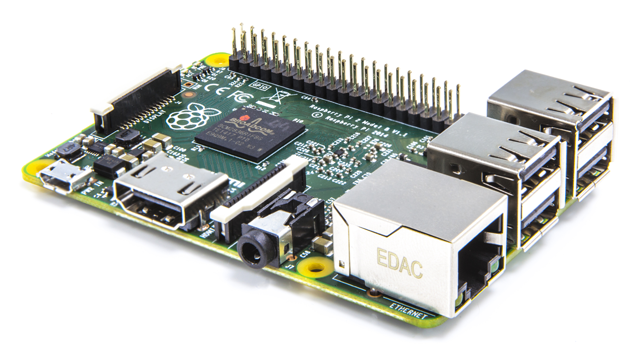
    Raspberry Pi manufactures low-cost computing devices widely used by hobbyists, educators and software developers around the globe.