
Author: Fiona Craig

  • European stocks edge lower as trade uncertainty weighs while earnings remain in focus: DAX, CAC, FTSE100

    European stocks edge lower as trade uncertainty weighs while earnings remain in focus: DAX, CAC, FTSE100

    European equities moved slightly lower on Tuesday as investors evaluated shifting global trade conditions following the implementation of new worldwide tariffs introduced by U.S. President Donald Trump.

    At 08:05 GMT, Germany’s DAX index declined 0.1%, France’s CAC 40 fell 0.2%, and the U.K.’s FTSE 100 slipped 0.2%.

    New tariff environment adds uncertainty

    The latest round of global trade tariffs announced by President Trump has taken effect at a 10% rate after a U.S. Supreme Court ruling invalidated a large portion of earlier levies, adding fresh uncertainty to international trade dynamics.

    The 10% tariff level was communicated via the U.S. Customs and Border Protection messaging system. Media reports indicate the White House is now considering increasing the tariff to 15%, a level Trump signalled over the weekend following the court decision.

    Investors are questioning whether trade agreements negotiated prior to the Supreme Court ruling remain valid. A European Union assessment suggested the revised tariff framework could push duties on certain EU exports beyond levels allowed under existing trade arrangements.

    Trump is expected to address trade policy during his State of the Union speech to Congress later Tuesday, having already warned trading partners not to “play games” by withdrawing from recently negotiated agreements.

    Earnings season continues across Europe

    Corporate earnings remained a key focus for markets as companies continued reporting results during a busy week for financial updates.

    Standard Chartered (LSE:STAN) announced a 16% increase in full-year pre-tax profit, supported by strong performances in its global banking and wealth divisions. The lender also unveiled a $1.5 billion share buyback programme and raised its full-year dividend by 65% compared with the previous year.

    Telefonica (BIT:1TEF) reported a fourth-quarter net loss after recognising €2.8 billion in restructuring charges, which outweighed improvements in operating performance as the telecom group reshaped its portfolio and exited several Latin American markets.

    Fresenius Medical Care (TG:FME) posted a sharp increase in fourth-quarter operating income, helped by accelerating cost-saving measures and favourable reimbursement trends.

    Croda International (LSE:CRDA) also reported improved adjusted earnings for 2025, with growth driven by solid performance in its Consumer Care and Life Sciences divisions.

    The European automotive sector drew attention as well after data from industry body ACEA showed regional new car sales declined year-on-year in January for the first time since June. Total EU registrations fell 3.9%, although battery-electric vehicles increased their market share to 19.3% from 14.9% a year earlier. Hybrid-electric vehicles remained the dominant powertrain at 38.6% of registrations, while petrol and diesel vehicles continued to lose market share.

    Oil prices hover near seven-month highs

    Oil prices edged higher on Tuesday, trading close to seven-month highs ahead of another round of nuclear negotiations between the United States and Iran later this week.

    Brent crude futures rose 0.3% to $71.33 per barrel, while U.S. West Texas Intermediate crude gained 0.4% to $66.55 per barrel. Both benchmarks are currently trading near levels last seen in early August 2025.

    Iran and the United States are scheduled to hold a third round of nuclear talks in Geneva on Thursday, amid growing concerns about the risk of military escalation as Washington pushes for an end to Iran’s nuclear programme.
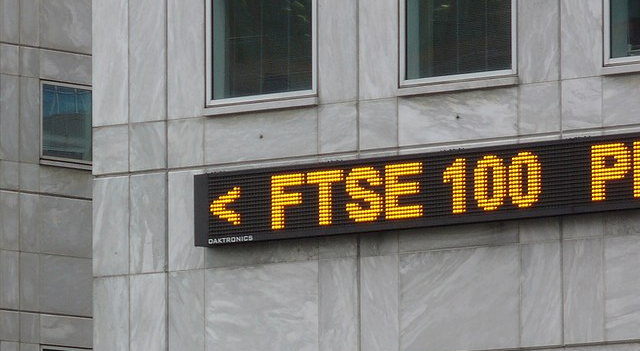

  • FTSE 100 opens lower as AI concerns weigh on sentiment; Standard Chartered in focus

    FTSE 100 opens lower as AI concerns weigh on sentiment; Standard Chartered in focus

    UK equities edged lower at Tuesday’s open, with investor sentiment remaining cautious amid ongoing concerns about artificial intelligence–driven disruption and broader geopolitical uncertainty. Market participants are expected to keep a close watch on developments linked to the AI theme, which analysts say continues to influence global risk appetite.

    Sterling slipped below the $1.34 level as trading began, while attention also turned to monetary policy developments. Four Bank of England rate-setters are scheduled to appear before parliament later in the day, with investors looking for clues on the likelihood of a potential interest rate cut in March as policymakers remain divided on the outlook.

    As of 08:11 GMT, the FTSE 100 index was down 0.2%, while GBP/USD fell 0.1% to 1.3475. European markets also weakened, with Germany’s DAX and France’s CAC 40 both declining by around 0.3%.

    UK market movers

    Standard Chartered PLC (LSE:STAN) reported fourth-quarter results that missed analyst expectations, as higher costs and flat revenue growth weighed on performance. The Asia-focused bank posted underlying pre-tax profit of $1.24 billion for the three months to 31 December, below Bloomberg consensus estimates of $1.38 billion, although still 18% higher than the $1.05 billion recorded a year earlier. Operating income remained broadly unchanged at $4.85 billion, with growth in wealth solutions and global banking offset by weaker episodic trading income within markets.

    Croda International PLC (LSE:CRDA) reported improved adjusted earnings for 2025, supported by strong performance in its Consumer Care and Life Sciences divisions. Group sales rose to £1.70 billion, representing a 6.6% increase at constant currency, driven mainly by a 9.6% rise in volumes. Adjusted operating profit climbed 7.9% to £295.3 million, lifting margins to 17.4%, while adjusted profit before tax increased 8.4% to £276.2 million. Adjusted basic earnings per share rose slightly to 146.2 pence from 142.6 pence a year earlier.

    Unite Group PLC (LSE:UTG) reported a 2% decline in net asset value for 2025 and issued more cautious earnings guidance for the year ahead, reflecting weaker occupancy trends and moderating rental growth despite continued demand from higher-tariff universities. The student accommodation provider recorded net asset value of 955 pence per share, below Jefferies’ forecast of 988 pence. Adjusted earnings per share increased 2% year-on-year to 47.5 pence, marginally below expectations, while the company declared a dividend of 37.7 pence per share, slightly under consensus forecasts.

  • Standard Chartered shares fall after Q4 profit misses expectations amid higher costs

    Standard Chartered shares fall after Q4 profit misses expectations amid higher costs

    Standard Chartered (LSE:STAN) reported fourth-quarter results that fell short of market expectations as increased costs and weaker market-related income offset continued strength in wealth management and deposit growth, sending the bank’s shares lower.

    The Asia-focused lender posted underlying pre-tax profit of $1.24 billion for the three months to 31 December, below the $1.38 billion consensus estimate compiled by Bloomberg. Despite the miss, profit still rose 18% year-on-year from $1.05 billion. Operating income remained broadly stable at $4.85 billion compared with $4.83 billion in the same period a year earlier.

    Analysts at Jefferies attributed much of the shortfall to weaker episodic income within the Financial Markets division, estimating that deal timing and market-related inventory effects reduced income by roughly $150 million versus expectations. This softer performance partly offset solid growth in wealth solutions and global banking activities.

    Net interest income declined 1% year-on-year to approximately $2.95 billion, reflecting margin pressure from lower interest rates. The bank reported a net interest margin of 209 basis points, up 15 basis points quarter-on-quarter but 11 basis points lower than a year earlier. Jefferies noted that net interest income nevertheless exceeded its forecasts, supported by higher HIBOR rates, improved CASA pass-through and favourable treasury income timing. Deposits increased 12% year-on-year, exceeding consensus expectations by $14.7 billion.

    Operating expenses rose 5% to $3.43 billion, driven by ongoing investment spending, transformation initiatives and higher performance-related compensation. The figure also included $121 million linked to regulatory changes. Excluding this item, Jefferies estimated costs rose 4% year-on-year and 12% quarter-on-quarter, with the cost-to-income ratio reaching 71%, up 13 percentage points from the previous quarter.

    Credit impairment charges increased to $145 million from $130 million a year earlier, mainly reflecting retail provisions. Analysts estimated the quarter’s cost of risk at roughly 20 basis points, while noting reduced retail impairments following portfolio optimisation measures.

    Chief executive Bill Winters said the group continued to benefit from structural growth trends across its Asia, Africa and Middle East markets and had begun 2026 on a solid footing. Wealth performance remained steady, with investment product income rising 22% year-on-year and new money inflows of $10 billion, broadly unchanged from the prior year.

    The bank ended the quarter with a common equity tier 1 ratio of 14.1%, in line with expectations and 10 basis points lower sequentially. Tangible net asset value per share increased 12% year-on-year to 1,730 cents. Standard Chartered also announced a $1.5 billion share buyback programme, exceeding consensus expectations of $1.39 billion.

    For the full year, underlying pre-tax profit rose 18% to $7.9 billion from $6.8 billion, while return on tangible equity improved to 14.7% from 11.7%. The board proposed a final dividend of 49 cents per share, bringing the total annual payout to 61 cents — a 65% increase year-on-year.

    Looking ahead, the bank has shifted its reporting and guidance to a reported basis. For 2026, it expects net interest income to remain broadly flat at constant currency, with reported revenue toward the lower end of a 5–7% growth range. Reported costs are forecast to be broadly unchanged year-on-year, while management targets a reported return on tangible equity above 12%, equivalent to roughly 13.5% on an underlying basis according to Jefferies. The bank added that trading in the first quarter has started strongly across corporate and investment banking as well as wealth management, with analysts viewing the 2026 outlook as modestly ahead of consensus expectations.

  • Brooks Macdonald beats profit forecasts despite softer revenue performance

    Brooks Macdonald beats profit forecasts despite softer revenue performance

    Brooks Macdonald (LSE:BRK) reported first-half results for 2026 showing profits ahead of market expectations, although revenue came in slightly below forecasts. The wealth manager delivered underlying pre-tax profit of £13.6 million, representing a 12% decline year-on-year but exceeding consensus estimates by around 5%, supported by earlier-than-expected benefits from cost control measures.

    Revenue for the period reached £58 million, up 12% compared with the prior year but approximately 3% below analyst expectations. The average revenue yield linked to funds under management fell to 50.6 basis points from 59.4 basis points in fiscal 2025, largely reflecting weaker transactional income within the business performance services division. Excluding transaction-related impacts, revenues declined 5% year-on-year while costs increased by 3%.

    The group reported a profit margin of 23.4%, while earnings per share totalled 64.2 pence — down 7% from the previous year but around 4% ahead of forecasts. An interim dividend of 31 pence per share was declared, representing a 3% increase year-on-year and meeting market expectations.

    Cash balances declined to £27 million from £54 million, reflecting higher capital expenditure, continued investment activity and mergers and acquisitions spending. The company’s capital surplus also reduced to £12.0 million from £15.6 million at the end of fiscal 2025.

    Looking ahead, Brooks Macdonald expects full-year 2026 performance to align with current market expectations. Management anticipates first-half revenue yield trends will persist into the second half, with operating costs broadly similar to first-half levels before the Financial Services Compensation Scheme levy. The firm also plans to continue investing organically and remains open to further acquisitions in financial planning as part of its growth strategy.

  • Avacta reports promising preclinical results for pre|CISION cancer therapy candidate

    Avacta reports promising preclinical results for pre|CISION cancer therapy candidate

    Avacta Group’s (LSE:AVCT) therapeutics division has released new preclinical data indicating that its pre|CISION platform candidate FAP-Exd (AVA6103) may deliver cancer treatments with greater selectivity and effectiveness than Enhertu, a leading antibody-drug conjugate (ADC). The company used an AI-generated synthetic comparator model based on publicly available AstraZeneca data to evaluate drug delivery performance in FAP-high animal models, comparing two closely related exatecan-family payloads.

    According to the analysis, AVA6103 demonstrated faster tumour penetration and achieved peak drug concentrations in tumour tissue more than ten times higher than those observed with Enhertu’s T-Dxd payload. The study also reported a tumour selectivity index nearly three times greater, supporting deeper and more sustained responses in preclinical testing. Avacta plans to initiate a Phase 1 clinical trial for AVA6103 in the first quarter of 2026 and intends to present the findings at upcoming scientific conferences, which could strengthen its positioning within the competitive oncology drug delivery market and attract further investor and partner interest.

    Despite scientific progress, the company’s outlook remains constrained by weak financial fundamentals, including ongoing losses and limited commercial partnerships. Technical indicators also point to bearish momentum, while valuation remains difficult to support given negative earnings and the absence of dividend income.

    More about Avacta Group plc

    Avacta Therapeutics, a division of Avacta Group plc, is a clinical-stage biopharmaceutical business focused on improving the delivery of highly potent cancer therapies. Its proprietary pre|CISION platform uses a fibroblast activation protein (FAP)-targeted peptide system designed to release cytotoxic drugs selectively within solid tumours, aiming to enhance treatment efficacy while reducing toxicity to healthy tissue.

  • Croda reports higher earnings and margins and unveils new 2028 growth targets

    Croda reports higher earnings and margins and unveils new 2028 growth targets

    Croda (LSE:CRDA) delivered 2025 sales of £1.7 billion, representing growth of 6.6% at constant currency, supported by improved performance in its Consumer Care and Life Sciences divisions, both of which recorded increases in revenue, profitability and margins. Industrial Specialties, however, experienced a decline during the period. Adjusted operating profit rose 7.9% at constant currency to £295.3 million, although statutory profit was reduced by more than £100 million in impairment and restructuring charges linked to optimisation of the group’s lipids capacity as part of ongoing portfolio refinement.

    Management reported that its transformation programme is progressing ahead of schedule, generating £28 million in gross benefits during 2025. The company also introduced a new working capital initiative, reduced leverage levels and modestly increased its dividend. Looking ahead, Croda outlined a new financial framework covering 2026 to 2028, targeting organic sales growth of 3–6% annually, operating margins above 20%, stronger cash generation and improved returns on capital. The strategy reflects confidence that operational efficiencies, focused innovation and enhanced customer engagement will drive performance despite an uncertain macroeconomic backdrop.

    The company’s outlook combines solid financial fundamentals and strategic progress with some cautionary factors. While recent corporate developments and earnings momentum provide support, valuation remains relatively demanding and technical indicators point to weaker market momentum, suggesting investors may remain cautious in the near term.

    More about Croda International

    Croda International is a UK-based specialty chemicals company focused on applying “smart science” to develop high-performance ingredients and solutions across consumer care, life sciences and industrial markets. Its portfolio includes beauty and personal care actives, fragrances, home care ingredients, crop protection and seed enhancement technologies, as well as pharmaceutical components, with a strategic emphasis on higher-growth, value-added applications worldwide.

  • BTG Consulting maintains full-year outlook as advisory divisions deliver steady trading

    BTG Consulting maintains full-year outlook as advisory divisions deliver steady trading

    BTG Consulting plc (LSE:BTG) reported that trading for the third quarter to 31 January 2026 met board expectations, enabling the group to reaffirm its full-year guidance and continue its track record of profitable growth. Performance remained stable across all divisions, with restructuring activity supported by challenging economic conditions, while the financial advisory business benefited from an increase in completed transactions and a strong pipeline heading into the final months of the financial year.

    The real estate advisory division traded in line with expectations, and integration of recently acquired businesses Kirkby Diamond and Network Auctions is progressing smoothly, with both operations performing as planned. During the period, the company also completed a rebrand and corporate name change, bringing its financial and real estate advisory operations together under a unified identity. Management said the move reflects the firm’s development into a broader advisory platform and supports continued investment in talent and growth opportunities.

    The group’s outlook is underpinned by solid financial performance and positive corporate developments, although technical indicators suggest some caution due to weaker market momentum. Valuation metrics point to potential overvaluation, but strategic acquisitions and a consistent dividend yield help balance the overall investment case.

    More about BTG Consulting plc

    BTG Consulting plc, formerly known as Begbies Traynor, is a UK-based advisory firm providing financial and real estate consultancy services aimed at enhancing, protecting and realising client value. The company offers restructuring, financial advisory and property advisory services, supporting businesses, investors and lenders with funding, transactions and asset realisation across varying economic environments.

  • Ceres Power schedules 2025 results release and investor presentation for March

    Ceres Power schedules 2025 results release and investor presentation for March

    Ceres Power Holdings (LSE:CWR) has confirmed it will publish its full-year results for the period ended 31 December 2025 on 26 March 2026, alongside a live online investor presentation hosted through the Investor Meet Company platform. The session will be open to both existing and prospective shareholders, reflecting the company’s continued focus on investor engagement as it progresses development and commercial partnerships across fuel cell and green hydrogen technologies.

    The presentation will provide investors with an opportunity to hear directly from management and submit questions, offering additional transparency around operational performance and strategic priorities. By facilitating direct dialogue with the market, Ceres aims to strengthen confidence in its positioning within the global energy transition while showcasing progress in deploying its solid oxide technology across power generation and industrial decarbonisation applications.

    The company’s outlook is supported by a strong balance sheet with low leverage and solid equity backing, as well as continued revenue growth. However, ongoing losses and cash outflows remain key constraints. Technical indicators present a mixed picture, while valuation remains pressured by negative earnings and the absence of dividend support. Recent earnings commentary has provided some encouragement through evidence of commercialisation progress and cost-reduction initiatives, although uncertainty around order timing and revenue recognition continues to represent a risk.

    More about Ceres Power Holdings

    Ceres Power Holdings is a UK-based clean energy technology company specialising in solid oxide fuel cells for power generation and electrolysers used in green hydrogen production. Operating an asset-light licensing model, the company partners with major industrial groups including Doosan, Delta, Denso, Shell, Weichai and Thermax to deploy its technology across applications ranging from AI data centres to heavy industry decarbonisation. Listed on the London Stock Exchange and awarded the Green Economy Mark, the majority of Ceres’s activities are aligned with green-economy technologies.

  • Blencowe Resources advances Orom-Cross expansion as Iyan assays pave way for JORC update

    Blencowe Resources advances Orom-Cross expansion as Iyan assays pave way for JORC update

    Blencowe Resources (LSE:BRES) has released the final assay results from 87 shallow drill holes at the Iyan deposit within its Orom-Cross graphite project, confirming extensive near-surface graphite mineralisation with strong lateral continuity. Several intercepts exceeded 30 metres in thickness, and the results are expected to support a maiden JORC resource estimate for Iyan in the first quarter of 2026, which management believes will significantly expand the overall Orom-Cross resource inventory.

    The company intends to position Iyan as a bulk blending deposit, combining substantial tonnage with higher-grade zones to improve mine design and enable efficient, low-strip-ratio extraction. According to management, the latest drilling outcomes strengthen the case for a large-scale, long-life development while supporting ongoing financing and offtake negotiations. Additional assay results from the nearby Beehive deposit are still pending and could provide further resource growth, reinforcing Orom-Cross as a multi-deposit graphite development hub.

    Despite operational progress, the company’s outlook remains constrained by weak financial fundamentals, including the absence of revenue, recurring losses and increased cash burn during 2025. Technical indicators offer some support, with the share price maintaining an established uptrend above key moving averages and positive momentum signals. Valuation remains difficult to assess given negative earnings and the lack of dividend data.

    More about Blencowe Resources Plc

    Blencowe Resources Plc is a London-listed natural resources company focused on developing the Orom-Cross graphite project in Uganda. The project comprises several deposits — including Camp Lode, Northern Syncline, Iyan and Beehive — with the objective of delivering consistent, large-scale graphite supply through long-life, low-cost production operations.

  • City of London Investment Group reports record assets and maintains dividend amid leadership transition

    City of London Investment Group reports record assets and maintains dividend amid leadership transition

    City of London Investment Group (LSE:CLIG) delivered a solid performance for the six months to 31 December 2025, with funds under management increasing to $11.2 billion from $10.8 billion at the start of the financial year and rising further to a record $11.9 billion by mid-February 2026. Net fee income grew to $37.3 million, while profit before tax reached $14.0 million, enabling the board to maintain its interim dividend at 11 pence per share.

    The reporting period also marked a leadership change, with Cooper Abbott formally assuming the role of chief executive officer and joining the board. The chair highlighted Abbott’s multi-asset investment expertise and emphasis on empowering investment teams as central to the company’s long-term strategy. Strong investment performance — particularly across international and emerging markets, which now represent 57% of total assets — alongside disciplined cost management and increased engagement with clients and shareholders, helped reinforce the group’s market position despite ongoing volatility.

    The company’s outlook is supported by solid financial delivery and positive corporate developments, while a reasonable valuation and attractive dividend yield enhance its investment appeal. However, technical indicators point to weaker share price momentum and a bearish trend, suggesting some near-term caution.

    More about City of London Investment

    City of London Investment Group is a London-listed specialist asset manager focused on international and emerging market strategies through its affiliates, City of London Investment Management and Karpus Investment Management. The firm serves institutional and sophisticated investors, seeking to generate alpha-driven returns across equities and other asset classes while delivering strong long-term outcomes for clients.