Author: Fiona Craig

  • TBC Bank Group Increases 2025 Shareholder Returns with Dividend Boost and Buyback

    TBC Bank Group Increases 2025 Shareholder Returns with Dividend Boost and Buyback

    TBC Bank Group PLC (LSE:TBCG) has announced plans to raise its total shareholder payout for 2025, proposing a final dividend of GEL 3.87 per share, subject to investor approval. The dividend is scheduled for payment on 22 June 2026 to shareholders on the register as of 22 May. The amount will be converted into pounds sterling using the average Georgian lari exchange rate over five days, ensuring the sterling payout reflects prevailing currency conditions.

    When combined with the quarterly interim dividends already distributed, the bank’s total dividend for 2025 will amount to GEL 8.87 per share — representing a 10% increase compared with the previous year. The dividend equates to a 35% payout ratio. Including a GEL 75 million share buyback completed during the year, total capital returned to shareholders rises to 40% of net profit, highlighting the group’s strong capital base and its continued focus on cash returns.

    More about TBC Bank

    TBC Bank Group PLC is a London-listed financial services holding company whose core operations are conducted through TBC Bank Georgia and TBC Uzbekistan. The group is centred on digitally driven retail and corporate banking, maintaining leading market positions in Georgian lending and deposits, while also operating Central Asia’s largest mobile-only bank and digital payments ecosystem in Uzbekistan.

  • Smarter Web Company Secures £225m, Expands Bitcoin Holdings and Steps Up to LSE Main Market

    Smarter Web Company Secures £225m, Expands Bitcoin Holdings and Steps Up to LSE Main Market

    The Smarter Web Company (LSE:SWC) has released audited results for the year ended 31 October 2025, highlighting £225.2 million in newly raised capital and a strategic shift marked by its move to the London Stock Exchange’s Main Market. The fundraising comprised £209.4 million in equity and £15.8 million through Bitcoin-backed convertible loan notes. The group reported profit before tax of £2.84 million, largely attributable to exceptional gains and fair value adjustments, while its core operations remained loss-making.

    By year-end, the company held 2,660 Bitcoin and carried no fiat-denominated debt, positioning its balance sheet around what management describes as a substantial and distinctive Bitcoin treasury. The group views this digital asset reserve as a central pillar of its financial strategy.

    Leadership reaffirmed a long-term, 10-year expansion plan focused on acquiring profitable, cash-generative businesses with recurring revenue streams. The objective is to rebuild sustainable earnings while steadily increasing Bitcoin per share. Management also pointed to the recent transition from the Aquis market to the Main Market of the London Stock Exchange as a significant milestone, expected to enhance trading liquidity and broaden institutional investor access. Ahead of its March AGM, the company has issued an updated annual report and investor presentation outlining its strategic direction and Bitcoin-centric balance sheet framework.

    More about Smarter Web Company PLC

    Smarter Web Company PLC is a UK-based digital services provider specialising in website design, development and online marketing solutions. Revenues are generated through upfront project fees, recurring annual hosting contracts and optional monthly marketing services. Since 2022, the company has integrated Bitcoin into its operations, accepting it as payment and implementing a formal Bitcoin Treasury Policy, making it one of the largest UK-listed public companies holding Bitcoin on its balance sheet.

  • Huddled Group Seeks Shareholder Approval to Refresh Issuance Powers Following £740,000 Capital Raise

    Huddled Group Seeks Shareholder Approval to Refresh Issuance Powers Following £740,000 Capital Raise

    Huddled Group (LSE:HUD) has scheduled a general meeting in London for 11 March 2026 to seek renewed authority to issue shares, after completing a £740,000 fundraising via a direct subscription and retail offer. The proceeds are intended to strengthen inventory levels and provide additional working capital to support its established e-commerce brands, as well as expansion into new sales channels.

    The previous fundraising substantially utilised the share issuance authorities granted at the company’s August 2025 general meeting. As a result, the board is now requesting shareholder approval to issue additional subscription shares and to refresh its broader allotment powers. Management says the move is designed to preserve financial flexibility as the group continues to pursue its growth strategy.

    From a performance standpoint, the investment case remains challenged by continued losses, narrow or negative margins, and ongoing negative free cash flow. These pressures offset strong top-line growth and a relatively low level of debt. Technical indicators suggest limited short-term momentum, while valuation metrics remain constrained by negative earnings and the absence of a dividend.

    More about Huddled Group

    Huddled Group plc, quoted on AIM under the ticker HUD, operates as an e-commerce group with a focus on the circular economy. The company manages a portfolio of online retail brands and has used recent capital raises to increase stock availability, reinforce working capital, and broaden its presence across additional distribution channels.

  • Wildcat Petroleum to Leave Main Market and Refocus on Sudan Gold Processing

    Wildcat Petroleum to Leave Main Market and Refocus on Sudan Gold Processing

    Wildcat Petroleum (LSE:WCAT) has unveiled plans to withdraw from the London Main Market and apply for admission to the Aquis Growth Market, marking a major strategic shift away from oil and gas toward gold processing operations in Sudan. Management cited the prolonged weakness in global oil markets and limited access to financing for African oil projects as key reasons behind the pivot. The company now intends to concentrate on gold processing, including alluvial mining, tailings reprocessing, and related activities within Sudan.

    The proposed cancellation of the Main Market listing and the move to Aquis are conditional upon each other and subject to shareholder approval. There is no certainty that the Aquis admission, targeted acquisitions, or associated fundraising efforts will ultimately proceed. Wildcat aims to secure funding by the end of March to support at least a year of corporate operations. It plans to fast-track deployment of turnkey gold processing plants or acquire existing facilities to take advantage of elevated gold prices, with a stated objective of distributing the majority of future profits to shareholders through dividends.

    Should shareholders endorse the proposals, Wildcat expects to utilise its established relationships with Sudanese authorities to secure suitable processing sites. The company’s strategy centres on accelerating gold production timelines to drive shareholder returns. While management believes an Aquis listing should preserve ISA and SIPP eligibility, actual access will depend on individual platform policies, meaning retail investors will need to confirm how their providers treat Aquis-listed shares.

    From an investment perspective, the company’s rating is weighed down by its lack of revenue, ongoing losses, and continued cash burn, alongside shrinking equity levels. The absence of debt provides some balance sheet support. Technical indicators suggest recent momentum, although shares appear overbought in the short term. Traditional valuation measures offer limited guidance given the negative price-to-earnings ratio and absence of a dividend yield.

    More about Wildcat Petroleum Plc

    Wildcat Petroleum Plc is a London-listed company that historically pursued petroleum-related opportunities. It is now repositioning toward the gold sector, with a focus on building a Sudan-based gold processing platform. The strategy targets small- to mid-scale hard rock processing plants designed to treat ore tailings sourced from artisanal miners, who account for the majority of Sudan’s gold production.

  • Weak Walmart Outlook Could Drag Wall Street Lower: Dow Jones, S&P, Nasdaq, Futures

    Weak Walmart Outlook Could Drag Wall Street Lower: Dow Jones, S&P, Nasdaq, Futures

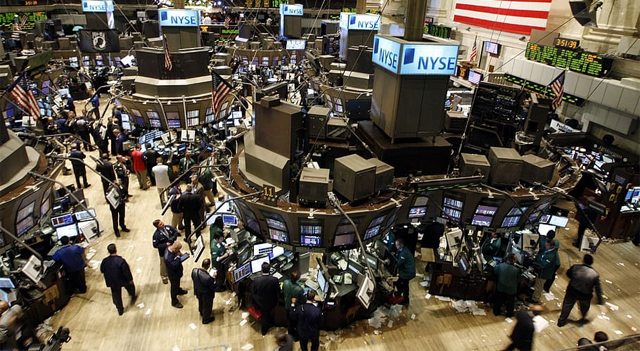
    U.S. stock futures are signaling a softer open on Thursday, suggesting markets may retreat after posting solid gains in the previous session.

    Investor sentiment has been dampened by Walmart (NYSE:WMT). Although the retailer exceeded fourth-quarter earnings expectations, its profit forecast for the year ahead came in below analysts’ projections, prompting a cautious response from the market.

    Rising oil prices are also contributing to the negative tone, as crude continues to climb amid escalating tensions between the United States and Iran and fears of potential military escalation.

    That said, futures trimmed some losses following new data from the Labor Department showing that initial jobless claims fell more than anticipated in the week ended February 14.

    On Wednesday, stocks surged early in the session before paring gains later in the day. Even after retreating from intraday highs, the major indices still finished comfortably in positive territory.

    The Nasdaq advanced 175.25 points, or 0.8%, to 22,753.63. The S&P 500 rose 38.09 points, or 0.6%, to 6,881.31, and the Dow Jones Industrial Average gained 129.47 points, or 0.3%, to 49,662.66.

    Early momentum was largely driven by Nvidia (NASDAQ:NVDA), which rallied after announcing a multi-year strategic partnership with Meta (NASDAQ:META) spanning AI infrastructure, cloud systems and on-site computing platforms.

    The company said the agreement will enable widespread deployment of its CPUs and millions of Blackwell and Rubin GPUs.

    Although Nvidia shares climbed as much as 2.9% during the session, they later eased but still closed up 1.6%.

    Micron (NASDAQ:MU) also posted strong gains, rising 5.3% after reports that David Tepper’s Appaloosa Management increased its stake in the semiconductor company by 200%.

    Encouraging economic data also supported markets. A Federal Reserve report showed industrial output in January rose more than economists had expected.

    However, enthusiasm faded somewhat after the release of minutes from the Fed’s January meeting, which underscored divisions among policymakers regarding the direction of interest rates.

    The minutes from the January 27–28 meeting indicated that several participants believed further rate cuts would likely be appropriate if inflation continues to ease in line with projections.

    Others suggested it may be suitable to keep rates unchanged for “some time” while assessing additional economic data.

    The Fed also noted that a number of policymakers judged that further easing may not be warranted until there is clear evidence that the disinflation process is firmly reestablished.

    Additionally, some officials supported a two-sided characterization of the rate outlook, reflecting the possibility that rate hikes could be considered if inflation remains above target.

    Sector performance reflected moves in commodity markets. Oil service companies outperformed as crude prices surged, lifting the Philadelphia Oil Service Index by 2.7%.

    Gold-related stocks also advanced amid a sharp rise in bullion prices, pushing the NYSE Arca Gold Bugs Index up 2.5%.

    Energy producers, financials and transportation stocks also posted gains, while rate-sensitive sectors such as utilities and commercial real estate lagged behind.

  • European shares retreat amid uneven earnings and rising U.S.-Iran tensions: DAX, CAC, FTSE100

    European shares retreat amid uneven earnings and rising U.S.-Iran tensions: DAX, CAC, FTSE100

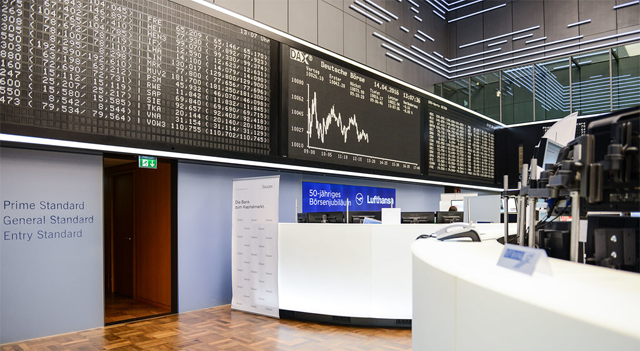
    European equity markets traded broadly lower on Thursday as investors digested a varied set of corporate earnings and reacted to reports that the United States military could be ready to launch strikes against Iran as soon as this weekend.

    In geopolitical developments, Russia said it had intercepted and destroyed 113 Ukrainian drones overnight, while U.S.-mediated negotiations in Geneva concluded without meaningful progress.

    Germany’s DAX fell 1.1%, France’s CAC 40 declined 0.9%, and the U.K.’s FTSE 100 slipped 0.7%.

    Airbus (EU:AIR) led losses after the aircraft manufacturer warned that delays in engine deliveries for its A320 program were slowing its planned production ramp-up.

    Accor (EU:AC) shares also came under pressure after the hotel operator reaffirmed its medium-term guidance, which failed to excite investors.

    In London, CRH (LSE:CRH) moved lower after reporting fourth-quarter results that fell short of market expectations.

    On the positive side, French telecom operator Orange (EU:ORA) advanced strongly after posting quarterly core earnings that exceeded forecasts.

    Air France-KLM (EU:AF) rallied as the airline group reported a record operating profit exceeding €2 billion for 2025.

    Nestle (BIT:1NESN) gained ground following its announcement that it intends to divest its ice cream division.

    Shares of Repsol (TG:REP) also climbed after the Spanish energy company increased its 2026 dividend outlook and confirmed it would continue its share buyback program at the current pace.

  • Oil advances further amid U.S.-Iran tensions and supply disruption fears

    Oil advances further amid U.S.-Iran tensions and supply disruption fears

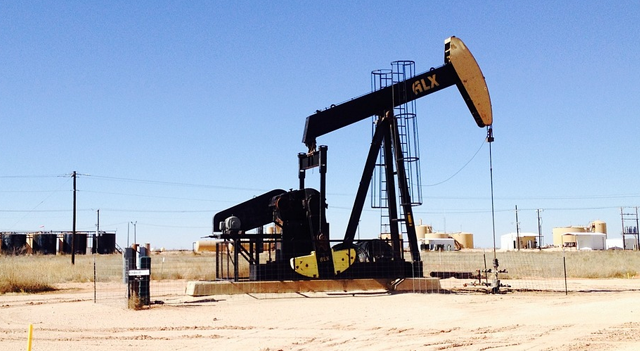
    Oil prices continued to climb on Thursday as diplomatic efforts between Washington and Tehran unfolded against a backdrop of heightened military maneuvers in the Middle East, raising concerns about potential disruptions to global crude supplies.

    By 07:35 GMT, Brent crude had gained 23 cents, or 0.3%, to $70.58 per barrel, while U.S. West Texas Intermediate (WTI) rose 25 cents, or 0.4%, to $65.44 per barrel.

    Both benchmarks had surged more than 4% in the previous session, marking their strongest settlements since January 30, as traders incorporated escalating geopolitical risks into pricing.

    “Oil prices are rallying as the market becomes increasingly concerned over the potential for imminent U.S. action against Iran,” ING analysts said in a Thursday note.

    “For oil markets, the concern is clearly what action would mean not only for Iranian oil supply, but also broader Persian Gulf oil flows, given the risk of disruption to shipments through the Strait of Hormuz.”

    Iranian state outlets reported that the Strait of Hormuz was briefly closed on Tuesday, although it was not confirmed whether full operations had resumed. Roughly 20% of global oil shipments transit through the strategic waterway.

    “Tensions between Washington and Tehran remain high, but the prevailing view is that full-scale armed conflict is unlikely, prompting a wait-and-see approach,” said Hiroyuki Kikukawa, chief strategist at Nissan Securities Investment.

    “U.S. President Donald Trump does not want a sharp rise in crude prices, and even if military action occurs, it would likely be limited to short-term air strikes,” he added.

    The White House said Wednesday that nuclear discussions in Geneva yielded some limited progress, though significant differences remain. Officials indicated Iran is expected to provide additional details in the coming weeks.

    Iran also issued a notice to airmen (NOTAM) announcing planned rocket launches in southern regions between 03:30 GMT and 13:30 GMT on Thursday, according to the U.S. Federal Aviation Administration.

    Meanwhile, U.S. naval assets have been deployed closer to Iranian waters. Vice President JD Vance stated that Washington was considering whether to continue diplomatic engagement or pursue “another option”.

    Elsewhere, talks between Ukraine and Russia concluded in Geneva without meaningful breakthroughs. Ukrainian President Volodymyr Zelenskiy accused Moscow of delaying U.S.-led efforts to end the four-year war.

    On the supply side, industry data provided additional support. Market sources citing the American Petroleum Institute reported declines in U.S. crude, gasoline and distillate inventories last week. That contrasted with Reuters poll expectations for a 2.1 million-barrel build in crude stocks for the week ending February 13.

    Official inventory figures from the U.S. Energy Information Administration are scheduled for release later Thursday.

  • Gold reclaims $5,000 level on geopolitical tensions; Fed minutes cap momentum

    Gold reclaims $5,000 level on geopolitical tensions; Fed minutes cap momentum

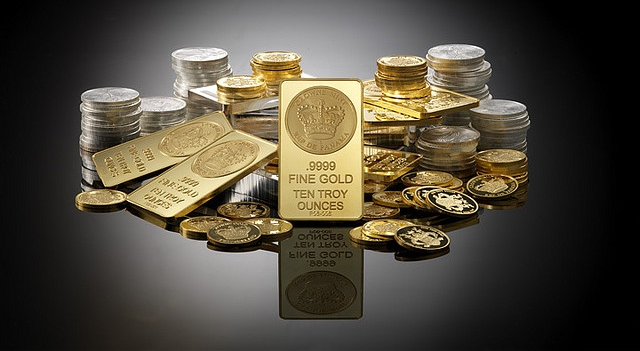
    Gold prices pushed higher during Asian trading on Thursday, extending gains after a more than 2% surge in the previous session, as investors balanced ongoing geopolitical risks against mixed signals from the Federal Reserve.

    Spot gold climbed 0.9% to $5,019.95 per ounce as of 02:03 ET (07:03 GMT), while U.S. gold futures rose 0.6% to $5,037.75.

    The metal had rallied 2.1% on Wednesday, recovering much of the losses seen earlier in the week.

    Trading volumes were thin, with several major Asian markets closed for holidays, which amplified near-term price swings.

    Safe-haven flows persist amid global tensions; Fed outlook in focus

    Continued geopolitical uncertainty remained a key driver of demand for bullion. Investors monitored rising frictions between the United States and Iran, including concerns about maritime security in the Strait of Hormuz and stalled nuclear negotiations.

    Limited progress in Russia-Ukraine peace discussions also kept broader security risks elevated, supporting inflows into traditional safe-haven assets such as gold.

    However, optimism was tempered after the release of the Fed’s latest meeting minutes, which revealed differing views among policymakers on the direction of interest rates.

    Some officials indicated that further tightening could be warranted if inflation remains persistent, while others suggested that conditions may allow for rate cuts later in the year.

    The possibility that U.S. interest rates could stay higher for longer boosted the dollar and Treasury yields, restraining additional upside in gold following its recent rebound.

    The U.S. Dollar Index held steady after rising 0.6% overnight in reaction to the Fed’s slightly hawkish tone.

    Gold typically loses appeal when interest rates rise, as higher yields increase the opportunity cost of holding a non-interest-bearing asset.

    Investors are now awaiting Friday’s release of the U.S. personal consumption expenditures (PCE) price index — the Fed’s preferred inflation gauge — for clearer guidance on the policy outlook.

    Broader metals firm; silver outperforms

    Other precious and base metals also traded higher on Thursday.

    Silver advanced 2.3% to $78.98 per ounce, while platinum gained 0.8% to $2,099.11 per ounce.

    In industrial metals, benchmark copper futures on the London Metal Exchange edged down 0.5% to $12,920.20 per metric ton, while U.S. copper futures rose 0.5% to $5.80 per pound.

  • Bitcoin slips beneath $67,000 as Fed minutes reinforce rate concerns

    Bitcoin slips beneath $67,000 as Fed minutes reinforce rate concerns

    Bitcoin extended its recent downturn on Thursday, dropping below the $67,000 level after minutes from the Federal Reserve’s January meeting signaled a more hawkish stance and added fresh uncertainty around the outlook for U.S. interest rates.

    Broader crypto markets were also pressured by a cautious risk environment, as rising geopolitical tensions between the United States and Iran dampened appetite for speculative assets. In contrast, gold attracted safe-haven flows.

    At 01:06 ET, Bitcoin (COIN:BTCUSD) was down 1.3% at $66,963.8.

    Digital assets also failed to keep pace with gains in global technology equities, despite their usual correlation with the sector.

    Rate outlook weighs on crypto sentiment

    Bitcoin remained under strain as investors digested the Fed minutes, which offered little comfort regarding the direction of monetary policy.

    The record of the January meeting revealed growing differences among policymakers over the longer-term trajectory of rates and inflation. “Several” officials indicated that additional rate increases could be appropriate if inflation proves persistent.

    Policymakers also discussed uncertainty surrounding the economic implications of artificial intelligence, with differing views on whether the technology will ultimately boost or hinder growth.

    The renewed mention of potential rate hikes unsettled crypto traders, as higher borrowing costs typically reduce demand for speculative investments such as Bitcoin. Following the release of the minutes, flows appeared to shift toward the U.S. dollar.

    Goldman Sachs chief downplays personal Bitcoin exposure

    Goldman Sachs (NYSE:GS) CEO David Solomon said he personally owns very little Bitcoin, though he continues to monitor the asset and its evolving role in financial markets.

    While Goldman has taken a measured approach to digital assets, Solomon has previously expressed interest in the sector’s long-term potential.

    Speaking at the World Liberty Forum on Wednesday, he suggested the bank could consider expanding its involvement in cryptocurrencies, particularly if regulatory clarity improves under the Donald Trump administration.

    Altcoins subdued ahead of key inflation data

    Elsewhere, the broader crypto complex traded in a tight range, with limited positive catalysts to drive momentum. Like Bitcoin, most altcoins have experienced significant declines in recent months amid a broad cooling in investor enthusiasm.

    Market attention is now turning to upcoming U.S. macroeconomic data for further guidance on interest rate policy. Of particular importance is Friday’s release of the Personal Consumption Expenditures (PCE) price index, the Fed’s preferred measure of inflation.

    Ether, the second-largest cryptocurrency by market capitalization, fell 1.1% to $1,980.99, while XRP dropped nearly 4% to $1.4228.

    Solana, Cardano and BNB posted losses ranging from 0.4% to 3%.

    Among meme tokens, Dogecoin declined 2.5%, and $TRUMP retreated 1.7%.

  • Fed minutes strike cautious note; Walmart and Deere earnings ahead – market drivers: Dow Jones, S&P, Nasdaq, Wall Street Futures

    Fed minutes strike cautious note; Walmart and Deere earnings ahead – market drivers: Dow Jones, S&P, Nasdaq, Wall Street Futures

    U.S. equity futures moved modestly higher on Thursday, pointing to a potential continuation of the previous session’s technology-led rally. Investors examined the Federal Reserve’s January meeting minutes for signals on interest rate direction, while oil prices climbed amid rising geopolitical tensions in the Middle East. Meanwhile, Walmart (NYSE:WMT) and Deere (NYSE:DE) are set to release quarterly earnings, offering insight into the health of key segments of the U.S. economy.

    Futures tick up

    As of 03:09 ET (08:09 GMT), Dow Jones futures were up 30 points, or 0.1%. S&P 500 futures gained 16 points, or 0.2%, and Nasdaq 100 futures advanced 86 points, or 0.3%.

    Wall Street closed higher on Wednesday, led by strength in Nvidia (NASDAQ:NVDA). The semiconductor giant rallied after announcing a multi-year agreement to supply advanced chips to Meta Platforms. Markets are also positioning ahead of Nvidia’s highly anticipated earnings next week, often viewed as a barometer of momentum in the artificial intelligence sector.

    Broader gains were seen across technology shares, including storage companies such as SanDisk and Seagate Technology, whose infrastructure plays a crucial role in AI expansion.

    The rally helped calm concerns about the timeline for returns on substantial investments in AI-related infrastructure like data centers. Software stocks also gained ground, rebounding after recent volatility tied to fears of competitive disruption from emerging AI models.

    Fed minutes suggest possible upside risks to rates

    Market participants also focused on the minutes from the Fed’s January meeting for clues about future policy moves.

    Analysts drew attention to language stating that “several participants” would have favored a “two-sided description” of the Federal Open Market Committee’s rate outlook — implying that rate increases remain a possibility if inflation does not move sustainably toward the 2% target.

    After pausing its rate-cut cycle last month — which had begun in mid-2025 — policymakers are widely expected to resume easing later this year. With labor markets holding firm and inflation gradually moderating but still above target, some investors anticipate a potential rate cut as early as June.

    That expectation remains largely in place, though Capital Economics noted that the Fed appears to be in “wait-and-see mode.” The firm also suggested that Kevin Warsh, President Donald Trump’s nominee to replace Jerome Powell as Fed Chair, may struggle to “convince his new colleagues of the need” for more aggressive rate reductions.

    Oil rises on supply concerns

    Crude prices extended gains as intensifying military activity in the Middle East fueled concerns over possible disruptions to energy supply.

    Brent crude rose 1% to $71.04 per barrel, while U.S. West Texas Intermediate gained 1.1% to $65.74 per barrel.

    Both benchmarks had already jumped more than 4% on Wednesday, reaching their highest closing levels since January 30.

    Reports of heightened naval and military operations in the Persian Gulf increased fears about supply vulnerability. At the same time, optimism about any easing of sanctions on Russian energy exports faded following inconclusive talks between Russia and Ukraine.

    Further support came from U.S. inventory data, with the American Petroleum Institute reporting a drop of roughly 609,000 barrels in crude stocks for the week ending February 13. Official figures from the Energy Information Administration are expected later Thursday.

    Walmart earnings in focus

    Walmart headlines Thursday’s earnings calendar.

    The retail powerhouse’s stock has surged this year, lifting its market capitalization above the $1 trillion mark and cementing its status as the largest company in the consumer staples space.

    Given the central role of household spending in the U.S. economy, Walmart’s results could offer meaningful insight into consumer trends during the critical holiday season. The company has benefited from inflation-conscious shoppers seeking lower-priced essentials.

    The report may also shape expectations ahead of earnings from other major retailers such as Home Depot and Target. Together, these updates could shed light on whether the U.S. economy continues to exhibit a “K-shaped” pattern — with higher-income consumers maintaining strong spending while lower-income households face persistent cost pressures.

    Deere set to report

    Deere & Company will also release earnings before the opening bell.

    Widely seen as a gauge of industrial demand, Deere previously warned that new U.S. tariffs could significantly impact its 2026 results.

    The farm equipment manufacturer is expected to face margin pressure as a result, though CEO John May indicated that stable demand for forestry and smaller agricultural equipment, combined with cost-cutting measures, may partially offset the effects.

    Tariffs on imported raw materials are projected to reduce Deere’s fiscal 2026 pre-tax earnings by about $1.2 billion, compared with an estimated $600 million impact in the prior year.

    Meanwhile, weaker crop prices and rising production costs have prompted many farmers to delay purchases of large machinery such as tractors, instead opting for rental agreements or used equipment.