Author: Fiona Craig

  • GSK Wins EU Clearance for First Twice-Yearly Biologic in Severe Asthma

    GSK Wins EU Clearance for First Twice-Yearly Biologic in Severe Asthma

    GSK (LSE:GSK) has received approval from the European Commission for Exdensur (depemokimab), marking the first ultra-long-acting biologic authorized in the European Union for severe asthma driven by type 2 inflammation. The therapy is also cleared as an add-on treatment for severe chronic rhinosinusitis with nasal polyps. Backed by data from four Phase III studies demonstrating durable efficacy and a favorable safety profile with dosing just twice per year, the decision bolsters GSK’s respiratory portfolio and introduces a differentiated option that could reshape care standards for patients whose disease remains poorly controlled.

    Clinical results underpinning the approval showed sustained symptom control and reduced exacerbations across both indications, highlighting the potential of depemokimab to address unmet needs in type 2 inflammatory disease. The extended dosing schedule may improve adherence and reduce treatment burden compared with more frequent biologic regimens. Meanwhile, the asset continues to be evaluated in additional late-stage trials, supporting potential expansion into other type 2 inflammatory conditions.

    GSK’s broader investment case remains centered on solid profitability and strengthening operational performance. Management’s guidance for 2026 reflects confidence in continued momentum across key franchises, including respiratory and vaccines. Shares appear reasonably valued and offer a modest dividend yield, though technical indicators suggest overbought conditions in the near term. Investors are also monitoring balance-sheet discipline and the consistency of earnings delivery.

    More about GSK

    GSK is a global biopharmaceutical leader specializing in respiratory and inflammatory diseases. Its portfolio spans vaccines, targeted biologics and inhaled therapies. The company’s strategy is focused on advancing respiratory medicine by addressing underlying disease pathways and slowing progression in asthma, chronic obstructive pulmonary disease (COPD), and rare respiratory disorders.

  • FTSE 100 opens higher as investors await key UK data; SkinBio tumbles

    FTSE 100 opens higher as investors await key UK data; SkinBio tumbles

    UK equities began the week on a firmer footing Monday as investors positioned ahead of a packed economic schedule. Employment figures are due on Tuesday, followed by inflation data on Wednesday — both seen as potentially influential for the Bank of England’s interest rate decision next month.

    By 1029 GMT, the FTSE 100 was up 0.1%, while sterling edged 0.01% lower against the dollar to 1.3647 in GBP/USD trading. Germany’s DAX was little changed and France’s CAC 40 gained 0.3%.

    UK market movers

    Shares of Barratt Redrow PLC (LSE:BTRW) dropped more than 2% after Deutsche Bank lowered its profit projections and cut its price target by 15%, pointing to weakening market conditions and rising fire-safety remediation expenses.

    Analyst Chris Millington reduced the target price to 454 pence from 536 pence but kept a “buy” recommendation on the stock, which last closed at 388.90 pence. The bank trimmed its underlying pre-tax profit forecasts by 9% for fiscal 2026, 6% for FY27, and 7% for FY28.

    Elsewhere, SkinBioTherapeutics PLC (LSE:SBTX) slumped over 37% after announcing an internal probe into former CEO Stuart Ashman over allegations of material financial misrepresentation. The issue will require a 17% reduction in reported 2025 revenue.

    The skincare-focused group said it will reverse £770,000 in royalty income, a move expected to significantly widen operating losses and push fiscal 2026 performance well below market expectations. Management noted that information received late on February 13 raised “significant doubt” about the legitimacy of the royalty revenue.

    Optima Health PLC (LSE:OPT) declined 4.8% after confirming it had agreed to acquire PAM Healthcare Limited for around £100 million. The deal will be funded through £70 million in new borrowing facilities from HSBC and Barclays, alongside a £30 million bridge loan from Deacon Street Partners Limited, controlled by major shareholder Lord Ashcroft.

    Meanwhile, Schroders PLC (LSE:SDR) was cut to “sector perform” by RBC Capital Markets, which argued that limited upside remains for the asset manager’s shares following Nuveen’s approach. RBC lifted its price target to 610 pence to reflect the cash terms outlined in the 612 pence-per-share offer.

    Economic and political backdrop

    On the housing front, asking prices in the UK were largely flat in February after a record jump in January, according to property portal Rightmove. The average price for newly listed homes slipped by £12 to £368,019, following a 2.8% surge the previous month. Even so, prices are still 2.8% higher than in December, marking the strongest start to a year since 2020.

    In political news, the BBC reported that the UK government is considering accelerating plans to raise defense spending to 3% of GDP. Britain had previously pledged to increase annual defense outlays to 2.5% of economic output by 2027, with a goal of reaching 3% after the 2029 general election.

  • NatWest shares advance after UBS lifts profit outlook

    NatWest shares advance after UBS lifts profit outlook

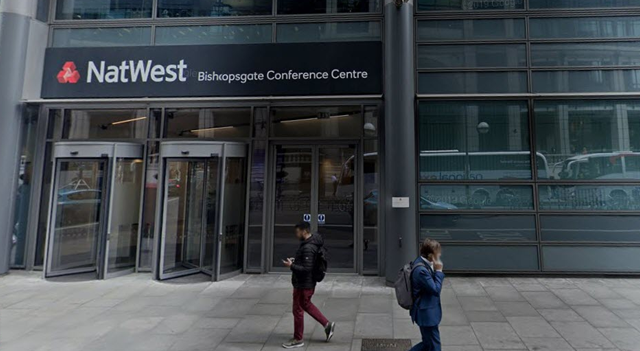
    Shares of NatWest Group PLC (LSE:NWG) gained 4.6% on Monday after UBS increased its earnings projections for the UK lender, citing robust fourth-quarter performance and stronger capital generation.

    The Swiss bank reiterated its “buy” recommendation and kept its 780 pence price target unchanged, implying potential total returns of around 40%. UBS raised its diluted earnings per share estimates by 5% for 2026, 4% for 2027, and 3% for 2028.

    UBS said NatWest’s fourth-quarter pre-tax profit — excluding notable items and litigation costs — came in 7% ahead of market consensus. Net interest income surpassed expectations by 3%, while operating expenses matched forecasts. Loan impairments were 30% better than anticipated, totaling 13 basis points of loans.

    The broker pointed to “strong” operating momentum, noting expansion in both lending and deposits, as well as an 8 basis point rise in net interest margin compared with the market’s expectation of just a 2 basis point increase.

    NatWest’s common equity tier 1 (CET1) ratio stood at 14.0%, 30 basis points above consensus estimates. That figure reflects the £750 million share buyback announced in connection with the Evelyn Partners transaction.

    Looking ahead, UBS said the bank’s 2026 guidance is broadly in line with current market forecasts, while its newly introduced 2028 targets indicate potential upside of 2–3% relative to consensus and appear achievable.

    Those medium-term goals include a return on tangible equity above 18%, compound annual growth in customer assets and liabilities of more than 4%, a cost-to-income ratio below 45%, and an intention to operate with a CET1 ratio of approximately 13.0%.

  • Rosebank Industries shares slip amid $3.05 billion US acquisition talks

    Rosebank Industries shares slip amid $3.05 billion US acquisition talks

    Rosebank Industries (LSE:ROSE) said it is in advanced negotiations to purchase two U.S.-based companies currently owned by private equity firms, in a deal that carries a headline enterprise value of roughly $3.05 billion.

    The company’s shares declined 2.5% following the announcement.

    According to a company statement, the proposed acquisition would be financed through a mix of new borrowing facilities and an equity raise of approximately £1.9 billion.

    Rosebank did not disclose the identities of the businesses involved or provide a timetable for when the transaction might be finalized.

  • Optima Health shares slide after £100 million PAM takeover agreement

    Optima Health shares slide after £100 million PAM takeover agreement

    Shares of Optima Health (LSE:OPT) dropped 4.8% on Monday after the UK-based provider of technology-enabled corporate health and wellbeing services revealed a deal to purchase PAM Healthcare Limited for roughly £100 million.

    The transaction remains subject to approval under Ireland’s Foreign Direct Investment rules. To fund the purchase, Optima has secured £70 million in new borrowing facilities from HSBC and Barclays, alongside a £30 million bridge loan from Deacon Street Partners Limited, which is controlled by major shareholder Lord Ashcroft.

    The company plans to refinance the bridge facility through a fully underwritten £35 million open offer priced at 175 pence per share — a 17.8% discount to the February 13 closing price. The equity raise is expected to proceed after the acquisition is finalized.

    Management said the deal should enhance adjusted earnings per share beginning in the first full financial year after completion, with EPS accretion projected to exceed 25% by the end of year three. On an unaudited pro forma basis, the combined group is expected to generate more than £26 million in underlying adjusted EBITDA before accounting for synergies.

    “This transformational acquisition underscores our intent in delivering our stated strategic objectives and cements Optima’s position in its attractive and growing market,” said Jonathan Thomas, Chief Executive Officer of Optima Health.

    Founded in 2004, PAM reported unaudited revenue of about £66.6 million for the year ended December 31, 2025, alongside adjusted EBITDA of £8.2 million. The business serves more than 1.5 million employees and works with over 1,500 organizations.

    Following the acquisition, Optima is set to become the clear market leader, with an estimated 15% pro forma market share. The transaction also advances the company toward its longer-term goal of reaching a 25% share of the market. Management expects annual revenue and cost synergies to surpass £5 million once the integration process is complete.

  • Oil holds steady as U.S.–Iran diplomacy offsets OPEC+ supply expectations

    Oil holds steady as U.S.–Iran diplomacy offsets OPEC+ supply expectations

    Crude prices traded in a narrow range on Monday as investors weighed the prospects of renewed U.S.–Iran nuclear negotiations against the likelihood that OPEC+ will move ahead with plans to increase output.

    As of 09:10 GMT, Brent crude was down 18 cents, or 0.3%, at $67.52 per barrel, while U.S. West Texas Intermediate (WTI) slipped 17 cents to $62.72 per barrel.

    Market participation was limited, with financial centers in China, South Korea and Taiwan closed for Lunar New Year, alongside the Presidents Day holiday in the United States.

    Both benchmarks ended last week lower, with Brent easing roughly 0.5% and WTI shedding about 1%, after U.S. President Donald Trump said Washington could potentially reach an agreement with Tehran within a month.

    Washington and Tehran are scheduled to meet again in Geneva on Tuesday for a second round of discussions focused on Iran’s nuclear program and preventing further military escalation.

    An Iranian diplomat was quoted Sunday as saying Tehran is pursuing a deal with the United States that would bring mutual economic benefits, including cooperation in energy and mining investment as well as aircraft purchases.

    Meanwhile, U.S. officials told Reuters that a second aircraft carrier has been deployed to the region and contingency plans are in place for an extended military operation should talks collapse. Iran’s Revolutionary Guards have warned that any strike on Iranian territory could prompt retaliatory action against U.S. military installations.

    “An escalation in tensions with Iran could push Brent toward $80 per barrel. A de-escalation would likely send it back toward $60 per barrel,” SEB analysts said in a research note.

    Although geopolitical risks have provided some underlying support to prices, expectations that the Organization of the Petroleum Exporting Countries and its allies — known collectively as OPEC+ — may restart production increases from April are capping gains. According to Reuters, the group is leaning toward that decision at its March 1 meeting after a three-month pause in supply adjustments.

  • Gold dips and silver weakens as investors reassess U.S. rate path

    Gold dips and silver weakens as investors reassess U.S. rate path

    Gold prices moved modestly lower on Monday, with silver also under pressure, as markets continued to evaluate the trajectory of U.S. interest rates following the latest inflation readings.

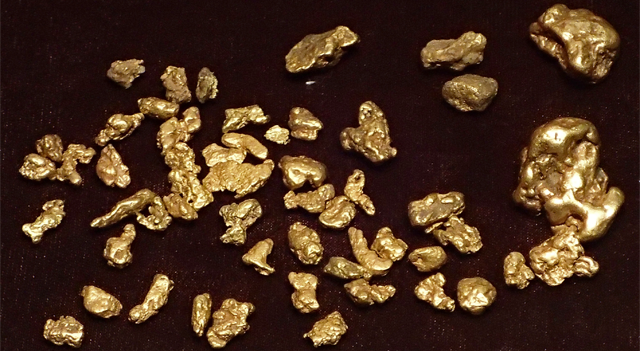
    As of 04:25 ET (09:25 GMT), spot gold declined 0.6% to $5,015.40 per ounce, while April gold futures slipped 0.2% to $5,035.25 per ounce.

    Spot silver dropped 0.9% to $77.230 per ounce, and platinum fell 1% to $2,057.10 per ounce.

    Precious metals have seen pronounced volatility over the past two weeks, with sharp intraday swings, and both gold and silver remain well below their late-January highs.

    Trading volumes were muted, with financial markets in China, South Korea, and the United States closed for the session.

    Rate uncertainty keeps metals choppy

    Gold and silver held onto part of last week’s advances, supported by bargain-hunting and a softer U.S. dollar. Rising geopolitical tensions between the U.S. and Iran also contributed to safe-haven demand.

    Even so, both metals continue to trade beneath their late-January peaks and have experienced erratic price movements as investors grapple with uncertainty over the Federal Reserve’s next moves.

    The late-January downturn in gold followed U.S. President Donald Trump’s nomination of Kevin Warsh to replace Jerome Powell as Fed Chair when Powell’s term ends in May.

    Warsh has been perceived as less supportive of aggressive monetary easing, prompting concerns that U.S. financial conditions may remain relatively restrictive in the coming years.

    “The market’s attention is gradually shifting to the potential impact of tariffs, which has yet to fully emerge in economic and inflation data, and doubts remain around future Fed credibility. Such a backdrop will intensify investors’ appetite for real assets like gold,” ANZ analysts said in a note, adding that their longer-term outlook for gold remains broadly constructive.

    Focus turns to Fed minutes and inflation data

    Investors are now awaiting further signals on the U.S. economic outlook, starting with the release of minutes from the Federal Reserve’s January meeting on Wednesday.

    The minutes are expected to offer deeper insight into policymakers’ thinking on interest rates, particularly as markets weigh the possibility of a leadership transition at the central bank.

    Later this week, December’s personal consumption expenditures (PCE) price index — the Fed’s preferred inflation measure — will be published and is likely to influence expectations for the longer-term rate outlook.

    Additional U.S. economic releases scheduled for the week include trade data and industrial production figures.

  • Bitcoin retreats below $69,000 as crypto slump deepens into fourth week

    Bitcoin retreats below $69,000 as crypto slump deepens into fourth week

    Bitcoin (COIN:BTCUSD) moved lower on Monday, adding to a prolonged downturn that has now stretched into a fourth straight week, as persistent uncertainty over U.S. interest rate policy continued to weigh on demand for high-risk assets.

    The leading cryptocurrency slipped after briefly reclaiming the $70,000 level over the weekend. By 00:58 ET, Bitcoin was down 2.7% at $68,409.7.

    Strategy says balance sheet resilient even in sharp downturn

    Strategy (NASDAQ:MSTR) — the largest corporate owner of Bitcoin — said Sunday it remains confident in its ability to service its debt even under a severe price correction.

    In a social media update, the company stated it can “withstand a drawdown in $BTC price to $8K and still have sufficient assets to fully cover our debt.”

    Strategy currently holds 714,644 Bitcoin, financed through a mix of equity issuance and long-term borrowing. Led by outspoken Bitcoin supporter Michael Saylor, the company has continued accumulating the cryptocurrency despite the recent pullback.

    Bitcoin has now surrendered roughly half of its value since reaching a record peak near $126,000 in October. The token has been at the center of broader selling pressure in speculative markets, as shifting expectations around Federal Reserve policy have prompted investors to dial back risk exposure.

    The sustained slide has fueled speculation that Strategy could eventually face pressure to offload part of its holdings to meet liabilities — a scenario Saylor has repeatedly dismissed.

    Earlier this month, Strategy reported a $12.4 billion loss for the December quarter, sharply wider than the $670.8 million loss posted a year earlier. Outside of its substantial Bitcoin position, the company generates relatively modest operating income.

    Altcoins mirror Bitcoin weakness

    The wider crypto market also trended lower, tracking Bitcoin’s ongoing retreat.

    Ether, the second-largest cryptocurrency, fell 6.1% to $1,958.63, while XRP dropped 7.7% to $1.4575.

    BNB declined about 4%, with Solana and Cardano losing 5.4% and 6.2%, respectively.

    Among meme tokens, Dogecoin slumped 11.4%, while $TRUMP shed 2.4%.

    Sentiment across digital assets has remained fragile since October, with both retail and institutional inflows slowing significantly. At the same time, a rally in gold prices and stronger interest in physical safe-haven assets have diverted capital away from cryptocurrencies.

  • Shortened Trading Week Brings Key Data, Earnings and Renewed U.S.–Iran Dialogue Into Focus: Dow Jones, S&P, Nasdaq, Wall Street Futures

    Shortened Trading Week Brings Key Data, Earnings and Renewed U.S.–Iran Dialogue Into Focus: Dow Jones, S&P, Nasdaq, Wall Street Futures

    Investors are entering a holiday-shortened week that nonetheless features important economic releases and major corporate earnings. Oil markets remain steady as Washington and Tehran prepare for another round of nuclear negotiations in Switzerland. Meanwhile, Warner Bros. Discovery is reportedly reassessing takeover discussions, while gold and Bitcoin are trading lower.

    U.S. markets closed to start the week

    Wall Street is shut on Monday for a public holiday, but attention will quickly shift to a busy calendar of data and earnings in the days ahead.

    On Friday, U.S. equity benchmarks ended mixed. Markets reacted to January inflation data showing price pressures easing more than anticipated, increasing speculation that the Federal Reserve could move up its next rate cut to June. Earlier in the week, however, a strong labor market report had suggested that policymakers — who reduced borrowing costs multiple times in 2025 — might delay further easing until later in the year.

    The Nasdaq Composite continued to face headwinds, as investors remain wary of how emerging artificial intelligence models could disrupt the technology and communications sectors. Questions surrounding intensifying competition and the timeline for returns on heavy AI-related capital spending weighed on sentiment across major indices last week.

    Focus now turns to Friday’s release of the December personal consumption expenditures (PCE) price index, the Fed’s preferred inflation gauge. An advance estimate of fourth-quarter U.S. GDP is also due the same day.

    Corporate earnings remain a key driver this week, with reports expected from Walmart Inc. (NYSE:WMT), Palo Alto Networks (NASDAQ:PANW), Analog Devices (NASDAQ:ADI) and Booking Holdings (NASDAQ:BKNG).

    U.S.–Iran nuclear discussions resume

    The United States and Iran are set to meet again in Switzerland for a second round of talks aimed at addressing Tehran’s nuclear program, after dialogue resumed earlier this month.

    The renewed negotiations come amid ongoing tensions. Washington has reinforced its military presence in the Middle East and signaled readiness to escalate pressure if diplomacy fails. President Donald Trump has repeatedly warned Tehran that it must agree to a deal or risk further military consequences.

    Iranian officials said over the weekend that they are prepared to consider compromises on their nuclear activities in exchange for relief from U.S. sanctions, adding that the next step lies with Washington.

    “[T]here is still a large risk premium priced into the market given the uncertainty over how the situation between the U.S. and Iran evolves,” analysts at ING said in a note.

    Oil prices were largely steady in European trading, with thin volumes due to market holidays in both China and the United States. Weak economic growth data out of Japan also added to concerns about global demand. Brent crude for April delivery hovered near $67.72 per barrel.

    Warner Bros. weighs fresh takeover talks – report

    In corporate news, reports suggest new developments in the takeover saga involving Warner Bros. Discovery (NASDAQ:WBD).

    Bloomberg reported that Warner Bros. is considering reopening negotiations with Paramount Skydance (NASDAQ:PSKY) after David Ellison’s group enhanced its hostile offer. Board members are reportedly assessing whether Paramount’s proposal could be more attractive than a competing bid from Netflix Inc. (NASDAQ:NFLX).

    Last week, Paramount pledged to increase the cash component offered to Warner Bros. shareholders for every quarter that a deal remains unresolved in 2026 and to cover any penalties associated with terminating Warner’s current agreement with Netflix. However, the base offer of $30 per share remains unchanged.

    Gold retreats as dollar steadies

    Gold prices moved lower in European trading as the U.S. dollar stabilized following recent inflation data. Precious metals have experienced sharp swings over the past two weeks and remain below late-January highs.

    Spot gold fell to around $4,998.69 per ounce, while April futures declined to roughly $5,018.69. Although safe-haven demand has been supported by geopolitical tensions, stronger dollar moves have limited gains.

    Bitcoin extends its slide

    Bitcoin (COIN:BTCUSD) continued to decline, marking a fourth consecutive week of significant losses across the cryptocurrency market.

    The digital asset pulled back toward $68,624 after briefly surpassing $70,000 over the weekend. Bitcoin has now lost roughly half its value since reaching a record high near $126,000 in October.

    Meanwhile, Strategy (NASDAQ:MSTR), the largest corporate holder of Bitcoin, said it would remain able to meet its debt obligations even if the cryptocurrency fell to $8,000. The company stated on social media that it can “withstand a drawdown in $BTC price to $8K and still have sufficient assets to fully cover our debt.”

    Strategy currently holds 714,644 Bitcoin, financed through a combination of equity issuance and long-term debt.


  • European equities tick up as earnings optimism offsets holiday-thinned trade; miners in focus: DAX, CAC, FTSE100

    European equities tick up as earnings optimism offsets holiday-thinned trade; miners in focus: DAX, CAC, FTSE100

    European markets started the week slightly firmer on Monday, buoyed by a generally constructive earnings season, though trading volumes were muted due to holidays in both Asia and the United States.

    At around 08:02 GMT, Germany’s DAX advanced 0.4%, France’s CAC 40 added 0.2%, and the U.K.’s FTSE 100 rose 0.2%.

    Earnings momentum supports markets

    Activity was subdued, with much of Asia closed for Lunar New Year celebrations and U.S. markets shut for George Washington’s birthday. Even so, investor sentiment across Europe remained broadly upbeat as corporate earnings continue to exceed expectations against a gradually stabilising economic backdrop.

    According to LSEG data, companies accounting for 57% of Europe’s total market capitalisation have reported results so far. Fourth-quarter earnings growth is averaging 3.9%, outperforming earlier forecasts that had pointed to a 1.1% contraction. Around 60% of companies have surpassed analyst estimates, compared with a typical beat rate of 54%.

    While Monday’s earnings calendar is relatively light, attention this week will turn to Europe’s major mining groups — Rio Tinto (LSE:RIO), Glencore (LSE:GLEN), Anglo American plc (LSE:AAL) and Antofagasta plc (LSE:ANTO) — as they release results amid elevated metals prices.

    Automaker Volkswagen AG (TG:VOW3) is also likely to draw scrutiny after Manager Magazin reported that the group plans to reduce costs by 20% across its brands by the end of 2028.

    Across the Atlantic, the earnings spotlight will fall on Walmart Inc. (NASDAQ:WMT), which is set to publish quarterly results on Thursday. Investors will be watching closely for signals on U.S. consumer demand.

    Economic data in focus

    On the macro front, Eurozone industrial production figures for December are due later Monday, with economists expecting a 1.5% month-on-month decline.

    In the U.K., asking prices for newly listed homes were broadly flat in February, dipping by just £12 to an average of £368,019 after a 2.8% rise in January, according to property portal Rightmove.

    Earlier in Asia, Japan’s latest GDP reading disappointed. The economy expanded at an annualised pace of just 0.2% in the fourth quarter, well below expectations of 1.6%. The data showed only a modest recovery following a sharp contraction in the third quarter, potentially strengthening the case for further fiscal support under Prime Minister Sanae Takaichi.

    Oil steady ahead of U.S.–Iran talks

    Crude prices were little changed in quiet holiday trade, as markets awaited further diplomatic engagement between Washington and Tehran.

    Brent crude futures slipped 0.1% to $67.66 per barrel, while U.S. West Texas Intermediate futures edged down 0.1% to $62.68 per barrel.

    Both benchmarks had declined between 0.5% and 1% last week after U.S. President Donald Trump suggested that a potential agreement with Iran could be reached within a month, weighing on prices.

    A second round of U.S.–Iran discussions is scheduled for Tuesday in Geneva, following renewed talks earlier this month aimed at resolving long-standing tensions over Iran’s nuclear programme.